Philosophy
A Moral Argument Against Animal Testing
Animal testing is a form of “normalizing the unthinkable” and an oppression of sentient beings that is morally unjustifiable and wrong; the inadequacy of existing arguments and laws makes the need to reconsider their ethical standing clear.
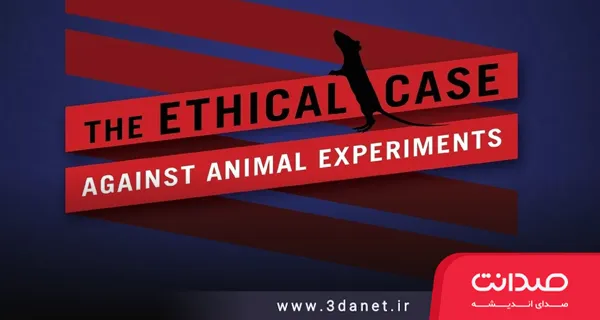
A Moral Argument Against Animal Testing
Book Summary
The deliberate and repeated abuse of innocent, sentient animals, involving cruelty, pain, suffering, terrifying confinement, instrumental use, trade, and death, should be unthinkable. Yet animal testing is precisely that: "the normalization of the unthinkable."[i] The number of animals used annually in animal testing is estimated at 115.3 million. Given the cruelty, pain, suffering, and death they endure, animal testing is one of the greatest moral problems of our age.
This normalization stands in direct opposition to the knowledge we now possess regarding the scope and spectrum of animal vulnerability to cruelty. We cannot close our eyes to the complexity of animal consciousness, particularly animal sentience (defined by the capacity to experience pain and pleasure). Unlike our ancestors, we now know (with as much evidence as we have for humans) that animals, especially mammals, birds, and reptiles, not only experience pain, but also suffer bewilderment, fear, distress, trauma, anxiety, dread, agitation, anticipation, and terror with an intensity no less, or only slightly less, than humans. This is a conclusion drawn from many scientific books and peer-reviewed journal articles.
This normalization is built upon humanity's excessive trust in the scientific validity of animal testing. But recent scientific critiques have turned the tables, particularly regarding the unreliability of animal testing, the unpredictability of laboratory environments, the incongruity of human diseases with "animal models" of diseases, interspecies differences in physiology and genetic function, and the emergence of human-relevant tests with greater predictive power. The result is that it is no longer correct or logical (if it ever was) to say that our only moral choice is between animal testing and abandoning scientific progress.
This normalization is based on a discredited attitude that animals are merely tools in the service of humanity, a means to achieve human ends, replaceable items, and commodities that humans can treat and dispose of as they see fit. In the last forty years, a great deal of intellectual work has been published on the moral status of animals. This new work confronts attitudes such as (1) in ethical thinking, humans must always have absolute priority (anthropocentric ethics), (2) animals exist for humans, solely to satisfy their interests and desires (instrumentalism), and (3) humans must be distinguished and separated from other animals in a kind of "us" and "them" duality, in which animals are certainly considered inferior (dualism).
This normalization is challenged by a new ethical thinking that revolves around three positions: (1) Individual animals possess value. Sentient beings (beings capable of experiencing pain and pleasure) are not mere things, objects, machines, or tools; each has an inner life that demands our respect. This view extends to individual sentient beings, not merely to a collective or as a member of a community. (2) Given their sentience, there is no logical basis for ignoring the sentience of animals or depriving them of the basic moral considerations we grant to humans. And (3) consequently, doing wrong to any animal (except when it is in the animal's own interest, for example, in medical practice), if not absolutely unjustifiable, at least requires a very strong moral justification. Of course, some believe that doing wrong to innocent sentient beings (i.e., morally blameless beings) is absolutely unjustifiable.
This normalization faces logical obstacles that demand special moral consideration for animals. (1) Animals cannot express their consent or dissent. (2) They cannot defend their interests or articulate them. (3) They cannot understand or explain the reason for their suffering. (4) They are morally innocent or blameless. (5) They are vulnerable and relatively defenseless. These characteristics make justifying cruelty to animals (like cruelty to infants) extremely difficult.
This normalization rests on false moral arguments. Let us review three reports from authorities:
1. The UK Government's Animals in Science Committee (APC) states that even if inflicting suffering is "in itself" wrong, it may not be "absolutely" wrong if it can be "shown to be the lesser of two evils."[ii] But this argument presupposes the very thing that needs justification—namely, that a direct and immediate choice must be made, a scenario the committee itself (elsewhere) acknowledges is rare: "In animal research, it is seldom, if ever, the case that we are in the unavoidable position of being able to save a child's life by taking an animal's life."[iii]
2. The House of Lords Select Committee says humans are "unique" and "therefore" can use animals in experiments.[iv] But here we face a fallacy. What must be shown is how humans are unique and how this justifies humanity's degrading moral behavior toward animals.
3. The Weatherall Committee says animal testing is justified because if, hypothetically, a hospital caught fire, we would "spontaneously" decide to save the humans.[v] But this conclusion does not follow from that premise. The conclusion that follows (if we accept the proposed assumption) is merely that humans behave this way in the described situation. This scenario is, by definition, a limited catastrophic event in which an individual must make a direct choice. But we commit a logical error if we generalize this event, in which most humans might decide to save their own kind, and derive from it a kind of duty to prioritize humans across a wide range of normative situations where the individual is not forced to make a choice.
This normalization is exacerbated by certain laws and regulations, which do little to actually protect animals and often even do the opposite. [In the book] we have shown that inspections are flawed, licenses create a false sense of legitimacy, intra-organizational oversight in the European Union is inadequate, the so-called "Three Rs" strategies are not implemented, and ethical and welfare committees do not provide a comprehensive ethical assessment of proposals and have the fundamental flaw of turning away from the core ethical issue. The so-called "Three Rs" strategies, endorsed by the European Union and supported by governments only in word—strategies that could have brought about some changes—receive severely limited funding in practice. This makes alternative methods the Cinderella of scientific research. Even where oversight exists, it is not very strict. The disturbing evidence obtained from undercover inspections testifies to this claim.
This normalization is constantly justified by the claim that human interests require such experiments, but one must ask whether humans ever truly benefit from exploiting animals. Humans can be [psychologically] harmed by exploiting animals—for example, through desensitization[1], loss of empathy[2], habituation[3], and denial[4]. We now know there is a strong link between animal abuse and the perpetration of violence against humans. Furthermore, new scientific findings should compel us to question the claim of these experiments' usefulness, as we now know that many of them have led us to misleading or incorrect results. Moreover, the same logic that justifies experimenting on animals could also justify doing so on humans. And let us not forget that prisoners of war, people of color, Jews, and children have been among those who have tasted the bitter fruit of these experiments.
The normalization of the unthinkable must be de-normalized[5] and de-institutionalized[6]. Ethical research methods must be fully institutionalized, and an immediate, large-scale shift in funding toward non-animal alternative methods must occur.
Note: What you read was the Persian translation of a summary of the book A Moral Argument Against Animal Testing, edited by Andrew Linzey and Clair Linzey, published in 2018 by the University of Illinois Press.
Translator: Mohammadrasoul Alizadeh Asli
.
.
[1] desensitization
[2] empathy
[3] habituation
[4] denial
[5] de-normalized
[6] de-institutionalized
[i] L. Peattie, “Normalizing the Unthinkable,” Bulletin of Atomic Scientists (1984): 32–36.
[ii] APC, Review of Cost-Benefit Assessment.
[iii] Ibid.
[iv] House of Lords, Select Committee.
[v] Weatherall et al., Use of Non-Human Primates.
.
.




Discussion0 comments
No comments yet; let yours be the first voice.