Religion
A Question for Mostafa Malekian: “Why Do Your Words About Religion Rob People of Their Peace?!”
Mostafa Malekian argues that spirituality is possible without belief in a particular God, and that no institution—including religion—can eliminate all human suffering. He also stresses, through the analogy of Galileo, that the imperfection of reason is no justification for turning away from it.
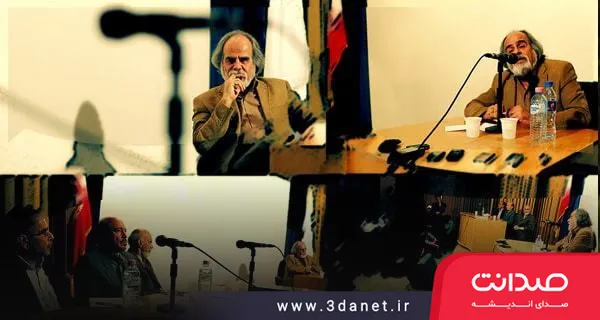
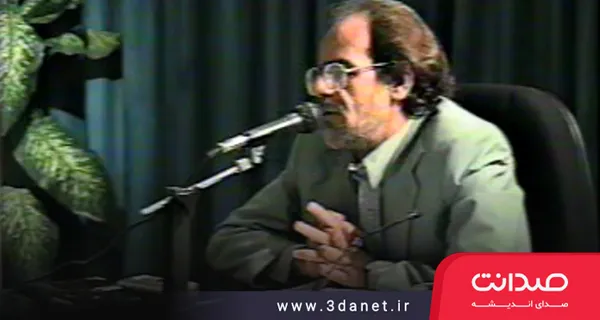
A Question for Mostafa Malekian: “Why Do Your Words About Religion Rob People of Their Peace?!” This audio file is part of the session on Modernist Ethics, held at the University of Isfahan on 16/2/1393.
*First Question: A Query on the Utility of Ethics Without God and the Afterlife
The ethical system of all divine prophets is based on monotheism. Today, can a spirituality without monotheism and an ethics without God and the afterlife solve humanity's problems and fundamentally reduce human pain and suffering?
Professor Malekian's Response:
First Response: The Fallacious Nature of the Question
You began the question with a premise designed to deny me the right to disagree, and that premise was: all divine prophets believed in monotheism. And if someone wants to say otherwise, they will no longer have the opportunity.
In response, I say, “I will assume” that all divine prophets believed in monotheism. And “I will assume” your statement is correct; then your statement shows that all “prophets” believed in monotheism. From this, it follows that there is no prophet who does not believe in monotheism, but it does not follow that there is no human being who does not believe in monotheism. Many human beings have not believed in monotheism, and many still do not today.
Second Response: The Meaning of God in the Question
The second point is that you referred to spirituality without God and religion; what do you mean by this phrase?
Answering the Question Assuming a Specific Conception of God
If you mean spirituality without the God of a particular religion, then such spirituality is certainly possible; for instance, spirituality without Yahweh or Ahura Mazda is, of course, possible. Or spirituality without the Buddhist Nirvana, without the Krishna of Hinduism, is possible. Why? Because you yourself, without believing in any of these specific gods, are spiritual, and because you are a Muslim, you believe in another specific God, namely Allah. Of course, spirituality without belief in a specific God is possible, and the clearest proof of this is the questioner himself.
Answering the Question Assuming a General and Universal Conception of God
But if you say, I accept spirituality without a specific God, but in general, one must accept some kind of God. Your meaning in that question is that for spirituality, one must generally accept some kind of God; then two points must be noted: One is that you first fall into the embrace of Dr. Dehbashi's discourse, who in a sense believes the entire universe is monotheistic; meaning a person could not believe in Allah but still believe in God.
Second, if this is your meaning, then I say: Yes, one must believe in some kind of God in some way. And those who are spiritual do believe in an interpretation of God. Of course, spirituality has conditions; in some schools of thought, spirituality is impossible. For example, if a person is a materialist and considers the world confined to the discovered and undiscovered laws of physics, chemistry, and biology, they cannot be spiritual.
Third Response: The Meaning of Religion in the Question
But at one point you asked, is spirituality without religion possible? What do you mean by religion?
If by religion you mean only Islam, then yes, we have had many spiritual people without them being Muslim. Indeed, before the advent of Islam, we had spiritual people, and after the advent of Islam, we have also had non-Muslim spiritual people.
The Quran itself says about Christian priests that they are of two kinds; do not lump them all together: “They are not all alike. Among the People of the Scripture is a community standing [in obedience], reciting the verses of Allah during periods of the night and prostrating [in prayer].”
Some priests prostrate in the depths of the night; why are you more Catholic than the Pope? I see myself as closer to the conception that God has of the Jews and Christians than to the conception we Muslims have of the Jews and Christians.
The Quran says: if you entrust a heap of wealth to some Christian priests, they will return the trust without betraying it in the slightest; I am not saying this, God is saying this.
Fourth answer: The reduction of a portion of human pain and suffering by religion and spirituality
But in response to whether this spirituality reduces human pain and suffering at its root, it must be said that pain and suffering are a different story. Human pain and suffering in this world can never be reduced to zero.
The division of pain and suffering into avoidable and unavoidable
Life has tragic aspects; that is, it has unavoidable pains and sufferings that, whether you go up or down, these tragic aspects exist. But there are also avoidable pains and sufferings; like a toothache, which is resolved by visiting a dentist.
However, we reduce some avoidable pains and sufferings by living ethically, some by living religiously, some by living rationally, and some by living legally. We do not reduce all pain and suffering through a single path.
No matter how religious you are, you cannot reduce your toothache. All of these institutions are, in principle, supposed to reduce only a portion of pain and suffering. You cannot reduce all suffering with religion. If that were the case, there would be no doctors, architects, or engineers in this society; the existence of these professions means that not all pain and suffering can be reduced by religion. The matter is very clear.
*Second question: Examining the relationship between spirituality and the Muslim conception of God
In your view, is spirituality more effective with Allah or without Allah? Professor Malekian's answer: I have taught logic for a lifetime; you cannot lead me anywhere with these methods. One must ask, what do you mean by Allah? If your meaning is this question: are spiritual people who are Muslim more spiritual, or are non-Muslim spiritual people more spiritual? I submit that no, some Muslim spiritual people are more spiritual than some non-Muslim spiritual people, and some non-Muslim spiritual people are more spiritual than some Muslim spiritual people.
*Third question: Question about the limitations of reason Given that reason is imperfect, how can we solve our problems with it? Professor Malekian's answer: First answer: The limitation of reason is not a license to turn away from it. If human beings cannot reach something, they should not abandon it. But one should not turn away from what can be reached by human reason. If human reason is imperfect, it can at least resolve a few problems.
Second answer: Criticism of the dual treatment of reason by some religious scholars You might suggest that we resort to religion; so if human reason is imperfect, this same imperfect reason tells us to resort to religion, which is a contradiction. If reason is a source of knowledge, we must adhere to it, even if it contradicts religion. Ultimately, we must resolve this point: does reason have validity or not? Galileo's analogy on the dual treatment of reason Galileo used to say to Christian scholars: Suppose someone gives you a wristwatch as a gift; you would be very grateful for the kindness they have shown you by giving you a gift to wear on your wrist. But if your friend immediately added:
Galileo used to say: O Christian clergy! You first whisper in our ears that reason is the greatest divine gift, the distinguishing feature of man from other animals, and you told us to be grateful to God for this gift; but as soon as we want to discover something with this reason, you say: "Sir! There is the Holy Book; what place has reason compared to the Holy Book!?" If this is the case, take this reason back; if we are to ask you for the time, we don't want this watch! See for yourselves, my friends, how you reconcile this with your conscience. After all, does reason have authority or not? If it does not, then even when philosophers use this same reason to prove that God exists, reason has no authority there either. How is it that when theologians and philosophers prove the existence of God, the essence of God, the acts of God, the attributes of God, the resurrection, general prophethood, and specific prophethood, you say reason is respected; but as soon as reason says something that is incompatible with one of the propositions of my and your religious texts, you say this reason of yours is that of a sparrow! Some tell me: All of human reason is the size of a sparrow's reason; you, Mostafa, don't even have reason! My dear, if I have no reason, then at the very moment I am proving the existence of God, that too is not reason.
We cannot say that as long as reason proves the claims of my religion and creed, its judgment is acceptable; but as soon as this same reason says something contrary to religious claims, the judge of reason is dismissed. Reason is the only judge whose appointment and dismissal must be decreed solely by itself. Reason is the only judge whose appointment and dismissal must be decreed solely by itself, not by anyone else from outside reason issuing such a decree upon it. The decree of reason's dismissal must be signed by reason itself. And, of course, reason must issue such a decree. The limitation of reason is an acceptable matter.
I, in fact, believe that someone who possesses deep rationality, not superficially, understands that reason is limited; there is no doubt about this. However, the decree on the limitation of reason cannot be issued by anyone else; reason itself must decree its own limitation, not that reason is going about its work and someone comes and says: No! Reason is not permitted to enter this domain!! Human beings, from Plato to our time, have long understood that one of the signs of deep rationality is its awareness of its own limitations. The universe has not been molded to the size of our human reason; the universe is far deeper and more complex than our human reason. But the point is this: as far as reason works, one cannot block its path and say you have no right to enter such-and-such a realm.
Continuation of the Discussion of University of Isfahan Professors with Mostafa Malekian
Part Three of Dr. Dehbashi's Speech A Critique of Mostafa Malekian's Recent Remarks
A series of topics were raised that are controversial and need to be refined from both sides.
First Critique: Failure to Distinguish Between Universal Reason and Particular Reason Sometimes we want to measure universal reason against particular reason; certainly, particular reason cannot overshadow universal reason. Therefore, these must be defined. Can that reason which is bound to the time of the nineteenth-century Kant encompass all times or not? This too must be defined.
Second Critique: Criticism of a Purely Historical View of Islam
But regarding the issue of monotheism that was raised, in our view, all the verses of the Quran must be considered. The Quran says: "And indeed, among his kind was Abraham." From the Quran's perspective, Islam is common to all religions, not that Islam has only a historical aspect. If we look with this view, then the unity mentioned in that noble verse is realized; but if we want to look at divine religions in a sectional and historical way, yes, that same issue arises. Hence, in that verse, the emphasis is on monotheism itself, without the embellishments that have been attached to it. Therefore, if Yahweh is the same Creator God, it makes no difference; only the name differs.
· Professor Malekian's Response to Dr. Dehbashi's Critiques
I would like to say one point with the utmost respect to Dr. Dehbashi. He says we have two kinds of reason: one is particular reason and the other is universal reason. By particular reason, he means this reasoning faculty of ours that we humans possess as one of the powers of the soul. This reason perceives universals, and it is with the aid of this reason that we reason.
They say there is another intellect, called the Universal Intellect. Then they want to attribute to the Universal Intellect perceptions that are not necessarily identical to the perceptions of the particular intellect; that is, they say with the particular intellect that is in our mind and consciousness, we perceive certain things; but we have a Universal Intellect that is at a much higher level than this particular intellect, and its perceptions correspond to reality with absolute certainty.
First response: The Universal Intellect cannot be proven.
I submit that we accept the particular intellect; I accept that I have an intellect, you, Dr., yourself accept that you have an intellect, and so does everyone else. But as for this Universal Intellect you claim exists, first prove its existence with the particular intellect; otherwise, I say this claim of yours (the existence of the Universal Intellect) is nonsense. Has it been revealed to you that the Universal Intellect exists? You must prove the Universal Intellect exists, and the proof of the Universal Intellect must be done with the “particular intellect.” Thus, two things rest upon your shoulders: First, if the particular intellect cannot prove the existence of the Universal Intellect, the claim of the Universal Intellect’s existence is sheer nonsense and nothing more. Second response: Proving the Universal Intellect with the particular intellect entails the negation of the Universal Intellect. Second, if the particular intellect does prove the Universal Intellect, and you have previously discredited this particular intellect, then the existence of this proven Universal Intellect becomes dubious.
In high school, I was a student of Mr. Dehbashi, and emotionally I have always been and remain fond of him; but much of what transpires in our society originates in university classrooms.
If I find out that a professor says something in a university classroom and then cannot repeat that same thing before his peers, I am very suspicious of his work. I had a grandfather who, when I was 9 years old, said: “Mostafa! If a baker’s bread is good, he tosses the bread onto the counter, and whoever wants bread puts down money and takes the bread; but if a baker says, ‘Come inside the back room of the bakery to get bread,’ know that baker’s bread has a problem. If his bread had no problem, he would offer it right there on the counter.”
Now, I submit: these things you say in classrooms, if you can say them in front of me as well, then go ahead and say them in class; not that we take students, whose knowledge is less than ours, into the classroom and plant ideas in their minds, from which a thousand corruptions arise, while we cannot say those same things before our peers.
Now, I submit: I will sit here for another ten days, and let Dr. Dehbashi prove that we have a Universal Intellect. I, Malekian, am seated here waiting for one of the philosophy professors to stand up, whether Dr. Dehbashi or any other dear and respected person, and prove that the Universal Intellect exists. Sir, we cannot go into a university classroom, close the door, and say whatever we want to the young generation, who are certainly less experienced than us. Cosmic novels in university classrooms!
I am seated here for another ten days; let someone prove the Universal Intellect, and it must be proven with the particular intellect, because we only have the particular intellect at our disposal. What is the meaning of these claims of yours? You are constantly writing cosmic novels! I call these things cosmic novels! That is, they are novels, but they do not correspond to reality. I have stated that I have devotion to Mr. Dehbashi, and he was my teacher, but truth is dearer than the teacher.
· Dr. Dehbashi’s response to Malekian:
First response: The Universal Intellect is an existential matter, not conceptual and abstract
When we speak, we have a basis for saying that the Universal Intellect, firstly: the Universal Intellect is an all-encompassing intellect. Now, they ask, who has said this intellect exists? Well, the philosophers have said so. Therefore, the Universal Intellect has an all-encompassing existence and is not conceptual and abstract.
This world is a thought from the Universal Intellect Intellect is like a king, and forms are the messengers
Malekian: O Rumi, state the proof for this poetry of yours as well. O Rumi, your speech also requires proof. Must Rumi also provide proof? Is Rumi exempt from proof?
Dehbashi: In any case, I have referred to something that philosophers and mystics have said, and I have not spoken from myself.
Second response: Our differences with Mr. Malekian are foundational.
This striving intellect, like existence, is gradational; that is, it has degrees, but these degrees depend on the activity and aptitudes that enable an individual to progress from lower to higher stages, for immaterial things have no limits. We speak based on these foundations, and perhaps they differ from the foundations of Dr. Malekian.
Mr. Malekian: No, our difference here is not in the foundations.
Third response: Proving the universal intellect is possible through the partial intellect's acknowledgment of its own error in certain instances.
Dr. Dehbashi: Therefore, we speak of the gradation of the intellect. Right now, with this very partial intellect, we can compensate for our error, recognize that I made a mistake, and then correct it. With which intellect? With this very partial intellect.
Therefore, this intellect is not so limited that we can claim only this partial intellect exists. The partial intellect is this very acquired and schooled intellect. If we posit transcendence for the intellect, then we must also posit a perfect, one-hundred-percent intellect; but if we do not posit transcendence for the intellect, then my intellect must remain at the level of elementary, middle, and high school. So, this very intellect has the potential to attain perfection.
What I mean by the universal intellect is the divine manifestation, the flow of divine existence in the world, from which these partial intellects also partake. We do not speak of our own accord; rather, we are speaking. If I come and set forth a model, there must be a superior model that encompasses all. Not that I come and limit religion solely to historical religion, and then, when Islam is discussed, say: Yes! It was for a certain year and the matter is concluded. This Islam is common among all of us, this is our belief. The Quran discusses this: "And indeed, among his followers was Abraham."
If we want to discuss it historically, yes! I agree with you; but we must consider religion in all its dimensions. These dimensions all proceed from the universal to the particular. And this universal I mentioned is not a conceptual universal; it is that very universal, somewhat akin to the intellect in Hegel, as some have said. That is, the universal intellect has manifestations in the world. If there is an objection to this, please state it so I may respond.
.
.
Download Audio File | Approximately 20 minutes | Approximately 10 MB
.
.


Discussion0 comments
No comments yet; let yours be the first voice.