Religion
A Seminarian’s Scholarly Priorities: The Qur’an, Theology, and Language
A seminary student's intellectual priorities should center on the Qur'an, theology, and language rather than jurisprudence and its principles, for the Qur'an is the shared language of Muslims, while jurisprudence is not the language of dialogue with the contemporary world. Seminaries must train mujtahids in the Qur'an and theology.
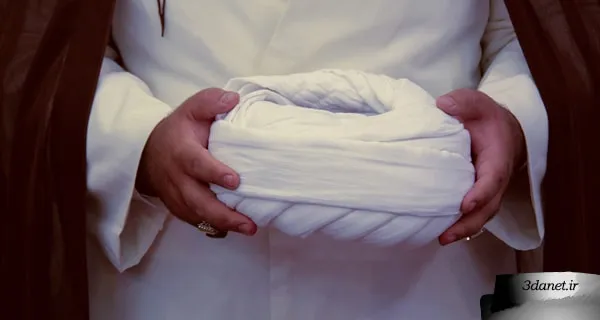
I have been asked to answer the question: "If you were a young seminarian, what intellectual priorities would you set for yourself?" My answer to a seminarian's intellectual priorities is, in brief: the Qur'an, theology, and language. In what follows, I will try to expand on my answer somewhat and substantiate it to a degree.
.
A Seminarian's Scholarly Priorities: The Qur'an, Theology, and Language
Yaser Mirdamadi has a seminary education (up to the late intermediate level, primarily from the seminary of Mashhad). In addition, he earned his BA and MA in Islamic Theology from Ferdowsi University of Mashhad. He also holds an MA in Muslim Cultures from the Institute for the Study of Muslim Civilisations (ISMC) in London. He is currently a final-year PhD student in Islamic Studies at the University of Edinburgh in Scotland. He is a researcher on the "Muslim Biomedical Ethics" project at the Institute of Ismaili Studies (IIS) in London and a lecturer in Islamic Studies at Al-Maktoum College in Dundee, Scotland. He has translated Joseph Schacht's "An Introduction to Islamic Law" into Persian, published with a critical postscript (Tehran: Gam-e No Publishing, 2008). His translation of "Fear of Knowledge: Against Relativism" by Paul Boghossian (Tehran: Kargadan Publishing) will be published soon.
I have been asked to answer the question: "If you were a young seminarian, what intellectual priorities would you set for yourself?" My answer to a seminarian's intellectual priorities is, in brief: the Qur'an, theology, and language. In what follows, I will try to expand on my answer somewhat and substantiate it to a degree.
-
The Qur'an
When and under what conditions jurisprudence (fiqh) and its principles (usul) became the main subjects of Shi‘i seminaries is, of course, a question worth asking, one that can be put to researchers of the history of Shi‘i seminaries (for instance, Rasul Ja‘farian is a good reference for answering this question). Whatever the historical answer may be, contrary to the prevailing practice of Shi‘i seminaries up to now, I believe jurisprudence and its principles should (no longer) be the main subjects of the seminaries (as if a seminarian must specialize in these two fields, while knowing other Islamic sciences only at a general level, and no more, is acceptable). I think many arguments can be advanced in favor of the claim that Qur'anic studies and theology (kalam) should become the two main subjects of the seminaries, such that every seminarian must know these two fields at a specialist level, while knowing other Islamic sciences (including jurisprudence and its principles) only at a general level, and no more, is acceptable. In other words, seminaries today, more than and prior to anything else, should train experts in the Qur'an (mujtahid fi al-Qur'an) and experts in theology (mujtahid fi al-kalam), and not, more than and prior to anything else, experts in jurisprudence and its principles.
It is well known that the course of study in the seminaries (especially before they became program-based) was such that a seminarian could progress from the beginning of his studies to the level of independent legal reasoning (ijtihad) without engaging with the Qur'an beyond its legal verses (ayat al-ahkam). That is, a seminarian normally deals with only one-twelfth of the Qur'an (500 verses out of more than 6,000 verses of the Qur'an). This is while, for example, a Christian seminarian is, in principle, proficient in the Old and New Testaments, and this is a product of his education in a seminary, not merely the result of his personal inclination and pursuit. Among Muslim seminarians, however, if a seminarian is proficient in the Qur'an, this is the result of his personal inclination and pursuit, and not the product of his main and central seminary education.
In a pluralistic world where, even if you have never stepped outside the four walls of Qom in your entire life, you can still, thanks to the virtual sea and social networks, keep abreast of the latest intellectual, political, and social developments in the four corners of the globe (provided internet speed and filtering allow it!), jurisprudence and its principles hardly provide a language for dialogue with other religions and denominations (or even a language for dialogue among ourselves); rather, it is the Qur’an and theology that furnish us with such a language. The formation of jurisprudence and, consequently, its principles was particularly the product of a period when the Islamic world became an empire and needed law, and the jurists cultivated such a law and placed it at the disposal of the Islamic empire. One cannot converse with the contemporary world using the language inherited from the age of past empires, and if one cannot converse with the other, one also becomes incapable of conversing with oneself. The claim is not that jurisprudence and its principles have become irrelevant and ineffective and are beyond reconstruction; rather, the claim is that they have lost their centrality for understanding and disseminating religion.
The Qur’an holds centrality in the lives of all Muslims, from every denomination (Shi‘a, Sunni, or Ibadi) and with every approach (literalist, rationalist, or esoteric)—although it is natural that each of these denominations and approaches has a different interpretation of “the centrality of the Qur’an for Muslim life,” and, for instance, Ibn Hanbal’s interpretation of this matter is entirely different from that of Ibn ‘Arabi. The Qur’an is the common language of all Muslims, and the marginalization of Qur’anic studies in the seminaries amounts to the marginalization of the common language of Muslims among this group, and without partaking in this common language, one cannot have anything to say among Islamic denominations, nor even among other religions.
-
Theology
The Hanbalis and, to some extent, the Ash‘aris considered and still consider learning and teaching the science of theology permissible only out of necessity, like eating carrion. In their view, under normal circumstances, a believer has no need for the science of theology, but if a doubt arises, theology is needed only to the extent necessary to remove the harm and repel the doubt. Even in that state, the science of theology is like a vaccine containing a weakened form of the disease virus to immunize the individual against a stronger form of that virus (for an example of this, see the treatise “Iljām al-‘Awāmm ‘an ‘Ilm al-Kalām” by Muhammad al-Ghazali). This argument against the science of theology, however, is only effective if, firstly, the task of theology is solely to answer objections, and secondly, the societal environment is not, so to speak, an “abode of doubt”—that is, not a society where, as Sa‘di says, “every hour a new qibla arises with idol-worship.”
The task of the science of theology is not solely to answer objections, and this is not even its most important function. Among the important functions of the science of theology are the doctrinal formulation of fervent religious faith, the articulation and classification of religious beliefs, and their intra-religious substantiation (by reference to the Qur’an and Hadith). Of course, the science of theology also bears the responsibility of rationally substantiating religious beliefs, defending them against the objections of critics, and critiquing alternative religious-denominational beliefs. Someone who is not a mujtahid in any subsidiary branch of jurisprudence (but is familiar with jurisprudential sub-branches) yet is a mujtahid in the science of theology is a scholar of religion. However, someone who is a mujtahid in the subsidiary branches of jurisprudence but is not a mujtahid in the science of theology can hardly be considered a scholar of religion (and, in our discussion, an Islamicist). Even newly emerging practical issues today are so intertwined with theoretical foundations that, for example, on the permissibility of abortion or mercy killing (euthanasia), one cannot speak adequately without considering philosophical and theological foundations. The jurisprudential “it is permissible” and “it is not permissible” also need, more than ever, to substantiate themselves by referring to philosophical and theological foundations, and it is precisely here that the centrality of the science of theology (including philosophical theology) becomes more apparent than ever.
Moreover, the number of those who, like Abu al-ʿAlaʾ, cry out, “Would that I knew which religion and creed is the true one” (يا ليت شعري ما الصحيح), or who, like Khayyam, have settled upon the saying, “There is no truth or certainty within grasp,” is on the rise. And if we do not hear them or seek them out, that is no indication of their absence or that their numbers are not growing. A learned scholar from the seminaries recently and rightly remarked that one can no longer provide a convincing answer to those who raise objections to religion and creed with just one or two discussion sessions. This means the seminary has an ever-increasing need for specialists in religious and creedal doctrines, not for batch after batch of specialists in jurisprudential derivatives. Of course—and most certainly—the task of these theologians is not merely apologetics, or what is termed “answering doubts”; rather, their more fundamental task, in the words of Iqbal Lahori, is the reconstruction of Islamic thought in the new world.
-
Language
By language, I mean first and foremost the Arabic language. Contrary to common perception, not all Arabic language skills are taught in the Islamic seminaries; rather, only the reading and comprehension of classical religious texts (and generally jurisprudential and legal-theoretical texts) are taught (though even regarding this very skill, it is nowadays said that students do not receive proper training as they did in the past and, as the saying goes, their literary foundation is not strong). This is while Arabic conversation and mastery of contemporary Arabic are not part of the curriculum in the seminaries. The result is that a student studies Suyuti and Mughni for years but cannot speak two simple words of Arabic on the Hajj pilgrimage, let alone hold a scholarly discussion in Arabic with a Pakistani or Tunisian student (or even a new European Muslim who has learned conversational Arabic well), or has taught Kifaya and Makasib for years but cannot easily read the books of contemporary Arab intellectuals. Accordingly, Arabic language instruction must be such that it prepares the individual not only to understand and read classical Arabic texts but also to understand and read contemporary Arabic texts, as well as to write in Arabic, converse in Arabic, and also comprehend spoken Arabic.
But leaving the Arabic language aside, it is no exaggeration to say that today no one can become a competent scholar of Islam unless they are proficient in at least one of the major European languages (English, German, or French) or are at least familiar with one of these languages at the level of reading and comprehension. The volume of credible research that has been and is being produced in these languages across various fields of Islamic sciences is so great that one cannot wait for translations, which are few in number, selective, and regarding whose quality and the fidelity of the publisher or translator (and their safe passage from under the cleaver of censorship) one cannot always be assured.
It might be said that the works of Western academic Islamicists are so-called “Orientalist” works, written out of prejudice and by non-Muslims, and how, given this description, could such works possess authority and credibility for the religious studies of Muslims? But firstly, experience has shown that fairness is a gem that recognizes neither Muslim nor non-Muslim, and I have no doubt that many Muslims’ understanding of Islam is closer to that of the Christian Montgomery Watt, the renowned Scottish Islamicist, than to that of the Muslim Abu Bakr al-Baghdadi, the head of Daesh, who, incidentally, also holds a doctorate in Islamic Studies from the University of Baghdad. Furthermore, the number of Muslims conducting research in various branches of Islamic studies in European languages and using Western academic methods is increasing to such an extent that the distinction between Western Islamic studies and the Islamic studies of Muslims is fading. The works of Seyyed Hossein Nasr, Mohammad Ali Amir-Moezzi, Hossein Modarressi Tabatabai, Martin Lings, Henry Corbin, and others of this kind are now simultaneously considered part of the Islamic-studies heritage of Muslims (although Corbin was not formally a Muslim) and part of Western academic Islamic-studies works.
The upshot is that, in my view, a seminary student should set their research-educational priority upon the Qur’an and theology (and not jurisprudence and legal theory), and in this path become familiar with all the skills of the Arabic language, and in the meantime also become well acquainted with at least the skill of reading and comprehending one of the major European languages.
I hope and believe that seminarians specialized in the Qur’an, theology, and who are linguistically informed and attuned to the times can provide a fitting response to the manifold challenges facing Muslim life in the contemporary world.
.
.
A Seminarian’s Scholarly Priorities: The Qur’an, Theology, and Language
Author: Yaser Mirdamadi
[This piece was first published on the “Hawzavi Letters” Telegram channel].
.
.

Discussion0 comments
No comments yet; let yours be the first voice.