Religion
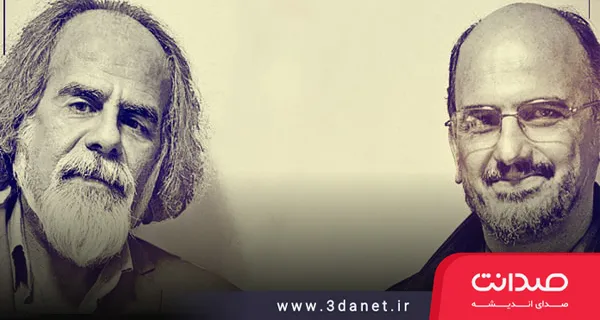
Abolghasem Fanaei Responds to Soroush Dabbagh's Critique of Mostafa Malekian's Views
Fanaei’s responses to Dabbagh’s critique of Malekian’s views overlook Malekian’s documented position. Dabbagh had attributed to him the absolute impossibility of reconciling religion and rationality, whereas Malekian held only that traditional religion is incompatible with modern rationality.
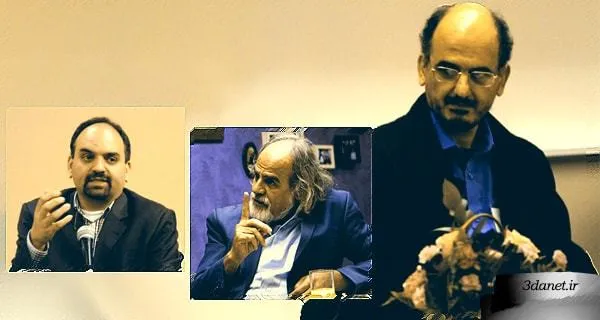
A clarification regarding Abolghasem Fanaei's two critical articles on Soroush Dabbagh's critical observations on Mostafa Malekian concerning the possibility or impossibility of reconciling religiosity and rationality: The first article was published by Soroush Dabbagh at a time when Mostafa Malekian, in his objectively/publically citable writings and lectures, had said nothing about the impossibility of an absolute reconciliation of "religiosity and rationality," and had only spoken of the impossibility of reconciling traditional, "historical," institutionalized religion with full, complete modern rationality. Further explanation: Malekian's documented, objective, and referable claim (not Malekian's personal/undocumented/non-objective claims and private discussions), which appears in the book "Tradition and Secularism" and Malekian's conversation with Shargh newspaper at that time, concerns the impossibility of reconciling historical institutionalized religion with modern rationality in its entirety, which is argumentative rationalism. According to Malekian's view at that time, reconciling a degree of religiosity with a degree of rationality is entirely possible. This is because he considers both religiosity and being modern to be gradational concepts, and he deems only a specific type of religiosity—namely, complete, traditional, historical religiosity—to be irreconcilable with complete modern rationality. In other words, only a specific type and level of religiosity is irreconcilable with the full level of modern rationality in Malekian's account. Fanaei's first critique of Dabbagh, titled: "On the Essence of Religion and the Essence of Modernity," was published in such a context. After this critique, Soroush Dabbagh delivered a lecture on the same subject at the University of Mashhad, where he formulated his positions in a more revised and modified manner. Abolghasem Fanaei also wrote a critique of this second, revised formulation, titled "From Dogmatism in Religion to Dogmatism in Philosophy," in which his main criticism, again, is the overlooking of Malekian's correct account in his objective writings and documentations.
At present, in Mostafa Malekian's objective writings, Malekian's former opinion exists with more flavor under the title of the impossibility of an "absolute" reconciliation of rationality and religiosity in an objective and citable form, which, in terms of content, is the same as Soroush Dabbagh's initial account of Malekian at a time when Malekian had apparently not made any objective and citable statements on this matter.
.
.
Abolghasem Fanaei's Responses to Soroush Dabbagh's Critique of Mostafa Malekian's Views
.
First Response | Abolghasem Fanaei | Ayin Magazine, Issue 6 | March 2007
On the Essence of Religion and the Essence of Modernity
A Response to Dr. Soroush Dabbagh's Critique of Mostafa Malekian's Views
On the Relationship Between Religion and Modernity
.
Second Response | Abolghasem Fanaei | Ayin Magazine, Issue 8 | September 2007
From Dogmatism in Religion to Dogmatism in Philosophy
A Response to Soroush Dabbagh's Lecture Critiquing the Later Malekian
.
.
Related Content:
.
The Article Dogmatism and Being Modern
A Critique of Mostafa Malekian's Views on the Relationship Between Religion and Modernity
Author: Soroush Dabbagh
.
The Article on Rationality, Devotion, and Modernity
A revisit of the philosophical positions of Malekian and Soroush Dabbagh, and a response to Fanaei's critiques
Author: Koosha Eghbal
.
.


Discussion1 comments
آقای فنائی رو هم اگر برای ما مخاطبان معرفی کنید من ممنونمیشوم واقعا، یک بیو کوتاه از زندگیشون مثلا یا اینکه کجا درس خوانده اند کجا درس میدهند یا مثلا ترجمه میکنند یا چه کار میکنند کلا چه کتابهایی نوشته اند نگاهشون چیه چی میگن و ...امروز خیلی دارم بهتون زحمت میدم ارادت ابراهیم کبریتی