Psychology
An Introduction to the Psychological Views of Karen Horney
Karen Horney traced the roots of psychological disturbances not to the sexual instinct but to environmental harms. She believed that 'basic anxiety' is the foundation of neurosis, and that people resort to three strategies to cope with it: moving away from others, moving against others, or moving toward others.
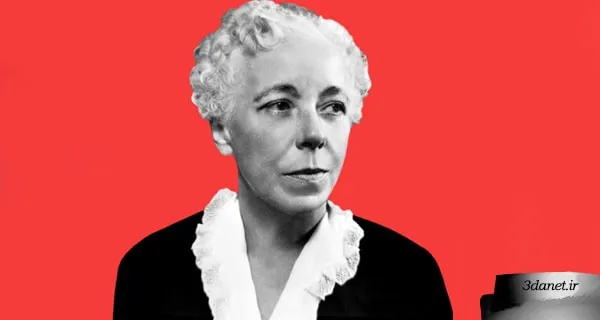
An Introduction to the Psychological Views of Karen Horney
(This essay is a short excerpt from the book “From Suffering to Liberation,” by the same author.)
1. Horney’s Biography
Karen Horney, a psychologist and psychoanalyst, was born in Germany in 1885. She is one of the most prominent contemporary psychologists with a psychoanalytic approach. Horney is one of the figures whose views and findings have had a broad influence on the psychology and psychoanalysis of our era. Horney was initially a disciple and follower of Freud’s school of psychoanalysis (Freudianism), but through subsequent research and work, she gradually diverged from him and became one of Freud’s critics. Horney’s main disagreements with Freud lay in her opposition to her mentor’s view that gave the sexual instinct a foundational role in human psychological development and considered its repression the primary cause of psychological problems. Horney instead emphasized that the main cause of people’s mental and behavioral disorders is environmental abuse and cultural and upbringing-related conflicts. Karen Horney herself suffered greatly in childhood from a lack of affection within her family, especially from her harsh and neglectful father, and this became a strong motivation for her to step into the realm of exploring the human psyche and its hidden sufferings. Karen Horney is considered (alongside Alfred Adler, the Austrian psychologist) the founder of the approach known as “Neo-Freudianism.” At the age of 47, Horney emigrated to America and continued her psychoanalytic activities and research in that country. In New York, she founded the so-called “Karen Horney” school, which is still active today. She passed away in America in 1952 at the age of 77.
2. A Summary of Horney’s Theories
Mrs. Horney’s psychological and analytical theories can be summarized in several main principles.
First Principle: Horney believes that as a result of environmental abuse, especially during childhood, the individual develops a kind of institutionalized and continuous fear of the environment and people. This fear is a type of constant and hidden anxiety that has the potential to remain with the person for the rest of their life. The intensity of this fear depends on the severity of the adversities and abuses in the individual’s developmental environment (whether verbal or physical abuse) and varies among different people. Horney calls this fear “basic anxiety.” The reason for this naming is that this anxiety is, firstly, the earliest and most fundamental reaction of the human psyche to a sense of danger and threat. Secondly, once this anxiety is formed in the depths of the human psyche, it constitutes the foundation of the phenomenon of neurosis, and gradually, various types of suffering, mental disorders, and defensive, compensatory, and aggressive mechanisms are built upon it. Horney calls the totality of this anxiety and its mechanisms “neurosis.” In other words, “basic anxiety” is the foundation upon which the entire structure of neurosis, with all its branches, leaves, results, and consequences, is built, grows, and expands.
Second Principle: According to Horney’s theory, the stage following the formation of basic anxiety is resorting to various defensive mechanisms through which the individual tries to protect their existence from danger and harm – this harm can be real or imaginary, or a combination of both.
3. Neurotic Types According to Horney
Mrs. Horney says that in a general classification, human defensive mechanisms can be divided into three groups: “moving away from people,” “moving against people,” and “moving toward people.”
A. The Detached Type: As a result of environmental abuse, a group of individuals decide to minimize their contact with people in order to stay safe from harassment. This type, out of fear of becoming entangled with others or of social interactions and exchanges that might involve such entanglement or tension, tries to distance themselves from the environment as much as possible and retreat into a safe cocoon of solitude and isolation. This is, of course, different from the state of inherent isolationism or introversion that may exist in any human being. Horney calls this group “detached” or withdrawn.
B. The Aggressive Type: Some individuals prefer to preempt others' aggression in order to stay safe, attacking instead of defending. The weapon of this type is aggression and hostility. Through irascibility and contentiousness, this group tries to show a powerful and fearsome face to everyone, and in this way, build a fortress of aggression around themselves against the attacks and harassment of others. One characteristic of this form of behavior is that the aggression of these individuals is, in most cases, inappropriate and excessive. For this reason, those around them are unable to understand the causes of their behaviors and often prefer either to distance themselves from them or to retaliate against their belligerent behavior with anger and reprisal. They do not know that the contentious person's aggression is, in truth, a kind of fear with a veneer of boldness. In other words, the aggressive individual's offensive behavior is actually a kind of forward flight.
C. The Affection-Seeking Type: The third group consists of those who resort to kindness and showing affection to others to preserve their security. This group, seeing themselves as incapable of fighting and defending their rights, decide that in order to be safe from people's malice, they will appease them as much as possible and, by doing so, secure popularity and thus their own safety. The affection of these people (which can be called "defensive affection") is fundamentally different from genuine, authentic kindness. One of these differences is that the affection-seeking person's love is a defensive and precautionary tactic, arising not from liking the other party, but from fear of harm and harassment from them. Another is that the affection-seeking person's loving is less out of sincerity and more a cover for incapacity and fear of aggression. Affection-seeking people sometimes go to exaggerated lengths in showing affection to others, and often, the greater their fear, the more intense and severe their defensive affection will be.
4. A Few Points
Regarding Ms. Horney's classification, a few points should be known. First, as she herself explains, her categorization is a general and more or less approximate division, and every neurotic individual may fall, to some extent, into one, two, or all three of the mentioned groups, but in each person, one of these behaviors is usually more prominent and observable.
Second, Horney says that neurotic people often display different behaviors according to different situations, meaning that, for example, if an aggressive person sees that the opposing force is too strong in a certain place and aggression does not work, they may lay down their weapon and, instead of fighting and attacking, resort to showing affection or fleeing and withdrawing, and vice versa. Similarly, if an affection-seeking person finds themselves in a situation where they see the "opponent" as weak and the ground as favorable, they may shed the skin of a compassionate and affectionate individual and adopt harsh and aggressive behavior instead.
The final point is that although Horney has drawn a very precise and vivid picture of the structure of human neurosis, it is not surprising that her views, like those of any other researcher, have been subject to numerous criticisms and objections. One of these objections is that Horney's classification is said to be overly general and broad and is incapable of explaining the many individual complexities in different people. Among Horney's works, one can mention the books "Self-Analysis," "Our Inner Conflicts," and "Neurosis and Human Growth," all of which have been translated into Persian and are available in the book market.
.
.
An Introduction to the Psychological Views of Karen Horney
Author: Sasan Habibvand
Ways to contact the author:
Email: sasan.habibvand@yahoo.com
Telegram: telegram.me/sasanhabibvand
.
.



Discussion2 comments
باسلام وارادت آیا دوجلدکتابی که آقای حبیب وند بناداشتند درایران بچاپ برسانند چه شد باتشکر
سلام و سپاس فراوان از علاقه شما. هر دو کتاب ("بندباز" و "از رنج تا رهایی") در دست انتشار است و به محض انتشار، با کمک دوستان خوب صدانت، اعلام خواهم کرد. با مهر بسیار حبیب وند