Environment
Are We All Zangi? Or Perhaps a Little Worse!
Iranians have used science not to prevent disasters like floods and drought, but to destroy nature. Deep ignorance and entrusting crisis management to seminaries instead of specialists have increased vulnerability.
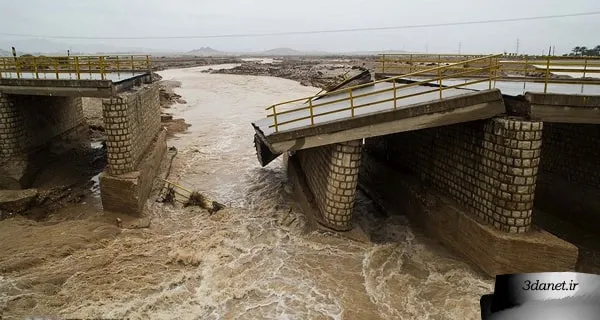
The venerable Rumi once said: Giving a blade to a drunken Zangi / Is better than "knowledge" falling into the hands of the unworthy Floods have swept across Iran, just as drought has. Now we have these two contradictory calamities together, and both have seized the initiative from Iranians. No explanation can be given for it other than falling into the trap of profound ignorance; ignorance! * What is the main cause of these phenomena (floods, drought, and earthquakes) that we humans have placed on the list of 40 natural disasters? Natural climate change, or global warming caused by human activity? * What is the difference between an "earthquake" and a "flood," using the index of being human-made? We Iranians have not used "knowledge" as a source of insight for prevention or conscious confrontation in dealing with these events; rather, we have taken it in hand as a tool for destroying nature, all of us together; the people and the authorities; academics and seminarians; left and right; principlists and reformists! If only we were that drunken Zangi in Rumi's poem and merely left a limited negative effect on our surroundings with a blade; no! We are more dangerous, we are the unworthy ones into whose hands knowledge has fallen:
Giving a blade to a drunken Zangi / Is better than knowledge falling into the hands of the unworthy
What percentage of Iranian citizens with a qualification above a high school diploma know:
- What is the relationship between "floods" and "global warming"?
- What is the relationship between "global warming" and "human population"?
How many literate people in Iran know that we now have more than twice the Earth's capacity for human population in the biosphere? Studies by ecologists say that with this human lifestyle, the Earth can sustain a maximum of 3 billion human beings, and no more; and we are now seven and a half billion!
- How many Iranian graduates know the relationship between lifestyle (dietary style, leisure style, style of moving around the city) and floods? How many young Iranians have left school, or how many Iranian teachers nurturing the new generation, can explain the relationship of the CO2 effect with a meat-based diet, and the relationship of the destruction of democracy, republicanism, and public oversight with encroachment on forests and river boundaries, and the connection of all this to the floods in Aqqala and Shiraz?
We have used knowledge, intelligence, and literacy to build chainsaws for cutting down trees, to build mechanical excavators for altering river boundaries; to master IT for the purpose of filtering social networks, to calculate the profit and loss from property transactions and selling lands to villa owners and the well-to-do, to obtain hollow academic degrees for entering the ranks of management (from the presidency and parliamentary representation to governorship or the Friday Imamate of a province and a city); to set up an engineering firm for gaining profit in the construction sector, and not for understanding nature and preventing the damage caused by the mass of human greed and its encroachment upon nature.
The general literacy of Iranians for understanding natural phenomena and explaining what is called a natural disaster, and the civic duty for a measured confrontation with them, is very meager and deplorable. We citizens, always self-righteous and perpetually complaining, are constantly engaged in the unconsidered forwarding of texts and news; we enjoy grabbing officials by the collar in the virtual space, whom we dare not criticize in real space; we enjoy one day, under the pretext of mismanagement in an earthquake crisis, and another day focusing on mismanagement in a flood, mocking the ruling system; because the arena for critical dialogue in real space is constricted, but we are incapable of accurately delineating our own role and that of the officials in the disorder of the situation.
We, we governors-general, director-generals, Friday Imams, commanders, prosecutors, lawyers, and members of parliament who have turned a blind eye to encroachment on forests and boundaries; we citizens who, with bribes, want them to turn a blind eye to the digging of our illegal wells, turn a blind eye to the conversion of agricultural lands into sites for building villas, we who want the number of our houses and the number of our cars to equal the number of family members and even exceed it,... and do not understand the connection of these things to natural catastrophes; ... we, are we that drunken Zangi, or perhaps a little worse?!
When, during the second presidential term of “that closer gentleman” (November 2010), news of the signing of a memorandum of understanding with the Islamic seminary, aimed at reducing natural disasters, was published by the then-deputy interior minister and head of an entity called the National Disaster Management Organization, a wave of astonishment and regret spread. How was one to make sense of that news? Should it have been chalked up to the list of delusions of someone who, by invoking a halo of light, thought he was producing a model for global governance?
To refresh our memory and strengthen our weakened historical recollection, it would not hurt to review the news of that memorandum here.
And yet, by juxtaposing the following components, the wisdom of that affair—that is, turning to the Islamic seminaries to control natural disasters—becomes somewhat comprehensible. We will review these components on two levels: A) the nature of natural disasters; B) the seminary's connection to it.A) The nature of what has been called natural disasters;
1- What has been termed natural disasters is a combination of:
One) a “natural event” + Two) “vulnerability.”
Earthquakes, tsunamis, lightning, storms, tornadoes, floods, droughts, and dozens of such events are occurrences in nature that are not “disasters” in themselves; at most, they are changes in nature's normal processes. But the collapse of a house due to an earthquake, tsunami, or flood upon the humans dwelling within it is a disaster for humans, which in the language of disaster management specialists is called “vulnerability.”
2- Based on a model in disaster management, four phases for confronting a crisis can be distinguished:
A-2-1) Prevention A-2-2) Preparedness A-2-3) Response A-2-4) Reconstruction
3- In societies where people have employed their reason and entrusted matters to experts, specialists strive in the prevention phase to identify vulnerability factors as much as possible, so as to prevent a disaster from occurring should that natural event take place, or to reduce the extent of damage, and also to teach people the correct behavior regarding that event in the other three phases. For example, people learn which are the hazard-prone points, such as fault lines and floodways, so that structures are not built in these areas or are built according to standards.
B) The role of the Islamic seminary
1- According to the constitution of this country, and more intensely than the provisions of the constitution in the current practices of governance in Iran, only an individual nurtured by the Islamic seminary is qualified to be installed in the highest position of power in this country, and those responsible for appointing the highest authority in the country are the highest-ranking graduates of the Islamic seminary.
2- The qualifications of the head of the legislature and the head of the executive branch must, before the public populace has the opportunity to express an opinion about them, be determined by individuals who are products of the Islamic seminary (the jurists of the Guardian Council).
3- The institutions that absorb the largest budgets for the religious-moral education of the general public and have undertaken the teaching of religion and ethics, the institutions that have the greatest initiative for influencing people's worldview—namely, the Islamic Republic of Iran Broadcasting (IRIB), the Islamic Propagation Organization, and the Office of the Representative of the Supreme Leader in Universities, which have been responsible for preparing various programs, authoring official and compulsory textbooks on ethics and Islamic studies, and training instructors for university ethics and Islamic studies courses over these several decades—are under the supervision of the Islamic seminaries or are products of the Islamic seminary.
4- It is impossible for an engineer equipped with professional ethics, yet without ensuring a location is not vulnerable to natural hazards, to proceed with designing and constructing a structure in disaster-prone areas; it is impossible for a citizen to be imbued with human ethics, for an official to consider organizational ethics, for a prosecutor to uphold the ethics of justice and prosecution against those encroaching upon the public sphere, yet before the eyes of all observers, all manner of encroachments upon nature occur and construction lacks standards.
With these premises, namely: 1- The moral decay of everyone, 2- The seminaries being responsible for the people's affairs of spirituality and ethics, can the seminary still be considered unrelated to the reduction of "natural disasters"?
I think there is no doubt left that if the seminaries had been successful in fulfilling their duty, that is, disseminating and promoting ethics and spirituality among the people and officials, this amount of damage should not have been inflicted upon the pillars of society. If these damages resulting from moral weakness are undeniable, then inevitably, attention must be directed toward that most important origin of religion and ethics, namely the seminaries. Therefore, bravo to the intelligence and good judgment of the officials closer to the government, who had found the crux of the problem: the seminaries. However, if only we were also informed of the content of that memorandum and the results of its conclusion!
In recent years, the story of the Lisbon earthquake and its surrounding debates has been published many times in newspapers and websites; now, recalling it and reviewing its lessons learned is not without benefit. It is recorded in history that around 9 o'clock in the morning on November 1, 1755, which coincided with a holiday and many believers were engaged in worship in churches, a severe earthquake occurred in Lisbon (the capital of Portugal). Initially due to the quake, and then due to the terrifying waves that surged from the ocean (later known as a tsunami), more than 80,000 people were killed in a horrific manner, and 80 percent of the city was destroyed.
It was a catastrophe, and deeply painful. The intensity of the astonishment and grief so pained the mind of the French intellectual of that era, the esteemed Voltaire, that he composed a poem in which he mocked the philosophers of the time who believed in the "best of all possible worlds" and also believed in a powerful and benevolent God, and in a way, challenged them to a dispute: If natural disasters, as the Catholic religious apparatus of that time promoted, are the retribution and punishment for human sins that God sends down out of justice, why in Lisbon, where on that day a large number of believers were engaged in worship in the city's magnificent cathedral, and not in Paris, which, in Voltaire's satirical phrasing, was drowning in lust? And why with such vast dimensions that included nursing infants killed with their mother's breast in their mouths, and not limited only to sinners? Why at 9 o'clock in the morning, which was the time of worship, and not, say, in the evening when debauchery occurred, and so on...
When Voltaire's poem was published, Rousseau, another thinker of the Enlightenment who, as it happened, was both a theist and a critic of civilization and a nature-lover, responded to it: "God has ordained that humans live on the earth. What causes death and suffering in an earthquake? Cities; the intensity of human concentration in cities. So what does the physical order of the world tell us? That those centers of corruption and deprivation are not places where humans were meant to dwell. Man is meant to live in proximity to nature. The earthquake is the word of God, who, through the physical order, reminds us of the moral order."
Regardless of judging the dimensions of the dispute between Voltaire and Rousseau, the lesson that can be drawn from Rousseau's words (a thinker focused on ethics and education) is profound and worthy of reflection: The afflictions resulting from natural events are not divine calamities, but rather stem from human error, which is evident in the Lisbon catastrophe and what occurred at the Darvazeh Quran of Shiraz: the structure, without considering the occasional behaviors of nature, human density!
The factors creating crises are numerous, but the mother of all problems in these incidents is "population," "a human population exceeding the earth's capacity"!
Population is involved in these incidents and crises in two ways, direct and indirect.
- Direct impact: For example, reports indicate that the severe traffic and concentration of cars (density of human population) at the Darvazeh Quran of Shiraz prevented cars and people from escaping the danger zone.
- Indirect impact: for example, the provision of food, clothing, and other artificial tools for the human population of over 7 billion on Earth leads to an abundance of greenhouse gases, which has disrupted the climate.
Conclusion and Two Strategic Recommendations:
1- The Earth's resources are limited and cannot meet the unlimited, countless needs of humans. Limits must be set on two things: one, the number of human souls and population on Earth, and two, the desires of each human. (Strategy of the necessity of promoting the ethics of life, childbearing, and consumption)
2- Modern science has made it largely possible to understand many natural events and, by avoiding interventionist human behaviors in nature, to prevent the emergence of many harms. Let us not use science and creativity solely to alter nature; human science and creativity can also be employed in friendship with nature, understanding its behavior, and alleviating human suffering. (Strategy of professional ethics)
Let the end of these three discourses be a poem that has been widely republished these days. The Sage of Tus, in a passage from the story of Bijan and Manijeh in the Shahnameh, said:
A stream whose water passed a day ago / The wise man makes not his resting place thereby
.
.
Are We All Zangi? Or Perhaps a Little Worse!
Author: Ardeshir Mansouri
.
.
Discussion5 comments
"فاجعه بود و بسیار دردناک. شدت حیرت و اندوه، ذهن روشنفکر فرانسوی آن روزگار، جناب ولتر را چنان به درد آورده بود که منظومهای سرود و طی آن به فیلسوفان وقت که به «نظام احسن در جهان» قایل بودند و نیز به خداوند قادر و خیرخواه باور داشتند تسخر زد و به نوعی آنان را به محاجه فرا خواند: اگر بلاهای طبیعی، چنانکه دستگاه دینی کاتولیک در آن زمانه ترویج میکرد، عقوبت و کیفر گناهان انساناند که خداوند از سر عدل نازل میکند، چرا در لیسبون که در آن روز تعداد پرشماری از مؤمنان در کلیسای باشکوه آن شهر به عبادت مشغول بودند، و نه در پاریس، که به تعبیر طنزآلود ولتر در شهوت غرق بود، و چرا با آن ابعاد گسترده که شامل کودکان شیرخواری میشد که پستان مادر به دهان کشته شده بودند، و نه فقط محدود به گناهگاران؟ چرا در ساعت ۹ صبح که زمان عبادت بود و نه مثلاً شامگاهی که فجوری رخ میداد و …" پاسخ روشن است. ولتر مغالطه پهلوان پنبه کرده است. ابتدا منطق الهی را درست ارائه کن نهتخریب. به جواب خواهی رسد.
علم مدرن بعنوان راه کار؟ تغییر محیط زیست در جهان را خود مدرنیته ایجاد کرده. sustainable developement توبه نامه مدرنیته و اعتراف به خطای فاحش باورمندان به مدرنیته است. بایست علم روز رامطالعه کرد ولی نبایست عقل و تحقیق originalتعطیل شود. این حتی در فلسفه تکنولوژی منابع جدید پذیرفته شده. دانش بومی و حل مسأله با copy catمقلد صرف بودن فاصله بسیار دارد
آیتالله علمالهدی هم دقیقا همین بیانات را مطرح کردند و سیل و خسارات ناشی از آن را ناشی از سومدیریت برشمردند. پس اختلاف الان این است مدیریت کدام دولت و مسئول بد بوده و گرنه در مورد اینکه سیل خشم خدا نیست همه متفقالقولند لینک بیانات آیت الله علم الهدی https://news.gooya.com/2019/03/post-24735.php
اطالهی کلام فقط و فقط برای گفتن یک جملهی ساده: باید دانش مواجهه به بلایای طبیعی را کسب نمود. روسو و ولتر و مولوی و نوشتن چند معادل انگلیسی جلوی برخی کلمات که معنایشان کاملا مشخصه زائد بود. باز هم ممنون که ما را از نادانی نسبت به بلایای طبیعی آگاهیدید.
تنها کسب دانش حل یک مشکل به خودی خود باعث حل آن معضل نمی شود بلکه تامین منابع ، تکنولوژی و اراده و نظارت بر اجرای درست و سالم حل مشکل هم باید باشد تا بتوان بر آن فائق آمد، گاه منابع را به چیزهایی که مطامع ماست اختصاص می دهیم و گاه هم از همین منابع ناچیز اختصاص یافته، نمدی برای کلاه خود می سازیم و مشکل همواره تکرار می شود.