Religion
Can Critiques Be Put to the Test?
The author argues that the relationship between Sufism, religious intellectualism, and jurisprudence in the works of Reza Babaei and Mohammad-Taqi Sobhani suffers from a poverty of reasoning and overgeneralization—a critique that accuses one of these discourses of reading motives into its opponents and finds both lacking precise definitions and sufficient evidence.
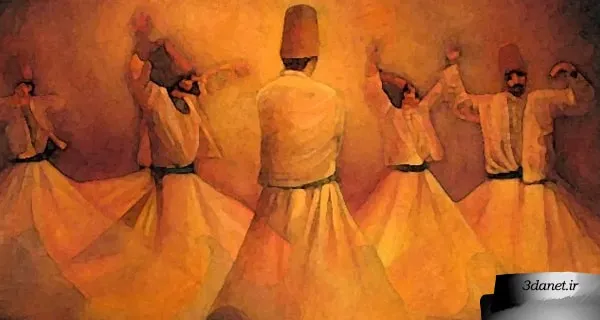
Mr. Reza Babaei and Mr. Mohammad Taqi Sobhani, in two separate texts, have put forward claims regarding the connection and relationship between three conceptual constructs, namely Sufism, religious intellectualism, and jurisprudence, which I will here, with some license, refer to as variables A, B, and C respectively.
The author's heart is pledged neither to religious intellectualism nor to Sufism; the present piece is merely a look at the analysis of the two aforementioned discourses to show that both of them, in the words of Hartmut Lange's novel, are simply "supporting nothing." Both suffer from a poverty of reasoning and researcher-tormenting generalizations; and of course, Mr. Sobhani's text is also tainted by motive-reading and Dear Uncle Napoleon-style revelations of behind-the-scenes goings-on.
Reza Babaei in the note "Jurisprudence, Sufism, and Religious Intellectualism"
In a poet-like piece, he proceeds to list numerous claims:
1) There is a connection between the two variables A and B.
2) The connection between these two is causal. A is the historical cause for the emergence of B. This causality is greater in the three dimensions of the definition of religious concepts, the nature of faith, and the purposes of religion than in other dimensions.
3) The geographical region of the signifier, with the empowerment of variable C (i.e., jurisprudence, juristic authority, and jurists) through sociological causes, has proceeded to suppress both variables A and B.
4) The cause of the suppression of variables A and B by variable C is the conflict between the exoteric and the esoteric, or form and inner character.
5) C does not realize that the conflict with the esoteric is, in truth, scratching at itself, a cause for turning away from religion, and an opportunity for the emergence of non-native forms, such as Eastern mysticisms.
Mohammad Taqi Sobhani in the note "Sufism and Religious Intellectualism; From Incompatibility to Convergence"
Some of his assertions are as follows:
1) In the region of the signifier, no activity has been carried out against A; rather, the growth of scholarly research on it has been aided.
2) Between variables A and B, two types of connection can be envisioned: descriptive and prescriptive(?).
3) Variables A and B have no historical, genealogical connection with each other:
3-1) Proponents of B accept such a claim,
3-2) Their vocabularies have no connection with each other.
3-3) The ideals and tools of both are completely different; A seeks the flourishing of the Divine realm, and B pursues the material world.
4) Only Abdolkarim Soroush is indebted to Sufism; and he himself denies this attribution.
5) In recent years, an instrumental causal connection has been established between A and B for the following reasons:
5-1) Variable B has found variable A to be the best tool for attacking C (bypassing Sharia, theology, revelatory sources, and the system of religious authority and clergy).
5-2) "Sharia-aversion, interpretivism, distrust of reason, introversion, and a penchant for ecstatic utterances were the best pretexts for religious intellectuals to attract the wandering, shelterless youth of the post-revolutionary era, and someone like Soroush employed all capacity and ability in this field to good effect"
5-3) "Another hook of intellectualism in the past two decades has been absolute tolerance and liberation from constraint and devotion, seasoned with hedonism, carefreeness, and judgments based on taste"
5-4) The existence of a spirit of Sharia-orientation and spirituality-orientation in the region of the signifier led to the emergence of B; but B "is a convenient excuse to draw this child from the bosom of jurisprudential customs, Sharia-based ethics, and traditional religious ceremonies, into the lap of gatherings of dhikr, drum, harp, and Sama, and to quench their thirsty souls with readings of Rumi and recitations of Hafez"
6-5. The instrumental use of variable B by A leads to the destruction of both. “Even if this project yields no other result, it is highly effective for separating the younger generation from under the banner of religion and jurisprudence and delivering them into the tempest of spirituality-stricken cults or disillusioned social and political groups.”
Critique:
1) In both discourses, there is no definition of the concepts and variables cited.
2) Neither religious intellectualism nor Sufism is a single, unified current. It is as if both believe in a Hegelian spirit that turns diverse phenomena into a single object, which can then be entirely beaten with a stick or driven away.
3) In addition to the necessity of defining the nature and delimiting the scope of the two variables above, we need definitions for these concepts: influence, the nature of this influence, the dimensions of this influence, the magnitude of the effect, the mechanism of influence, antinomianism, anti-Sharia sentiment, and so on.
4) Beyond defining concepts, we need to provide textual and extra-textual evidence (from historical to empirical) for this influence or lack thereof. Annemarie Schimmel has excellent discussions on this connection that could serve as a model.
5) A portion of Mr. Sobhani’s writing resembles judicial, or even security, statements in which the epistemic and moral legitimacy of one group is presupposed in advance, and it proceeds to demolish other groups; what’s more, by #motive-reading and attacking motives instead of ideas (and this, from some who not only lack the opportunity to defend themselves but are even deprived of the blessing of a homeland), and by drawing a line of nullification through an institution under the pretext of its distant, possible consequences (such as Satanism for Sufism). It is exactly like saying physics is epistemically and morally flawed because it produces godless Stephen Hawkings.
.
.
Can Critiques Be Put to the Test?
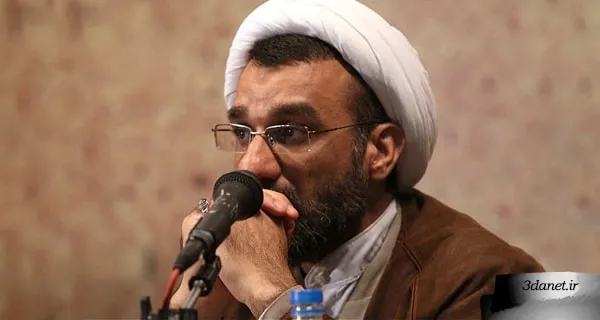
Author: Mohsen Zandi
.
.


Discussion0 comments
No comments yet; let yours be the first voice.