Philosophy
Characteristics of Borrowed Life from Heidegger's Perspective
Heidegger identifies three traits of inauthentic life: idle talk and the transmission of untested beliefs, curiosity and restless novelty-seeking without reflection, and the bewilderment that comes from lacking a personal standpoint. The human being is reduced to a mere transmitter and receiver, living on the basis of hearsay.
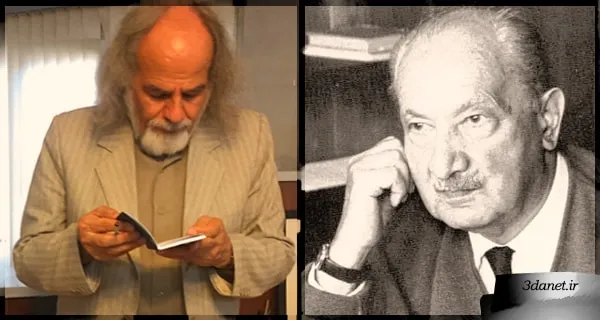
1_ First characteristic: We are afflicted with idle talk and chatter. What kind of speech is idle talk? It is speech in which the act of speaking itself is important, not the content of the speech. What does it mean when they say we engage in idle talk at social gatherings? It means it does not matter at all what we say; what matters is that we are saying something. In a sense, the act of speaking itself has become the subject, whereas it should be a means, and something should be conveyed through the act of speaking. In reality, we constantly take sentences, propositions, and beliefs from one group in our lives and pass them on to another group (the transmission of untested information from others to me and from me to others). In this way, idle talk has come to constitute the whole of my life and yours.
?In truth, we have heard things from fathers, mothers, educators, public opinion, radio, television, the press, and mass media; then we pass them on to others just as we heard them, without examining them beforehand to see whether these matters are true or false. It is as if we are merely and solely a device that is, on the one hand, a receiver of things you give me, and on the other hand, a transmitter of those same things to another, and I merely exist in this state of receiving and transmitting. He continues: In fact, we feel a particular pleasure in both receiving and transmitting, and it is this very pleasure that has caused our entire lives to fall into this state. (Now reflect: are you not like this?)
?From childhood until now, you have learned things from fathers, mothers, teachers, educators, and so on. Today and tomorrow, when you become a teacher, a father, a mother, etc., you will transmit those same things to your children, students, and pupils. Has it become clear in the meantime which of the things you received were true and which were false, or not? You simply received them and took pleasure, and then, without reflection or scrutiny, you give them to others and will take another pleasure.
2_ Second characteristic: From the stage of idle talk and chatter, we reach the stage of prying, curiosity-mongering, and meddling. Curiosity-mongering means that as soon as I hear something and it enters my mind—since there was no intention to test it—I immediately say, what else do you have? That is, even though I have not yet received the first matter and it has not entered my digestion and understanding, I still search for something new. From this perspective, all of us say, in word and deed: "What's new?" And there is no one to ask us, what have you done with the old things that you are looking for new ones? What artistry did the old things possess for you that you are now desirous of new ones again? So prying means being in love with novelty. For example, you have written a book, and by reading it, I transmit your beliefs to myself, without paying any attention to whether they are correct or not, but as soon as I meet you, I say: Sir, haven't you published a new book recently? There is no one to say: Well, of the previous books you read, which was true and which was false?!
?Therefore, the search for novelty is a characteristic of people who live a borrowed life; and it is by virtue of this very characteristic that we slide from this thinker to that thinker, from this school of thought to that school of thought; and we do not pause at all to consider whether this school of thought we have accepted until now is correct or incorrect.
?It is also from this perspective that if you ask me: "Does God exist or not?" I will say with the utmost pride and honor that there are nine opinions on this matter; that is, I do not know whether God exists or not, but I have heard nine opinions about it. Whereas the question was not about how many opinions exist, but rather you wanted to know whether there is a God in reality or not. Do you know why I answer this way? Because instead of settling the account of one of the opinions personally with myself when I heard it—to determine whether it is ultimately correct or incorrect—I immediately said: Never mind whether it is correct or incorrect, that was one opinion anyway; what is the second opinion? And so on, up to the ninth opinion, without any scrutiny or reflection upon them.
3_ The third characteristic: confusion and bewilderment, meaning I do not know what kind of world I am living in. For instance, I do not know whether the world is purposeful or purposeless; I do not know whether I live in a world with God or without God; I do not know whether war is better or peace; yet at the same time I know that there are many opinions about each of these questions and I can explain all of them to you. In reality, we are intellectually staggering. Why? Because we have never decided anything for ourselves and have merely been a vehicle for transmitting opinions. In other words, beliefs simply reach us and are transmitted from us to others, and because we have a lust for hearing and speaking, through the exercise of this lust we have sunk into bewilderment; that is, we have no defensible personal opinion.
?Let me give another example: I say to someone: So-and-so! I want to research such-and-such a topic. He says: Come on, let's go online. We go and see that there are 800 books, 9,000 articles, and thousands upon thousands of files. He says: Here you go, and he is proud that he has put me in the loop about these things. Whereas, amidst this heap of books, treatises, and articles, I did not want to see what writings exist on the question of "whether A is B or not?", rather I wanted to know "whether A is B or not?". In fact, instead of our speech being about realities, it is about the speeches that have been made about realities, and we have never transitioned from these speeches to the realities themselves.
?This intellectual staggering, which Heidegger interprets as dizziness, lostness, and bewilderment, arises for a person when, instead of dealing with realities themselves, they deal only with the beliefs of others about reality.
?Now, if you have been paying attention, you will see that these three stages exist in all domains of life, even in everyday life. For example, if I ask you: For what reason should one eat with a fork and knife? You say: Well, they have said you should eat this way. If I ask: For what reason should boys go to propose to girls? You say: Well, you know, that's what they say! Why should a person attend a funeral reception, or why should one go to see a corpse at all? Well, you just have to go! People enjoy celebrations and joy; do you enjoy them too? I don't enjoy them, but since it is ugly in people's eyes to say I don't enjoy celebrations, I live as if I take pleasure in celebrations and joy!
?Therefore, you yourself do not know why you should do such-and-such a thing, because nothing is clear to you and you are still in those three processes, and naturally you can easily be pulled from one side to the other; and since you have accepted what you have been told so far without reason, naturally tomorrow when they say something else, you will accept that without reason too, even if it contradicts the previous thing.
?Heidegger, continuing his discussion on this matter, says: One of the characteristics of borrowed people is that, since nothing is rooted in them, everything about them is based on conjecture and speculation. Here I am reminded of this Quranic verse which says: "إِنْ هُمْ اِلاَّ یخْرُصُونَ" [Al-An'am: 116] meaning they only conjecture; or elsewhere it says: "إِنْ هُمْ اِلاَّ یظُنُّونَ" [Al-Baqarah: 78], "إِنَّ الظَّنَّ لایغْنِی مِنَ الْحَقِّ شَیئاً" [Yunus: 36] meaning these are mere suppositions. (Supposition is that which does not well up from within you).
.
.
Characteristics of Borrowed Life from Heidegger's Perspective
Mostafa Malekian
Source: The Authentic Life and the Demand for Reason
.
.




Discussion2 comments
همه این خصوصیات که گفته شد ویژگی خود هایدگر هستش که هزاران صفحه نوشته بی محتوی بی معنی مهمل و بی سرو ته از خودش به جا گذاشته
معلومات بسیار مفید و موثر. تشکر از سایت شما.