Sociology
Childbearing: From Rights to Responsibilities, Amir Soltanzadeh
Procreation is a moral responsibility toward the rights of the child and society, not an instinct for immortality. Without financial or psychological means, bringing a child into the world turns birth into suffering for the child and a burden on society; a critique of pro-natalist traditions and the taboo of abortion.

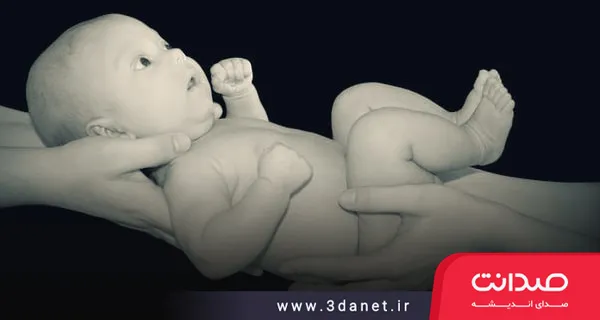
The desire for immortality is a human instinct. For this reason, humankind has long striven for greater longevity. There are many myths on this subject. But the truth that, to some extent, satisfies this feeling is having children. Most people, by instinct, wish to have children. This feeling is so powerful that few are not interested in having children. Many couples even pay exorbitant costs to be able to have a child. But the question that arises here concerns the rights of the newborn infant to life and family.
Every human being born into today's world has rights and needs that must be met. Every human, by virtue of being human, is entitled to security, education, provision of food and clothing, healthcare, and a calm and psychologically safe environment. These are moral prerequisites.
Now consider a family that lacks the financial means to meet the financial needs of a newborn child. Social crises and problems begin after this birth. You may have often read in the incident pages of various publications about the sale of children and orphaned children. In such a family, the child becomes a tool for resolving family disputes.
Apart from the economic issue, the psychological readiness of the parents for childbearing is very important. A father or mother who is not yet capable of accepting responsibility and has not prepared themselves to manage a new member—what view do they have of their child? Unwanted children usually suffer from many psychological afflictions. The parents' lack of attention to the manner of upbringing and stinginess in bestowing affection will create major psychological problems in the child's adolescence and the springtime of life.
Our society is in transition to modernity. Rationalism and thought have found their place in our society. But unfortunately, regarding issues of marriage and childbearing, traditions weigh heavily upon science and reason. Many couples decide to have children based on traditional analyses. Due to the lack of engagement with this subject and the absence of reasoned critique of tradition, the issue of abortion still remains a taboo for many families and young people. The initial solution for opening up space to express this problem is, first of all, to critique tradition on the subject of abortion. I hope this discussion paves the way for breaking the aforementioned taboo.
The family is the smallest unit of society. It is the place where personalities are formed, and if insufficiently nurtured, it will bring about future social problems.
Whenever the topic of abortion is raised, it brings with it many tensions. My intention here is not to judge various opinions, but rather to try to examine this phenomenon from an ethical perspective.
Questions that every human being can answer alone.
Is the birth of a child who will be deprived of the basic necessities of life ethical and humane? If a being who does not yet have the ability to make decisions, and about whose existence or non-existence we are deciding, is to live in poverty
and is to be born into these conditions, is it ethical? Who bears the responsibility for the social problems resulting from the birth of this child? Why should society pay the price for the mistake of a birth? Who will be accountable for the emotional frustrations that arise in the future for unwanted children and manifest in their personal lives?
Given the advancement of medical science and the rising age of marriage, isn't delaying the birth of a child a way to prevent this issue?
In many cases, abortion will be the only solution that frees a person and society from problems in the future. Given the defined human rights, when a human being lacks basic rights and material and spiritual needs from birth, why should we add a wound to society's wounds by bringing them into the world? Why, just as we recognize the right of couples to have a child, do we not recognize their right not to have one?
The effort to build a society composed of minimally flawed and healthy human beings is a duty of today’s and tomorrow’s fathers and mothers. But the materials and prerequisites for this society must be provided so that we can produce and supply a high-quality workforce to the community. Now, if a family does not currently see this ability and power within itself, or does not see it at all, it can, taking conditions into account, postpone this matter or negate it entirely. Many of the discriminations that arise within families, or the emotional imbalance between parents and children, stem from the inappropriate timing of the birth of some children.
The above subject can be examined from sociological, psychological, and religious perspectives. However, the ethical frameworks governing human life and the modern world are valuable and institution-building in this regard.
.
.
Amir Soltanzadeh | Childbearing: From Rights to Responsibilities | Personal Website | 20 November 2014
.
.



Discussion0 comments
No comments yet; let yours be the first voice.