Philosophy
Cognitive Science: A Continuing Revolution
Cognitive science is the product of the convergence of disciplines such as psychology and artificial intelligence in the effort to understand the mind. Through its computational theory, it views cognition as the processing of information on symbols, where mental operations are sensitive solely to syntactic properties.
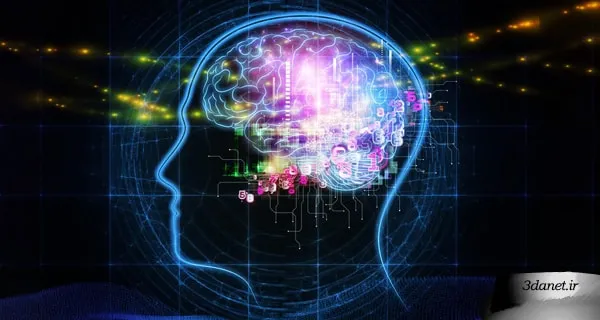
Undoubtedly one of the most significant developments in human knowledge in recent decades has been the emergence of an interdisciplinary field known as cognitive science. For a long time, researchers and thinkers in the fields of psychology, linguistics, philosophy of mind, neuroscience, and anthropology have separately and in parallel, each within their own discipline, studied, researched, and theorized about the nature and function of the mind. Their great, shared concern was understanding the workings of the human mind, and various study methods were developed in these fields that could complement one another for the study of the mind. Artificial intelligence can also be added to this set as a highly influential field, which, with its own methods, investigated intelligence, and whose goal was to create an intelligent entity possessing mental functions.
In the second half of the twentieth century, the aforementioned fields, due to their shared concern as well as specific approaches and developments that emerged within each of them, drew closer together and resolved to organize a joint effort for their common concern. The cognitive revolution occurred as a highly noteworthy event, and the result of the synergy of the named fields is what is referred to as the cognitive sciences, or, due to their unity, cognitive science.
Researchers in the field of cognitive science have focused on topics such as perception, memory, problem-solving, learning, language, reasoning, and other mental phenomena. A wide range of study methods, including behavioral experiments, brain imaging, conceptual analyses, computer modeling, and more, are employed in cognitive science.
To become more familiar with cognitive science, let us look at the computational theory of mind, which is the first theoretical model to emerge in cognitive science.
The Computational Theory of Mind
Representation:
A representation is a sign or symbol that stands for something. For example, "the word apple" is a representation of a type of fruit, and when someone hears the word apple, they bring a specific type of fruit to mind; thus, the word apple is a symbol and representation of a specific type of fruit. It should be noted that a representation is separate from its referent; therefore, the word apple, which appears in written form, is distinct from that specific type of fruit in the external world, and that word is the representative and representation of that specific fruit in our writing. Another example is "the picture of a house." The picture of a house is a symbol and representation of a real house in the world. Again, it should be noted that the picture of a house is distinct from the house itself in the external world and is merely its representative on paper.
Now we must distinguish between the syntactic properties and the semantic properties of a representation or symbol. Henceforth, because the word symbol is more encompassing than the word representation, I will only use the word symbol.
The syntactic properties of a symbol are properties that are identified solely by considering and examining that symbol. For example, when we consider only the word apple (which is the symbol of a specific type of fruit), we can say that this symbol is composed of three letters (A, P, L, E), its letters are connected, the length of this word in this text is one centimeter, and it is inscribed on a white background. Thus, all syntactic properties can be identified solely and exclusively by examining the symbol itself, without regard to anything else.
But symbols also have another type of property, which is classified under semantic properties. Semantic properties are related to the meaning of a symbol. For instance, the referent of a symbol is a semantic property of that symbol. For example, the referent of "apple" is a type of fruit in the external world, and the referent of "a picture of the Pyramids of Egypt" is the pyramids themselves in the country of Egypt. Unlike syntactic properties, semantic properties cannot be identified by examining the symbol itself. For example, no matter how much we examine the written word apple, we cannot see that type of fruit itself in the external world within that symbol.
Computation:
But in defining computation, it can be said that any operation performed on a symbol, and any manipulation the mind performs with a symbol, is called computation. An example of a type of computation can be shown as follows:
A is B.
B is C.
Therefore, A is C.
Different symbols can be substituted for "A," "B," and "C." For instance, if we substitute "Socrates" for "A," "human" for "B," and "mortal" for "C," the result of the computation becomes:
Socrates is mortal.
Another example of symbol manipulation, computation, and processing is when we rotate an image of an object, such as a teapot, in our mind to examine it from different angles. Of course, these were merely simple and imprecise examples to approximate the concept of computation for the reader. How exactly computation occurs in the mind is itself a very extensive discussion in cognitive science.
To clarify the information processing theory, one can consider the following points:
- Cognition is the result of a kind of computation or information processing, that is, computation performed on symbols.
- Computation or information processing is a goal-directed process. This means that the computations and processing the mind performs are aimed at providing an adaptive and appropriate response to environmental conditions. For example, the computations and processing the mind performs lead to decision-making in the situations we find ourselves in.
- The information processing process has a representational characteristic. During the information processing process, what is manipulated in our mind is not the components of the external world themselves, but symbols that represent and stand for the components of the external world. For example, when we rotate the image of a teapot in our mind, this process represents the potential rotation of the teapot in the external world. In other words, mental processing represents and stands for processes that could occur in the external world.
- Information processing processes can be described in a formal and algorithmic manner. A formal and algorithmic description is one that determines, step by step, what is done during mental computation and processing. The important point in formal processing is that this processing operates only on the syntactic features of the symbol and has no sensitivity to the semantic features of the symbol. For example, suppose the computation, according to the previously mentioned example, is as follows:
A is B.
B is C.
Therefore, A is C.
In this case, algorithmic and formal processing means that the processor is only sensitive to the syntactic features of the symbol we substitute for A, B, and C (for instance, that they are words) and is not at all sensitive to semantic features. For example, one could substitute "Kamran," "tree," and "pigeon" for "A," "B," and "C" respectively. Thus, the processing on the symbols turns out as follows:
Kamran is a tree.
The tree is a pigeon.
Therefore, Kamran is a pigeon.
So, algorithmic and formal processing does not consider the meaning and reference of the symbols. However, another point is that although formal processing does not consider the semantic features of the symbol, these processes are carried out in such a way that the semantic feature of the symbols is preserved; that is, if, according to the words we substitute for "A," "B," and "C" in "A is B" and "B is C," these two premises are true, then the conclusion, which is "A is C," is certainly true. For example, if we substitute "Socrates," "human," and "mortal" for "A," "B," and "C" respectively, since according to this substitution, the first two premises are true, the conclusion will also certainly be true, and the semantic features of the symbols are preserved, whereas in the previous example, the result was that Kamran is a pigeon, meaning that since the premises were not true, the result was that pigeon also referred to Kamran.
It is emphasized again that the theories proposed regarding the nature of representation and computation in cognitive science are not limited to the examples mentioned in this text. For instance, computation according to our example is synonymous with a "logical" process, but many other alternative theories have also been proposed about the form of computation.
As stated, the computational theory of mind or information processing is the first theoretical model that emerged in cognitive science, and extensive discussions have taken place about it to date.
What has been said so far was a preliminary discussion for the purpose of familiarization with cognitive science. The thematic and theoretical scope of cognitive science is certainly far broader than the picture presented by the present writing. It can be said that wherever intelligence, computation, processing, and cognition are involved in any way, cognitive science is present there. Undoubtedly, the theoretical and applied scope of cognitive science will expand more and more rapidly in the coming years, and regardless of any value judgment, the advancement of cognitive science in the not-too-distant future could affect almost all aspects of life, or even transform it completely. The interesting point is that the emergence of new perspectives and theories in cognitive science makes this field more attractive and heated every day. So it can be said that the cognitive revolution that occurred at the beginning of the formation of cognitive science continues in various forms, such as the entry of new topics and novel approaches into this field, and the increasing involvement and application of this field in various aspects of life. Cognitive science is a revolution whose fire blazes ever more fiercely each day.
For further familiarization with cognitive science, you can read the book "About Cognitive Science" published by Amirkabir Publications, written by Dr. Javad Hatami. Despite its small volume, this book will give the reader a broad yet deep view of the nature and the theoretical and applied scope of cognitive science. The first chapter of this book deals with the story of the birth of cognitive science and the roots and causes of the cognitive revolution. The second chapter examines the computational theory of mind and its implications in detail. The third chapter addresses the developments in the subsequent decades after the cognitive revolution in this field and discusses the various disciplines and study methods in cognitive science. The fourth chapter reviews new approaches in cognitive science. And the fifth chapter turns its attention to the impact of cognitive science on topics such as the concept of self, lifestyle, conceptual system, and the concept of the human being.
.
.
Cognitive Science: A Continuing Revolution
Author: Ahmad Lotfi
.
.




Discussion5 comments
این همه بافته تا آخر کتاب صاحبکار و استادش رو تبلیغ کنه؟! این همه کتاب معتبر، حالا چرا کتاب آقای حاتمی؟!
ممنون از سایت خوبتون که مطالبی در جهت افزایش آگاهی افراد قرار میدید.موفق باشید <a href="https://pooke.net/" rel="nofollow">پوکه معدنی<a / rel="nofollow">
بسیار عالی.موفق باشید
بسیار سطحی
احسنت