Philosophy
Summer School on the Philosophy of Cognitive Science, Iranian Institute of Philosophy
The Iranian Institute of Philosophy and Wisdom held its 'Philosophy of Cognitive Sciences' summer school with fifty participants and nine classes. Topics such as the primacy of consciousness, intentional content, and mental causation were discussed during the three-day course.
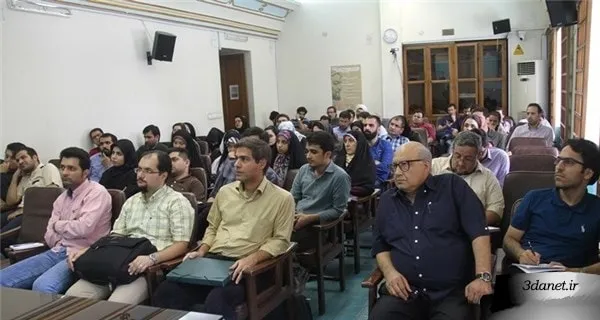
The Summer School on the “Philosophy of Cognitive Science,” which comprised 9 classes on various topics in the philosophy of cognitive science, was held from 18 to 20 August with three classes each day. Around 50 participants from various universities across the country—selected from among more than 150 applicants—attended the school. The first day of the Summer School on the Philosophy of Cognitive Science commenced with an opening ceremony and a formal welcome by Dr. Avani. While emphasizing the importance of the philosophy of cognitive science in the country, she announced the readiness and enthusiasm of the Institute for Wisdom and Philosophy to benefit from the participation of professors and researchers in this field.

Following this, Dr. Mehdi Homazadeh delivered the first class on the topic “The Primacy of Consciousness in the Challenge with Phenomenal Externalism and Neurobiological Internalism.” In this class, he first explained the definition of the term consciousness and the reason it is challenging in contemporary philosophy of mind, and then elaborated on the most important physicalist theories on this matter. The director of the Philosophy of Cognitive Science program at the Institute for Wisdom and Philosophy explained the three categories of theories on consciousness—“identity theory,” “functionalism,” and “representationalism”—and categorized and presented the objections raised against each. After explaining the criticisms leveled against each of these categories of theories—which were mostly problems found in the literature of the discussion and occasionally novel objections—Dr. Homazadeh concluded that phenomenal consciousness remains a serious and unexplained challenge.

Continuing the first day, the second class was held, presented by Dr. Keyvan Alasti on the topic “Intentional Content and Evolutionary Biology.” He first addressed the problem of intentionality and aboutness, explaining why it poses a challenge for physicalism. After explaining several categories of classical physicalist theories on intentionality (the causal theory, the indicator theory, the informational theory, etc.), he elaborated on the evolutionary theory. In the final part of the class, the faculty member of the National Center for Science and Technology Policy turned to one of the theories under the evolutionary perspectives on intentional content—proposed by Millikan—and explained the manner of denotation and aboutness of propositional states based on Millikan’s biosemantic theory.

The final presentation of the first day concerned the predictive coding perspective and its role in refuting the theory of empirical data, delivered by Dr. Farid Masrour. He first explained the standard view of sensory perceptions (with an emphasis on visual perception), which proceeds bottom-up from simple components (line and surface) to more complex components (shape and volume) and ultimately culminates in object recognition. The associate professor at the University of Wisconsin–Madison then elaborated on the new predictive coding perspective, which has a top-down structure, from object hypothesis to the recognition of simpler shapes and parts. By explaining the problem of matching the perceived object with the external object, he assessed the predictive coding perspective as having an advantage for a rationalist and realist solution to this issue, whereas the standard view lacks such an advantage. At the end, Dr. Masrour, pointing to the diverse disagreements that exist on this subject, discussed some of the problems and presuppositions of the predictive coding perspective, among which is the acceptance of a kind of innate mental framework for sensory perceptions, which is close to the framework of the Kantian view on this matter.

The second day of the summer school began with a presentation by Dr. Hossein Esteki. Invited to the school as a neuroscience specialist, he discussed the topic of "The Influence of Brain Structures on Conscious Functions." The full professor at Shahid Beheshti University of Medical Sciences first explained the neuronal structure of the brain and its functioning, and then demonstrated some of the types of experiments conducted to identify brain modules associated with cognitive functions. In the final part of the class, he explained certain neurocognitive experiments concerning the dissociation of conscious functions and the mind's unawareness of itself or some of its voluntary actions, with reference to the modularity of the brain. He also spoke of the possibility of creating laboratory conditions for the illusion of belonging to a body with another object, which challenges certain views in the philosophy of mind.

The second day continued with a class by Dr. Omid Karimzadeh on the topic of "The Richness or Thinness of Visual Perceptual Content." He first pointed to the existing disagreement in the philosophy of cognitive science regarding the content of visual perception, where some hold a thin view of visual perceptual content (without representation of the external object's nature), while others, in contrast, defend a rich content (including representation of the external object's nature) for visual perceptions. The faculty member at Shahid Beheshti University then elaborated on Siegel's argument, which establishes rich content for visual perceptions and rests on the phenomenological difference between perceiving the apparent features of an object (before grasping its nature and after grasping its nature). Defending this argument, he rejected the view of the thinness of visual perceptual content and, during the discussion, also pointed to some challenges arising from the thin view.

The final class of the second day was presented by Dr. Mehdi Zakeri on the topic of "Mental Causation and Neuroscientific Studies." At the beginning of the class, he explained the problem of mental causation and why it is challenging for dualist and neo-dualist views. He then described the classic physicalist objection to the inability of abstractist views to explain mind-body causal interaction, which is based on principles such as the "principle of the causal closure (and completeness) of the physical." The associate professor at the University of Tehran then divided the problem of mental causation into three aspects: mind-to-body, body-to-mind, and mind-to-mind, identifying the most challenging part as downward causation (mind-to-body) and explaining the physicalist arguments regarding it. At the end, he pointed to some neuroscientific studies that strengthen the problem of mental causation in favor of the physicalist view and applied the aforementioned arguments to this empirical framework.

The first class of the third day, on the topic of "Externalism about Intentional Content," was again presented by Dr. Keyvan Alasti. In this class, he explained the two divisions of externalism and internalism regarding intentional content and elaborated on the standard arguments in favor of each. In this context, the faculty member at the National Research Institute for Science Policy first described Putnam's Twin Earth argument concerning the meaning of natural kind terms, then presented Tyler Burge's argument about the meaning of linguistic terms, and explained the importance of these two in shaping the externalist or anti-individualist view of content. At the end, he addressed some objections raised by internalists and their arguments, who hold internalism not only about phenomenal content but even about the content of propositional attitudes, and respond to arguments like those of Putnam.

The second class of the final day was presented by Dr. Majid Davoody Beni on the topic of “Predictive Coding and the New Evil Demon Problem.” Drawing on an explication of two empirical views, “embodiment” and “predictive coding,” the faculty member of Amirkabir University explained new arguments against the problem of cognitive skepticism (with the famous evil demon hypothesis against the brain in a vat). He then showed that by relying on these two empirical views, a new response to the evil demon problem can be provided and the realism of perceptions and cognitions can be defended.

The final class was on “Machine Learning,” presented by Dr. Hadi Moradi. While explaining some disagreements about the definition of intelligence, he elaborated on theories that defend the intelligence of current robots and also referred to views that even consider opposition to robots to be unethical. The associate professor and head of the Artificial Intelligence group at the University of Tehran then, drawing on functionalist views about intelligence and consciousness, demonstrated some technical experiments showing the superior performance of robots in complex cognitive functions. He did, however, point to the challenges and ambiguities facing functionalist approaches by raising some arguments against this view—such as John Searle’s Chinese Room argument. The Summer School on the Philosophy of Cognitive Science ultimately concluded with the motivated and promising participation of students and researchers in philosophy and cognitive science.
.
.
Audio Recordings of the Lectures at this Event
- Opening Lecture by the Program Director of the Summer School on the Philosophy of Cognitive Science and the Deputy of Research and Graduate Studies of the Institute
Mehdi Homazadeh Abyaneh (PhD in Philosophy of Mind from the Institute for Cognitive Science Studies and Program Director of the Philosophy of Cognitive Science at the Iranian Institute of Philosophy) on the topic: “The Primacy of Consciousness in the Challenge with Phenomenal Externalism and Neurobiological Internalism”
⭐️ Keyvan Alasti (PhD in Philosophy from the Iranian Institute of Philosophy and faculty member at the National Research Institute for Science Policy) on the topic: “Intentional Content and Evolutionary Biology”
⭐️⭐️ Farid Masrour (PhD in Philosophy from the University of Arizona and faculty member at the University of Wisconsin–Madison, USA) on the topic: “Predictive Coding and the Myth of the Given”
⭐️⭐️⭐️ Hossein Esteki (PhD in Neurophysiology from the University of Texas, Full Professor at Shahid Beheshti University of Medical Sciences) on the topic: “The Influence of Brain Structures on Conscious Functions”
⭐️⭐️ Omid Karimzadeh (PhD in Analytic Philosophy from IPM and faculty member at Shahid Beheshti University) on the topic: “The Content of Visual Perception; Strong or Weak?”
⭐️⭐️ Mehdi Zakeri (PhD in Philosophy from the University of Tehran and faculty member at the University of Tehran) on: “Mental Causation and Neuroscientific Studies”
⭐️ Keyvan Alasti (Faculty member at the National Research Institute for Science Policy) on: “Externalism about Intentional Content”
Majid Davoodi Beni (PhD in Philosophy of Science from the Iranian Institute of Philosophy and faculty member at Amirkabir University of Technology) on: “Predictive Coding and the New Evil Demon Problem”
⭐️⭐️⭐️ Hadi Moradi (PhD in Artificial Intelligence from the University of Southern California and Head of the Machine Intelligence and Robotics Group at the University of Tehran) on: “Learning and Thinking by Machine”
.
.
Summer School on the “Philosophy of Cognitive Science,” Iranian Institute of Philosophy
Source: Iranian Institute of Philosophy
.
.





Discussion1 comments
سلام رشته من فلسفه تعلیم و تربیت است ولی بهنظرم در زمینه فلسفی کاری نمی شود کرد بلکه این مباحث به درد علوم تجربی می خورد. به نظر شما نظرم درسته؟ در صورت اشتباه در چه زیمنه ای یک فیلسوف می تواند کار کند؟ ممنون