Philosophy
Do Not Hold Speech So Cheap
A critique of Abdolhossein Khosropanah's book The Philosophy of Islamic Philosophy and an examination of its recognition as an innovation by the Board for the Support of Theory Chairs; the ambiguities of this government body and the book's definitions of Islamic philosophy and wisdom are analyzed.
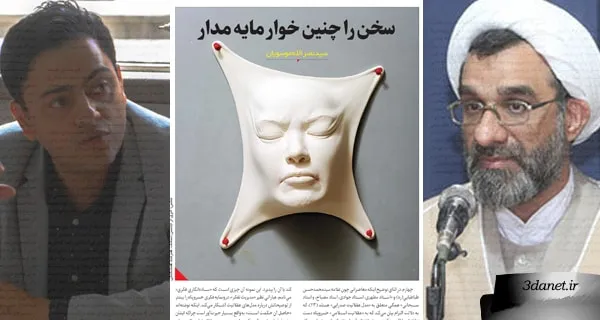
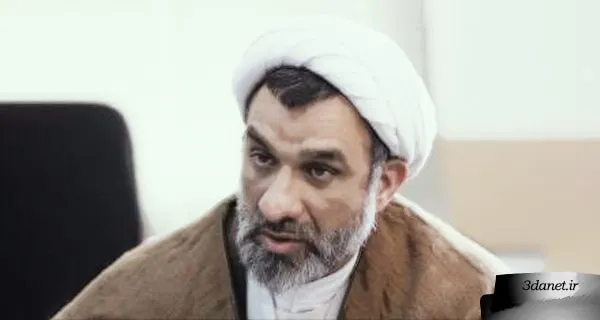
His Eminence Hujjat al-Islam wa-l-Muslimin Dr. (hereinafter, for brevity, I shall refrain from using his titles and first name), the current esteemed president of the Iranian Institute of Philosophy, has published many works. An assessment of these works could be beneficial. Here I will examine parts of his most important work, based on its priority in his list of works: “The specific theories and views of Professor Khosropanah are: 1. The theory of the philosophy of Islamic philosophy, which was accepted as an innovation by the Board for the Support of Theory‑Building Chairs” (http://khosropanah.ir/fa/about.html).
1. Ambiguities concerning the Board for the Support of Theory‑Building Chairs
Before beginning the critique, allow me to briefly mention a point: in my limited experience of teaching and research in Iran and abroad, apart from this instance, I have never seen a “governmental” “board” whose “members” are appointed not by the scholars of a discipline but through the mechanisms of appointing individuals to state positions, accept or declare a view as an “innovation” or a “theory.” Even if these individuals had been chosen by the relevant scholars, it would still, to my imperfect eye, be a strange thing for them to come and declare a view an innovation or a theory. Of course, they could accept or reject the correctness or truth of a view, but as for its “being a theory,” I do not know. My not having seen it may well be due to my own inexperience, but the disadvantages of this practice in our country are not one or two. I will mention two: first, it is possible that, God forbid, individuals who have temporarily obtained a position through feigned praise and flattery, or closeness to this or that official, and who are not at all people of knowledge, may find their way onto such a board. It is clear what corrupt consequences are conceivable from the presence of such individuals on such a board. Second, let us suppose the said board accepts or declares a view as a theory or innovation, but the scientific community or the scholars of that field not only do not accept that view as a theory or innovation, but pay no attention to it at all. Under such circumstances, not only is the respect of the board and of the person whose view has been declared a theory or innovation endangered, but confusion and disarray may also arise among students and seminarians. I am not saying that a task of this kind, however it is carried out, is entirely without benefit; but its current form is not without problems.
2. An outline of the philosophy of Islamic philosophy
First, let me try to give an outline of the book: The innovations and critiques presented in the book The Philosophy of Islamic Philosophy are described as follows: • Discovery of four models of philosophies of sciences and affairs with a historical or logical approach • Establishment of two models of philosophies of sciences and actual affairs with a historical and logical approach (the surveillance theory) • Establishment of the philosophy of Islamic philosophy • Analysis, evaluation, and critique of definitions of Islamic philosophy • A new definition of modern Islamic wisdom under the title "wisdom of the self" • Comparing the wisdom of the self with similar philosophical and scientific systems • Elucidation of key terms and systematization of philosophers' definitions (Khosropanah 1389, 15-16) My main reference is the book The Philosophy of Islamic Philosophy, (Abdolhossein Khosropanah, Publishing Organization of the Research Institute for Islamic Culture and Thought, 1389). (A considerable portion of this book has been published electronically on the website of the Supreme Council of the Cultural Revolution, on the page of the Board of Support for Theory-building, Critique, and Debate Chairs (http://korsi.farhangoelm.ir/Products/Other/Article/٢٠٩٩). Henceforth, I will only cite the book's page numbers.) The structure of the book is as follows: In the first part, Khosropanah explains the "discovery" of four "models" of "philosophies of." In the second part, he "establishes" two other "models" for these philosophies. In the third part, using these results, he undertakes the "establishment of the philosophy of Islamic philosophy" (95), as a philosophy of. Since I will not be examining this "philosophy of," it is not amiss to present Khosropanah's "definition" of "the philosophy of Islamic philosophy" here: The philosophy of Islamic philosophy is the meta-perspectival, a posteriori, second-order knowledge of Islamic wisdom and its various tendencies, approaches, and methods, with a historical-logical approach aimed at attaining the requisite philosophy. (95) I hope that by the end of this critique, you will have the patience to read this quotation again. I will try to speak a little about some of the components of this definition. The fourth and fifth parts of the book claim to explain "the nature of Greek philosophy" and "the nature of Islamic philosophy." The sixth part, titled "Modern Islamic Wisdom," initially presents "the author's chosen viewpoint" on "the essential attributes of philosophy" (292). For example: "In the author's view, the following axes can be considered the essential attributes of philosophy: 1. One of the essential attributes of philosophy is that philosophy must be considered the mother of all human sciences and provide the subject matter for other sciences, and in this respect, sciences never influence philosophy, although some sciences may pose problems for philosophy" (292). (This is a statement that considers it among the essential attributes of a science that it be "considered" the "mother of all sciences.") The author introduces four other "axes" as essential attributes of "philosophy" and then adds, "It is worth mentioning that these essential attributes have been obtained through a historical examination of rationalist philosophical schools, but perhaps further investigation could yield other essential attributes" (295). Regarding how his explanation "paves the way for defining philosophy," he writes: "If we consider the essential attributes of philosophy as gradational and possessing degrees, then a definition that possesses the essential attributes of philosophy in a more intense form can be considered more acceptable" (295). Continuing in this same sixth part, which is the longest part of the book, Khosropanah summarizes his view on "wisdom" as follows: Wisdom consists of true propositions that correspond to reality, if related to the domain of realities, and comprises correct propositions if it includes conventional concepts, and it also relates to correct action, and the totality of wisdom must encompass human felicity; therefore, even if wisdom expresses natural knowledge, it must somehow secure human felicity. (340) (I do not know what kind of things "true propositions" are, but that "wisdom" should "consist of" a set of propositions, i.e., "true propositions corresponding to reality," and not, for instance, knowledge of them, and that too a set of propositions with this generality, seems strange.) In any case, the author says, "Our chosen definition of Islamic wisdom was the accidents and properties of the concrete existence of the human being" (434). A considerable portion of the sixth part of the book is dedicated to comparing the wisdom of the self with other viewpoints: from "Iqbal's philosophy" (372) and "humanism" (376) and "existentialism" (380) to "Descartes' philosophy" (382) and "anthropology" (387). The two final parts of the book, namely "the seventh discourse" and "the eighth," examine the "domain of Islamic philosophy," in comparison with the domain of the wisdom of the self, and the "pathology of Islamic philosophy." In the continuation of this critique, I will only examine the first and second stages of Khosropanah's project, namely the "discovery" of "models" of the philosophy of and the development of these models through the "establishment" of two new models, which is the key to the other stages, and also a port
Meh Khosropanah, I will address these two stages.3. Beginning of the Book: Models of Rationality
«سخن نخست»، صفحات ۱۷-۳۰ کتاب، به معرفی پژوهش و آنچه خسروپناه «مدلهای عقلانیت حاکم بر جهان اسلام» میخواند، اختصاص دارد: «انگاره اولیه تحقیق... در اردیبهشت ۱۳۸۳...مطرح گردید» (ص ۱۹): نگارنده پس از دو سال پژوهش در سال ۱۳۸۵ شمسی با اینکه بهشدت از حکمت متعاله دفاع میکرد و آن را پایان فلسفه اسلامی میدانست به این نتیجه رسید که فلسفه اسلامی با همه قوتها و امتیازها در عرصه فلسفه هستی، فلسفه معرفت، فلسفه نفس و فلسفه دین، نسبت به علوم و نظامهای اسلامی تا حدودی فاقد کارآمدی است. و این فقدان، زاییده آسیبهای روشی و محتوایی و ساختاری فلسفه اسلامی است. (۲۰) اگر از آشفتگیای که در نحوه بیان ادعای فوق وجود دارد بگذریم، این ادعا هم هیجانانگیز است و هم نگرانکننده. هیجانانگیز است که بخوانی کسی که مدعی است سالها فلسفه اسلامی خوانده است و حکمت متعالیه را پایان فلسفه اسلامی میدانسته است پس از دو سال پژوهش به این نتیجه رسیده است که «روش»، «محتوا» و «ساختار» فلسفه اسلامی آسیب دیده است و این آسیبدیدگی منجر به ناکارآمدی آن شده است. نگرانکننده است، چراکه او این آسیب را به مشکل دیگری درباره «تولید علم» مربوط میکند و دو صفحه بعد مینویسد «بنده عامل و مانع اصلی تولید علم در کشور را مدل عقلانیت حاکم بر کشور میدانم» (۲۲) و در پایان این بخش راهحل را حاکمساختن «عقلانیت اسلامی» معرفی میکند (۲۶). اجازه بدهید این نگرانی را کمی توضیح بدهم. خسروپناه مینویسد «مهمترین مدلهای عقلانیت حاکم در جهان اسلام به لحاظ تاریخی عبارتاند از: عقلانیت حدیثی و اخباری یا نقلگرایانه ظاهرمآبانه، عقلانیت عقل و نقلگرا، عقلانیت اعتزالی، عقلانیت اشعری، عقلانیت سینوی و مشایی، عقلانیت صوفیانه، عقلانیت اشراقی و عقلانیت صدرایی». (۲۲-۲۳) او «عقلانیت اسلامی» خود را که «برگرفته از عقل بدیهی و استنتاجی و قرآن و سنت اهل بیت» (علیهمالسلام) (۲۶) است در کنار این «هشت مدل عقلانیت»، مدل نهمی میشمرد که راه نجات اسلام و کشور است و در ختم کلامش اضافه میکند که «به هر حال نگارنده تنها میخواست تذکاری به نویسندگان نقشه جامع علمی و توسعه کشور بدهد تا آشکار گردد که بدون تدوین عقلانیت اسلامی و بدون آسیبشناسی مدلهای دیگر عقلانیت نمیتوانند به توسعه علمی آگاهانه دست یابند» (۲۷). این میزان از بیپروایی قلمی، بیمبالاتی نظری، سادهانگاری فکری و خیالاندیشی واقعا موجب تأسف است. اول آنکه در سی صفحه ابتدایی کتاب، مؤلف حتی یک بار هم سعی نمیکند تا بگوید منظورش از «عقلانیت» چیست. اگر این مفهوم عقلانیتی که به کار میبرد، مفهومی مدرن است، دفتر اندر دفتر دربارهاش کتاب و مقاله نوشتهاند و جا داشت حداقل با یک ارجاع خشک و خالی خواننده را متوجه میکرد که از چه چیزی به عنوان «عقلانیت» یاد میکند (اینکه دائم مؤلف از «مدلهای عقلانیت» سخن میگوید در ذهن خواننده این احتمال را تقویت میکند که او با استفاده از مفهومی مدرن از عقلانیت سعی در طبقهبندی گونههای آن در جهان اسلام دارد) و اگر نه، یعنی او از هیچکدام از مفاهیم مدرن عقلانیت برای طبقهبندی اشکال «عقلانیت» در جهان اسلام استفاده نمیکند، جا داشت توضیح میداد این عقلانیتی که مد نظر اوست و هشت یا نه مدل مختلف دارد چگونه چیزی است. دوم، هر آنچه که این عقلانیت هست، این تقسیمبندی، مدلهای هشتگانه آن و نامهای آنها از کجا آمدهاند؟ مثلا «عقلانیت حدیثی و اخباری» چیست؟ نمایندگان آن چه کسانی هستند؟ آیا کسانی شبیه کلینی و شیخ صدوق (ره) ذیل اینگونه از عقلانیت طبقهبندی میشوند یا مذاهب کلامیای نظیر ظاهریه واجد چنین عقلانیتی هستند؟ چرا نام دیگر این «مدل عقلانیت» را «عقلانیت نقلگرایانه ظاهرمآبانه» میگذارد؟ آیا این نامگذاری مجدد دربردانده نوعی پیشداوری برای تخفیف یا رد این «مدل» است؟ وضع «مدل عقلانیت عقل و نقلگرا» کمی بهتر است: «برای نخستینبار توسط شیخ مفید ارائه گردید ولی نسل بعدی یعنی سید مرتضی و شیخ طوسی تنها آن را در عرصه عقاید و فقه و اخلاق بهکار گرفتند و متأسفانه همانند جابربن حیان و ابنهیثم در عرصه علوم جزئیه بهکار نگرفتند» (۲۴). این «متأسفانه» به چه معنی است من نمیدانم. آیا فقیهان ممتازی نظیر شیخ مفید، سید مرتضی و شیخ طوسی مثل بعضی از «دکتر»ها یا «حجهالاسلاموالمسلمین دکتر»های عصر ما میباید در همه عرصههای علمی قلمفرسایی میکردند و حالا که نکردهاند مایه تأسف است. یا اینکه تأسف از این است که چرا طبیعیدانهایی پیدا نشدند که بروند از کتب فقهی و امالی شیخ مفید «عقلانیتی» را که خسروپناه کشف کرده است کشف کنند و در شیمی و فیزیک بهکار گیرند (این خود به چه معنی است بماند).
These parts of the book are annoyingly concise and ambiguous. Third, Khosropanah nowhere explains why the “rationalities” he attributes to, or discovers in the works of, Sheikh Mufid, Seyyed Murtadha, Sheikh Tusi, Avicenna, Sheikh al-Ishraq, and Mulla Sadra (to say nothing of the Ahl al-Hadith, Akhbaris, Ash‘aris, and Mu‘tazilis) do not merit the description “Islamic,” yet his chosen “model” deserves the title “Islamic rationality.” This is an instance of what I call “literary recklessness.” Fourth, while explaining that contemporaries such as ‘Allamah Seyyed Muhammad Husayn Tabataba’i (ra) and “Professor Mutahhari, Professor Javadi, Professor Misbah, and Professor Subhani” all belong to the “Sadrian model of rationality” (23)—which implies by necessity that they have not attained Khosropanah’s “Islamic rationality,” or if they have, they have not employed it as they ought—he speaks of “allegorical rationality” and “allegorical and analogical rationality”: “But Mu‘tazili rationality before the translation era accepts allegorical rationality, and after the translation era, allegorical and analogical rationality” (23). It is as if Khosropanah adorns “rationality” with an ornament and ties it to something whenever he sees fit: once to jurisprudential schools, another time to theological schools, yet again to philosophical currents, and the next time to types of reasoning in Aristotelian logic, once to Sufism, and finally, for himself, to Islam itself. This is an instance of what I call “theoretical carelessness.” Fifth, and this is the last point I will make about these few irrelevant pages of the book. He writes, “I believe in an Islamic rationality derived from self-evident and inferential reason, and the Qur’an and the Sunnah of the Ahl al-Bayt, which brings about a particular management of thought, the result of which is wisdom” (26–27). It would have been good if Khosropanah had given some consideration to the hypothetical readers of his book as well. Someone might think to themselves that the “Qur’an and Sunnah” were also available to Sheikh Saduq, Sheikh Mufid, Seyyed Murtadha, Sheikh Tusi, Avicenna, Suhrawardi, and Mulla Sadra, and probably in a much better form than what is available to you (well, the hypothetical reader might well deny Khosropanah’s scholarly stations). Moreover, you have not explained to me, the reader, what this “self-evident and inferential reason” is, not even a summary explanation, and whatever it is, it is unlikely to have been attained by any human being to date except Khosropanah. So how can the reader evaluate or accept Khosropanah’s “Islamic rationality”? This is an instance of what I call “intellectual oversimplification.” Phrases such as “management of thought” reveal the intellectual core of Khosropanah’s thought more than his explanations of the models of rationality. That he has written “the result of which is wisdom” is truly astonishing, because a few lines below he says that “to attain Islamic rationality” one must do such and such and “at least engage in formulating six secondary philosophies…” (27). How do we know the result of something we still do not know exactly what it is and what must be done to realize it? He might say that “its result must be wisdom” or that it is our wish that it be so. Whatever the name for such “musts” or “hopes and wishes,” it is not a “theory,” and whatever the result of the “management of thought” may be, it is not “wisdom.” And this, too, is an instance of what I call “fantastical thinking.”4. “First Discourse: The Nature and Types of Second-Order Philosophy” (31-63)
The main subject of the first part is “The Discovery of Four Models of Secondary Philosophies” (31–63). That Khosropanah has no scruple about using words and phrases correctly becomes clear even by this point in the book. But how he employs words such as “discovery,” “establishment,” and “theory” must be sought in this chapter and the next. He writes:
“Philosophy with of, in the Oxford English Dictionary, is defined as the study of the general principles of some particular branch of knowledge, experience or activity incorrectly [an examination of] those general principles of any subject or phenomenon” (34). The above sentence is utterly confusing. Fortunately this time, and only this time, the original words of the “Westerners” appear in a footnote. If you read the English, you realize that a semicolon should have been placed after “activity,” and instead of “incorrectly,” something like “less properly” should have been used for the translation of “less properly.” These details, alongside Khosropanah’s method of appealing to the Oxford English Dictionary to discuss what he calls “secondary philosophies” (in a footnote: “philosophies of”; the quotation marks are also mine), are not even worth mentioning. But how does Khosropanah “discover” the “four models” of “secondary philosophies”?
In this manner:
The discovered types of secondary philosophies:
Given the preceding discussions and by drawing upon the sources and instances of secondary philosophy, each of the secondary philosophies of epistemic systems and realities can be examined with two approaches, historical and logical, and the secondary philosophies can be divided into four groups. These four groups are:
• Secondary philosophy of sciences with a logical approach;
• Secondary philosophy of sciences with a historical approach; [...]
• Secondary philosophy of realities with a logical approach
• Secondary philosophy of realities with a historical approach. (35)
Khosropanah says that “philosophy” in what he calls “secondary philosophies”—such as philosophy of physics, philosophy of mathematics, philosophy of language, and philosophy of mind—is equivocal and does not have a single definition or concept (41). Yet each of these “philosophies” is either “secondary” to a particular “science,” like physics or mathematics, or secondary to a particular reality, like language or mind. Later, as if he wishes to say that there are two basic (“basic” is my addition) approaches to examining these sciences or realities: first, the “descriptive-historical” approach, which he also calls “historical and descriptive,” “a posteriori,” or in the “realm of actualization,” and second, the “normative and logical” approach, which he also calls “a priori” or in the “realm of what ought to be.” In this way, Khosropanah “discovers” four types of secondary philosophy. That he has called such a thing a “discovery” is probably meant as a joke.
First, this is a classification with two different criteria, for the validity of which no argument or evidence whatsoever is presented. Classification is not discovery. By this analogy, someone might extemporaneously say that they have “discovered” two main types of jurisprudence: jurisprudence based on an a posteriori approach and jurisprudence based on an a priori approach. And so on in other cases.
Second, the meaning of annexation, the annexed, and the thing to which it is annexed is clear in some instances. For example, in Persian literature, annexation or dependence is a type of relation between two nouns or noun phrases that has specific types. Here, however, the meaning of this relation, if it is a relation at all, is unclear. Especially if “philosophy” in these various usages does not have a single definition or concept, what exactly is being annexed to the sciences or realities, and in what sense is it annexed? If no annexation, in the sense of something common among these instances, is at work, how should the nomenclature of “annexed” and “that to which it is annexed” be explained?
Third, part of what Khosropanah later says to explain his “discovery” is more obscure than the original matter. For instance, “philosophies of truths deal with the issues of their subject of annexation in an introspective manner” (40). Does, for example, “philosophy of mind” deal with the issues of “mind” “in an introspective manner”? This convoluted language makes the task difficult for critics and is unhelpful for students and seminarians.
Fourth, Khosropanah’s other explanations of his “discovery” not only do not help but seem misleading. For example:
Secondary philosophies with a historical approach, given that they aim to describe knowledge or reality, must employ the historical method, and this does not mean that secondary philosophy in this sense is the same as the history of sciences or realities; rather, it means that they answer the external questions of sciences or the internal questions of realities through the transmitted method and historical approach. (41)
In the philosophy of mathematics, are “the external questions of mathematics” or “the internal questions of mathematical realities” “answered” through the “transmitted method and historical approach”?
5. “Second Discourse: The Surveillance Theory” (65–92)
The subject of this part of the book is “The Surveillance Theory (The Establishment of a Historical-Logical Compound Philosophy)” (65). Khosropanah writes: “The surveillance theory is one of the innovations that can be a source of transformation in the sciences” (65). Let us pass over “the sciences” in this general form. In this section, Khosropanah aims to introduce and defend one of his “theories.” First, let us read Khosropanah’s explanation of “theory” and then his “argument” for it: A theory is an interconnected and interrelated set of concepts, definitions, presuppositions, variables, and a hypothesis about a specific subject and phenomenon that possesses the power of law-governed and methodical explanation of that subject. (71) Where this pseudo-definition originates from is not mentioned anywhere—neither before it, nor in a footnote, nor after it. Worse, Khosropanah does not explain its components either. For instance, what does he mean by “variable”? Why should a variable be part of a theory? Furthermore, by what reckoning have these components been arranged together? For example, why are “presuppositions” and “variables” part of a theory, but “assumptions” and “constants” (non-variables) are not? Much could be written about this explanation. Let me also present Khosropanah’s pseudo-argument for it: Various definitions have been offered regarding the nature of theory, or approach and method, or the historical and logical term, drawing on different foundations, and no scientific or literary academy has settled on a specific definition. The board supporting theorization chairs has also not arrived at a standard, shared definition of the nature of theory. Westerners, too, are confused about the nature of theory, paradigm, model, method, and dozens of other terms; for this reason, one must content oneself with a chosen definition (65). It is better that I say nothing about this paragraph! I will merely point out that it could be used as an example in introductory logic textbooks—how so, I leave to the readers. Khosropanah’s explanations of other words or phrases he uses are not much better. To give you a sense of his precision, it is not amiss to mention his explanation of this key phrase, “logical approach,” which constitutes one of the two fundamental pillars of his discovery: Logical approach: If the external and internal problems of a discipline are studied regardless of the historical identity of the science, and the questions of that discipline are answered in a prescriptive capacity and in a normative manner, we interpret this as a logical approach. For example: Islamic philosophy and physics, which discuss their rulings without attention to the history of existence or the history of the body (77). Here he speaks of “answering” “in a prescriptive capacity” and “in a normative manner.” Example: Islamic philosophy and physics. I do not know in what sense, in the philosophy of physics, we answer, or are supposed to answer, the questions of that discipline—that is, physics—“without attention to the history of the body,” “in a normative manner.” In fact, with this explanation by Khosropanah, it is not clear how he is using the word “normative.” I do not think I can adequately describe the inadequacy of such passages in the text.
6. What is “Foundational Compound Philosophy (Surveillance Theory)”?
So that my footing in the narrative of the "Surveillance Theory" might slip less, I will report this part of the second discourse in a separate issue and with greater use of quotations from Khosropanah. As in the previous chapter, Khosropanah, by juxtaposing two concise and ambiguous divisions, "attained" the "discovery" of "four models of superordinate philosophy," namely superordinate philosophy of science with an a posteriori approach, superordinate philosophy of science with an a priori approach, superordinate philosophy of reality with an a posteriori approach, and superordinate philosophy of reality with an a priori approach. (With apologies to all scholars for expressing these matters in this way) one can guess that by combining some of these approaches, for example a posteriori-a priori, what new superordinate philosophies could be constructed. This is the main idea of the "Surveillance Theory." If you do not believe it, read on: Superordinate philosophies can be divided into four models according to the aforementioned methodology. [...] Now, after these four models discovered from Western works, the question arises: can there be another superordinate philosophy? The author's answer is affirmative, meaning one can have a superordinate philosophy of sciences or realities that first answers their external or internal questions with a historical approach, and then, with a logical approach, engages in a pathology of their answers and theories, and subsequently arrives at the requisite theories and presents another paradigm and model of superordinate philosophy. The historical approach, like surveillance operations in war zones, provides the researcher with a macro-perspective on reality or science [...]. (83) Khosropanah emphasizes that he only "discovered" the four previous models; more precisely, he discovered "their being models," and he "established" these two new models: "In expressing those four models, the author only discovered their characteristics and their being four models, which has not been observed in this form in any Western or Islamic book." (85) The "establishment" of this "theory" appears so magnificent to Khosropanah that he describes it as follows: The Surveillance Theory should not be considered merely a classification of sciences; rather, it is the realized discovery of four models of superordinate philosophies that no researcher has achieved in this manner. Moreover, the classification of sciences is not a simple discussion, as great figures like Farabi, Ghazali, Khajeh Nasir al-Din Tusi, Ibn Khaldun, Ampère, and dozens of others have offered differing opinions on this subject. However, because the discussions of superordinate philosophy were not raised at that time, none of them arrived at a classification of superordinate philosophies. Thus, the author, by examining dozens of existing superordinate philosophies, arrived at these four models and then classified them. The foundational part of the theory, namely the two models of historical-logical superordinate philosophy, is also an important, fundamental, and robust matter that will play a significant role in meta-problematic transformation. (88) Whether Khosropanah's work was a classification of sciences or not, whether his "theory" is a "simple discussion" or not, and why no one but him has succeeded in the "discovery" and "establishment" of these "superordinate philosophies" might be worthy of discussion, but I do not know what the hapless name "Ampère" is doing in this context. Surely there was a wisdom to it, "important, fundamental, and robust."
7. Conclusion
Writing this brief piece on the first 93 pages of the book was very difficult for me. I have also looked over the rest of the book, but I cannot write anything about it. This book falls far short of the basic standards of scholarly research and writing. As an example, I would like to add one more point and conclude my remarks. The author pays no attention to what a "quotation" is for, where it is permissible, and where it is not. Example: he has presented two full pages from the Burhan of the Shifa in a footnote as a quotation (see p. 294) or has done the same with verses 10 to 21 of Surah An-Nisa (see p. 316). For a few other examples, see the footnotes on pages 173, 177, 178, 179, and 192. I will refrain from examining the precision of the "arguments," the correct use of "words," the cleverness of the "discoveries," the robustness of the "theories," and the logicality of the "divisions" in the remainder of the book. I wish the board supporting theory chairs had never published such discourse. Speech remains from you as a memento; do not hold speech so cheap.
.
.
Do Not Hold Speech So Cheap
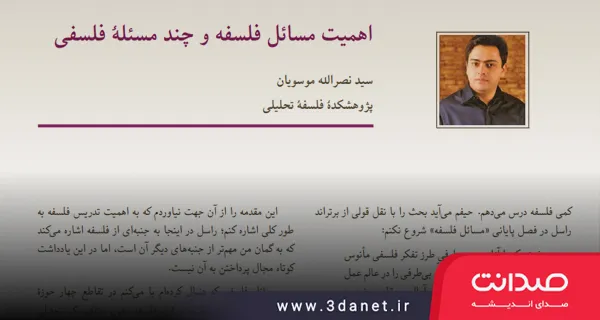
Author: Seyyed Nasrollah Mousavian
Source: Shargh Newspaper - 24 February 2018
.
.

Discussion7 comments
طلاب فاضل هم داریم چرا ان ها را رئیس انجمن حکمت نمی گذارند .باید جزو تیم و باندی باشی تا بتوانی غنایم را خوب تقسیم کنی .دانشگاهی و حوزوی هم ندارد .مرد خویشتندار و با وجدان ره به جایی نمی برد
نقدی آموزنده سپاس
هر چند این دست نظریه پردازی ها ماقبل نقداند اما کمترین ثمره کوشش دکتر موسویان آگاه شدن نوآموزان و شاید متنبه شدن این دست نظریه پردازان خواهد بود.
از این جهت این نقد بسیار آموزنده است...چرا که این کتاب لغو را کسی نوشته که تا چندی پیش طلبه بی ادعایی بود که به شاگردی آقای ملکیان افتخار می کرد(رجوع به درسگفتار های فلسفه غرب خسرو پناه)...از وقتی رییس بنیاد حکمت فلسفه شد شخصیتش عوض شد ..شروع کرد به نقد سروش و ملکیان و...فرعون شد...حالا هم فکر می کند نظریه پرداز بزرگ حکمت اسلامی است. در نقدی که از سروش دارد می گوید ...هر جا که کلام وحی با علوم جدید منافات دارد...بدیهی است که باید طرف کلام وحی را گرفت...یعنی آسمان هفت طبقه است و...شهاب ها تیر هایی هستند که به شیاطین که دارند اسطراق سمع می کنند شلیک شده اند را باید بپذیرید...و حتی دست به تاویل هم نزنید
بسم الله الرحمن الرحیم جناب مهیار عزیز اندکی به تاریخ مراجعه فرمایید تا برای جنابتان روشن شود که کتاب فلسفه فلسفه اسلامی و نیز نقدهای جناب آقای خسروپناه بر سروش و ملکیان پیش از ریاست ایشان بر مؤسسه پزوهشی حکمت و فلسفه ایران (نه بنیاد حکمت فلسفه) ایراد و منتشر شده است. موفق و حق طلب باشید
سلام علیکم مشخص نکردند به چه مطلبی نقد دارند و بیشتر دسته بندی را مطرح کردند
نقد دقیق و آموزنده است برای کسانی که در ایران به هر صورت نه بر مبنای محتوا و دغدغه بلکه کمی و کیلویی می خواهند کتاب و مقاله بنویسند و چون در ساختار قدرت هم دستی دارند به بهترین شیوه آثار خود را چاپ و قالب می کنند. در مقابل این روند جز تاسف کاری از دست آدم برنمی آید، یقینا انتقادهایی از قبیل نوشتار فوق را در حکم توهین به خود میدانند. چون آنچه در ذهنشان معنا ندارد همان نقد و تفکر انتقادی است.