Philosophy
We and the Philosophical Windmills
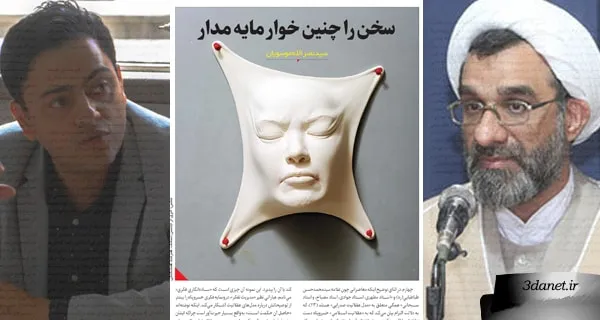
Instead of engaging with real challenges, Iranian philosophers tilt at windmills and remain absent from global conversations. A critique of an article by Abdolhossein Khosropanah exemplifies these fundamental misunderstandings of contemporary philosophy.
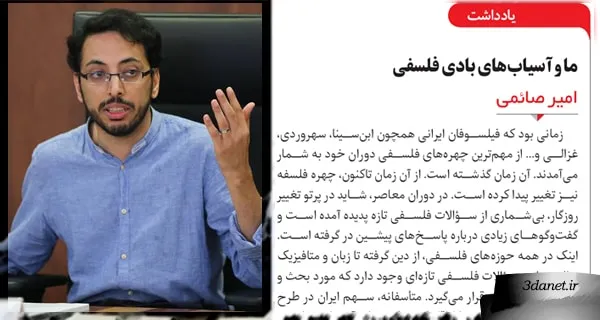
There was a time when Iranian philosophers such as Ibn Sina, Suhrawardi, Ghazali, and others were counted among the most important philosophical figures of their era. That time has passed. Since then, the face of philosophy has also changed. In the contemporary period, perhaps in light of changing times, countless new philosophical questions have emerged, and many discussions have taken place regarding previous answers. Now, in all areas of philosophy, from religion to language and metaphysics, there are new philosophical challenges and questions that are discussed and explored by philosophers. Unfortunately, Iran's contribution to proposing answers to these questions, or at least engaging in dialogue about them, is almost zero. Iranian philosophers are no longer considered important figures in the world. Some believe that Islamic philosophy is so rich and profound that the insights and ideas within it can shed new light on today's philosophical questions. Whether this belief is true or not, the fact is that despite spending much cost and capital, Iranian philosophers have not been able to benefit from their historical heritage in today's world of philosophy. One of the main reasons for our lack of success, I think, is that many Iranian philosophers, especially key figures in philosophical policymaking in the country, do not have a correct understanding of contemporary philosophy. Our understanding of contemporary philosophy and the challenges and questions within it is very meager, and in many cases, we only have a caricature of contemporary philosophy in mind. Inevitably, we turn contemporary philosophical theories into straw men and, instead of engaging with contemporary philosophy, we want to grapple with these self-made straw men. For instance, we are like Don Quixotes who, instead of real champions, attack windmills. Our difference from Don Quixote, of course, is that Don Quixote was alone (or at least only Sancho accompanied him) and believed he was ultimately defeated in battle. We, however, with many people and spending much capital, attack the windmills and, intoxicated, cry out in victory. Abdolhossein Khosropanah is the head of one of the most important philosophical centers in Iran, the Iranian Institute of Philosophy, and is a member of numerous councils that have a hand in policymaking for the humanities and philosophy in Iran. Khosropanah has numerous publications in various philosophical fields. For example, let us look at one of his articles titled "The Semantics of Religious Propositions" (published in the fall of 2012 in the scientific-research quarterly *Islamic Theology*). This article is supposed to be about the new challenges that have been raised in contemporary philosophy regarding the semantics of religious propositions. A look at this very article is strong evidence for the conclusion that the author has absolutely no knowledge of contemporary philosophy. He wants to answer the questions and challenges arising in contemporary philosophy without having properly understood those questions and challenges. The elementary mistakes in the basic issues of contemporary philosophy leave no choice but to conclude that the author of the article has mistaken windmills for contemporary philosophy. Let me point out a few of these mistakes:
At the beginning of the article on the semantics of religious propositions, Khosropanah presents a report on the “linguistic sciences” (without it being clear what purpose this report on the linguistic sciences is supposed to serve within the subject of the article, other than padding the word count). The linguistic sciences are divided into eight categories, among which are (1) “grammar” (2) “linguistics” (3) “philosophy of language” (4) “analytic philosophy or linguistic analysis” (pp. 11–12). Then, in explaining the philosophy of language, he writes:
“Third category) Philosophy of language: like other philosophies of, it deals with subject-matter studies, i.e., the general aspects of language, and reflects and investigates them through a rational method. Linguistics states the general rules of language obtained through empirical method, and the philosophy of linguistics deals with linguistics as a second-order discipline and answers questions such as: What is linguistics? What is its definition? What is its subject matter? What sciences is it related to?…” (p. 11) A basic familiarity with introductory books on the philosophy of language is enough to prevent one from thinking that the subject of the philosophy of language consists of questions such as what linguistics is and what sciences it is related to. The philosophy of language is not the philosophy of linguistics. The philosophy of linguistics (if this subject has indeed received serious attention from philosophers) is a topic within the philosophy of science, not the philosophy of language. Khosropanah continues:
“Fourth category) Analytic philosophy or linguistic analysis: Analytic philosophy or linguistic philosophy is one of the Western philosophies introduced by Wittgenstein and others in opposition to logical positivism” (p. 11)
Analytic philosophy is one of the most important parts of contemporary philosophy, which itself has numerous sub-branches such as the philosophy of language, metaphysics, the philosophy of mind, epistemology, and so on. Therefore, a basic familiarity with one of the most important parts of contemporary philosophy, namely analytic philosophy, is enough to prevent one from thinking that the philosophy of language and analytic philosophy are on the same level. The philosophy of language is a sub-branch of analytic philosophy. Furthermore, analytic philosophy is not linguistic analysis. Answering philosophical questions through linguistic analysis was a method employed by, among others, the logical positivists and Wittgenstein. Here, Khosropanah conflates a broad philosophical discipline with a specific theory. After this classification, Khosropanah turns to the view of logical positivism and writes:
“The result is that according to the view of the logical positivists, which was based on the principle of verifiability, not only most of the customary statements of philosophy, but all common propositions in metaphysics, ethics, theology, and religion are neither true nor false, but rather meaningless and contain no real content or cognitive meaning. The school of positivism was subjected to severe criticism and critiques by its own proponents, the later Wittgenstein, and Popper. Some of these critiques are as follows: a) Auguste Comte’s evolutionary, three-stage theory has no precise historical or scientific support, and with some tolerance, it should be attributed to a specific period in the history of the European social system, and generalizing it to the entire world is incorrect. Moreover, today in the philosophy of science, the dependence of science on philosophy and the influence of metaphysics on scientific theories is affirmed by philosophers of science.” (pp. 12)
Here, a homonymy has caused Khosropanah to mistakenly conflate logical positivism with Auguste Comte’s positivism. The former is relevant to the meaningfulness of religious propositions; the latter is not. The critique of Auguste Comte’s positivism has nothing to do with the verification theory and its application to religious propositions. Furthermore, the dependence of science on philosophy—a doctrine that is highly dubious—has been accepted by whom? Why should it matter to us that someone has accepted it, and what does it have to do with the critique of positivism anyway? The problems pointed out are merely a drop in the ocean. There is no point in trying to wade further into this ocean and point out Khosropanah’s numerous errors and inaccuracies. This task was, first of all, the duty of the scientific-research journal that accepted the article. Naturally, if the peer-review process had been properly conducted, such an article should not have been published in the journal, leaving us now to enumerate its mistakes. Why articles of this caliber so easily find their place in our scientific-research journals and become the basis for professors’ promotion and advancement is itself another tragic tale. It might be said that Khosropanah’s problem—namely, not knowing and not being precise about contemporary philosophy, yet speaking about it recklessly and simplistically—is not unique to him, and many other examples of this kind can be found in Iran’s philosophical community. Nevertheless, I believe Khosropanah stands at a considerable distance from others even in this respect. His naked philosophical ignorance and recklessness, which manifests in his prolific output and the raising of strange and bizarre cl
.
.
We and the Philosophical Windmills
Author: Amir Saemi
Source: Shargh Daily - 24 February 2018
.
.

Discussion3 comments
مطلب دکتر صایمی در آشکار کردن بی اطلاعی دکتر خسروپناه درباب فلسفه تحلیلی معاصر-که به قول ایشان چه بسا مشتی نمونه خروار باشد و سایر آثار و نوآوری های ایشان نیز از گذر چنین داوری های در مجلات علمی چاپ شده اند- و در عین حال ارتقا های که امثال دکتر خسروپناه در آموزش عالی چه به لحاظ مدیریتی چه مرتبه علمی می گیرند، بیانگر وضع اسف بار جامعه دانشگاهی ایران است-خصوصا در علوم انسانی، که عده ای با علم کردن علوم انسانی اسلامی درپی کسب مطامع و اغراض سیاسی و گروهی خود هستند-، که عده ای عمدتا به علت سرسپردگی به دستگاه و ملاک های سیاسی ارتقاء می یابند ولو به لحاظ علمی بضاعتی چندان در قیاس با بقیه نداشته باشند...
اگر بپذریریم که سخن شما (سید محمد باقر در کامنت بالا ) در مورد شیوه نقد ایشان درست است، پس ناچار باید بپذیریم که کلام شما هم فرقی با کلام ایشان ندارد. بیچاره علم.
سلام علیکم حقیر مطلب دکتر صائمی را مطالعه کردم.۹۰ ℅ توهین و تحقیر بود و ۱۰℅نقد دکتر صائمی بهتر بود بجای اینکه در سیاسی ترین مطبوعات نقد دکتر خسروپناه کند ،انتقادش را به مجله کلام می فرستاد و اگر دکتر صائمی به صدر تا ذیل فلسفه اسلامی ایراد و اشکال دارند مطرح کنند نه اینکه بگویند باید کنار گذاشته شود و به فلسفه های معاصر پرداخته شود. و دکتر صائمی بارها کرسی نظریه پردازی در موسسه اخلاق زیر نظر دکتر مجتبی مصباح در اختیارشان گذاشته شده است ولی با این مطلبشان در روزنامه شرق نشان دادند بین علم و عمل فاصله زیادی است