Philosophy
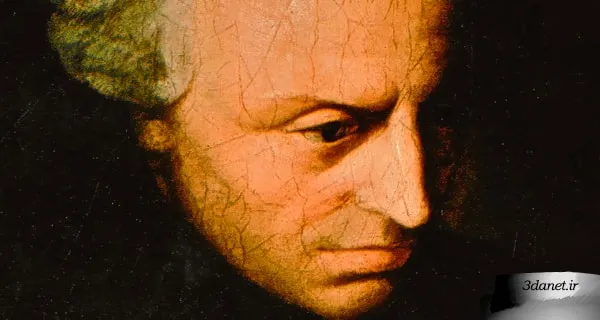
Enlightenment in Kant’s Thought and Its Connection to Moral Psychology [Be Your Own Judge]
Mostafa Malekian sees Kant's message as regret at being human and the root of dictatorship as the fear of the responsibility of freedom. Intellectual independence is not indifference to humanity's heritage, but choosing contradictory views according to one's own discernment.
![Enlightenment in Kant’s Thought and Its Connection to Moral Psychology [Be Your Own Judge]](/images/w800/jpg/posts/2016/08/244-min.webp)
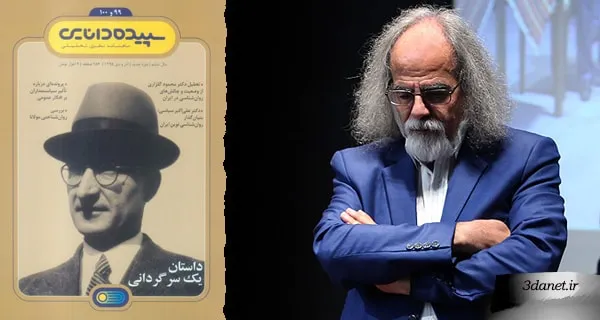
Salman Sameni: We sat down with Professor Mostafa Malekian for a conversation about ethics in Kant’s thought. In this conversation, freedom in Kant’s thought was also discussed, and Professor Malekian described the quintessence of Immanuel Kant’s message for modern humanity as follows: “If we look at the world from Kant’s perspective, most of us would regret our own humanity, and this is a very important message Kant has for humanity.” In this conversation, Malekian also spoke of human beings’ dissatisfaction with being born free, and attributed the reason for this dissatisfaction to their inability to exercise freedom, because human beings fear taking on the responsibility for all their own stances and decisions, great and small, major and minor, and it is this very fear, according to Professor Malekian, that leads a person down a path to find someone and place their own responsibility on that person’s shoulders. And thus, the ground is prepared for the acceptance of dictatorship in human societies. You can read the text of the conversation with Mostafa Malekian about Kant’s moral psychology below.
- Kant’s motto in the Enlightenment is that the individual should reach a stage where they do not need a guardian or another to think. Can the “other” fundamentally be eliminated from an individual’s thought?
In my opinion, Kant’s statement cannot, for two reasons, be concerned with a vacuum of thought or a disregard for what others have thought. The first reason is that thinking always takes place upon a series of raw materials. That is, you cannot have a chair and a table without having wood and tools; therefore, you cannot think without having raw materials, but mental raw materials, not external, objective raw materials. That is, the same work that wood does for a carpenter, raw materials do for the mind, and a thinker cannot think without raw materials. Raw materials are always obtained from what we hear or read from others. I must hear your words and read your writings and then reflect upon them. In fact, your words and writings become the raw materials upon which I must think.
This is one reason that you cannot think and reflect in a vacuum and complete disconnection where the presence of the other is absent, but there is also a second aspect without which you cannot think. Just as being an independent or self-thinker is a virtue, and if it is an intellectual virtue, then lack of independence, dogmatism, and imitation of others is an intellectual vice, yet at the same time, if I pay absolutely no attention to the beliefs of others, that is also intellectual conceit. It is intellectual narcissism and self-infatuation. Therefore, at one end of this intellectual spectrum are susceptibility to imitation, dogmatism, eclecticism, conformity to public opinion, and following the intellectual fashions of the time. All of these are at one end of the spectrum of intellectual vices.
But at the other end of the spectrum, there are also a series of intellectual vices such as self-infatuation and intellectual conceit. If Kant points out this end of the spectrum—that you should not be susceptible to indoctrination and dogmatism, follow public opinion or the fashions of the time, and so on, all of which is indeed correct—from the other side, Kant certainly does not invite us to have intellectual self-infatuation and to consider ourselves the center of the universe in the realm of thought. If this is so, that this self-infatuation is as reprehensible as dogmatism and imitation, the requirement for me not to be self-infatuated is that there exists the possibility that others may have more knowledge than I do, or more experiences than I do, or a greater power of understanding than I do. Only a full-fledged narcissist could possibly think that there is no knowledge except what I myself possess. There is no understanding that others have except that I myself also have it.
If I am not to be self-infatuated, I must strongly allow for the probability that others have knowledge that I do not have, and have mental experiences that I do not have. So, in this second sense too, one cannot think completely detached and disconnected from others, because if this were the case, we would have fallen into the trap of intellectual self-infatuation. It is as if I consider myself the possessor of knowledge, power of thought, or mental experience that no one else is capable of. This, too, in my opinion, is certainly not what Kant means to say. What Kant is actually saying is that just as one should not be susceptible to suggestion, dogmatism, or imitation, on the other hand, one should not act as if one knows of no other knowledge besides one’s own. As if there is no understanding, power of thought, or mental experience anywhere else. So, what is the synthesis of these two?
- Then why doesn’t Kant mention this second meaning?
I submit. The sum of these two is that, regarding whatever I think about, I must be informed of everything others have said or written on this subject or issue; after all, all the mental experiences, intellectual powers, and understandings that are not in me—everyone knows everything. Therefore, I must be informed of all of these, but the whole problem is that when I become informed of all of these, I see that they are not compatible with one another. All the thinkers of the world who have reflected on a single subject have not arrived at a single understanding. Rather, they have reached contradictory and conflicting results, and results that are in some way or another incompatible with one another.
Now that others, with all their power of understanding and abundant mental experiences, have reached incompatible results on the subject of my interest, which of these contradictory results should I accept? One has said A is B, another has said no A is B, another has said some A are not B, another has said every A is B. Well, these are contradictory and incompatible results with one another. It is here, in my opinion, that Kant asks us, amidst all these mutually incompatible opinions, to choose one option based solely on our own understanding and discernment, and only based on our own understanding and discernment. Therefore, its meaning is not that I become utterly indifferent to the entire cultural heritage of humanity and pay no attention to everything humanity has achieved in terms of the power of thought and experience. No, I must pay attention to all of these, otherwise I am narcissistic and guilty of arrogance and haughtiness.
But the problem is that when I think about a subject and when I look at the heritage humanity has bequeathed, I see that this heritage has God knows how many incompatibilities. Now, whether the incompatibility is of the contradictory type or the contrary type, it is incompatibility nonetheless. Now, what position should I adopt regarding the issue? It is here that I act solely based on my own understanding and discernment. I say, in the face of the eight solutions given to resolve this issue and problem, the eight positions adopted towards this subject, I choose the path that the totality of my thinking faculties presents as more correct, rightful, and sound. If we were to say that Kant said we should pay absolutely no attention to the heritage of others, the implication of this statement would be, as the Westerners say, to reinvent the wheel.
- Professor, there is a theme in Georg Hamann's article addressed to Kant that you (Kant) do not want the guardian and the other to be eliminated, but rather you want to sit in the place of that other yourself and gain a profession and respect. Is this correct in your view?
In one interpretation, it is correct because...
- Because our mind always and involuntarily moves towards such an authority? Now, whether this authority is a priest or a critic of the priest?
Exactly so. The same escape from freedom that Erich Fromm discusses in social matters generally and political matters particularly; that is, he says we have an escape from freedom and we desire to cast all our responsibility onto someone else's shoulders and become his agent, and then be able to say, "The agent is excused." We are agents and we are excused. And for this very reason, according to Fromm, tyrannies and dictatorships come into being. I want to say that this very same point can be repeated regarding our discussion.
- If possible, could you elaborate a bit on Erich Fromm's discussion?
Erich Fromm’s argument in the book Escape from Freedom is that the main reason for the emergence of dictatorships and despotisms, for instance in the political sphere, or the emergence of authorities, is that although man, as Rousseau said, is born free, he is not particularly pleased that he is born free. The very phrase stated in the Universal Declaration of Human Rights, which is in fact influenced by Rousseau. It is true that we are born free—that is, if we want to describe human beings descriptively, we must say that humans are born free—but if we look at it normatively, it is not the case that we are all pleased that we are born free; the vast majority of us are displeased that we are born free. Why are we displeased? Because we intuitively find that if I am to fully embrace my freedom—and embracing freedom also means exercising freedom—if I want to fully embrace my freedom, do you know what the result is? The result is that, great and small, large and little, minute and immense, whatever emanates from me, its responsibility rests upon my own shoulders.
- And this is terrifying.
Yes, this is terrifying. I am terrified of shouldering the responsibility, great and small, minute and immense, large and little, minor and major, for all my actions and stances, and this is terrifying. And because he is terrified, he seeks a way to remove the burden of responsibility from his own shoulders as much as possible and cast it onto another’s. It is at this point that a person finds someone, relinquishes his own freedom, and as if bestows his freedom upon him, saying, “This share and coupon of freedom that was given to me, I give this to you as well. But in return, I also cast the responsibility onto his shoulders.” In his analysis within his social psychology, Erich Fromm says that “if this escape from freedom did not exist within us, dictators would not emerge.” After all, if this were not the case, how would dictatorships come into being? Can just anyone in this world come and ride on the backs of you and me? No, they cannot, unless we ourselves are also prepared to give them a ride, and in Erich Fromm’s social psychology, this readiness truly exists within us.
“The readiness exists” does not mean that we were displeased with freedom itself at first glance—no, we are pleased—but it brings total and complete responsibility in its wake, and because we do not like this responsibility, we say we do not like the mother who gives birth to this child either. In reality, we do not like this total and complete responsibility, and we ask, who was the mother of this total and complete responsibility? Freedom. So we do not like freedom either. We bestow freedom upon another so that we may cast the responsibility onto another’s shoulders. It is then, at this very point, that I have the psychological readiness to create a dictator. That is, I have cast freedom onto another’s shoulders and said, in return, you take on the responsibility as well.
I become your agent, so that I can say to myself and others, “The agent is excused.” I have received orders from another party. What can I do? The agent is excused. Erich Fromm expresses this point regarding social matters in general and political matters in particular. But I say this exists in intellectual matters as well, precisely. That is, we like to have an intellectual authority. Now, for one person, their intellectual authority is a cleric. For another, their intellectual authority is a university professor. For another, their intellectual authority is a mystic; for another, their intellectual authority is a philosopher; for another, their intellectual authority is a scholar of the empirical sciences.
- So you mean to say that this reliance on another is not only a psychological issue, but we even want to do the same thing in the domain of knowledge?
Precisely—I mean to say that this is the case not only in the domain of our volition but even in the domain of our knowledge and belief. There too we like someone to be a belief‑production machine for us. Now, “O lovers, behold who your beloved is!” One person sees this machine manifested in a cleric and wants it to be manifested and embodied in him; another in a philosopher; another in a mystic; another in an empirical scientist; another in an artist or a man of letters. That is, they differ in terms of instance, but they do not differ in terms of nature and essence. Its nature and essence is that we like another to think in our place. Now Kant wants to take this away from us. He does not want to say that you have no need of others at all. The whole discussion turns on this: let others speak their word, but let yourself be the judge of the word of others. Not that I have no need of others—and Kant’s own life, of course, confirms this. Kant himself does not want to say that I existed in a vacuum or was not influenced by any philosopher.
- He even says the opposite.
Yes, I allow others to speak, but I do not allow others to be the judge of their own word. I set myself up as the judge of the word of others. We must therefore avoid the excess of this side and the excess of that side. The excess of this side is to say that we have made a decision—decision, in Arabic, means to make oneself deaf. Aṣamm in Arabic means deaf. Taṣmīm means to make oneself deaf. We make ourselves deaf and do not allow any word from another to reach our eardrum. This means you want to reinvent all the carts from scratch. That is not right. Take the cart of others, then, to the extent of your ability, remedy any defect or shortcoming it has. Then entrust this cart to the next generation in the same way. Subsequent generations will do the same so that this cart becomes ever more flawless. Kant himself did exactly this. That is, he took what others had said. But the excess on the other side is that others speak and also determine the validity of their own word themselves—in which case everyone considers their own word valid and true. The middle way is that I hear the word of others but derive the criterion of its validity from myself. This is the meaning of Kant’s saying. Then its meaning is that I want the adjudication of the opinions of others to come from myself. I believe this is Kant’s message.
- But if we look at the other side of the matter, there are some people who accept this responsibility. That is, they have no fear of being the support of others. It seems this discussion has two angles. That is, on the one hand, what they do is a great deed because they have accepted the responsibility of others, and on the other hand, is this deed akin to a crime?
Your point is that this deed has a positive aspect and a negative aspect—that is, one positive side and one negative side. But if I were to observe it from Kant’s angle, it has no positive aspect at all. Because Kant believes our humanity consists of two things: our rationality and our freedom. To the extent that I turn down the wick of my own rationality and freedom, I have turned down the wick of my own humanity; and to the extent that I turn up the wick of my rationality and freedom, I have made my humanity blaze more brightly. So, in Kant’s view, if someone does this, they have taken both your rationality and your freedom. So this has no positive side whatsoever. But…
- But is it even possible to escape this issue?
Your question should have been phrased this way: if my humanity lies in my rationality and my freedom, why do we consent to hand these two over to another for free? The answer is this. As I indicated, at first glance this rationality and freedom are indeed the most valuable things we can possess, but upon a more reflective glance they are at the same time the most terrifying things we can possess. There are rare individuals who say, “Because these two are so noble, I accept them, even if they bring me terrifying and dreadful consequences.” Because if I have rationality, then I must think for myself, and if I have freedom, I must take responsibility for every matter. Both thinking for oneself and accepting responsibility are two things that, in the view of many people, are corrupt. Then, because the consequence is corrupt, they abandon rationality and freedom.
I believe the greatest statement that should be regarded as Kant's message, and Kant's noblest message for us, is that we must not relinquish these two—rationality and freedom—at any price, and of course, we must also accept their consequences. My view is that this is a very important message, but because we fear its outcomes and effects, we lose those two gems as well. Because preserving these two gems has a cost, and we do not want to pay those costs. To put it another way, there may be beings in the world who are not human and say, 'If only we were human.' But there may be beings in the world who envy being human. Yet we humans are all human, and the majority of us regret it and say, 'If only we were not human.' The rare Kantian minority are those who, despite the costs it entails, do not regret their humanity.
Therefore, there may be beings who envy being human, and the majority of us also envy, wishing we were not human. Yes, we may not say it with our spoken tongue, but the unspoken language of our lives demonstrates this. One who sells their rationality for imitation, blind obedience, conformity to public opinion, and the intellectual fashions of the time, it is as if they regret their rationality. And one who sells their freedom to an authority and says, 'This freedom is yours, and in return, you bear its responsibility,' it is as if they regret their freedom. So, if we look at the world from Kant's perspective, most of us regret our humanity. We have come to regret turning into gold / Have mercy, turn us back into copper. It is as if an elixir was applied to the copper of our existence and it turned to gold, and now we regret it and say, 'Return us to that copper.' I think this is Kant's very important message to humanity.
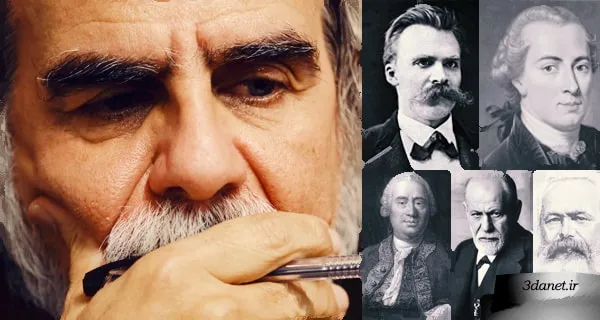
- Don't you feel that the foundation of Western thought after the Renaissance and during the Enlightenment took on a confessional character? Western philosophy and literature to some extent confirm this. It is, in a way, a questioning of what has been inherited as knowledge until now. Descartes' path begins with a question: Why has everything I have read so far brought me no certainty? The path of Hume's philosophy is a confessional path regarding the state of human knowledge. Kant stands at the peak of these confessions, even speaking of the limits and boundaries of knowledge. Rousseau's literature is titled Confessions. Dostoevsky's writings closely border on confessions. What is this confession, fundamentally? And when does it come to a person?
If you will allow, let us make a conventional distinction between confession [e'teraf] and admission [eqrar]. Lexically, they might mean the same thing, but I want to draw a conventional distinction between confession and admission to later show how accurate your statement and inference are. Let us call something an admission when I have made a moral or calculative error, and another has noticed this error and rubs my nose in it, and despite my reluctance to accept that I have committed this error, I accept it. Let us call this admission; that is, what happens in legal courts and tribunals. Meaning someone has committed a moral or calculative error, and another has noticed it—not that they went and confessed it themselves; another pointed it out, and despite not wanting to accept it, they do. Let us call this admission.
And then let us distinguish this from what is called confession and confessions, with the distinction being that in admission, there is a moral or calculative error, but in confession, there may be no error at all. Secondly, in admission, another has noticed, and I, despite not wanting to, accept it. But in confession, without anyone having found out, I myself, initially and spontaneously, report on my own condition. I say the confession we observe in the modern era is of this second type. That is, firstly, it is not necessarily limited to moral and calculative errors; it may include these, but we also confess to other things that are not considered moral or calculative errors. Furthermore, it is not necessary that someone has caught me out; I initially and spontaneously state that our condition is such and such.
- Meaning I analyze myself.
I examine myself. Well, this confession in the new sense requires distancing oneself from oneself. It requires that a person step back from themselves in order to see themselves. That is, if we want to have an objective view of ourselves—the subjective view we always have—we must be able to distance ourselves from ourselves, and I will now explain what I mean by distancing. It means being able to attain an objective view of ourselves, that is, to acquire the same kind of knowledge about ourselves that we acquire about others. Why is our knowledge of others objective? Because it is at a distance. When we can achieve the same distance from ourselves that we have from others, our knowledge becomes objective.
What does this distancing mean? A person cannot physically distance themselves from themselves. Distancing is, in one sense, doctrinal-epistemic; in another, emotional, affective, sentimental; and in yet another, volitional. One is that we hold certain beliefs about ourselves. We must set these aside. Set aside the beliefs we hold about ourselves and look at ourselves. Second, we also have particular feelings, affections, and emotions toward ourselves—for instance, we love ourselves, or we feel regret, remorse, or sorrow about the past. Well, these are three types of emotion; regret, remorse, sorrow are considered three feelings, affections, and emotions in psychology. We must be able to distance ourselves from these feelings and affections we have toward ourselves. We might also harbor narcissism toward ourselves; we must be able to achieve volitional distance.
- What exactly does this last sentence mean?
It means that someone might make the first confession and say that we are limited in power and knowledge, but we can overcome this limitation by connecting to another being—whatever name that being might have—we can remove this limitation. Like saying I am a drop and I can join myself to the sea, and through the sea my limitation disappears. If we confess that, while we have these limitations in knowledge and power, there is also nothing through connection to which this limitation can be turned into expanse, that is also a confession we make. But there is another limitation that we also confess, and that is that while our reason has judgments about which we have no doubt, we cannot live according to the dictates of these judgments. This, too, is a confession.
Consider what Hume said. Hume said: Induction has absolutely no rational authority, yet none of us humans can live for ten minutes without the capacity for induction. On the other hand, he said that causality, in the sense meant by philosophers before him, has absolutely no validity; we have no rational argument that the world is a world of cause and effect. Yet we cannot conduct our lives without a world of cause and effect. Furthermore, the world is not substance and accident as the ancient philosophers claimed, or at least we have no rational proof that the world's system is a system of substance and accident, yet we cannot manage and administer our lives without regarding the world as substance and accident.
This is also a kind of confession that we humans must be aware of: that while we have rational judgments, we seem unable to live according to the dictates of rational judgments. This is also a tragic aspect of life: my reason tells me induction is not valid, but I cannot conduct my life without induction. My reason tells me the order of the universe is not necessarily causal or substantial-accidental, but I cannot conduct my life without them. These are all confessions. Nor is it a confession of moral or calculative error. That is, a person looks at themselves and understands what existential predicaments they have, and we articulate these predicaments.
.
.
PDF file of the conversation "Be Your Own Judge"
.
.
A Conversation between Salman Samani and Mostafa Malekian Entitled Be Your Own Judge
Mehrnameh, Issue 9, March 2011
.
.



Discussion0 comments
No comments yet; let yours be the first voice.