Philosophy
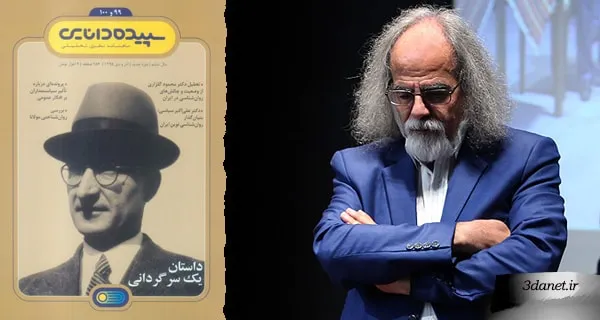
The Moral Psychology of Rumi: An Essay by Mostafa Malekian
The central problem in moral psychology is the gap between moral knowledge and moral action. Drawing on Rumi's works, Mostafa Malekian explains that, in his view, only love can bridge this divide and compel a person to live ethically.
Moral psychology is a branch of psychology that deals with what goes on in the psyche of a moral human being. The most important topics discussed in moral psychology include:
The discussion of the matters that are at play within the minds of individuals who deal with the phenomenon of morality, living morally, and being moral, and which drive them toward being less moral or more moral.
The discussion of those psychological needs that have caused human beings to establish an institution called morality. The discussion of those psychological needs that cause human beings to turn toward morality or turn away from it.
The discussion of the psychological effects and consequences of living morally. That is, what positive or possibly negative effects and consequences do individuals who live morally experience and feel within themselves as a result of this moral living?
The discussion of the psychological criteria and standards of ethical systems, and ultimately, the examination of whether one ethical system can be preferred over another based on a set of psychological criteria or not.
The analysis of the psychological presuppositions of morality. Morality has psychological presuppositions. For example, one of the psychological presuppositions of morality is that human beings are free and not compelled, because if human beings were compelled, then speaking of morality would be meaningless, and psychologists must study the correctness or incorrectness of this presupposition.
The discussion of the psychological strategies for living morally. That is, if we understand the correct meaning of living morally, how can we ourselves become moral livers and make others into moral livers as well? In other words, how can we transform ourselves or another from an immoral human being into a moral human being? Or how can a less moral human being be made into a more moral human being?
The Most Important Issue in Moral Psychology: The Gap Between Moral Knowledge and Moral Action
Among the topics of moral psychology, one of the most important discussions, and in my opinion the most important, is: what creates the gap between moral knowledge and moral action? That is, why, while we have moral knowledge in many situations, do we not act according to the requirements of our moral knowledge? What transpires in my mind and conscience that causes me to lie, even while I know I should not lie? Or, while I know I should be humble, I act arrogantly and do not behave humbly? Why does moral knowledge not always and necessarily lead to the moral action appropriate to it? What purgatory exists in between that prevents us from always and necessarily transitioning from moral knowledge to moral action? Why, despite knowing morally what we should and should not do in many situations, if not all of them, do we not commit to acting upon it? What causes this gap between moral knowledge and moral action? What fills this gap, and what causes one person, as soon as they acquire moral knowledge, to act according to its requirements, while another possesses this moral knowledge but, at the same time, lacks practical commitment to it? In my view, all the topics of moral psychology ultimately return to this discussion of what the gap between moral knowledge and moral action is.
Rumi's Answer to the Problem
This issue has been a subject of discussion since ancient times in Eastern cultures such as Hinduism, Buddhism, and Daoism, in Western religions such as Judaism and Christianity, in Islam, and also in various philosophical systems, and numerous answers have been given to it. I will not now address the various answers that have been given to this question in religious cultures, mystical schools, philosophical schools, and purely ethical cultures, because reporting and recounting the various answers and opinions that have been offered on this matter truly requires a long series of sessions. I want to pose this question to Rumi, to see what, in Rumi's view, creates a gap between moral knowledge and moral action, and why human beings do not act according to their moral knowledge? Rumi has alluded to this point mostly in the Masnavi and, to a lesser extent, in Fihi Ma Fihi, the Letters, and the Divan-e Shams; and of course, although Rumi did not explicitly set out to discuss and answer this question, there are numerous allusions, especially in the Masnavi, from which Rumi's view on this matter can be extracted. The passages in which Rumi analyzes the cause of our delay in moral action relative to moral knowledge are abundant.
Without quoting Rumi's words on this matter here, based on the investigation I have conducted in his works, I say that the sum of Rumi's views on this subject can be summarized in one sentence: What causes our moral knowledge, despite being complete, not to lead to appropriate moral action is that we are deprived of love. From Rumi's perspective, if you want your moral knowledge to lead to moral action commensurate with it, you must become a lover, for it is only love that fills the gap between moral knowledge and moral action. This proposition can also be expressed in another way and asked: Why do we not live ethically? The answer is: because we have not become lovers. In Rumi's view, one who has become a lover necessarily lives ethically, and consequently, it can be understood that one who does not live ethically has not become a lover. Rumi believes that even Yazid, if he had become a lover, would have become Gabriel. That is, in Rumi's view, even if Satan and Yazid, who are the embodiment of all moral evils, had become lovers, they would in fact have been transformed into moral beings: If a demon becomes a lover, he carries off the ball; / If a Gabriel becomes a demon, he dies (Masnavi, 6/3661). If Satan too had become a lover, he would have become Gabriel, and his demonic nature, that is, his devilry and devilishness, would have vanished. The submission of Satan became manifest there, / When a Yazid became a Bayazid through His grace (Masnavi, 6/3662). The Prophet said: “My Satan submitted at my hands” (Farhang-e Ma'surat-e Erfani, p. 49). That is, Satan submitted to Islam at the hands of the Prophet. In Rumi's view, the reason Satan submitted to Islam at the hands of the Prophet is that the Prophet was a lover. If he had not become a lover, he could never have made his Satan a Muslim.
You see a similar statement in the Divan-e Shams as well: You enter two blind eyes and bestow sight, / And you enter the mouth of a wolf and become a tongue. / You enter an ugly demon and make him a Joseph, / And you enter the nature of a wolf and become a shepherd (Divan-e Shams, p. 1094). That is, even a wolf, if it became a lover, instead of acting like a wolf, would act as a shepherd. In the following lines, Rumi, speaking from the tongue of Love, addresses humanity: You are like a dry valley, and we are like rain; / You are like a ruined city, and we are like an architect (Divan-e Shams, p. 972). You, O human, are a ruined city, and we, who are Love, are your architect. When your shadow falls upon criminal transgressors, / All their crimes become forty-day retreats and prayers (Divan-e Shams, p. 223). He says that if the gaze of Love falls upon criminal human beings, all their crimes are transformed into contented forty-day retreats. Love turns crime into prayer. Therefore, Love is the elixir that transmutes the copper of our existence into gold and transforms us from an unethical human being into an ethical one.
Given what has been said, Rumi's answer to the question under consideration can be understood quite clearly, but as soon as we ask,
1) Erotic love: This type of love deals with beauty. The other types of love have nothing to do with beauty. The only kind of love in which we deal with beauty is what was referred to as "eros" in the culture of ancient Greece and Rome. Eros is a type of love that arises only and exclusively when a person observes beauty somewhere. If a person does not observe beauty, or observes something that, in their opinion, is not beautiful, then love in this first sense will not arise. The greatest theorist of this love is Plato, who spoke about it in two of his works: one is the Symposium (Banquet, Feast, or Symposium) and the other is Phaedrus. In these two books, Plato engaged in the most extensive theorizing about the phenomenon referred to as eros. What is the precise definition of this phenomenon? The precise definition of erotic love is: the desire to behold true beauty. We must pay attention to every word of this definition. According to this definition, first, love belongs to the category of desire; second, it is the desire to behold (vision), not for anything else; and third, it is specifically the desire to behold true beauty. This is, in fact, the definition of eros. According to Plato, the desire to behold true beauty in a person begins with the desire for the beautiful bodies of humans. The desire for the beautiful bodies of humans. Initially, a person falls in love with the beauty that exists in the body of a specific human being. The love that a person develops for a beautiful body is erotic love. Then, this desire gradually extends from the beauty of one specific body to all beautiful bodies, and then, slowly, it moves beyond the beauty of human bodies and is generalized to the beauty of inanimate objects, plants, and animals. At this stage, a person falls in love with the beauty of flowers, birds, and animals, but gradually realizes that these, too, do not quench their thirst, and it is from here that they slowly find their way toward the true beauty of which each of these beautiful beings receives a share and, in Plato's terms, partakes, and they become a lover of true beauty. In this sense of love, which is love of beauty, we must pay attention to several points, all of which have been emphasized by Plato and those who claim to have traversed these stages. The first point is that in this love, we move beyond a specific human body or form and reach a transcendent reality, which Plato considers the Form of Beauty or the Idea of Beauty, and in religious terms, is called God. Of course, Plato does not use the term "God" and refers to true beauty as the "Form of Beauty." Therefore, the first point is that we are dealing here with a "journey" from human beauty toward true beauty. The second point is that, from this perspective, every beautiful object is an invitation from the higher world. Beautiful beings are invitations sent to us from the higher world. Every beautiful human calls us toward the Form of Beauty or the Idea of Beauty. Every beautiful body contains only a reflection of true beauty within itself; just like the reflection of the sun, which tells you: I am a reflection of the sun's light; if you want to see where I came from, you must refer to the sun itself. Therefore, beauty is the invitation of the higher world to those who are inhabitants of the low and inferior world of this earth. The beautiful ones of this world are merely invitations sent to us to call us from the dust to the heavens. In fact, all beautiful ones invite us to take flight from here and ascend upward. It is precisely here that it is said: metaphorical love is a bridge to true love. When our scholars said, "Metaphor is the bridge to reality" (al-majāz qantarat al-ḥaqīqa), this is what they meant. They called human-to-human love "metaphorical love" and believed that this love is a bridge to "true love," meaning the love of a human for God. Why is this love a bridge? Because it invites the person not to stop at this particular beautiful face but to move toward God. Every human beauty has a portion and share of divine beauty, and if someone wants to go to the source of beauty, they must go to the higher world. In other words, all beautiful ones say to us through their state: I am beautiful, and if you love me, it is because of my beauty, so go toward the origin of beauty. We are beautiful, but there is another beauty that is true beauty, and you must go toward it.
The third point is that, according to Plato, the Neoplatonists, and those who follow the Neoplatonic path, since the beautiful ones of this world invite us to journey to that other realm, these beauties will not satisfy us until we go to that realm. The beautiful ones of this world make promises but do not fulfill them. Every beautiful person in this world says to me: I will bring you fulfillment, but in reality, does not. The promises of the beautiful ones of this world are unfulfillable promises; only if we go to the divine origin of beauty can we then be satisfied; that is, feel a complete sense of total contentment, a sense of fullness and satisfaction.
The fourth point is that, according to Plato, the dignity and value of a human being differ based on which beauty they are a lover of. The dignity of the lover depends on the vessel of their beloved. One might be attracted by the beauty of a flower, or by the beauty of a human being. How much value I have as a lover depends on how much value my beloved has as a beloved, because the beauties of different beautiful ones do not possess the same degree of value, dignity, and virtue.
The fifth point is that, according to this view, when I am to pass through all beauties to reach true beauty, there is a kind of disregard for that beautiful human being whom I love. Why? Because if I want to reach true beauty, it no longer makes much difference whether I start from this beautiful one and then reach that beautiful one, or start from that beautiful one and reach this one. In other words, if you are a lover of a bank's building, you might prefer one specific building over other banks because you admire this bank's architecture more. But if you go to any bank only for money, then what difference do the banks make to you? They make no difference at all. Now, if I am to turn to beautiful ones in order to benefit from true beauty, then this beautiful person and that beautiful person are no different from one another. This is why in this type of love—that is, erotic love—a kind of promiscuity can also be imagined.
But the final point is that in this theory, beauty is not only an attribute of human beings, but also an attribute of inanimate objects, plants, and animals. Yet, beyond this, according to Plato, beauty is also an attribute of philosophical theories. One can say that one philosophical theory is more beautiful than another philosophical theory, or that one political organization is more beautiful than another political organization, and one can say that one ideal is more beautiful than another ideal. Someone might say that truth is more beautiful than justice, and another might say that justice is more beautiful than freedom. Here, even ideals possess beauty and ugliness; in other words, ideals possess beauty, comparative beauty, and superlative beauty.
Now that we are familiar with the theory of erotic love, we can examine Rumi's poems on love in light of it. In Rumi's poetry, we frequently see him speak of the beauty of his beloved. That is, Rumi actually moves within the discourse of eros and considers the beauty of human beloveds as a sign of God's beauty. Pay attention to the following poem by Rumi: The beloved is a pretext, and the Beloved is God / Whoever thinks there are two is a Jew or a Christian (Divan-e Shams, p. 1279). This idea that
The third point is that, according to Aristotle, this affection can be conceived in two forms: one-sided and two-sided. There are times when I simply wish to convey every good thing to you for your own sake, but you may not feel this way toward me at all. Aristotle calls this type of philia goodwill. I am your well-wisher, but you are not my well-wisher, because for whatever reason you do not have the disposition toward me that I have toward you. But if this relationship becomes two-sided—that is, I have this desire toward you and you have this desire toward me—then we are dealing with a kind of affection that Aristotle calls friendship. Rumi pays more attention to the two-sided relationship, although he occasionally alludes to the one-sided relationship as well.
A question arises here: what are the good things that I should wish for another? According to Aristotle, the good thing may be the fulfillment of a need or a desire, or the conferral of a benefit. This need, desire, or benefit can in turn be related to virtue, pleasure, or utility, and on this basis there are three different types of friendship:
a) Sometimes I wish to convey a virtue to the other party, in which case a friendship based on the conferral of virtue emerges. For example, if I wish to turn you into a good human being and to make you, who are perhaps not a truthful person, into a truthful individual, then my friendship toward you is based on the conferral of virtue.
b) Sometimes I wish to give the other party pleasure, in which case a friendship based on the conferral of pleasure emerges.
c) Sometimes I wish to confer a benefit upon the other party, which gives rise to a friendship based on the conferral of utility. Note that utility and pleasure differ from one another, a subject that is beyond our present discussion.
Each of these three types of friendship is internally divided into two kinds: sometimes you and I are friends, and I wish to confer virtue, pleasure, or utility upon you, and you also wish to confer virtue, pleasure, or utility upon me. Here, each of us gives what we receive and receives what we give. At other times, it is the case that I wish to confer virtue upon you and you wish to give me pleasure, or I wish to give you pleasure and you wish to confer a benefit upon me, or I wish to confer a benefit upon you and you wish to give me virtue; that is, an exchange takes place. This matter also differentiates friendship, and therefore one must be attentive in one's relationships with one's friends. It was important to Aristotle and counted as a great moral virtue, so he said that you must scrutinize your friendship with others and, when choosing your friend, know whether virtue is being exchanged in this friendship, or pleasure, or utility.
The next point that Aristotle makes here is whether the parties to the friendship hold an equal position or not. Does this unequal position impair their friendship or not? For instance, parents have this same friendship toward their children, but the parents' position relative to the children is unequal; likewise, a ruler can have this same friendship toward his subjects, but the ruler does not hold an equal position relative to his subjects; and men have this same type of relationship toward their wives, but their position is also not equal. Yet in this type of friendship, the inequality of the parties' positions does not impair the friendship. It is like two colleagues, one of whom is the other's superior and the other his subordinate, but they are placed on a single scale and can benefit one another, transmit virtue, and provide pleasure for each other.
The fifth point is that, according to Aristotle, in this type of friendship, the one who loves benefits more than the one who is loved. That is, in this friendship, being the lover is better than being the beloved. Being the lover is better than being the beloved. Through a psychological analysis, Aristotle shows that in philia friendship, the lover benefits more than the beloved.
And the final point is that this kind of friendship can occur between a person and himself; this is the only place where self-love is not problematic at all. One can bring virtue, pleasure, or benefit to oneself, and just as one loves others, one can love oneself. A person can do for himself the things he does for his friends. According to Aristotle, this kind of self-love has no flaw or defect whatsoever; rather, it is one of the moral virtues that a person not regard himself as less than others. When a person has the eagerness and diligence to bring pleasure, virtue, or benefit to others, why should he withhold and begrudge these things from himself? Later, some Aristotelians, such as Thomas Aquinas, said that a person must first love himself before he can then love others. If someone does not love himself, he can never establish a relationship of the philia type with others.
3) Agapeic Love: Agapeic friendship differs from erotic love and philiac friendship and has several important characteristics not found in those two types of love. In this love, as in philiac love, I want to give something to another person, but with very prominent and marked differences. Firstly, in this giving, if I give you something, I absolutely do not want to receive anything from you in return; I have no hope of receiving, no expectation of receiving, and no anticipation of receiving. This kind of giving is called giving without reciprocation. Secondly, this kind of friendship is completely universal, meaning it includes all human beings and even includes enemies. In the Jewish law, it is stated: "Love your friends and do not deprive those who have done you kindness of your kindness." Jesus Christ (AS), as recorded in the Gospels of Matthew and Luke, does not reject this saying and states: What is in the law is correct, but I say that you must also love those who do not love you. His phrase is: For if you love those who love you, what reward do you have? If a person is to love those who love him, what reward is there in that? Do not even the tax collectors do the same? You must love those who do not love you. In another place in the Gospel of Matthew, it is narrated from Jesus Christ (AS): "Love your enemies and bless those who curse you," and he goes on to give several examples of people who should presumably be intended, saying you must love these. Even beyond this, in the Gospel of Luke, there is a parable about the Good Samaritan. There, Jesus Christ (AS) says: "Love also those who are far from your creed and faith and do not accept your creed and faith," and the very famous example is the Good Samaritan. These are examples of agapeic love. Therefore, in this type of love, the other party who is to receive my love does not need to have any specific characteristic. I can love even my enemies, people who do not know me, or those who know me and harbor hatred, malice, or enmity toward me. Thus, agapeic love is universal and encompasses everyone. The third characteristic of this type of love, which is greatly emphasized by Rumi, is that human beings are valuable by virtue of being human. Therefore, you should not look at their actions and should have love for them. Human beings have intrinsic value and dignity, and it is precisely because of this intrinsic dignity of human beings that we should not look at their deeds.
The fourth characteristic of this love is that it is perpetual and does not perish like other loves. The two previous types of love may last for a while and then decline, but this love is perpetual. Our love is not everlasting because it depends on the characteristics of the other party. But since agapeic love does not depend on the characteristics of the other party at all, it is therefore never perishable. This love is perpetual love. It is love without cessation and without interruption.
The fifth issue is: who are the instances of such love, and to which individuals does it belong? As Aristotle and other philosophers said, this kind of love can exist between one human being and other human beings, and it is possible for a person to have such love for God. In that case, without regard to His reactions, one considers oneself His servant and bondsman in all circumstances and serves Him sincerely. What God gives me in return for the service I render Him is not important at all. Undoubtedly, love of God is certainly agapic, but our love as human beings for other human beings can belong to this third category, or to the first or second. In Christian theology, this love is promoted more than the other two loves.
Saint Paul said: "All virtues are summed up in three virtues: faith, love, and hope," and by love he meant precisely this agapic love. Some later philosophers and mystics held that while agape is extremely valuable, because our capacities for agape are limited and we cannot do good and show love to all human beings in the world regardless of their goodness or badness, we must therefore be selective. That is, while inwardly, in my heart, and emotionally I love all human beings in the world, given my short life and limited resources, I cannot behave lovingly and friendly toward all of them, so I must be selective, and for this purpose a preference in this selection is necessary. It is here that theorists like Thomas Aquinas asked why agape should be indifferent to the characteristics of human beings. Now that every person's capacities are limited and we cannot do good to all human beings, we must be selective in our good deeds, and he defines this selection as follows: first, have agape for yourself; second, for those close to God, or, in religious terms, those brought near to God; third, for relatives by marriage and by blood. Yet many thinkers believe that if selection enters the picture, agape turns into non-agape, because in agape a person should not differentiate between individuals. This is why Kierkegaard, in his book Works of Love, which is his most important book, says: agape must not be particularized. Rumi, too, speaks abundantly of this kind of love. He says that the sun shines both on the dunghill and on the rose garden, and in his view we too must act like the sun; we must shine on everyone.
Love in Rumi's Works
Although we can find many examples of each of these three types of love in Rumi's poetry, he nonetheless has statements about love that do not correspond with any of these three types. Rumi attributes three important characteristics to love that exist in none of the three types of love we know.
The first characteristic is that Rumi has a great many verses in which all beings of the world are lovers: The wolf and bear and lion know what love is / He who is blind to love is less than a dog (Masnavi, 5/2008). Truly, what kind of love is this? It is obvious that the wolf, bear, and lion know nothing of eros, philia, or agape. In Rumi's works, all parts of the universe are lovers, and every part of the world is drunk with the vision: Had not this heaven been a lover / its breast would have possessed no purity / And had the sun not been a lover / its beauty would have had no radiance / Had the earth and mountain not been lovers / no plant would have sprouted from the heart of either (Divan-e Shams, p. 1127). In these verses we see that heaven, the sun, the earth, and the mountain are all lovers. This characteristic of love does not exist in any of the various approaches to love.
The second characteristic of love in Rumi's view is that in many instances he also considers God to be a lover. Among the three types of love we mentioned earlier, it is only in agapic love that God can also be a lover. But from Rumi's statements it appears that God's love for us is not agapic love, but rather a love of the kind that arises from our being similar to one another; we are similar to God, and He is similar to us.
The third characteristic that love possesses in Rumi’s works, which I find very strange, is that if love arises in someone, all evils in them are eradicated. The subject of discussion was that we do not live morally because we are not lovers. Now we see that, in Rumi’s view, love can eliminate all evils within us, but philia, eros, and agape do not have this property. It is true that agape is itself a good, and if a person has agapic love—that is, doing good to others without reward or expectation—it is a great virtue in itself, but this does not mean that this type of love creates other virtues in us. Yet Rumi’s claim is that love cures a person’s arrogance and pride: O remedy of our arrogance and our pride / O you who are our Plato and our Galen (Masnavi, 1/24).
Do we have any conception of this fourth love? In hermeneutic discussions, it is said that when you encounter a word in a writer’s text and do not know its meaning, you can gradually approach it by constructing a pattern of it. What pattern can we truly have of this love? A love in which all parts of the universe are lovers, God’s love for us is also of this category, and it eradicates all evils in the human being—what kind of love is it?
Another point is that Aristotle believed that the celestial spheres and the celestial souls also possess knowledge and will. That is, in his view, the sphere of the Sun, the sphere of Venus, the sphere of the Moon, and all the spheres have knowledge and will and are living beings, and since they possess knowledge and will, they can also have love, because according to Aristotle, a being that possesses knowledge and will can also be a lover. Knowledge and will are sufficient for love. Therefore, he said that the spheres are lovers, and if they move, this movement is because they are lovers of the Unmoved Mover. Although Aristotle did not use the word God, I take the Unmoved Mover to actually mean God. Thus, it can be said that the spheres are also lovers of God, and it is because of their love for God that they have this dynamism and movement. According to Aristotle, the Unmoved Mover is like the beloved, for the beloved sits in one place and the lover comes to them. Someone might consider this theory of Aristotle to be the same as Rumi’s theory, but it should be noted that in Aristotle’s view, only the spheres possess knowledge and will, whereas other beings on the earth do not possess knowledge and will and cannot become lovers. But in Rumi’s view, all beings in the world can become lovers. This is where we do not understand which love it is that was supposed to transform us from an immoral human being into a moral human being. Now, my entire point is that while Rumi believes that if you want to become moral, you must become a lover, we cannot understand what it means to become a lover—that is, what must we become? Must we acquire erotic love? Or acquire a love of the philia category, or acquire a love of the agape kind?
Until now, none of the Rumi scholars have been able to specify what this love is. Yet we constantly speak of the fact that Rumi is the ringleader of lovers and that from the beginning to the end of his poems he speaks of love. What, in truth, is the reality of the love that Rumi speaks of? And how can this love be attained and acquired?
.
.
Moral Psychology from Rumi’s Perspective
Author: Mostafa Malekian
Source: Sepideh Danayi Monthly, Azar and Dey 1395
Typing and Editing: Ms. Samira Rahimi
.
.






Discussion13 comments
سلام دوستان اگر من معنی و مفهوم جمله " من نمی دانم " و جمله " تا حالا به نظر می رسد یا دانسته شده است که انسان نمی داند" و شبیه این جملات در تکمیل لاادری! را بپذیرم، کار و بارم خواهد گرفت و نوعی رضایت خاطر _ لاجرم شخصی _ خواهم داشت. سپس می توانیم همین معنی را که من از مولانا مطلبی را نگرفتم، اما از آکوییناس گرفتم. در این صورت معنی یا مفهوم یا منظوری را از مثلا کلمه عشق _ در رابطه با؛ یا بدون ارتباط با چیزی یا شخصی _ می فهمم. البته بعدا با شواهدی که بدست می آورم یا عمیقتر شدن فهمم، بازهم بیشتر دانا خواهم شد... . و لذت یا الم، یا لذت و الم _ و دیگری هایی _ کسب خواهم کرد. متشکرم امین بلندی
عشق پیوند روح عاشق و روح معشوق است. فکرکنم منظور مولانا همین است. پیوند دوروح درواقع درهم تنیدگی روح عاشق ومعشوق است.دو روح که هم سنخ یکدیگر باشند.
چنانچه روح عاشق با روح معشوق سنخیت نداشته باشد.هردو عذاب می کشند,مخصوصا معشوق بیچاره. اگرعاشق واقعا عاشق است وبامعشوق سنخیت ندارد,باید معشوق رارها کند.چه بساکسانی به نام عشق چه جنایتهایی مرتکب شده اند,نظیر قتل-خودکشی-اسیدپاشی وغیره.. به نظرمن انسانی که بداخلاق است باعشق هم درست نمی شود. ذات بد نیکو نگردد چونکه بنیادش بد است..
به قول دکتر عبدالحمید ضیایی، ملکیان فرمانروای فروتن حوزه عقلانیت است . آفرین بر دست و بر بازوش باد . حکایت مولوی ( و اساسا عرفان اسلامی ) اینست که دائما و دائما و دائما در باب چیزی ( عشق ) سخن میگویند که اساسا معلوم نیست ماهیت آن چیست .بنده اصلا کاری به مبادی انتولوژیک عشق ( یعنی وجود خدا ) ندارم . مشکل بنده ( و در واقع مشکل عرفان )اینست که سخن محصلی در باب کیفیت این عشق وجود ندارد . حکایت مولوی حکایت کسی است که دائما و با شوقی بی حد و حصر میگوید: وه که چه لذت نابی ، وه که چه شادی غیرقابل وصفی ، و کذا و کذا ، و آنگاه که مامیپرسیم از چی لذت میبری ، واسه چی میرقصی ( سماع میکنی ) ، جناب مولوی هیچ حرف محصلی ندارد . شما دیوان شمس را که میخوانید حرارت غزلیات شمس را احساس میکنید . غرلیات شمس تصنع و تکلف نیست . احساس خالص و نابی است که منظوم شده . بقول خود مولوی : خون چو میجوشد منش از شعر رنگی میدهم . ولی دریغ از ذره ای اندربیان چیستی این عشق . علی ای حال با حلوا حلوا کردن دهان شیرین نمیشود . مضاف به آنکه عاشقان دیوانه کم ندیده ایم . ( بلانسبت مولوی ) .
سلام علیکم قیامت شو قیامت را ببین..... این پاسخ مولوی به شماست
به نظر چاره ای نیست جز اینکه پای در راه نهیم که آن هم زهرهء شیر میخواهد که نازپرورد تنعم نبرد راه به دوست و میان خون رفتن کار هر روبه صفتِ لاغرِ زشتخو مثل من نیست.
هر وقت زیر شمشیر غمش رقص کنان رفتیم، ما هم میچشیم ولی افسوس که حب دنیا نمیذاره پا در چنین راهی بذاریم.
به نظر من عشقی که مولانا از آن می گوید، بیان احساس تعلق به کل هستی و شادی زنده بودن است.چیزی شبیه به شادی و اعتماد بی چون و چرای کودکان.
زیبایی عشق در سردر نیاوردن است کار سر نیست درک عشق . جای عاشقی هم سر نیست
جالب بود از افلاطون و ارسطو و عیسی و توماس اکویناس و... چیزها آموختیم اما از آشفته بازار عشق و عاشقی های مولوی نتوانستیم سر در بیاوریم! زیبا نیست؟ همه شعر و عرفان ما دقیقا همینه!
اگر مولوی رومی یا حتا اگر ژاپنی بود ، در ردیف کسانی قرار می گرفت که از آنان « چیزها آموختید » . به هر حال ، از مولوی آموختم « ترازو گر نداری ، ترا زو ره زند / یکی قلبی بیاراید ، تو پنداری که زر دارد » ؛ « هر که باشد خرمنش سوخته / می نخواهد شمع کس افروخته » و .... ؛ آموختن به منش آموزنده هم وابسته است .
سلام علیکم چون افلاطون و ارسطو و توماس رو ریختی تو ذهنت . حالا با مولوی هم میخوای همون کارو بکنی بخاطر همین جواب نمیگیری
از استاد دکتر محمدعلی انصاری مفسر ارجمند قرآن جایی شنیدم که استاد جلال الدین همایی این غزل خواجه که ((زان یار دلنوازم شکریست با شکایت)) را هرگاه خواستند بخوانند از خود بیخود و بیهوش می شدند و نمی توانستند به پایان برسانند غزل جناب خواجه را؛ غرض اینکه آن حالی که شما و من یا هر فارسی زبان پیدا میکنیم با خواندن هر غزل جناب حافظ یا یکی از غزلیات شمس را یک غیرفارسی زبان نمیتواند داشته باشد و درک کند، آن عشق که حضرت خداوندگار مولانا مارا بدان راهبر است، نه در لفظ و بیان که در جان و دلهای ما نقش بسته( توجه شما را به ناخودآگاه جمعی یونگ جلب میکنم) عشقی که از صدها و هزارها سال پیش در جان و دل ما نقش بسته و در لفظ و بیان و قلم آمدنی نیست.به نظرم ما ایرانیان ملت عاشقانیم ولی افسوس و هزار افسوس که روزمرگی( اقتصاد،سیاست و ...) ما را از خودِ واقعی مان بسیار دور کرده است وگرنه چرا ما هنوز عاشق حضرت مولونا و جناب حافظ و شعر و غزل هستیم.