Philosophy
Ethical Schools from the Perspective of Mostafa Malekian
Mostafa Malekian distinguishes three schools in the history of ethics: deontological, consequentialist, and virtue ethics, which locate the criterion of right action in the act itself, its outcome, and the agent, respectively. Yet human beings possess intuitions aligned with all three, making the choice of one difficult.
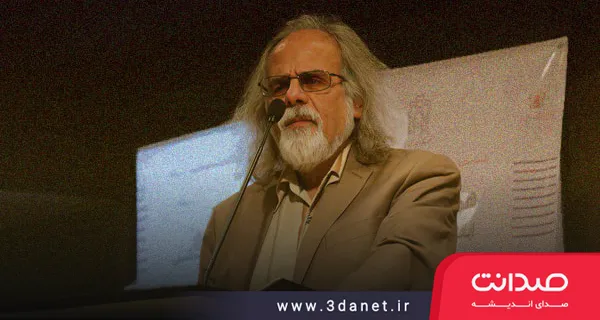
In the field of ethics, one can distinguish three tiers—"schools," "systems," and "theories"—that have emerged throughout the history of human culture. That is, numerous ethical schools have appeared over the course of human cultural history; within each school, many systems have arisen, and within each system, many theories have been realized. In the present discussion, I will deal solely with schools. I believe that, by rational limitation, no more than three ethical schools have emerged in history, which are: 1. the duty-oriented school, 2. the result-oriented or consequence-oriented school, 3. the virtue-oriented school. In other words, the focus of every moral philosopher is either duty, or result, or virtue.
Two Functions of Ethics: Decision and Judgment
In life, we need ethics in two domains: first, in the domain of "decision," or more commonly, decision-making, and second, in the domain of judgment. The first domain concerns what decision the individual makes to perform an action, and in the second domain, an action has been performed—whether by the individual themselves or by another—and the individual wishes to judge whether this action is morally defensible or unjustifiable. Thus, decision occurs before the act, and judgment occurs after the act. The first condition for our decisions and judgments to be morally defensible is that we have a criterion, a scale, a standard, and a kind of consistency; otherwise, we become of one roof and several climates (in my view, three climates). This inconsistency has several philosophical flaws and one psychological flaw; the psychological flaw is that it leads to a kind of moral capriciousness.
First: Result-Orientedness or Consequentialism
In this school, no action is "right" or "wrong" in itself; rather, we attribute such a quality to an action by virtue of the effects and results that follow from it. The rightness and wrongness of actions are not by virtue of the actions themselves, but by virtue of the goodness or badness of the effects and results that follow from those actions. Therefore, in this school, we always pay attention to the result; that is, until the effects and results of an action reveal themselves, we cannot judge it. This school is called result-orientedness (teleologism) or consequentialism. Of course, in detailed discussions, it is said that "consequence" has a slight difference from "result" (telos) and is broader than result.
A well-known version of this school is called utilitarianism, whose originators are Jeremy Bentham, his close friend James Mill, and his son John Stuart Mill, three British philosophers of the late nineteenth century. Consequently, utilitarianism is one of the systems within the consequentialist school; that is, one can be result-oriented without being a utilitarian.
Second: Duty-Orientedness
This school holds that the good or bad effects and results of actions play no role in determining the rightness or wrongness of actions; rather, there is a list of human actions that is the list of right actions, regardless of any result or consequence, and there is another list of human actions that is the list of wrong actions, again regardless of any result or consequence. In this school, we look at the action itself and see whether the action is on the list of right actions or wrong ones. When Kant said, "Tell the truth, even if the heavens fall," he held such a view. In Kant's view, a human being's duty is that, for the purification of their own soul, they must never lie, but must only and solely either tell the truth or remain silent, and not concern themselves with the results and effects of their action. The responsibility for what effects and results follow from an action does not lie with the individual. Of course, sometimes right actions have positive or negative results, and vice versa, but this has nothing to do with the moral agent; in this view, we are responsible for our own souls and do not concern ourselves with other matters.
Third: Virtue-Orientedness
In this view, the rightness and wrongness of actions depend neither on their effects and results nor on the action itself, but on the agent of the action; that is, in this school, it is said that one must see from what field the deed has sprung. Every human being's action is a fruit that emerges from the field of their being, and to assess the rightness and wrongness of actions, one must pay attention to that field. Therefore, in this view, if a single action is issued by two people, to examine it morally, one must pay attention to those individuals themselves.
Plato, Aristotle, and all the moral philosophers of the classical era—including the Stoics, Epicureans, and Skeptics in Western culture, and the Confucians, Daoists, Hindus, and Buddhists in Eastern culture—adhered to a virtue-ethics perspective, meaning the agent performing the act was what mattered to them. For example, Aristotle said that if a person possesses four inner qualities—wisdom (practical wisdom), courage (fortitude), temperance (moderation), and justice (fairness)—then whatever they do is the right thing. In the Aristotelian account, wrong actions are issued by a person due to a deficiency in these four qualities. In other words, it is impossible for someone who has these four qualities to perform an immoral act. Thus, in the Aristotelian virtue-ethics view, there is a difference between someone who tells the truth for their own benefit and someone who tells the truth because of the presence of the four aforementioned virtues, and only the latter's action is considered moral. We call these four inner qualities virtues.
It should be noted that, firstly, virtues are mental states and psychological conditions, not behaviors; rather, they are the source, origin, or wellspring of behaviors such as humility, honesty, trustworthiness, etc. Likewise, vices are mental states that predispose us to bad behaviors like lying, breaking promises, etc. Secondly, the number of virtues in human culture varies among different thinkers, different systems, and different theories.
In this system, therefore, the virtues follow an all-or-nothing rule. That is, although each of these virtues admits of degrees, an individual is moral only when they possess some degree of all four. Of course, there is disagreement about the number of virtues, and throughout history, in various ethical systems and theories from the Eastern world (cultural India and China) to the Western world, anywhere from three to eighteen virtues have been proposed. This difference stems from the psychology of the thinkers; for instance, one thinker among the sages of ancient India might say that three conditions are sufficient for a person to perform a morally right action, while another might say five conditions are necessary.
Which position should we adopt?
The curious point is that we humans have intuitions that align with all three of the aforementioned schools or approaches, and this is precisely why choosing one of the three is difficult. Our intuition regarding the "consequentialist" school is that ethics was made for humanity, and humanity was not made for ethics. We are not servants of ethics; rather, ethics seeks to help human beings. To understand this, one can look at other institutions like politics and education. The institutions of politics and education were established to improve the condition of human beings. We are the masters served by politics and education. Consequentialism, therefore, carries with it an intuition that we find agreeable.
We also have intuitions in favor of "deontology" and "virtue ethics." A person intuitively distinguishes between someone who reprimands another out of benevolence and goodwill, and someone who reprimands another out of malice, judging the former as moral and the latter as immoral, because the former does so out of goodwill and the latter does not. Therefore, beyond the act itself and its outcome, the inner state from which this speech, action, or body language originates matters to us. In other words, judging based on the motive from which the action was issued is a consideration of virtue ethics. Thus, our intuitions support all three schools, and this very fact makes deciding among the three schools difficult; it seems we can reject neither Kant (deontology), nor Aristotle and Plato (virtue ethics), nor Bentham and Mill (consequentialism).
Which theory is dominant in our culture (Islamic ethics)?
It seems that all three attitudes, or all three schools, exist within our Islamic culture; that is, we witness duty-oriented explanations, consequence-oriented explanations, and virtue-oriented explanations. Our ethical scholars have written in four domains of ethical books: first, mystical ethics, which rely on mystical-empirical reasoning in favor of their view, such as Sad Maydan and Manazil al-Sa'irin (both by Khwaja Abdullah Ansari); second, philosophical ethics, which employ rational argumentation for their view, such as Taharat al-A'raq by Ibn Miskawayh and Akhlaq-e Naseri and Akhlaq-e Mohtashami by Khwaja Nasir al-Din Tusi; third, transmitted and devotional ethics, which say an act is right because there is a hadith or narration concerning it; fourth, prudential ethics, such as Sa'di's Golestan and Bustan. All four of these types, despite their reliance on the Book and the Tradition, differ from one another in adopting one of the three aforementioned ethical schools.
For example, in the treatise Sa'di wrote on ethics in 153 sections, various approaches to the three mentioned schools can be seen; that is, sometimes the primacy of duty, sometimes the primacy of consequences, and sometimes the primacy of virtue. In our jurisprudence as well, without attention to the conflicts among these three approaches, all three are discussed. That is, in our principles of jurisprudence, theology, philosophy, and ethics, we have not yet adopted a position on this matter and do not realize that these three views are not mutually compatible.
If I were to adopt a position, it would be virtue ethics
For many years, it has seemed to me that the school of "virtue ethics" is more correct than the other two schools. But I must mention two points. First, some have raised the objection against virtue ethics and attention to inner virtues that someone might commit murder and then claim they performed the act based on inner virtues. How can such a person's action be justified? This objection is laughable because it confuses ethics with law. The function of law is different from that of ethics. The function of ethics is the spiritual and inner perfection of the individual, whereas the function of law is to build a society with welfare, security, justice, and freedom. Someone who performs an act dictated by inner virtues or vices—if the act truly arises from their inner virtues—their action is ethically correct, and vice versa. However, this act must be assessed legally by legal standards. If a person, based on their inner virtues, does something that carries legal punishment, that person must accept that punishment, because legally their act is evaluated as wrong, and that punishment is the cost of their virtuous lifestyle. Living ethically has a cost, and a person must accept the cost of their own ethical living.
Regarding the theory of "civil disobedience" (civil disobedience), which was devised and introduced by Henry David Thoreau (the American anarchist philosopher) and figures like Emerson and Walt Whitman, this very separation of law and ethics is illuminating. Civil disobedience means standing against the law of the country in the name of ethics. In civil disobedience, the individual oscillates between being an ethical human being and being a good citizen. If they want to be a good citizen, they must act according to the letter of the law, but if they want to be a good human being, they cannot act according to the letter of the law. Therefore, those who devised the theory of civil disobedience said that the ethical person must say that being ethical is my primary duty, and being a good citizen is my secondary duty, and wherever these two conflict, one must side with being ethical. They said one must stand against the law by the decree of ethics and considered imprisonment the cost of living ethically.
In any case, in my view, virtue ethics is the correct school, although this is my own opinion and virtue ethics has not yet become the generally adopted view of moral philosophers. As we said, in the ancient era the main tendency in both East and West was virtue ethics, but after the modern era, virtue ethics gradually retreated in favor of the two other tendencies, namely duty ethics (especially in its Kantian version) and consequentialist ethics (especially in the version of the utilitarians, i.e., Bentham and the Mills). From the mid-twentieth century onward, virtue ethics gradually gained strength. Especially since the end of the Second World War (1945), virtue ethics has been revived, first by neo-Aristotelian and neo-Thomist philosophers and then by feminist moral philosophers such as Iris Murdoch and Simone Weil. But this current is not yet widespread, although some predict that it will work much more successfully than the other two approaches. Therefore, in my view, virtue ethics is defensible, but this approach, like its two rivals, sometimes leaves us in theoretical perplexity and practical indecision. When faced with moral dilemmas, if virtue ethics is not illuminating, we first refer only to “duty ethics,” and if we still remain in a state of perplexity and indecision, we refer to “consequentialist ethics.”
.
.
Ethical Schools from the Perspective of Mostafa Malekian
Source: Lecture by Mostafa Malekian, Iranian Association for Ethics in Science and Technology, titled “A Review of Ethical Theories,” Monday, 10 April 2017
.
.


Discussion4 comments
آرزوی سلامتی و شادکامی برای شما دارم جناب استاد ملکیان عزیز
مثل همیشه مختصر مفید و آموزنده افتار ما استاد ملکیان عزیز
بی آفرین نی اخلاق پس جان من زی خلاق این اخلاق را مکتب دان که نام دارد خود قرآن نبی شدست گر اسوه بسی خورده از سفره از شرق و غرب بی نیاز بدین طعام دست بیاز اینک تراست برنامه مسکر مخور مستانه
حاجی محمد جان! لطفا فارسی حرف بزن، تا منِ لر هم بفهمم.