Philosophy
Ethics in the Virtual World
The expansion of cyberspace has made it necessary to formulate specific principles and frameworks to guard against media-related immorality. Technology in itself is neither good nor bad; understanding ethics and distinguishing virtues from vices is essential for attaining perfection.
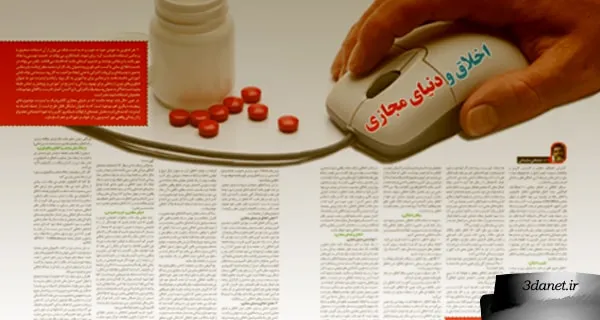
Cyberspace represents a new generation of social relationship spaces which, despite not having a very long history, have managed to find a firm place in people's lives. Many people of different ages and from various social groups have come together in cyberspace, communicating with one another across vast distances in the real world. Nowadays, methods of communicating with others via the Internet have increased. Email, text messages, chat rooms, websites, and games have become ways to expand and maintain social relationships. Nearly four hundred million people worldwide use the Internet daily, and one of the primary uses of the Internet is establishing social connections with others. Perhaps the main drawback of Internet-based communication is that interaction in cyberspace is fundamentally text-based, and therefore, it lacks the visual and auditory cues present in face-to-face interactions.
Ethics in the Virtual World [Examining the Ethical Dimensions of Cyberspace]
Subheading: 1. Cyberspace represents a new generation of social relationship spaces which, despite not having a very long history, have managed to find a firm place in people's lives. Many people of different ages and from various social groups have come together in cyberspace, communicating with one another across vast distances in the real world. Nowadays, methods of communicating with others via the Internet have increased. Email, text messages, chat rooms, websites, and games have become ways to expand and maintain social relationships. Nearly four hundred million people worldwide use the Internet daily, and one of the primary uses of the Internet is establishing social connections with others. Perhaps the main drawback of Internet-based communication is that interaction in cyberspace is fundamentally text-based, and therefore, it lacks the visual and auditory cues present in face-to-face interactions.
2. No technology is inherently good or bad; rather, it can be used correctly or, conversely, inappropriately. For example, letter writing can serve friendship and foster affection, or conversely, it can be an angry, spiteful missive that creates distance. The telephone can serve to convey information or obtain urgent news as a useful function, or conversely, be used as a means of passing time or even causing nuisance. Cinema can play an educational role, or conversely, be used for corrupting instruction. The computer and the Internet, as modern communication technologies, are naturally beneficial for improving life and accelerating education, research, and contact, but if used as a means of passing time, spreading false news, or instilling distorted subjects, they are harmful. At the same time, it should be noted that in the electronic virtual world and the Internet, there are other complex issues that can be raised as problems, including Internet addiction, which may occupy a major part of the user's time around the clock, distancing them from real life and depriving them of sleep, food, and physical activity.
** Introduction: The expansion of virtual spaces and the growth of users and audiences have made the formulation of specific principles and frameworks inevitable in order to protect this space from media-related immoralities. Ethical issues in cyberspace are described with various terms such as information ethics, technology ethics, and computer ethics. Ethics in the virtual world (cyber ethics) is a subject that, in recent decades with the advent of computer-related technologies, computer networks, and the emergence of the Internet, has attracted the attention of philosophers and, consequently, the producers and users of various software. In the present age, we are witnessing an information explosion in the virtual world which, while beneficial, also causes material, cultural, and social harms and damages. These damages can inflict irreparable harm on families and, consequently, on the individuals of society. This issue can be compared to the environmental pollution following the Industrial Revolution. [Abdullah Shajari and Morteza Shajari, Ethics in the Virtual World] ** The Importance of Ethics: Ethics (akhlāq) is the plural of khulq, which lexically means the inner force and innate disposition of a human being, perceptible only through the eye of insight and not outwardly, in contrast to khalq, which refers to tangible form perceptible by the outward eye. [al-Rāghib, p. 15] Thus, ethics is the collection of a human being's spiritual and inner characteristics. The concept of ethics is also usually used to specify behavioral criteria—criteria that refer to and cite common and appropriate norms for behaviors existing in society. However, the term ethics technically refers to a science that informs about dispositions, good and bad traits, their roots, and their effects, both in the individual and social domains. The science of ethics is a discipline that discusses human character traits (malakāt) with the aim of separating virtues from vices so that a person can perform the good deeds required by inner virtues, be praised by the general public in human society, and attain happiness and perfection. Ibn Miskawayh, inspired by Quranic teachings and hadiths, defines the science of ethics as follows: "The science of ethics is a science that introduces good and bad psychic qualities and the voluntary actions and behaviors corresponding to them, and shows the method of acquiring good psychic qualities, performing praiseworthy deeds, and avoiding bad psychic qualities and reprehensible deeds." [Ibn Miskawayh, p. 27] Ultimately, it can be said that ethics includes character traits (malakāt al-nafsāniyya), spiritual states, individual manners, social customs, and all voluntary actions—whether of the limbs (jawāriḥ) or the heart (jawāniḥ)—that are characterized as good or bad, carry a value judgment, and assist a person in attaining the ultimate perfection, namely nearness to God, servitude, and worship. The two main questions raised here are: 1. What is the general criterion for the goodness or badness of a trait or behavior? 2. Are ethical propositions absolute and eternal, or relative and temporary? [Virtual Ethics or an Ethical Virtual Space?, Khadijeh Hasan Beygzadeh] Ethics is a branch of philosophy that deals with the rightness and wrongness of concepts and matters. Religions have always been one of the primary platforms for attention to ethics, placing special emphasis on ethics for the worldly and otherworldly happiness of human beings, as well as human society, and for the growth and excellence of nations. For instance, one of the goals of the sending of the prophets, especially the Holy Prophet (PBUH), has been the refinement of character and the purification of souls. As God says in the Quran: "He purifies them and teaches them the Book" [Friday, verse 3]; or the saying of the Noble Messenger of Islam (PBUH): "I have been sent to perfect the noblest of character traits" [Mīzān al-Ḥikma, vol. 3, p. 471]; or the Holy Quran, in its most sublime praise of the character of the Holy Prophet (PBUH), says: "And indeed, you are of a great moral character" [The Pen, verse 4]. Thus, all of these demonstrate the importance of ethics in Islam.
** Ethical Schools:
Given that there are numerous ethical schools, each offering its own interpretation of ethics and ethical actions, it is worth reviewing them and identifying the most superior ethical school. 1. Epicurus defines ethics around the axis of pleasure. Epicurus believed that one should follow nature and satisfy those necessary, physical desires that are not a source of harm or suffering. 2. Plato bases ethics on justice, equating justice with beauty and beauty with ethics; thus, ethics pertains to the beautiful soul. 3. John Stuart Mill and Jeremy Bentham have interpreted ethics on the basis of public utility and benefit. 4. Adam Smith, Spencer, and Auguste Comte view ethics as based on sentiment, meaning an ethical act is one that originates from a sentiment higher than individual inclinations. 5. Nietzsche links ethics to the category of power, meaning he says whatever leads to power and increases human power is ethical, and whatever causes human weakness is unethical. Some others, like Rousseau and Immanuel Kant, consider ethics to be based on the theory of conscience, meaning an ethical act is one inspired by conscience. [See: Mohammad Mehdi Mirbagheri, Ethics and Information Technology] 6. Some Islamic philosophers believe the criterion for being ethical is reason and will, although this theory differs from the theory put forth by Islam. However, the ethical school of Islam is based on the primacy of intention, meaning intention, as a real matter, gives spirit to the action. This means that even if an act is good but lacks the goodness of the agent—that is, the agent did not have a sincere or correct intention—that act lacks moral value. This is also mentioned in the narrations. The Holy Prophet (PBUH) says: "Actions are but by intentions" [Bihar al-Anwar, Vol. 70, p. 212], and Imam Baqir (AS) says: "The intention of the believer is better than his action" [Wasail al-Shia, Vol. 1, p. 109]. In the ethical school of Islam, true felicity depends on this very relationship. Ultimately, it can be said that in the holy religion of Islam, since the philosophy of ethics originates from religious teachings, attaining divine satisfaction and nearness to Him is considered the spirit of moral value. This causes the control of individuals in terms of observing ethics to have a very high executive guarantee, because in the school of Islam and Shia thought, control is exercised from within. However, in other ethical schools, ethics is described as an external behavior; therefore, they are compelled to have an external control, such as enacting laws, installing behavior-recording cameras, and various forms of punishment, to make society ethical. Hence, it goes without saying what the ethical situation will be in a society governed by such thinking. ** Ethics and Cyberspace: 1. The Capability of the Virtual World: On one hand, alongside the pleasurable facilities of information technology that have affected all different aspects of human life, on the other hand, all these valuable achievements have become very sensitive and hazardous due to the non-observance of correct ethical principles and unauthorized and dangerous uses, to the extent that many concerns have arisen about its adverse impact on the growth of culture and the health of society. Therefore, ethical discussions in this field have been seriously considered at the international level. The Internet is nothing but a virtual space, yet this very virtual world is so capable and flexible that it brings about extensive transformations in our lives. Due to its potential characteristic, the Internet, besides being a technological concept in the general sense of a tool, has created, as a mass medium, a virtual space for its users that both strengthens and destroys the ethics and human-social relations of individuals, and goes so far that it can even lead to changes in individual and social ethics. Hence, in recent decades, it has become a challenging subject for researchers in behavioral sciences, psychology, and sociology. What ethical standard should be set to control its negative consequences is not something upon which everyone agrees. Internet (virtual) ethics is considered a type of professional ethics, and this professional ethics, in turn, falls under the subset of social ethics, which is the subject of the science of ethics. Professional ethics is considered the intersection point of the science of ethics and technology. With this explanation, just as ethics carries a value-laden weight, the ethics of the virtual world will consequently have such a characteristic; meaning, ethical rules and principles must be established by users and operators in cyberspace with regard to the interests, culture, values, and beliefs collectively accepted in society. In this way, individual ethics will be subordinate to society so that no contradiction arises. در این راستا اخلاق حرفه ای مربوط به دنیای مجازی نیز باید طوری باشد که هم اخلاق فردی را مورد توجه قرار دهد و هم فرهنگ کلی جامعه را. البته این نکته را نیز باید در نظر داشت که اخلاق در رسانه ای مانند اینترنت به سبب حساسیت های خاص خود همواره تحت تأثیر سیاست و اقتصاد و آموزش های برگرفته از ایدئولوژی های آن جامعه است. 2. نقش اخلاق در دنیای مجازی: نقش و تأثیر اخلاق اغلب در مواردی که قدرت تصمیم گیری پیرامون خوب و بد بودن وجود ندارد بیشتر خود را نمایان می سازد. مواردی که وزنه های استدلالی طرفداران دو سوی تصمیم گیری های یکسان است مواردی که ممکن است یک تصمیم گیری نادرست پیامد فاجعه آمیز اخلاقی را در جامعه به بار آورد چیزی که از آن به عنوان ابهام در ارزشها یاد می شود همانند آزادی بیان و حفظ حریم خصوصی افراد و مسائل خصوصی خانوادگی، سرگرمی نوجوانان با بازی های کامپیوتری و پیامدهای نکوهیده و غیرقابل جبران آن همانند اعتیاد کامپیوتری و خشونت های ناشی از آن، برحق بودن آگاهی مردم از مسائل روز و حفظ امنیت ملی و تحریف حقایق، ایجاد سود و منفعت بیشتر برای صاحبان و کارگزاران برنامه ها و اعمال هزینه های اقتصادی برای کاربران، که این ابهامات وقتی پای اخلاق و تعهد اجتماعی در کار نباشد هرکسی خود را مجاز می داند با هر بهانه ای به حریم ها نزدیک شده و مرزهای اخلاقی را زیر پا بگذارد. 3. تعامل اخلاق و دنیای مجازی: بنابراین اساس و بنیان تعامل میان اخلاق و دنیای مجازی را مبتنی بر پاسخگویی به پرسشهای زیر دانست: آیا می توان یک قاعده و اصول اخلاقی برای همه شرایط و فرهنگ ها برای کلیه کاربران و کارگزاران تدوین نمود؟ در صورت تدوین چنین معیاری، منبع و سرچشمه این معیارها و هنجارها چیست؟ کاربران؟ کارگزاران؟ روانشناسان علوم اجتماعی و یا هنجار اجتماعی و قاعده پذیرش عمومی جامعه؟ دیدگاه های متفاوت و گاه متناقضی در این زمینه وجود دارد: الف) عده ای ضمن جداکردن حیطه اخلاق حرفه ای و مجازی از اخلاق اجتماعی در دنیای واقعی معتقدند که این خود کاربر کارگزار است که با توجه به نیازهایش تشخیص می دهد که چه چیزی پسندیده و خوب است و چه چیزی بد و ناپسند بوده و به ضررش تمام می شود مطابق با این دیدگاه اخلاق در دنیای مجازی جدا از اخلاق در دنیای واقعی یعنی تطابق اخلاق فردی و اجتماعی بر تکالیف اخلاقی موجود در جامعه، در نظر گرفته می شود که این خود زمینه ساز یک دیدگاه نسبی گرایانه در مبحث اخلاق است به عنوان مثال دروغ و توهین به افراد و یا ارائه مشخصات دروغین برای کسب موقعیت بهتر، در یک فضای مجازی مجاز شناخته می شود در صورتی که همان مورد در اخلاق واقعی حاکم بر جامعه جرم محسوب شده و مطابق با قانون با آن رفتار می شود. در اینجا معیار اخلاقی معیار خود محوری است که بر اساس مطلوب کاربر و کارگزار تعیین می گردد و بدین ترتیب ما به عدد استفاده کننده ها ملاک اخلاقی خواهیم داشت. ب) اکثر صاحب نظران با دیدگاه اخلاق خود محوری در کاربران مخالفند و در عوض به یک قاعده و قانون کلی معتقدند و قبول دارند که اخلاق حاکم بر رسانه و اینترنت از حوزه های فرعی اخلاقی عملی است اما از آنجائی که اخلاق را مطابق با فرهنگ و اولویت ها و منافع ملی و سودمندی های همه افراد جامعه می دانند و همچنین بدلیل وجود تنوع فرهنگ و ارزش های موجود در جوامع مختلف، وضع چنین قانون کلی و جهان شمول اخلاقی را کاری بسیار مشکل می دانند چرا که ممکن است در سطح بین المللی، معیار اخلاقی در یک جامعه، مورد پذیرش در جامعه دیگر نباشد. ج) گروهی دیگر نیز معتقدند که این منافع و اولویت ها هستند که اخلاق سازی می کنند. منطبق بر این دیدگاه حوزه های دیگر به جای اینکه تحت لوای حوزه اخلاق و تکالیف اخلاقی باشند، آنرا تحت الشعاع خود قرار می دهند همانند اولویت های اقتصادی در جوامع اقتصاد گرا که کاربران ملزم به پرداخت هزینه های غیرواقعی هستند بدین معنی که دارایی و ثروت، ارزش اخلاقی برتر محسوب شده و تمام روابط اجتماعی را تحت تأثیر خود قرار می دهند. طبق این سه رویکرد گفته شده که در سطوح مختلفی از نسبیت گرایی قرار دارند هر کدام به نوبه خود دارای ایراداتی هستند از جمله سلب مسئولیت از افراد، شکاکیت های اخلاقی که امکان داوری مطلق را از بین می برد، بی ثمری احکام اخلاقی، تناقض در میان امور همانند اصلاح و جنایت، خیرخواهی و شرارت، خدمت و خیانت و... که در نهایت به سست شدن پایه ها و شالوده های اخلاقی زندگی عمومی منجر می شود. منطبق بر چنین دیدگاه هایی، ارزش های انسانی در قبال سود بیشتر صاحبان تکنولوژی در محیط های رقابتی محکوم به فناست. d) Another approach is a realist and absolutist approach to ethics, that is, a truth-oriented ethics that encompasses all sub-domains of ethics. In this view, ethics is an absolute, general, and universal concept, laden with the responsibility of individuals and also the guardian of all human, cultural, and religious dignities and values of individuals. A view accepted by Islamic thinkers. [This type of understanding of ethics is of interest to all divine religions.] The answer of this approach to the question of whether ethical dos and don'ts have relative characteristics and only find meaning in a specific time and place, a particular society, and for specific conditions, will be a negative one. In other words, establishing a moral criterion according to the tastes of individuals, the variables of social conditions, and the customs of society (whether in the real world or the virtual world), which are characteristics of the relativistic approach to ethics, will not be accepted. [For further reading, see: Ethics in Cyberspace, Seyyed Mohammad Hossein Emami]
** The Virtual World and Privacy:
Perhaps sometimes in private conversations we say something we hope readers will forget, or write something we later regret and hope readers will lose our pages among the many scattered sheets in their archives and never bother to read them again; but information technology allows everyone to archive and store all information, past and present, in a systematic way and retrieve it instantly whenever needed. Therefore, if privacy is breached at a particular time and place, there is no hope that computer users will forget it; for information technology has eliminated this possibility. What you have bought and where you obtained it, where you got the money, how much you donated to whom, what expectations you have of whom, and with whom you correspond—all of this is broadcast in the computer world through loudspeakers that, firstly, can be heard by everyone, and secondly, their repeated and enduring sound is never silenced and constantly increases in volume with every electronic operation. Today, individuals' privacy is exposed to dangers that never existed before information technology, just as no one was at risk of electrocution before the advent of electrical technology. Now we must be careful that the development of technology does not set fire to individuals' privacy. Who bears responsibility for these emerging dangers? And what measures should be taken to reduce this sense of insecurity? These are the questions raised in this regard. Intrusion into users' systems and performing undesirable actions are among other harms recognized as unauthorized access; for example, the following cases are mentioned: • Interception and eavesdropping on a computer system or network • Unauthorized reproduction of a protected computer program, such as software piracy • Computer espionage and inspection using tools related to the disclosure, transfer, or use of trade and commercial secrets without authorization, such as hacking. [For further reading, see: Ethics in Cyberspace, Seyed Mohammad Hossein Emami]
** The Relationship Between Religion, Ethics, and Technology:
Many non-Muslim philosophers and sociologists also emphasize the effective role of religion in controlling and supervising technology, pointing to the relationship between religion, ethics, and technology. A. Carl Mitcham, in his article "Religion and Technology," expresses this relationship as follows: "Since technology can itself become a way of life, it can be a subject for religious and spiritual evaluations. Religion and technology, like ethics and technology, can be examined based on historical, foundational relativities, or specific issues... On the one hand, religion must play a significant role in confronting the ethical challenges arising from technological development, such as the ethical issues arising from nuclear weapons and environmental pollution, and on the other hand, a critical religious thinking regarding technology should be considered that has broader ethical perspectives than it, so as to create moderation between religious enthusiasm and considerations of growth and technology (Mitcham, 2009, p466-472)." B. Neil Postman, in his book Technopoly, while warning about the current state of the world and that technologies in the new era have subjugated the realms of human beliefs and values, considers the only existing solution to be humanity's return to human values in the shadow of a religious ethical perspective and spirituality: "There is much evidence that, especially considering our current circumstances, placing the story of humanity's ascent as the backbone of the set that constitutes the new curriculum is essential. Because the story of humanity's ascent gives a meaning to education that is neither technical nor commercial, but rather like a mirror that radiates a certain reflection and conception of the goals of academic life around, and the best of these stories are found in religious texts. Being educated in such a system means understanding the roots, stems, and stages of growth of knowledge and its systems." [Tabatabai, 1381, p257] The famous Russian writer Dostoevsky also believed that "if God does not exist, everything is permitted."
.
.
** References:
- al-Rāghib al-Iṣfahānī, Abū al-Qāsim al-Ḥusaynī (1423 AH), al-Mufradāt fī Gharīb al-Qurʾān, Qom, Dhawī al-Qurbā, 2nd ed. - Ibn Miskawayh (1371 Sh), Tahdhīb al-Akhlāq wa Taṭhīr al-Aʿrāq, Qom, Bīdār. - Abdullah Shajari and Morteza Shajari, 1393 Sh, Ethics in the Virtual World, Fourth National Conference on Ethics and Life Manners, Zanjan, Department of Philosophy, University of Zanjan. - Mohammad Rahimi, Pathology of Cyberspace and the Family; Threats and Challenges. - Mohammad Mahdi Mirbagheri, Article: Ethics and Information Technology (1385 Sh).
.
.
PDF file of this article (Ethics in the Virtual World)
.
.
Ethics in the Virtual World
Author: Mostafa Soleimani
.
.




Discussion0 comments
No comments yet; let yours be the first voice.