Religion
Veneration of Rituals and Moral Education in Children's Mourning Ceremonies by Mostafa Soleimani
For the moral upbringing of children during mourning ceremonies, parents should adapt the atmosphere to their children's distinct understanding and psychological limitations. Managing fear of the dark, explaining the meaning of crying, and refraining from expecting adult-like behavior prevents children from becoming disenchanted.
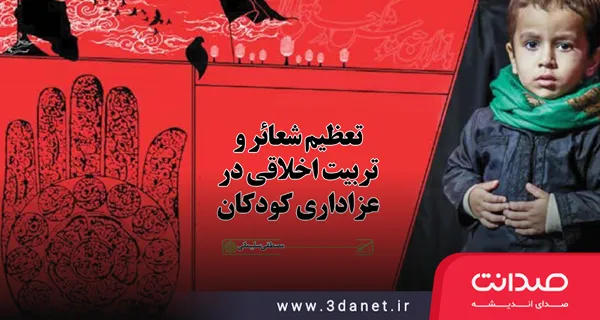
Veneration of Rituals and Moral Education in Children's Mourning Ceremonies
Mostafa Soleimani
Parents, directly or indirectly, seek to raise their children morally. By resorting to various tools and pretexts, they constantly want to create changes in their children that they think they desire. But these changes are not smaller-scale adults. Children's thinking is very different from that of adults. They do not have strong reasoning abilities and, therefore, cannot understand the world as adults perceive it. Hence, it is the adults who must bring themselves closer to the children's world.
To understand the world around them, children generalize and analogize phenomena. That is, to interpret new phenomena, they use the logic they used to interpret previous events. For example, even though they know the sun cannot sleep and wake up like humans, they interpret sunrise as the sun waking up in the morning.
This characteristic of children can be troublesome for parents who cannot put themselves in their child's place. In fact, many communication problems between parents and children, and the severing of intimate connections between them, occur because the child's understanding seems difficult for the parents to grasp.
That being said, parents who are thinking about the healthy and moral upbringing of their child must teach them new logics and perspectives according to the circumstances and considering the child's level of ability and understanding.
Muharram is a Great Classroom:
With the approach of specific religious occasions, such as the months of Ramadan and Muharram, many devout and sometimes religiously observant families decide to pursue their child's upbringing through religious affairs and ceremonies; hoping that by transmitting the value-laden concepts present in these special days and events, they can raise their child to be healthy and morally upright. For example, many of these parents believe that a great event like Karbala has so much to say that introducing it to children can be considered a great classroom for them. Thus, with the arrival of Muharram, they become concerned with taking their children to mourning gatherings; letting them taste the tea of the rawza khwani and, in short, enabling them to benefit from these gatherings and ceremonies; but the reality is that many families practically cannot succeed in this matter. Many children do not receive the appropriate educational effect from such gatherings and, conversely, sometimes even encounter situations that make them completely disheartened by and averse to mourning ceremonies.
In the continuation of this note, an attempt is made to better delineate a mourning atmosphere suitable for their conditions and requirements by referring to the psychological capacities of children.
Crying Behind Closed Doors:
Children consider their parents to be the superheroes of their lives. They perceive crying as a kind of weakness and, for this reason, upon seeing their parents cry, they consider them weak. It is obvious that someone who was once a superhero appearing weak can severely create feelings of insecurity and anxiety in the child.
For this reason, many parents, to preserve their children's mental security and health, keep them away from sad and sorrowful events as much as possible and generally hide their own crying and grief from their children. Now the question is, should parents' crying rationally be behind closed doors?
The reality is that children who have never seen their parents cry suffer from a deficiency in emotional intelligence. Parents must show their children that "crying is a sign of sadness," it has a reason, it is a short-term process, and it ends.
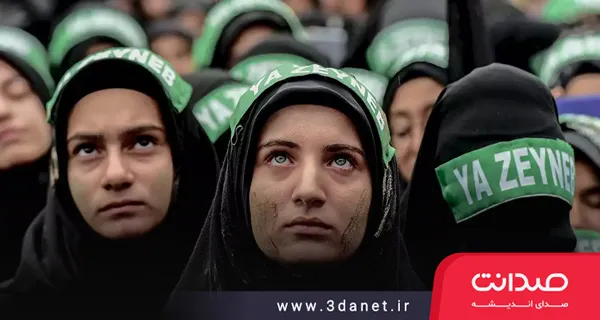
If children are unfamiliar with their parents crying, the mourning ceremony for Imam Hussein (AS) can cause them to become disenchanted with Muharram and Imam Hussein (AS); but familiarity with the atmosphere of their parents' weeping can encourage them to discover the reason for the tears. The child's real bond with Imam Hussein (AS) also practically occurs within this emotional atmosphere. However, since a child cannot comprehend the perfections of a personality like Imam Hussein (AS) to the extent an adult can, they see no difference between weeping for Imam Hussein (AS) and other forms of crying. This is also the reason for avoiding wailing and restlessness in the child's presence.
The darkness of the rawdas is full of imaginary monsters:
Children are in the developmental stage of imaginative fantasies. Due to their active and creative minds, they create a monster for themselves out of anything in the dark and then become afraid of that monster. Fear of the dark often occurs because the child feels insecurity and anxiety in that situation, thinking they will be harmed by that imaginary creature.
The darkness of the mourning gatherings for Aba Abdillah is not pleasant for children and creates an inappropriate image of these gatherings in their minds. For this reason, parents should not keep their children in the dark for long periods. Maintaining physical contact, such as holding children in one's arms or holding their hands when the lights are off, can also help restore their calm.
Children's patience lasts no more than a few minutes:
Children are generally energetic, have little physical and mental stamina, and consequently, their patience is limited. It is difficult to keep a child still in one place for more than a few minutes. Disregarding the child's level of patience and tolerance makes them nervous, tired, and disenchanted. Therefore, parents should keep the duration of attending mourning gatherings as brief and short as possible, paying attention to the child's state and condition.
Children cannot be paragons of etiquette:
The parents' manner of dealing with the child before, during, and after the mourning can determine the child's attitude toward this subject. Harsh, humiliating, and domineering behavior by parents toward their children in these gatherings makes them disenchanted and averse to these sessions.
Children cannot be paragons of etiquette like adults. We cannot expect children to understand the conditions of mourning like adults, sit in a corner, and grieve. A child must be a child. Mischief and playfulness are intrinsic to children, and for this reason, parents should always provide toys and entertainment for them.
Depriving a child of things they like and feel they need can create a bad memory of the mourning ceremonies in their mind. Parents can create pleasant memories for the child by bringing colored pencils, pens, paper, and the child's favorite snacks to the mourning gatherings for Imam Hussein.
The sound of the rawda is more pleasant during playtime:
These days, in many mourning ceremonies, eulogists and mourners constantly admonish children to observe silence, sit in one place, and be quiet. They ask them not to disrupt the order of the gathering and, in fact, force them to behave against their will.
An intelligent mourning gathering is one where, on its sidelines, a space is also provided for children of the same age to gather. Children should be able to engage in free play while simultaneously hearing the speaker's voice and the sound of the rawda.
Terrifying rawdas drive children away from the gathering of Imam Hussein:
Fantasy and visualization are part of children's developmental process. Through their imagination, children can learn many skills; strengthening non-abstract thinking and increasing language and communication skills are among the benefits and achievements of imaginary pictures. Nevertheless, the power of imagination can also have some harms for the child in certain cases.
In some mourning gatherings and assemblies, eulogists, without considering the age and state of their audience, describe the scenes of the mutilation of Imam Hussein (AS) and his companions. The detailed, blow-by-blow description of the severing of heads and hands in these gatherings can disturb the mental state of children who listen intently to the depiction of these painful events and cause them fear. With their imaginative power, children embellish these descriptions and create disturbing images for themselves.
However, since some eulogists, in open and public gatherings, give explicit explanations of these events and describe the story of the killing of Imam Hussein (AS) and his children in minute detail, it is the parents' duty to ascertain the nature of the gathering before attending.
If a child is to be positively influenced by attending the mourning ceremony of Imam Hussein, they must avoid any gathering where open and violent scenes are narrated.
Children Come First:
The parents' preference in choosing gatherings and assemblies should be the child's choice. Sometimes a child likes to attend gatherings where their peers participate. In such cases, it is better for parents to prioritize the child's opinion over their own.
The Effect of Some Eulogies Lasts for Years:
Children must be able to receive answers to their questions about the Karbala incident from their parents. Knowing where they are going, why they are going, and why they are participating in this mourning ceremony can make them highly sensitive and receptive to the educational points of this event.
Because children have not lost their innate purity, they can quickly establish an inner connection with the various dimensions and different personalities of the Karbala incident. The notion that one should not mistreat anyone, should not oppress anyone, and should not cause anyone harm can remain as a fixed mindset in children's personalities for years and immunize them against many errors.
Simply enabling children to hear descriptions of some of Imam Hussein's (AS) kindnesses in simple, childlike language is sufficient for their familiarity and bond with this school of thought. This simple yet sound familiarity can lay the groundwork for the children's deep understanding in the years to come.
Children Do Not Understand Reasoning; Their Understanding Only Extends to Affection:
Since children cannot imagine or conceive complex reasoning and abstract concepts, the teaching of the immense philosophy of the Ashura uprising must be tailored to their understanding. Children understand the language of affection. They can comprehend self-sacrifice, attention, kindness, and friendship; therefore, recounting scenes of Imam Hussein's (AS) affection for his sister, Lady Zainab (SA), or explaining stories that describe Imam Hussein's (AS) love for his children and companions can influence a child's behavior even into their teenage years.
If Parents Act Accordingly, the Eulogy Affects the Child:
Parents are the best role models for children. This means children always try to find what they hear and see first in their own parents. So, if children see no connection between what they observe from their parents and what they hear from the stories of Muharram and the description of the ethics of Imam Hussein (AS) and his companions, they will most likely become indifferent to moral advice.
Bad Eulogies Raise Depressed Children:
Parents must, at any age and according to their child's condition, make the stories they tell about Muharram and Imam Hussein (AS) more abstract and tangible for the child. The good feeling and love for the Ahl al-Bayt (AS) can activate what was instilled in the child during childhood in their teenage years. Describing the heavy events of Karbala at ages when the child has no understanding of them will bring them nothing but deep distress.
Conclusion:
1. The primary aim of all mourning ceremonies for the Infallibles (AS) is the moral education of parents and children. With a little searching and research, one can see that the purpose of the prophets' missions was the same. Indeed, religion without morality is hollow and nothing, let alone mourning ceremonies.
2. Mourning and weeping over the calamities that befell the Infallibles (AS) is not the sole purpose of holding religious ceremonies and gatherings; these mourning rituals have great objectives, some of which can be briefly described as follows:
Strengthening psychological and spiritual matters, self-purification, introducing the Infallibles (AS) as role models for Muslims, creating unity among the Muslim community, introducing true Islam to the world, attaining spirituality, teaching religious knowledge, and other lofty goals which, if Muslims paid attention to them, could resolve many problems in Islamic society.
.
.
Download the PDF of this article from Harim-e Imam Weekly
.
.





Discussion0 comments
No comments yet; let yours be the first voice.