Religion
Mostafa Soleimani's article 'Corona and an Ethical Look at Gatherings'
As Muharram approaches amid a surge in COVID-19, the holding of mourning ceremonies has been challenged; citing religious rulings and ethical principles, the preservation of life is deemed to take precedence over traditional gatherings, and religious rituals are proposed in new, safe formats.
Corona and an Ethical Look at Gatherings
Mostafa Soleimani[1]
The Concern of the Faithful These Days:
These days, on the eve of the month of Muharram, due to the rising number of coronavirus infections, the concern of many religious and faithful people is how to hold the mourning ceremonies for Aba Abdillah (AS). These concerns have so far provoked various reactions from opponents and proponents of holding the mourning ceremonies for Aba Abdillah (AS). In the meantime, what is certain is the opinion of health sector activists, who, given the current conditions, oppose holding any ceremonies and gatherings, even if the participants are committed to observing health protocols.
Does Suspending Gatherings Mean Suspending Sharia?
In the meantime, the faithful and the religiously observant who insist and emphasize on holding mourning ceremonies cite the fulfillment of the wishes of the enemies of Islam and the suspension of Sharia as negative consequences of banning the ceremonies, while in recent days, the spread and mortality rate from the coronavirus has reached its highest level in the past six months. A statistic that is deeply thought-provoking and worrying.
It is evident that given the situation the country is currently suffering from, and at a time when many Iranian cities are in a red status, proceeding to hold ceremonies could be very dangerous and catastrophic.
But why, in a situation where the obligation of "Hajj" has been prohibited, some still insist and persist on holding Muharram mourning ceremonies is worthy of attention and examination.
Truth Is Not Beyond Ethics:
Doctrinal (theoretical), practical, and historical reasons are among the reasons that proponents of holding ceremonies enumerate to prove the correctness of their statements. That mourning is a manifestation of love for and belief in the Imamate, falls under the category of Tawalli and Tabarri, and is therefore even more important than preserving life, are among the reasons proponents cite for the obligation of holding mourning ceremonies, under any circumstances. But with all these interpretations, one must consider, with a rational view and free from any prejudice, what the truth is. Certainly, what should not be overlooked is that truth should not be something beyond ethics.
We Must Prioritize the More Important over the Important:
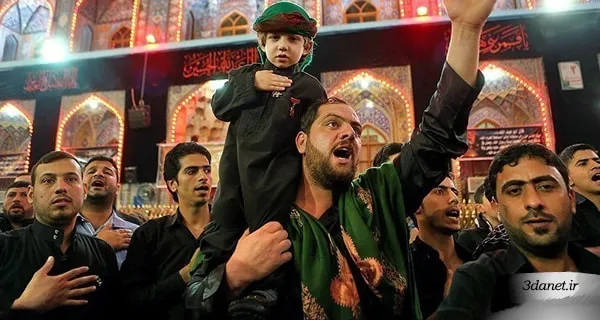
The Rawda of Aba Abdillah (AS) is one of our longstanding religious and national traditions. For years, the people of our country have viewed the concepts and values presented during this short ten-day period in the form of mourning gatherings as an intensive epistemological class. Many of these gatherings are the breeding ground for the emergence of soul-stirring and life-giving thoughts. Hence, these gatherings and ceremonies are an inseparable part of the people's beliefs, and arguably, the general belief is that what has reached us from religion has all been under the shadow of the gatherings for Aba Abdillah (AS) and his movement.
The honor and sanctity that Shias hold for the month of Muharram and public mourning for Aba Abdillah (AS) is very high, so much so that many consider the Rawda to be among the nearest means of nearness to God and count it as one of the shortest paths to closeness to the Almighty. But despite all this, is holding such massive public gatherings obligatory under the current circumstances? In the sense that even "endangering one's own life and the lives of others" is placed after it in priority? Perhaps a brief review of a few religious rulings that can be generalized to the current case could be helpful and illuminating in this regard:
1- Performing or abandoning actions that are a prelude to preserving life is obligatory.
2- Breaking the obligatory prayer to preserve property and prevent financial or physical harm is permissible; indeed, it is permissible for any purpose, religious or worldly, that is of importance to the worshiper.
3- Taqiyya is obligatory for fear of harm to one's life or honor, or that of close relatives and associates.
4- Huquq al-Nas (rights of people) refers to the rights people hold over an individual, which includes safeguarding the lives and property of people.
5- Ablution or fasting, if harmful to the body, must be abandoned.
And so on...
Suspension of Rulings is Sometimes Obligatory:
It is clear that a rawda (eulogy recitation) is not more obligatory than fasting during the holy month of Ramadan. When we can abandon fasting if there is a probability of harm to the body, then, a fortiori, we can abandon holding mourning ceremonies for Aba Abdillah (AS) if there is fear of financial, physical, or reputational harm.
In general, considering the mentioned fatwas, it seems that whenever religious rulings conflict with human health or one's life, property, honor, and reputation, they must be suspended. However, in addition to all this, it must be considered that there is no obligation to hold religious rituals in their traditional form, and given the current conditions, a more intelligent approach and a more rational form can be adopted so that these rituals are not suspended. In fact, considering the available and accessible spaces, another style can be chosen for holding religious ceremonies; a style that, on the one hand, does not conflict with the expertise, science, and knowledge of specialists, and on the other hand, can revive the teachings and blessings of customary traditions to an acceptable degree.
Religious Rituals are Influenced by Societal Conditions:
At a time when gatherings are considered a threat to life, it is obvious that many religious rituals are affected: holding congregational prayers, the obligatory Hajj, collective supplications and practices, participating in funeral processions, burying the deceased, and even visiting holy and religious sites.
Of course, one can strive, as much as possible, to hold these rituals in a different quality and format, without them disappearing altogether. We have all witnessed a close and accessible example of this quality of holding ceremonies during the holy month of Ramadan. The online holding of the Nights of Qadr gatherings are successful examples of these experiences, and before this, many bereaved individuals in recent months, due to the restrictions imposed on holding burial, funeral procession, and memorial ceremonies for their loved ones, have performed the rituals in a format other than the common ones, online and by forming mourning groups in virtual space.
The Very Principle of Gathering Means Opposing Medical Guidelines:
According to medical experts, holding ceremonies, in other words, the "principle of gathering," is against health protocols and guidelines; observing social distancing in mourning processions and the crowd of onlookers, with the quality that dear ones have prescribed—that it be glorious and passionate—is not feasible; holding a gathering in an enclosed space is also not possible, and thus, any action to hold a ceremony is, in a way, playing with people's lives.
One cannot baselessly claim that ceremonies and gatherings can be held while observing the necessary health guidelines. In any case, and even with a very small probability, there is a possibility that in these gatherings, the ground for the infection of even one person with this deadly virus may arise, and it is obvious that we have no right, under any circumstances, to endanger any human being's life.
In a situation where there is no guarantee whatsoever for preserving the lives of Husseini mourners, why should we insist on forming these gatherings? To what extent can we prevent the actions of "individuals careless about health guidelines"?
Where is Ethics in the Story These Days?
One can easily be certain that ethics, which has addressed the most delicate points in human interactions—even in relation to nature and inanimate objects—has not remained silent in the face of violating the rights of others. We have no right, in order to revive a recommended act (however highly virtuous), to commit the forbidden act of taking a life.
It must be seen whether, if we, contrary to the explicit text of the Quran, do not value preserving our own lives and, with unrealistic and irrational justifications, consider ourselves a devout, death-seeking religious person and thus recklessly expose ourselves to danger, are we not, according to the rule of ethics, also responsible for the lives of others? Is endangering the lives of others not a form of complicity in their murder?
And of course, the more important question is: in such circumstances, what moral and religious justification do those who, as guardians of religious rites, speak of safeguarding the rights of God and the Infallibles (AS), have for disregarding the rights of people (haqq al-nas)?!
What is the purpose of holding religious ceremonies?
In fact, we must see what our goal and purpose is in attending religious and faith-based gatherings, such as the mourning ceremonies for Aba Abdillah (AS). Is it anything other than wanting, through this means, to become acquainted with the morals, behavior, conduct, and creed of the Ahl al-Bayt (AS)? Is our goal in insisting on attending such gatherings anything other than becoming aligned with and resembling the Infallibles (AS)?
It seems the matter is far clearer and simpler than to become a challenge, a concern, and a point of contention in the cultural sphere. The ultimate thing an individual seeks from attending a religious ceremony is to draw closer to the spirit flowing within that ceremony. The mourning ceremony for Aba Abdillah (AS) is valuable when it guides the individual towards the creed of Aba Abdillah (AS). And the creed of Aba Abdillah is nothing other than the creed of the Prophet and the "sublime character" (khuluq 'azim).
And the essence of ethics can perhaps be summarized in these two phrases: "Do not suffer" and "Do not cause suffering." Although these expressions are generally used for educational and epistemological concepts, the breadth of these two words is so great that we can also introduce them into the domain of what we are afflicted with these days. By the rule of ethics, we have no right to create the grounds for physical suffering for ourselves and others.
In fact, what we gain in the current era from not responsibly holding gatherings is the very thing we sought in previous years by holding them. Our lost object is the ethics of Aba Abdillah (AS), the attainment of which sometimes occurs by holding gatherings and sometimes by not holding them. In any case, not deliberately trampling upon understanding will bring forth correct insight in times of confusion and turmoil.
Irrational conflicts are the weakness of our society:
Can we, without any rational or narrational backing, say that "Imam Hussein (AS) himself is our protector," when it is clearly stated in the Holy Quran: "And do not throw [yourselves] with your [own] hands into destruction" (2:195); meaning, do not cast yourselves into peril with your own hands?
Given the repeated warnings from the community of doctors and nurses, and considering the rational and scientific evidence and documentation, is participating in these gatherings and assemblies ethical, logical, and rational? Can a "recommendation to observe [guidelines]" create sufficient certainty for us that nothing will happen? If the matter is such that all individuals, upon merely being recommended to do something, oblige themselves to carry out that recommendation, then why are we still afflicted with numerous cultural and ethical problems in our society?
The undeniable truth is that a "recommendation" is by no means sufficient. In such cases, even compelling the performance of an act will not solve the problem; just as traffic fines have so far failed to prevent people's violations in this area.
In any case, it seems that the current predicament of our society is, more than anything else, a weakness in the domain of ethics, due to being contaminated by irrational conflicts, and nothing else; otherwise, it is perfectly clear that the school of Aba Abdillah (AS) is in no way aligned with actions such as endangering one's own life and the lives of others. When we cannot guarantee people's safety in a high-risk activity, we undoubtedly should not encourage or urge them to perform that activity.
Mourning ceremonies differ from many other religious rituals in terms of content and the manner in which they are held. In mourning gatherings, crowding, intermingling, and congregation are very high and naturally uncontrollable, and it is often the case that the stirring of religious emotions and sentiments takes matters out of their normal state. Full observance of health protocols and social distancing among mourning processions, chest-beating, and lamentation is a major challenge and a nearly impossible task. By the decree of reason, we are not permitted to cast ourselves and others into such an inescapable peril. Exercising caution under such conditions means not holding the ceremonies. When "whoever kills a soul, without [its being guilty of] manslaughter or corruption on the earth, is as though he had killed all mankind," then one cannot easily issue an order where, even by a weak calculation of probabilities, the life of a single person would be endangered during its execution.
Mourning rites can be restored after conditions return to normal, but undoubtedly, the existential void of the individuals who perish in the meantime can never be compensated.
.
.
PDF file of this article from Harim-e Imam weekly
.
.
[1] Graduate of Moral Philosophy
Mostafasoleymani110@gmail.com
.
.


Discussion1 comments
حسین مگوی کشته شد یقین بدان اسوه شد او که شتافت تا کوفه خاموش نماند بیهوده بسکه ضدّ اکراه بود به کربلاء رفته زود ایثار نمود از جانش مردم بوده آرمانش تا مردمند در بلا حسین نخواهد عزا