Religion
A Critique of Conspiratorial Thinking in the Pathology of Mourning Rituals
The clergy's Anglophobia attributes deviations in mourning rituals to foreign conspiracies: from the forged book 'Memoirs of Mr. Hempher' to false claims about CIA plots to distort Ashura, claims that have been echoed from the pulpit.
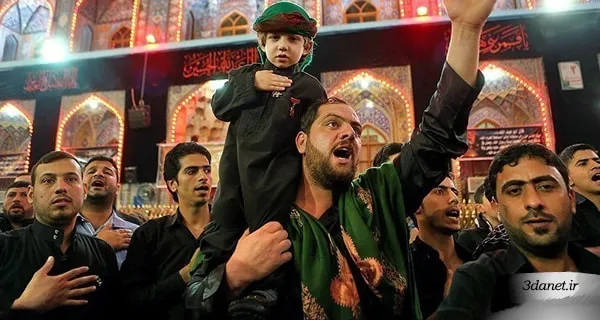
One. "Anglophobia" is a term for a psycho-mental encounter based on fear of England, its policies, and its people; a subjective perception that imagines the English as the principal, behind-the-scenes directors of the world and seeks traces of their interference in many social, cultural, and political events. In countries that were once British colonies (such as Iraq), this mode of thinking has a high degree of acceptance and prevalence. In Iran, although it has no colonial history, the interventions of the British government in the country's politics, especially from the Qajar era onward, have laid the groundwork for the formation and growth of an Anglophobic culture. A culture that still has adherents among both the masses and the elites.
Two. One branch of "Iranian Anglophobia" must be considered its seminary and clerical branch. Traces of Anglophobia are quite evident in the stances of some Shiite clerics and scholars from the late Qajar period onward. The anti-colonial literature of religious reformers, especially Seyyed Jamal al-Din al-Afghani and, in later periods, Dr. Ali Shariati, can be seen as factors in the emergence and growth of this approach among the Shiite clergy. In calling Muslims to "return to the self" and expressing the causes of the backwardness and decline of Islamic societies, they gave a special weight to the factor of "colonialism" by foreign powers and considered the root of many disorders and deviations to be the interference and conspiracy of foreigners, headed by the "old fox of colonialism," namely Britain.
Three. One of the important sources and examples of clerical Anglophobia is the book of unknown identity, "The Memoirs of Mr. Hempher." A book that, in terms of its main theme, writing style, and explicitness of expression, bears a strong resemblance to the book "The Protocols of the Elders of Zion" and, exactly like that book, is accused of being fabricated and lacking authenticity [1]. Mr. Hempher—according to the claims of this book—is a British spy who infiltrates Islamic societies with great cunning and skill and becomes the source of important events such as the emergence of Wahhabism through the instigation and guidance of Muhammad ibn Abd al-Wahhab. The peak of the power and influence depicted for England in this book is where Hempher describes a corner of his observations in the British Colonial Office: "Ten people were around a table: one of them, in the garb of the Ottoman Sultan, spoke Turkish and English. The second wore the garb of the Sheikh al-Islam of Istanbul. The third was like the Shah of Persia, and the fourth a court scholar of the Shia. The fifth like a Shia Marja' al-Taqlid in Najaf. These three spoke both Persian and English. ... The Secretary-General said: These five are in the role of the originals. We have made them to understand the nature of their thoughts [2]." The original text of The Memoirs of Mr. Hempher was written in Istanbul Turkish (one of the points of ambiguity about the book), and its Persian translation was first published in 1983 by the famous Amir Kabir publishing house. In the revolutionary atmosphere of the early 1980s, such a book with such an approach and theme was strongly welcomed. Multiple translations and editions of it were published, and it quickly found its way onto pulpits and into sermons. To this day, this book is one of the best-selling and most popular non-religious books read by the religious segment of society, and its contents are typically accepted without doubt.
Four. "Clerical Anglophobia" must be divided into two branches: one traditional and the other political. The main theme of traditional clerical Anglophobia, following the "otherness" of Sunnis in traditional Shia discourse, has largely formed around the axis of Britain's agency in the emergence of Wahhabism. But in the Anglophobia of political clergy, the scope of inclusion is broader, and the hidden hand of England is seen in many matters that, in the discourse of political Shiism, are considered "harmful." One of the famous examples of this interference and influence is deviations in the Ashura mourning rituals. According to the Anglophobia of the political clergy, one of the goals of the enemies of Islam and Shiism, headed by the colonial powers, namely England and America, is to render religious rites such as mourning ineffective by leading them into deviation. This is a theme that has existed, implicitly and explicitly, almost since the very emergence of the discourse of criticizing mourning rituals in the stances of scholars critical of certain mourning customs and those advocating for pathology and ritual reforms [3].
Five. One of the earliest sources in which foreign interference in mourning rituals is explicitly discussed—and which was later widely cited—is a report published in the Jomhouri-e Eslami newspaper on 26 May 2004 [4]. This report contains an excerpt from an interview with a person named Dr. Michael Brant—introduced as a former deputy director of the “CIA”—who reveals the CIA’s plans to deviate Shiism and its focus and planning to infiltrate Ashura mourning gatherings. Among other things, it states: “In another part of this conversation, Michael Brant addressed the importance of mourning for Imam Hussein and Ashura in Shiite teachings. According to this former CIA official, mourning for Imam Hussein intensely provokes the emotions of Shiites. ... Therefore, billions of dollars must be spent to abduct not only the speakers, but also the Shiite masses.” The report goes on to list, quoting Brant, a series of CIA schemes to deviate mourning rituals; such as “identifying and supporting speakers who lack correct information about Ashura and Shiite Islam” and “promoting methods of mourning for Hussein that do not conform to genuine Shiite beliefs and promoting new mourning practices that are against Shiite teachings,” and spending “huge sums ... to support these currents ... and speakers who speak in a way that makes Shiites appear irrational.” The themes of this report have been repeatedly republished in official and unofficial media in subsequent years, and have been expanded, elaborated upon, and embellished in the form of lectures, articles, notes, and news. Including in Mouood magazine and, quoting it, in “Fars News Agency” [5], as well as in an article titled “American Plans for Ashura Ceremonies” by Saeed Mostaghasi [6], and many other instances. In these reports and articles, the authorship of a book called “A Plan to Divide and Desolate Theology” is also attributed to Dr. Brant. Numerous preachers and clerics have spoken about Brant and his book; from various political and religious orientations: from Hamedreza Moavenian—a well-known preacher close to traditional, non-revolutionary Shiism—who spoke at length in his lecture about this book and that “its full text is available on the internet and can be downloaded” [7], to Seyyed Ahmad Khatami—a well-known political preacher and cleric and Tehran’s Friday prayer leader—who in 2005 delivered a famous pre-agenda speech at the Assembly of Experts session on the pathology of mourning, and in that speech spoke in detail about Brant and his book [8]. Scrutiny of this vast, false mass of material about Brant and his book shows that the primary and original source for all of them is that same Jomhouri-e Eslami report, and interestingly, in each of these narrations, the narrator has added extra embellishments of their own to that original text. An even more interesting point is that my repeated research and searches over these years, up to this moment, to find any trace of this individual and his book in non-Iranian media have been fruitless. Contrary to the aforementioned preacher’s claim, there is no trace on the internet of a book by that name. Or at least I have not found one so far. All that can be found are materials that have appeared in official and unofficial Iranian media. Beyond this, Michael Brant himself is of unknown identity, and his existence apparently only matters to domestic media. Internet searches reveal only one famous Michael Brant, who is a film writer and director. And it is strange that no trace can be found of a figure with an important position such as “former deputy director of the CIA.” (Unless we consider this itself a conspiracy of foreigners!)
The body of evidence strengthens the likelihood that Dr. Brandt is a figure similar to Mr. Humfer—a character born from the imaginative and conspiratorial minds of certain Shiites who, likely with good intentions, engage in forging documents and sources to prove their own legitimacy. Similar examples are not few. From the fabricated yet famous and influential book The Husayni Policy, attributed to a German named Mr. Marbin, to the forged (and laughable) letter of Albert Einstein to Ayatollah Borujerdi professing his conversion to Shiism, as well as the unsubstantiated, fabricated, and scattered statements occasionally attributed in domestic media to Francis Fukuyama—the American theorist—such as a text beginning with: "Shiism is a bird whose flight horizon is far beyond the reach of our arrows. It is a bird with two wings: one green wing and one red wing..." which is claimed Fukuyama delivered at a conference on Shiite studies in Jerusalem [9]; a matter he has categorically denied in an interview with the BBC [10]. In general, "silencing the adversary" by seizing upon sources and statements attributed to opponents of the Shiite faith is one of the common tools that the Shiite clergy, especially preachers and orators, have utilized for many years; sources and statements that are typically flawed and unreliable in terms of documentation and citation. Yet, they serve to enliven the pulpit and persuade simple-minded audiences who are not inclined to research. This traditional and clichéd method has been employed for years by the traditional clergy to prove the legitimacy of Shiism and refute opponents (particularly Sunnis), and of course, it has not been entirely ineffective in satisfying themselves and the lay audience. Although it is strange that in the age of expanding media and communications and rising levels of public knowledge, some religious propagandists still insist on using these unethical methods.
?Six. The project of reforming and pathologizing mourning rituals is one of the religious projects of the Islamic Republic, which specifically began in Khordad 1373 (June 1994) with Ayatollah Khamenei's speech criticizing certain mourning customs and has continued with ups and downs to this day. In recent years, whenever the pathology of mourning has been discussed in line with this project, the Anglophobia of the political clergy has immediately entered the arena and posited the hypothesis of foreign interference as a self-evident principle; without regard to the fact that as long as there is no receptive ground within a society, no external agent, however powerful, can make headway. Numerous claims are made for which no reliable evidence has been presented: from assertions that some young preachers and eulogists are directly paid by Western governments, and that behind the scenes of new and modern eulogy styles lies the support of foreigners, to even claims of direct agency and participation of Westerners in mourning rituals. Particularly in recent years, following the expansion of the promotional activities of Ayatollah Seyyed Sadegh Shirazi and his supporters and affiliates aimed at promoting disputed and "forbidden" mourning customs, a new concept called "English Shiism" has been constructed and elaborated in official media and the stances of the political clergy, and efforts are made to attribute all religious actions that contradict the model of political Shiism (the Islamic Republic's reading) to this current and to portray them as having a political and foreign root and origin. In the most recent example of these stances, Mohammad Hassan Akhtari—Secretary-General of the "Ahl al-Bayt World Assembly"—stated at the meeting of the Gathering of the Elderly Servants of Husayn: "England is a colonial state that has been conspiring against the Islamic region for at least four hundred years and implementing it. When the British government buys 15,000 qameh (blades) and distributes them among the mourners, has the British embassy and government's heart burned for Imam Husayn?" [11].
Seven. Mourning rituals and their instances, such as qameh-zani and certain other Shi‘i behaviors and customs, regardless of the stance we take toward them, are complex and essentially cultural-social phenomena that, from the perspective of their adherents, possess religious-jurisprudential backing. Just as some Shi‘a have reasons for opposing and confronting these customs, another group of Shi‘a likewise has reasons for endorsing and promoting them. Just as a number of jurists and maraji‘ have issued rulings declaring these customs forbidden or impermissible, another number of jurists and maraji‘ hold them to be permissible and even recommended. Each of these two groups has its own normative and epistemic sources and theoretical framework. This plurality in the normativity of religiosity and religious behavior must be acknowledged. Cultural phenomena require a cultural approach. A conspiratorial approach and a security-oriented response—the model the Islamic Republic has pursued in recent years regarding qameh-zani and similar customs—may satisfy one group of the faithful, but it has had and will have no positive effect on improving the current situation. Just as, for example, despite several decades of official and legal campaigns against qameh-zani, unofficial observations and statistics indicate the growth and expansion of this custom. The sole result of a security-oriented response and attributing cultural changes to an external factor is to sow discord among the faithful, deepen Shi‘i discursive rifts, and absolve custodians and officials of responsibility. The simplest and easiest way of confronting changes in religious culture is precisely this: instead of a correct and precise understanding of their causes and factors, we amplify the external factor. Discursive plurality and the diversity of models of religiosity are the reality of contemporary Iranian Shi‘ism. The failure to grasp this reality is the principal cause of the failure of the Islamic Republic’s religious policies in the project of reforming mourning rituals (and similar projects). Expelling the opposing and rival discourses of political Shi‘ism with labels such as “English,” “dependent,” and “deviant” only fuels religious resentments and will pave the way for resistance and the eruption of religious violence in the future.
Eight. The first step in solving a problem is a correct and precise understanding and recognition of it. This is the first brick, which, if not laid properly, will make the wall crooked all the way to the Pleiades. And it must be acknowledged that in many cases, the reason for the ineffectiveness of the Islamic Republic’s religious and cultural policies lies precisely here: the lack of a precise, field-based, objective, and real understanding of the subject. That is, exactly where social studies of religion (not commissioned, mercenary, and unmethodical pseudo-research) can come to the aid of the state and government. The service that social studies of religiosity can render to the government and state is the identification, description, explanation, causal analysis, and interpretation of the emergence and appearance of cultural changes in the domain of religiosity, and, conversely, the deliverance of custodians and administrators from the trap of simplistic and misleading notions such as religious and seminary-based Anglophobia.
.
.
Endnotes:
1_ Hamid Algar is among the experts who believe in the fabricated and inauthentic nature of the book Mr. Hemphill. The magazine Zamaneh also published a special issue on this subject in no. 122-123 (Dey and Bahman 1392 [December 2013–February 2014]).
2_ “Hidden Hands: The Memoirs of Mr. Hemphill.” Translated by Ehsan Qarani. Qom: Golestan-e Kowsar, 1376 [1997]: pp. 54-55.
3_ See “The Shi‘i Medium: The Sociology of Mourning Rituals and Religious Assemblies in Iran.” Mohsen Hesam Mazaheri. Tehran: Sherkat-e Chap va Nashr-e Beyn al-Melal, 1387 [2008]: Chapter 1.
4_ The newspaper Jomhuri-ye Eslami is considered one of the media outlets critical of the new forms of eulogy performance and one of the main actors in the current of mourning ritual pathology. Just a few days ago, the editor of this newspaper, Masih Mohajeri, sharply criticized eulogists in an editorial. An examination of this newspaper’s role in the current of mourning ritual pathology requires an independent study, which I will address in the future; God willing.
8. The text of this speech was published in a book titled “Poems on the Methods of Mourning” by Sureh Mehr Publications in 2005.
.
.
Turbaned Dear Uncle Napoleons, or the “Mr. Humfre” Syndrome in the Clergy
A Critique of Conspiratorial Thinking in the Pathology of Mourning Rituals
Author: Mohsen Hesam Mazaheri
.
.

Discussion4 comments
شما بیایید و مستدل سخن بگویید تا مردم به دین خدا جذب بشوند .
همین که شما و امثال شما ، مستدل سخن میگویید، پایمردانه تبلیغات میکنید و مردم را فراری میدهید، کافیست.
به جای پرداختن به کف های روی اب ، جریان اب زلال حقیقت اسلام را ببینید که تشنگان را سبراب مینماید و نور خورشید اسلام را که همچنان می درخشد ، و گمراهان را نجات می دهد ، اینها همه را را مدیون حضرت امام حسین( ع) و بطور کلی مدیون چهارده معصوم( ع) هستیم .
شما باید همه جا حضور و تبلیغات داشته باشی ؟؟؟ با همینگونه رفتارها همه رو از دین خدا زده کردید دیگه.