Philosophy
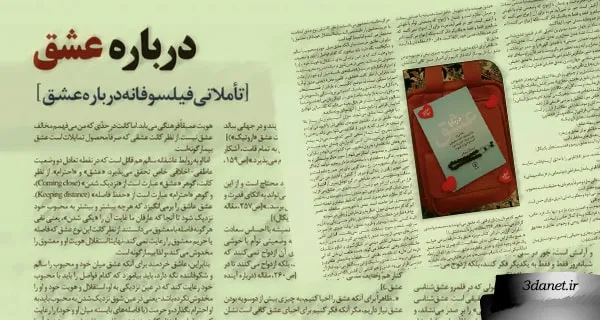
Philosophical Reflections on Love, Mostafa Soleimani
The book On Love views earthly love not as a bridge to cross but as a mirror reflecting the sacred, and examines contemporary philosophers' perspectives on love's relationship to marriage, unrequited love, and the distinction between Platonic and Aristophanic outlooks.
Love is always a source of anxiety, always accompanied by feelings of bliss and deprivation, and does not sit well with marriage, which is a state of contentment and tranquility. People do not marry in order to think of each other day and night, exclusively and solely; rather, they marry to fulfill their civic duties together. Probably the most important development in the realm of love studies in the modern world is the triumph of metaphorical love over true love. The love studies of the ancients generally placed "true love" or "divine love" at the pinnacle, and looked upon metaphorical love with contempt, or considered it merely a means (albeit a valuable and even irreplaceable one) for attaining true love. But in the love studies of the modern world, true love is precisely what was considered metaphorical in the eyes of the predecessors...
On Love [Philosophical Reflections on Love]
Mostafa Soleimani
* Book Title: On Love * Author: Group of Authors * Translator: Arash Naraghi * Publisher: Ney Publishing * Brief Description: On Love is a collection of articles in the realm of modern philosophical love studies by six contemporary philosophers: Martha Nussbaum, Robert Solomon, Robert Nozick, Laurence Thomas, Annette Baier, Elizabeth Rapaport.
Bibliography:
1- Love is always a source of anxiety.
Love is always a source of anxiety, always accompanied by feelings of bliss and deprivation, and does not sit well with marriage, which is a state of contentment and tranquility. People do not marry in order to think of each other day and night, exclusively and solely; rather, they marry to fulfill their civic duties together. Probably the most important development in the realm of love studies in the modern world is the triumph of metaphorical love over true love. The love studies of the ancients generally placed "true love" or "divine love" at the pinnacle, and looked upon metaphorical love with contempt, or considered it merely a means (albeit a valuable and even irreplaceable one) for attaining true love. But in the love studies of the modern world, true love is precisely what was considered metaphorical in the eyes of the predecessors. This book comprises translations of several important philosophical articles on love, or more precisely, "metaphorical love," that is, romantic or erotic love between human beings. The authors of these articles are among the renowned philosophers in the contemporary philosophical tradition, and each strives to analyze and examine the experience of human love from a particular philosophical perspective.
2- The authors and topics of these articles are as follows:
The Alcibiades Speech: A Reading of Plato's Symposium; Martha Nussbaum, The Virtue of (Erotic) Love; Robert Solomon, The Bond of Love; Robert Nozick, Reasons for Loving; Laurence Thomas, Risky Loves; Annette Baier, On the Future of Love: Rousseau and the Radical Feminists; Elizabeth Rapaport...
3- In the introduction, Naraghi compares Platonic love with Aristophanic love and writes:
A) In Platonic love or the Socratic-Diotiman model in Plato's "Symposium": - The beloved has no intrinsic importance and is merely a window to truth. The true beloved is the universal and absolute truth. - Corporeality is despised, and the ultimate object of desire is something beyond the senses. B) In Aristophanic love: - The individual beloved has particular relevance and importance, and only a specific person can be the individual's lost half and grant them a particular perfection. - Physical union is a symbol of the spiritual and existential union of lover and beloved. He also expresses the relationship between metaphorical and true love through two allegories; symbols of two different perspectives: 1) A bridge; which one must cross, and true love is merely a tool for reaching true love. 2) A mirror. It is quoted from Ghazali in the book "The Revival of the Religious Sciences" that there are aspects of the world of meaning that the seeker cannot discover with the mirror of their own heart alone and needs two mirrors. In this allegory, metaphorical love is not a bridge that the individual must sooner or later cross; it is a play of mirrors between two hearts that captures and reflects the sacred within their hearts."
4- You will read excerpts from this book:
“Openness is to enter the world of this story and also to let it enter you, to live within the story and humbly and submissively surrender yourself to it so that it may do with you what it will.” [p. 64, essay (The Alcibiades Speech: A New Reading of Plato’s Symposium)] “The aim of love is for the lover to place a particular person upon an extraordinarily lofty pedestal and to re-imagine themselves based on that person, to create an escape from the anonymity of the Kantian moral world and to flourish in a world they have built together.” [p. 147, essay (The Virtue of Erotic Love)] “It is within the bed of love’s complete intimacy that the human being is revealed in their full stature, is refined, is accepted, and finds healing.” [p. 159, essay (The Bond of Love)]
“The lover deeply needs the reciprocal response of their beloved and, in this respect, is completely and madly dependent upon them. The lover cannot, relying on their own power and ability, attain the desire of their love, that is, a reciprocal response…” [p. 257, essay (On the Future of Love: Rousseau and the Radical Feminists)] “Love is always a source of anxiety, always accompanied by feelings of bliss and deprivation, and does not sit well with marriage, which is a state of contentment and tranquility. People do not marry in order to think of each other day and night, exclusively; rather, they marry to fulfill their civic duties alongside one another…” [p. 260, essay (On the Future of Love…)] “…apparently, to revive love, we need something more than the reciprocity of love, unless we think it sufficient for reviving love to show that men and women (when they fall in love) become entangled in the same predicament.” [p. 236, essay (On the Future of Love…)] According to this report, in this book we also read about unrequited love: “…none of this means that there is no such thing as unrequited love, or that unrequited love is not love, for it is that dialectical relationship which, with all its resistances and conflicts, can occur within a single soul exactly as it flows within two souls. It is true that the intensity and richness of the affair may thereby be diminished, but as Stendhal often claimed, perhaps through this, the power of imagination gains greater richness; or as Goethe put it: Suppose I am in love with you, what business is that of yours?” [p. 140, essay (The Virtue of ‘Erotic’ Love)]
5- Further explanations by Arash Naraghi, the book’s author, in an interview with “Mehrnameh 15”:
الف) «تأکيد هيوم و پيروان او اين است که نبايد جنبههاي طبيعي و بيولوژيک عشق را از ياد برد. تجربه عشق با ساختار هورموني، عصبي و مغزي ما عميقاً مربوط است، و البته نقش مهمي هم در توليد مثل و تداوم نوع بشر ايفا ميکند. بنابراين، ريشه عشق را، مطابق نظر هيوم، نبايد در آسمانها جست، ريشه آن در طبيعت خود انسان است. اما پديده عشق، همانطور که پيشتر هم اشاره کردم، گرچه زمينه بيولوژيک دارد، اما از آن حدّ بسي فراتر ميرود، و به نحو عميقي با زبان درميآميزد، و هويت عميقاً فرهنگي مييابد. اما کانت در حدّي که من ميفهمم مخالف عشق نيست. از نظر کانت عشقي که صرفاً محصول تمايلات است عشق بيمارگونه است. اما او به روابط عاشقانه سالم هم قائل است که در نقطه تعادل دو وضعيت عاطفي- اخلاقي خاص تحقق ميپذيرد: «عشق» و «احترام». از نظر کانت، گوهر «عشق» عبارت است از «نزديک شدن» (Coming close)، و گوهر «احترام» عبارت است از «حفظ فاصله» (Keeping distance). عشق عاشق را برميانگيزد که هرچه بيشتر و بيشتر به محبوب خود نزديک شود تا آنجا که عارفان ما غايت آن را «يکي شدن»، يعني نفي هرگونه فاصله با معشوق ميدانستند. از نظر کانت اين نوع عشق که فاصله يا حريم معشوق را رعايت نميکند، نهايتاً استقلال هويت او و معشوق را مخدوش ميکند، و لذا بيمارگونه است. بنابراين، عاشق خردمند براي آنکه عشق ميان خود و محبوب را سالم و شکوفاننده نگه دارد، بايد بياموزد که کدام فواصل را بايد با محبوب خود رعايت کند که در عين نزديکي به او، استقلال و هويت خود و او را مخدوش نکرده باشد- يعني در عين شوق نزديک شدن به محبوب بايد به او احترام بگذارد، و حرمت (يا فاصلههاي بايسته ميان او و خود) را رعايت کند. بنابراين، از نظر کانت، «عشق در قلمرو عقل» (يعني عشق توأم با احترام) ممکن است، اما موضع اتکينسون و پارهاي از فمينيستهاي راديکال اين بود که عشق رمانتيک که مبتني بر وابستگي يکسويه زنان به مردان است، به بازتوليد ساختارهاي سرکوبگر زنان ميانجامد، و اساساً ناسالم و نامطلوب است. در هر حال، بعيد ميدانم که کانت با اين مواضع کمابيش افراطي و نتايج حاصل از آنها موافق بوده باشد.»
ب) «وقتي شما عاشق ميشويد، ميزان آسيبپذيريتان بسيار بالا ميرود. عاشق در برابر معشوق سپرهاي دفاعياش را فرود ميآورد، و در نتيجه هر تيري که به باروي او افکنده ميشود، ميتواند روحش را بهشدّت مجروح کند. شما از سخن کسي که دوست ميداريد بيشتر رنجيده خاطر ميشويد تا آن کسي که برايتان چندان مهم نيست. در تجربههاي عاشقانه فرد به روي محبوب خود گشوده ميشود، و بنابراين، نقاط ضعفش بر محبوبش آشکار ميشود. از سوي ديگر، وابستگي او به محبوب زندگي و سعادت او را با مخاطرات تازهاي روبهرو خواهد کرد. اگر خطري براي محبوب من رخ دهد گويي براي من هم رخ داده است، و چون حجم زيادي از زندگي او بيرون از کنترل و اختيار من ميگذرد، سعادت و شقاوت من به نحو مضاعفي در گرو عوامل بيرون از اختيار من قرار ميگيرد، و اين امر هم بر ميزان آسيبپذيري من عاشق ميافزايد. از سوي ديگر، گوهر عشق نوعي شورمندي است، و شورمندي، به تعبير کيرکه گار، ملازم خطرپذيري است. آنجا که خطر بيشتري نهفته است، شور بيشتري نيز حاجت است. عشق يا شورمندي صادقانه، به تعبير کيرکه گارد، بر مبناي ميزان خطرپذيري طرفين ارزيابي ميشود.»
c) “In my view, it is a mistake to equate the phenomenon of love with the sexual. Of course, thinkers like Schopenhauer and Freud ultimately considered love to be nothing more than a repressed and distorted form of sexual desire. But this view overlooks important aspects of the phenomenon of love. Undoubtedly, physical attractions play a significant role in the formation and continuation of amorous relationships. When Hafez says: ‘Be a slave to the face of one who possesses that charm,’ this ‘charm,’ which is the bait in the snare of love, is certainly related to outward and physical allure. Romantic love begins from this starting point, but it goes far beyond that limit. Love results from the interaction of that attraction (which is instinctual) and language (which is cultural). While we must acknowledge and recognize the biological foundation of the phenomenon of love, we should not neglect its linguistic character. The phenomenon of love, built upon those instinctual attractions, cultivates a network of deep human emotions, and those emotions are thoroughly intertwined with our system of beliefs and values. ‘Belief’ is among the constituents of emotion, which is fundamentally a linguistic matter. At least in this sense, love must be considered a phenomenon deeply interwoven with human language. This is why mere physical attraction cannot be considered an amorous relationship. An amorous relationship takes shape and flourishes in the context of dialogue, companionship, shared memories, and mutual understanding. Individuals gradually build a shared world with one another, and in this shared world, they become so intertwined and close that, in the words of Robert Nozick, they gradually create a ‘we.’ If your point is that the relationship of love should be linked to the physical in this sense, then I believe almost all the writers in this collection have done precisely that.”
.
.
Philosophical Reflections on Love
Author: Mostafa Soleimani
Source: Harim-e Imam Magazine, No. 229
.
.




Discussion0 comments
No comments yet; let yours be the first voice.