Psychology
Why Can't We Resist the Temptation of the Virtual World?
Smartphone makers and online game designers use subtle techniques to keep users completely hooked. In his book Irresistible, Adam Alter explains how these temptations target everyone's well-being and sever human connections.
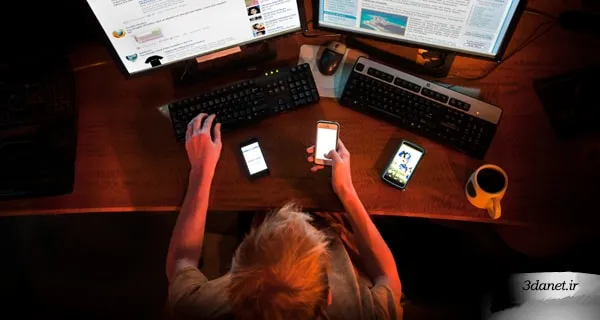
A school near my practice recently held a program on internet safety, with the subtitle: "How to keep your child safe while online!" The program, organized by several police officers in the school hall, explained the workings of a system they had named the "Child Exploitation and Online Protection Centre." The program brochure promised parents of children aged five to eleven that by attending, they would learn more about the dangers of the internet, especially social networks. I do not know when it became considered normal for children to have to receive online messages that do not necessarily have good intentions behind them, and to leave the detection of child abusers posing as their peers to the children's own understanding and cleverness. Adam Alter, in his book Irresistible, describes this terrifying situation: today's communication systems, even without such dangers, target and threaten not only the health of children but the health of everyone.
I know a child who committed suicide after a large number of his schoolmates widely shared a humiliating post about him among themselves. One of my teenage patients also told me that she wakes up three or four times every night to read messages on her mobile phone, and this has caused her difficulty concentrating in class. Last week, a social worker told me that the children of an "at-risk" family were being completely neglected – the mother would lie on the couch playing with her mobile phone, and the children had to put themselves to bed. I know a six-year-old child who, when walking, holds his hands to his chest and moves his thumbs very rapidly. He is actually imitating his father's habitual gestures, even though he does not yet have a mobile phone himself.
Alter, who teaches marketing and psychology at New York University, wants to show us with his book the subtleties the creators of smartphones, Netflix, and online games like "World of Warcraft" have employed in their programming, and how much they have spent, to get us completely hooked. He writes: "When I was a kid, I was afraid of drugs. I constantly had nightmares that someone was going to force me to take heroin, or I would see myself becoming an addict." So it is not surprising that he became a psychologist of addiction, and in this context, the drug he has worked on has been the internet. In a chapter of the book titled "Never Get High on Your Own Supply," he describes his observations and writes that Steve Jobs, the head of Apple, and Evan Williams, the head of Twitter, neither allowed their own children to play with touchscreen devices.
A few years ago, a programmer named Kevin Holesh became worried that his screen time was getting out of hand, and designed an app called "Moment" that calculates the amount of time a user spends with a screen (this does not include phone call time). The results this app showed – even for people for whom the issue was important enough to download it – were shocking: for 88 percent of these people, this time was more than one hour a day, and the average was three hours a day. Typical users checked their phone screens 39 times in a 24-hour period. And this was incomparable to the statistics from 2008, when smartphone use had not yet become widespread, and adults spent an average of only 18 minutes a day using their phones.
What is the significance of all these points? Have we properly devoted our time to receiving information and engaging or entertaining ourselves with our phones, and made good use of our time? Not necessarily. Alter writes in his book: "Life has become easier than ever, but this ease has also fueled our temptations." Childhood has lost its characteristics. Alter quotes a girl who has just finished sixth grade, meaning she has reached the age where all her peers have gotten mobile phones: "I don't feel like a kid anymore... I've given up everything that was normal for my age, like the games I used to play, my art hobbies, playing with my toys. It's all over."
From an etymological perspective, being addicted means being a slave, and behavioral addiction means "becoming so dependent on an experience that we suffer harm if it is not repeated and cannot manage without it." Alter clearly distinguishes between addiction (overindulgence in something that brings pleasure) and compulsion (overindulgence in something that merely soothes anxiety and restlessness). For many of us, turning to our phones has become a compulsion.
Midway through his book, Alter reveals that designers deliberately create these tools from the outset in such a way that addiction to them practically arises. He focuses on goals, and why, for instance, "Fitbit" users often exercise to the point of injury; he discusses the hazards posed by these highly contradictory feedbacks, feedbacks that simultaneously serve as a reward (like counting likes) or the importance of a sense of progress and advancement (like counting followers, or progressing in a game). In a chapter dedicated to games, he examines the addictive power inherent in making game levels harder. (Remember Tetris?) His book contains several riveting pages about stories and series that keep the audience in suspense and anticipation, as well as about the power of internet television. On social interaction, he writes: "A mind nurtured on online friendships can never adapt itself to interactions in the real world," and references a paper published in 2012 which showed that any smartphone simply left idly in a room could weaken the relationship of a couple randomly selected for the experiment, even if they did not touch the phone. The paper concluded that "portable communication devices like mobile phones can, paradoxically, by their mere presence, hinder the consolidation of potential human bonds, and perhaps even sever the ties of affection and intimacy," likely because their presence could signify connection with others who are absent.
In the 1970s, it had been proven that if the reward pigeons receive is unpredictable, they peck at a lever far more frantically. A rhesus monkey placed in a cage with a wire connected to the pleasure center of its brain ignores food and water to intensify the interactions caused by that wire. These neuropsychological experiments are famous, but Alter retells them to show how the newest technologies trap us in the communication experiment cage. An addict always has a slim chance of escape.
Some dismiss these concerns as alarmism and exaggeration, saying every new technology has always been met with pessimism. The girl who killed herself might have done so even without being publicly humiliated over her post. Absent-minded parents have always existed, and this is not a phenomenon unique to today. My adolescent patient might have had trouble concentrating even without waking up to check his phone. Socrates said that writing would make us all forgetful. Caxton’s printing press destroyed the economy of scribes. Television was condemned for vulgarizing and trivializing people’s entertainment. The world of connectivity is here to stay. Therefore, Alter advises parents, when discussing these issues with their children, to try to be kind, calm, informed, and realistic, and to remember that technology brings us both problems and solutions. It is easy to control the usage limits of these tools and block specific websites, and to hide likes and retweets on one’s social network. It is also good to remember that the status quo will not last long: tablet computers have only been on the market for seven years and smartphones for nine, and it is likely that within ten years both will suffer the fate of pagers.
What will the next big thing be? Probably virtual reality, which is currently in its infancy. Imagine a time when you can walk shoulder-to-shoulder with every foreign correspondent, and see how addictive the news will become then. Or imagine being placed on the field of play yourself, and see how addictive games become in that case. Facebook paid two billion dollars for Oculus and is investing heavily in its apps. Many of us have seen families who have come to a restaurant to eat but each is absorbed in a smart screen, ignoring the others. A decade from now, they will all appear with headsets.
.
.
the school near the GP practice where I work held an internet safety evening recently, subtitled “How to Keep Your Child Safe Online”. It was in the school hall, hosted by police officers, and explained the role of something called the “Child Exploitation and Online Protection Centre”. The blurb on the leaflet promised parents of children between five and 11 would learn more about the dangers of the internet, and in particular, social media. I’m not sure when it became normal for kids to have to cope with malicious online messages, and be savvy about paedophiles masquerading as peers. In Irresistible, Adam Alter makes the frightening case that even without these hazards, modern connectivity threatens the health of not just our children, but everyone.
A child I knew of killed herself after a humiliating post was shared widely around her school. An adolescent patient told me that he wakes three or four times each night to check his phone for messages, and struggles to concentrate in class. Last week a social worker told me that children in an “at-risk” family were being neglected – the mum lying on the sofa playing with her phone while the kids put themselves to bed. I know a six-year-old who walks with his hands held to his chest, thumbs blurred by movement, adopting his dad’s habitual posture, though he doesn’t yet have a phone.
Alter teaches marketing and psychology at New York University and wants to show us how smartphones, Netflix, and online games such as World of Warcraftare exquisitely and expensively engineered to hook us in. “As a kid I was terrified of drugs,” he writes. “I had a recurring nightmare that someone would force me to take heroin and that I’d become addicted.” It’s unsurprising he’s become a psychologist of addiction, and his intoxicant of choice is the internet. In a chapter subtitled “Never Get High on Your Own Supply” he makes the observation that neither Steve Jobs of Apple nor Evan Williams of Twitter have allowed their children to play with touch screens.
A couple of years ago a programmer called Kevin Holesh, worried that his own screen time was getting out of control, wrote an app called Moment, which tracks how long a user is interacting with a screen (it doesn’t count time on phone calls). The results were startling, even among those concerned enough to download the app: for 88% it was more than an hour a day, with the average being three hours. The typical user checked their phone 39 times in 24 hours. By comparison, in 2008, before smartphones became widespread, adults spent just 18 minutes a day on their phone.
Why does any of this matter? Surely time being informed, engaged and entertained by our phones is time well spent? Not necessarily: “life is more convenient than ever”, writes Alter, “but convenience has also weaponised temptation”. Childhood has changed. Alter quotes a young girl: “I don’t feel like a child any more… at the end of sixth grade [when all her peers got phones] I just stopped doing everything I normally did. Playing games, art recess, playing with toys, all of it, done.”
Etymologically speaking, to be addicted is to be a slave, and behavioural addiction is “a deep attachment to an experience that is harmful and difficult to do without”. Alter is good on the distinction between an addiction (the indulgence of which brings pleasure) and a compulsion (the indulgence of which merely brings relief from restless anxiety). For many of us, checking phones has become compulsive.
The middle part of Alter’s book is illuminating on the ways that designers engineer behavioural addiction. He examines goal-setting, and why users of Fitbits often exercise to the point of injury; the dangers of inconsistent but rewarding feedback (counting those “likes”); the importance of a sense of progress (such as counting followers, or advancing through a game). In a chapter emphasising gaming he examines the addictive power of escalating difficulty (remember Tetris?). There are a fascinating few pages on cliffhangers, and the power of streaming TV. As to social interaction: “a brain raised on online friendships can never fully adjust to interactions in the real world”, he writes, and refers to a 2012 paper, which suggested that a smartphone, placed idly in a room, can impoverish the relationship between two randomly assigned partners even if they don’t touch it. The paper concluded that “mobile communication devices such as phones may, by their mere presence, paradoxically hold the potential to facilitate as well as to disrupt human bonding and intimacy”, presumably because they represent the possibility of connection with absent others.
In the 1970s it was shown that pigeons would peck a bar more frenetically if the reward delivered was unpredictable. A squirrel monkey in a cage, with a wire into the pleasure centre of its brain, will ignore food and water in order to go on stimulating the wire. These neuropsychology experiments are well known, but Alter retells them to illustrate how the latest technology traps us in a lab cage of connectivity. For an addict, there’s little opportunity to escape.
Some will find this shrill and alarmist – new technology has always had its catastrophisers. It may have been that the girl who killed herself would have done so without the public shaming that followed her post; there have always been neglectful parents; my teenage patient might have struggled to concentrate without being woken by his phone. Socrates said that writing would make us all forgetful; Caxton’s printing press destroyed the economy of scribes; television was condemned for vulgarising and trivialising entertainment. Connectivity is here to stay, and Alter suggests that parents in conflict with their kids over it would do well to stay approachable, calm, informed and realistic, and remember that technology brings solutions along with problems. It’s easy to monitor usage or block certain sites, and have the likes and retweets hidden on your social media. It’s worth remembering, too, that the status quo won’t last long: tablet computers have only been around for seven years, smartphones for nine, and within 10 years both may well have gone the way of pagers.
What’s the next big thing? Probably virtual reality, currently in its infancy. Imagine how addictive news will be when you can walk alongside each foreign correspondent. Imagine how addictive games will be when they put you into the scene. Facebook paid $2bn for Oculus VR, and is investing heavily in its applications. Most of us have seen families out for a meal ignoring one another while each strokes a screen; a decade from now they may all be wearing headsets.
Gavin Francis’s Adventures in Human Being was winner of the Saltire prize for nonfiction last year.
.
.
Why Can't We Resist the Temptation of the Virtual World?
Gavin Francis is a Scottish physician and writer. What you have read is a translation of this piece by him:
Gavin Francis, ‘Irresistible: Why We Can’t Stop Checking, Scrolling, Clicking and Watching – review’, Guardian, 26 February 2017.
Translation: Sepideh Jediri
.
.




Discussion1 comments
بنده در همین راستا سه سال پیش یک مقاله در وبلاگم نوشتم که شاید برای مخاطبان جالب باشه: عبور شبکه های اجتماعی از مرزهای انسانی: http://silvercover.ir/?p=1817