Economic Sciences
What Should We Do About the Challenge of Technology and Corruption?
A negative, prohibitive approach to phenomena like capitalism or cyberspace, under the pretext of preventing corruption, stifles growth and creativity and cedes the field to others. The solution is not to eliminate these tools but to manage their risks for the sake of societal development.

There was a time when the debate centered on this: if "wealth" or "capitalism" is, in short, a cause of an individual's deviation—and it is—what is the remedy? Back then, Marxists claimed that capitalism is the source of corruption. Their claim, of course, focused on private property and the idea that ownership of the means of production entails the issue of surplus value, and that the capitalist, by virtue of owning the means of production, unjustly extracts this surplus value from the worker, appropriates it for himself, and thereby becomes wealthy—or a capitalist—and corrupt. These debates spread to us as well and, with certain religious and hadith-based citations, settled squarely upon the legacy of poverty, asceticism, the praise of seclusion, forty-day retreats, and the like.
At that same time, one response—which was predominant and stemmed from our leftist leanings—was to prevent a capitalist from emerging in the first place; and in land ownership, if someone had more than ten hectares, to stop them. A few religious scholars also gathered and endorsed and implemented this theory. Once again, there was a forced redistribution of lands (the story was that peasants did not rise up from their leased lands, and the expediency law also supported them), and once more, the integrity of the lands was lost, and agriculture was apparently damaged. In a country where, after the death of any landowner, their properties were fragmented and divided, the government itself accelerated this process with land redistribution. In any case, the aim was to figure out what to do so that capitalism or land ownership would not become a source of corruption. We thought long and hard until, out of fear of the communists, we implemented land reform, arguably damaged agriculture, and so on. Of course, this was not the sole factor in the destruction of agriculture or the inefficiency of the traditional agricultural production system; alongside it, there were dozens of other factors (including scientific and technical problems and our inability to modernize agriculture).
In any case, what should we do so that capitalism does not become a source of corruption? They said the way is to prevent a capitalist from emerging. At that time, one of the jurist scholars of Qom, who was witty and known for his advocacy of capitalism—and a critic of the first eight-year government of the revolution for its leftist excesses—would say: "What kind of talk is this, that we must take money from people so they are not capitalists, do not produce corruption, and do not become corrupt? Well, people also possess and carry other means of corruption; does that mean we should somehow destroy those too, so that no corruption remains?" His point was clear, and the author—out of modesty—cannot fully quote his statement; but in brief, it was a good example and comparison. Basically, whatever we ostensibly consider a source of corruption, we first deny it entry and declare it wholly illegitimate; let it go away so it doesn't create corruption! Gradually, it forces its way in and arrives; because it has its own technical, scientific, and worldly aspects; simultaneously, it has good and bad uses; so not only can it not be eliminated, but it enters under pressure and gradually becomes widespread; yet still under a policy of avoidance, fear, and anxiety. These days, an amusing irony occurred: during the government of the Third Millennium gentleman, Twitter was blocked; and now, after ten years, he himself opened a Twitter account at the start of new political activities. It seems to me there could be nothing more ridiculous and instructive than this. Even more interesting than this is Facebook, where, despite the ban, many religious dignitaries are active.
Again these days, the issue of cyberspace has come up for the hundredth time; ultimately, is it halal or haram? What should we do? Is it not like that story of capitalism? That is, should we eliminate and cut it off so that the situation improves? If capitalism and such things are truly the source of corruption, why do many of the virtuous own trading houses and capital? Now, sometimes they conduct commercial business for themselves, and sometimes as a charitable center or the like. My discussion is not about these at all; may all of it be halal for them, and may the poor be satiated in the light of their existence! We are not envious. The discussion is that, with all this talk, as that friend said, we never allowed the private sector to take shape; because we lacked experience and had been strict all along. And the one time we set out to create a private sector—no offense to the majority of people in this field—we created a big ... mess, and we have been waiting for three years to get people's money back from it; because we had not prepared the necessary laws; moreover, people uncommitted to the law had also taken charge.
The point is that when we reacted negatively to whatever came along and only paid attention to its formal aspects, the natural result was that we removed ourselves from the cycle of work and experience with these matters and deprived the new generation of the opportunity to display their talents and creativity; we could not even properly use these tools in religious propagation. In this virtual space, which, as some say, is over ninety percent corrupt, who dares to be present? Which talent among Muslim children is permitted to employ and display their creativity there? In these cases, the field must be left to others, namely the foreigners, and we must sit on our hands until we see when its use becomes official and permissible! We had the same story with cinema; no one has forgotten the battles of the religious scholars against the film *Muhammad, the Messenger of God* and all those fatwas from Al-Azhar, Saudi Arabia, and so on and so forth. What can one call this practice, which has been repeated hundreds of times? Has this behavior of ours not been a cause of the new generation's inaction in the optimal use of these tools on the path of society's growth and progress? I really have no concern with other aspects of the discussion, and this alone is what matters to me. Of course, this does not mean that I am, for instance, in favor of the potential corruption in using these tools; corruption exists, and in many parts of the world, they prevent it; what is important is taking a correct path — from among the uneven roads ahead. A friend used to say, once upon a time, a person would ride a donkey, and when they fell, their hand would break; they rode a bicycle, and when they fell, their leg would also break; they rode a car, and when they had an accident, they would be injured and even die, but there was a corpse; then the airplane came, and when it fell, one would be pulverized… Thus, every device, along with the help it provides, has its own specific problems; the art is to build an airplane whose probability of falling is near zero. Sitting and saying that a wise person does not board an airplane because its danger is great solves no problem.
.
.
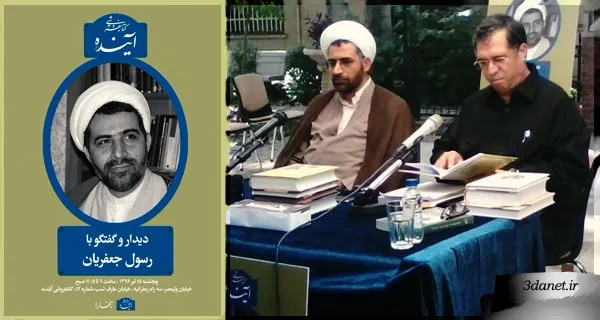
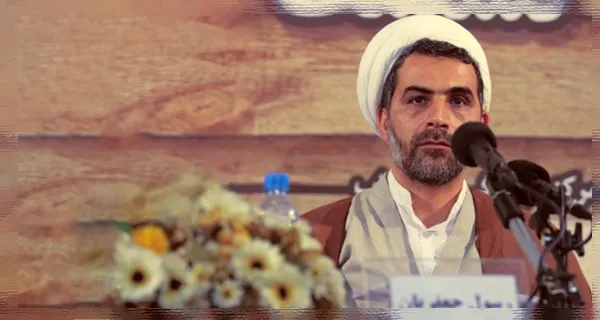
A note by Professor Rasul Jafarian on the endless controversies surrounding virtual space
What should we do about the challenge of technology and corruption?
Source: Mobahesat
.
.


Discussion0 comments
No comments yet; let yours be the first voice.