Religion
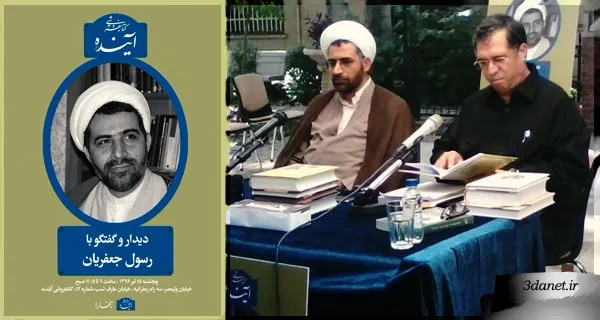
The Story That Became Historical Fact, Rasoul Jafarian
The novel Ghādat al-Andalus was a fictional story about the fall of al-Andalus that, through its incorporation into Tantawi Jawhari's commentary and its Persian translation, was gradually accepted as historical fact—an example of how narrative becomes history in the Islamic world.

The transformation of a story into history occurs frequently, and in its wake, it leaves traces that are sometimes quite fascinating. I often relate this experience to history students, but since it pertains to our contemporary religious literature, and particularly to what emerged from it during the Revolution, it will also be of interest to the general public. I hope it will be treated as a theory, and if there is room for critique, that they will guide this humble servant.
The matter I will review is an example of how and in what manner a tale and a story become history and are cited as fact. I must state that this happens frequently, sometimes deliberately and sometimes inadvertently. In any case, however, a context is necessary for this transformation; if it is provided, this metamorphosis occurs easily, and a fabricated story becomes a historical truth. Gradually, its citation passes from among the storytellers and infiltrates among individuals who stand a bit above this level—writers and even researchers whose field of work is another subject, but who use these as axioms. This happens in many nations and has numerous examples. But among them, stories fabricated with specific political and social motives require more scrutiny. These are used for a period and often become the source of changes that are noteworthy. These stories (like the affair of Mr. Humfrey) are often fabricated with specific goals, but when a need for them exists deep within society and the conditions entangled with it, no doubt is cast upon their accuracy and truth. Here, I intend to examine one example. Naturally, these points are limited to the evidence that will be presented.
When Napoleon's invasion of Egypt in 1798-1801 AD brought Europeans to Egypt, the occupation of this land by Europeans began. This occupation was a gradual process, and as is clear, economic, social, military, and cultural interventions paved the way for the continuation of this occupation and influence. During the nineteenth century, the presence of Europeans in Egypt created many changes. Schools and the training of new students, the spread of Westernization, civilizational changes, and many other issues, as well as the granting of certain religious freedoms and other matters, set the stage for change. Students also went to Paris and returned to Egypt with new educations. Many Muslims felt a sense of danger in this regard and engaged in an intellectual struggle against the West, but the changes were underway. At this time, a physician named Abd al-Rahman Ismail attempted to express the story of this occupation, through what had befallen al-Andalus, or Spain, at the end of the fifteenth century AD (the fall of Granada, the last Muslim emirate in Andalusia, on January 1, 1492), in a story, so as to influence and awaken the people.
The book Ghādat al-Andalus by ʿAbd al-Raḥmān Ismāʿīl (d. 1315 AH / 1897) is that very work of fiction. ʿAbd al-Raḥmān was a physician in Cairo who died young, at the age of thirty. In addition to several books on general medicine, being a man of letters and a poet, he also wrote novels. At that time, it was imagined that the fate of Egypt and the Islamic lands resembled the situation that al-Andalus had once faced; indeed, because al-Andalus had been lost, there was a fear that Egypt, too, would be lost. Naturally, this story, titled Ghādat al-Andalus, illustrated how the Westerners wrested al-Andalus from the hands of the Muslims. Al-Ziriklī (al-Aʿlām, vol. 3, p. 299) mentions the biography of this ʿAbd al-Raḥmān and, among his works, lists Ghādat al-Andalus, describing it as a “qiṣṣa” (story) and a work of fiction. Years later, an Egyptian exegete named Ṭanṭāwī Jawharī (d. 1940), author of the Tafsīr al-Jawāhir, included a summary of the book Ghādat al-Andalus over four pages under one of the verses of Sūrat al-Aḥqāf (Tafsīr al-Jawāhir, vol. 21, pp. 180–183) without indicating that it was a story. In Tafsīr al-Jawāhir, at the beginning of this account, Ṭanṭāwī wrote: “Consider what has come in the book Ghādat al-Andalus, composed recently in our era, and this is a summary of what is in it.” Then follows the detail, which includes a lengthy tale resembling a story about the fall of al-Andalus. The basis of this tale was that the Europeans, through a corrupt Muslim, were able to infiltrate al-Andalus and, by establishing commercial and economic relations, building schools, creating promenades and national parks, promoting wine-drinking and alcohol consumption, and spreading the abandonment of the veil, corrupted the Muslims of al-Andalus and seized the land. This was an important question confronting Muslims in Egypt. But it was natural that this problem was also relevant for many other Islamic lands, including Iran. Therefore, it was natural that this tale, in a way, also found the necessary ground in Iran. Two important questions were raised. How was al-Andalus lost? And another point: al-Andalus had been lost to the Europeans. What tools and methods had they used? This very moral corruption, which was also of great importance to Muslims and was ostensibly one of their major differences with the licentious Westerners, could serve as the answer to their question. It was quite readily understood by Muslims that Westerners bring debauchery and corruption to render them incapable of living and to plunder their country. But in Iran: In 1330 SH (1951/1952), a booklet was published in Qom titled Ghurūb-i Āftāb dar Andalus (Sunset in Andalusia). Its author was ʿAbd al-Jawād Gharīb, and the cover stated that the work was translated by the command, indication, and assistance of Mīrzā Khalīl Mujtahid Kamaraʾī.
The book contained an introduction about al-Andalus up to page 6, and at the end of the introduction, it was stated that the text was translated from Ṭanṭāwī’s Tafsīr al-Jawāhir, vol. 21, pp. 180–183. From page 66 to the end of this booklet, i.e., page 21, is the translation of that very text. Of course, the Persian text does not state where the author obtained this material, but as mentioned, Ṭanṭāwī identified his source as the book Ghādat al-Andalus.
Thus, a work of fiction, written by a thirty-year-old physician, is the very text that Tantawi included in his commentary al-Jawahir and which was translated into Persian in 1330 [1951/1952]. The story of the book recounts how the Christians were able to wrest Andalusia from the hands of the Muslims. The summary of this tale is that a treacherous Arab commander named Boraq meets with Ildefonsus at the Vatican, and through their planning, the groundwork for the fall of Andalusia is laid. There, he teaches them three methods. First, the promotion of religious freedom; second, the opening of trade and commerce; third, freedom of education. This corrupt Muslim explains to them that through trade and commerce they can mingle with the Muslims, strip them of their national and religious characteristics, and by spreading intoxicants, rob them of their modesty and chastity through the proliferation of debauchery. [These are matters pertaining to the modern era, and the novelist, in order to show that colonialism arrives through these means, has projected them back into the depths of history, namely the time of the fall of Andalusia in the ninth century AH.] In Boraq's view, if the Christians carry out these three tasks, Andalusia will slip from the grasp of the Muslims. In this story, it is recounted that after the explanations of that corrupt Muslim, the Christians convened a grand council on the matter. Under the guise of a peace treaty, the Christians create the conditions for infiltrating Andalusia, and in this way, they penetrate the Muslim lands. Under the pretext of peace, festivities are held, and in these festivities, everyone indulges in pleasure-seeking. In the view of this novelist, this is the prelude to the "fall and decline of the Islamic state in Andalusia." Christian missionaries enter Andalusia; a beautiful mansion is built on the banks of the Cordoba river; promenades are created, and the ground is prepared for the debauchery and amusement of the Muslim emirs and their youth. Furthermore, schools are established for the education of Muslim children, and their expenses are also paid [here, the translator alludes to the commencement of work by American schools in Iran]. The beginning of trade is one and the same as the sale of intoxicants and alcoholic beverages. "The priest who allocates the wine of Cordoba to the Muslim youth." This is a heading that appears on page 13, and within it, the corruption of the youth through the spread of wine-drinking is discussed. Christian girls, who had been employed by Christian priests, take on the task of spreading prostitution. Thus, pleasure-seeking and debauchery became so widespread that the people's income could not cover it. Consequently, they began embezzling and stealing from the public treasury, and gradually everything descended into corruption. "By this time, the number of Christian missionaries and priests in Andalusia had reached one thousand, and the number of teachers in the schools whose expenses were paid by the Pope had reached 485! Moreover, the Pope gave one thousand florins annually from his personal treasury to promote wine-drinking among the Muslims of Andalusia." (p. 16) [Here, the year 486/1094 CE is mentioned, which is fundamentally unclear what connection it has to the time of the fall, which occurred four centuries later.]
Generally speaking, however, it should be noted that the discussion of Andalusia at the dawn of the modern era, when Muslims turned their attention to their past civilization, seemed somewhat painful; therefore, it was natural that they would pay attention to it for various reasons and write about it. (As one example, Mr. Motahhari frequently lamented this issue and expressed his distress). The discussion was about the loss of Andalusia, and this was no small matter. In the contemporary period, at the beginning of the era of Western dominance, which first emerged in Egypt, it reminded people of that period, and it was imagined that this event was repeating itself and that Egypt, too, would be lost. Therefore, it was an interesting subject for examination, a subject that prompted the author of Ghadat al-Andalus to write a story and present the issues of his own time within the framework of a tale set in that period. But it is astonishing that this story became the basis for an analysis and was taken seriously. In Iran, a book titled The Land of Memories was written by one of the learned scholars of the seminary of that time, named [Ayatollah] Seyyed Ali Mohaghegh, and was repeatedly published by Nasl-e Javan Publications — which was under the supervision of Mr. Makarem Shirazi. In this book, an account is first given of the conquest of Andalusia, or Spain, by the Muslims, and a rapid historical overview of it is provided. This section is written using various sources.
In the final part of that discussion, the causes of Spain's decline are addressed, drawn almost entirely from the same book Sunset in Andalusia. This section mentions the role of the Church and colonialism, and the means by which the Church was able to wrest Spain from the Muslims. They "had to start the work from within, had to put the plan into action among the Muslims themselves, and in the end they did just that" (Andalusia, Land of Memories, p. 59). To this end, they set about creating internal divisions and, more importantly, "the spread of wine-drinking and lust among the youth by agents of the Church." Also cited as factors in Spain's decline are "the boundless expansion of Christians in religious propaganda and the onslaught of Christian missionaries into Spain," as well as "the expansion of commercial relations between Muslims and Christians and the influence of Christians on Muslim culture" (ibid., p. 60). These points are a summary of the very text that Tantawi took from the book Ghādat al-Andalus and which was translated in the booklet Sunset in Andalusia. In various places throughout this material, there are references to history repeating itself and the application of the same methods in Islamic lands: "Recently, too, other states, nurtured by that same old Simurgh, have become pupils wiser than their master and are playing this vital role even better." (ibid., p. 65) Here, the reference is to creating discord among Islamic countries. Regarding the spread of corruption, it is also stated: "Young men who, until recently, would spend their leisure time practicing archery, horseback riding, swordsmanship, or engaging in scholarly discussions, rushed towards these national parks and busied themselves with love affairs with Christian girls who had no mission other than this." (ibid., p. 71). And finally, in conclusion: "Yes, the Crusaders work so relentlessly, and we drowsy Muslims, in many cases, become the agents executing their plans. Their poisonous and lust-inducing films, their vulgar newspapers and magazines, their cultural associations and... are part of this sinister plot" (p. 75). This literature did not end there; it was passed from hand to hand and cited in Persian writings. This narrative—that the method of seizing Andalusia was the promotion of debauchery and corruption—appears repeatedly in the works of Mr. Motahhari as well, without him citing any source for it. He writes in one place: "In the history of Islamic Andalusia, that is, present-day Spain, we read that the plan devised by the Christians to seize Andalusia and wrest it from the hands of the Muslims was to provide them with means of pleasure under the guise of friendship and service: gardens and parks were endowed for making wine and plying the Muslims with drink. Beautiful, coquettish girls took to the streets to captivate hearts and create lovers. Lustful entertainments were provided from every direction, and the spirit of faith and chivalry died. It was after this development that they were able to put the Muslims to the sword without delay." (Collected Works of Shahid Motahhari, vol. 3, p. 404). Elsewhere, he writes: "Consider Andalusia, which was one of the great ancient and civilized countries. Many Islamic sages, literary figures, and philosophers hailed from this land, and later the Christians took it, and magnificent historical mosques still exist there. How did Christianity prevail there? It devised a plan and promoted two things there: one was the issue of unveiling, and the other was the issue of wine-drinking. They proceeded by ordering very beautiful Christian girls to adorn themselves in the best possible way, to stroll and move about in the streets, and to be free in their relations with men. The result was that after a while, attachments were formed, marriages took place, and gradually these marriages occurred even at the highest levels, and then the matter was concluded." (Collected Works, vol. 24, p. 547), and another account in Collected Works, vol. 25, p. 305). Another book that recounts this story on the same basis is the book Debate between the Doctor and the Old Man by the late Mr. Hasheminejad, which speaks at length about Muslim civilization and, when it comes to Andalusia, mentions the story of its decline through the spread of wine-drinking, the unveiling of Christian girls, and the like. (Debate between the Doctor and the Old Man, pp. 345–353), which reproduces exactly the same content from the book Sunset in Andalusia.
Engagement with this literature in Andalusia continued in a fictional booklet titled A Child from Andalusia, a work written and published by the late Agha Mehdi Haeri, son of Haj Sheikh Abdolkarim. In the introduction to this work, too, emphasis is placed on the necessity for Muslims to draw lessons from the story of Andalusia and how, after its conquest and eight centuries of dominance, Andalusia was lost. According to him, this matter can be “an instructive lesson and a useful historical admonition for us” (A Child from Andalusia, p. 9). According to the author, this story is taken from Arabic texts, and it is evident that traces of it existed in contemporary Arabic literature in Egypt and other lands. The original story is the tale of a Muslim family who, fearing Christian domination in Spain, resorted to dissimulation (taqiyya) and concealed their Muslim faith. The narrator of the events is a ten-year-old child, whose father, when the boy is ten, reveals the story of their being Muslim in a room from which he had been kept away until then, a room containing a Quran and a prayer mat, and asks him not to disclose the matter to anyone for fear of the Inquisition courts, which would find and kill Muslims. He told his son that they were Arabs and Muslims. (ibid., p. 32).
Here, the father explains to his child how we Muslims dominated Spain for eight hundred years, but now, for forty years, the situation has changed and our Christian enemies have seized this place. Thereafter, the child’s view of the Alhambra Palace, which was in fact a mosque, changes, and he comes beside it for days, conversing with it, while simultaneously fearing the arrival of the inquisitors. One time, upon returning home, he does not find his father and mother. His uncle arrives and takes him out of Andalusia via a secret route, to the Maghreb. This child is the same Muhammad ibn Rafi‘ al-Andalusi, who later attains a high station in literature and knowledge. These are the last words of this book, and because the author did not cite the source of the story, it is unclear whether it has any basis. It should be said that, of course, many Muslims, Arabs and others, lived secretly in Andalusia for decades, if not longer, after its fall. The influence of this matter on our contemporary religious literature has been very great, and with a simple search, one can see the spread of this idea in many general writings. Many religious preachers have recounted and cited these materials over the years. Our aim in raising this matter was not, and is not, to prove or deny any point about the impact of corruption in Islamic societies, or the goals of Westerners, or anything else. It is foolish for anyone to imagine that the writer of these lines has presented these materials in defense of a particular viewpoint about the West or the East, or the impact of corruption, and so forth. My aim, as someone interested in the field of history, was to show how a tale and a story become history and historical fact. I owe my attention to this subject and some of its signs and indications to my learned friend, Dr. Hossein Towfiqi.
Source: Khabaronline website




Discussion0 comments
No comments yet; let yours be the first voice.