Sociology
The 18th Critique and Thought Session: A Debate Between Mohammad Fazeli, Ebrahim Fayyaz, and Abbas Abdi on “The Impact of Cyberspace on the Edges of Social Rupture”
At the 18th Critique and Thought session, Abbas Abdi described a free media as a barrier to societal polarisation; without it, the virtual space becomes a threat. Fazeli traced the roots of discontent to an 'inner battle' and a sense of losing everything, which the media can amplify.
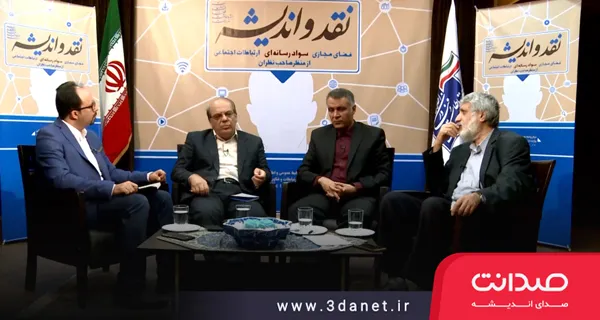
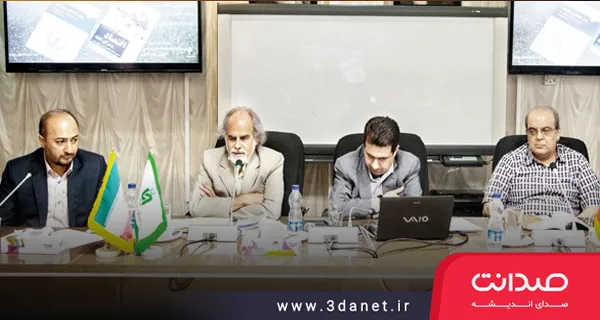
The 18th session of the Critique and Thought series was held by the Public Relations Office of the Ministry of Communications, and the topic “The Impact of Cyberspace on the Edges of Social Rupture” was discussed and examined in the presence of Abbas Abdi, journalist and social researcher; Mohammad Fazeli, sociologist and faculty member at Shahid Beheshti University; Ebrahim Fayyaz, sociologist and professor at the University of Tehran; and with Ehsan Mohammadi, journalist, as moderator.
Free Media Prevents the Polarization of Society
At the beginning of the session, in response to the question of what exactly we mean when we speak of “social rupture,” Abbas Abdi said: Societies are divided into two parts: traditional and modern. The nature of these two societies differs from one another. The research method in traditional societies is anthropology, meaning that when you understand the culture and behavior of one person, it means you understand all individuals in those societies, because the behavior and speech of people in a traditional society are almost identical. If you look at the issue through Durkheim’s lens, the solidarity of these societies is mechanical. This means everyone is similar to one another, and their unity is due to their similarity.
He added: But in modern society, the matter becomes entirely different. In modern society, you do not have similar people. The solidarity of individuals in these societies is organic. In these societies, everyone is different from one another. Their unity arises from their differences, because despite their differences, individuals need one another.
Stating that the distribution of differences in modern societies takes the form of a variable with a “normal distribution,” this social researcher said: In modern societies, it is not the case that everyone thinks alike. Almost and indeed, everyone thinks differently, and fundamentally, difference is not only considered a value in these societies but is also a necessity. However, their distribution takes the shape of a “normal distribution” curve. A majority lies in the middle, and a minority lies on the left and right of the curve.
He added: If, for any reason, this normal distribution curve becomes bimodal—that is, two curves are created and the centrist forces become a minority—the centrifugal forces, whether from the left or the right, gain a majority. Under these conditions, we are faced with a polarized society.
Abdi stated that in such a society, the necessary cohesion and solidarity are absent, along with the forces that bring the members of society closer to unity and the center of the curve, and said: We must examine in our own society what elements cause that social cohesion within the “normal distribution” to turn into a “bipolar distribution.”
He added: Based on research I conducted more than two decades ago, in Iran, two elements were more prone to polarizing society. One was “religion” and the other was “the state.” Society is driven toward polarization through these two elements, and the media intensifies this process. It is the media that establishes communication between individuals in the modern system. The freer the media, the more extensive and healthier the communications become, and the members of society draw closer to one another, preventing the polarization of society.
Cyberspace Becomes a Threat in a Society Without Free Media
This social researcher continued: Therefore, with the existence of modern media in a society where there is no free official media, cyberspace can turn into a threat, fueling the polarization of society and deepening the societal rift. At the same time, this very cyberspace can be an opportunity, because it helps the official media to also be free; then the situation will be different, and the main variables of society will move toward normal distribution and greater unity and cohesion.
Internal Combat: The Root of Discontent and Dissatisfaction in Iranian Society
Continuing the session, Mohammad Fazeli, in explaining the term he recently used in connection with Iranian society, calling it a “combative society”—a society whose citizens constantly feel their rights are being violated and are perpetually in an internal combat with others—and whether the media and cyberspace have contributed or are contributing to the increase of this “combat,” said: I used the term “combative society” for the state of Iran today, which was based on a condition I had previously called the “society of the dispossessed.”
He added: In any society, as a result of policies, some people lose and some people win. The axis for theorizing this winning and losing becomes "justice." In some societies, the number of winners exceeds the losers; but if a society reaches a point where every group has something to lose and the winners are a minority, ultimately the majority feels an internal struggle, meaning they are constantly in this internal dialogue and conflict that a group has violated the rights of the rest and individuals do not attain the rights they deserve.
This sociologist continued: In such a situation, society becomes a militant society; meaning everyone fights with a real or imaginary entity. My understanding is that the root of dissatisfaction and discontent in Iranian society stems from this internal struggle. When we are in this situation, society becomes susceptible to rupture. Because everyone takes a stance against the force that is imposing loss upon them; meaning society transforms into a collection of groups that have a subject for struggle and a position for polarization.
This university professor stated: Thus, instead of having a society interconnected through mechanisms of organic solidarity, where the media is essentially the channel and communication path for all these organic needs, the media becomes a place to represent these losses and struggles in the public sphere.
He continued: What is the cause of wheat growing? You might say it is soil, water, or suitable air; but the philosophy of realism says the cause of wheat growing is its own internal capability; meaning when we place wheat in suitable soil and water, that potential becomes actualized. Iranian society has the potential capacity for rupture centered on "loss" and "internal struggle."
Fazeli emphasized: If we expose this society, which has the capacity for rupture, to the media, the media can both fertilize it and establish a two-way interaction with those who have suffered loss; but the reality is that the actualized problem does not begin with the media. The media is essentially a kind of intensifier.
This sociologist continued: At the same time, the media can play a very important role in preventing the escalation of social ruptures. One of the reasons our society becomes polarized is that our media are incapable of helping to create organic solidarity and sometimes even become agents of division themselves.
When awareness is absent, we consider social media or cyberspace a threat
Continuing the session, Ebrahim Fayyaz, in response to how much the media can deepen rupture in society and whether virtual media works towards connection or rupture, said: In anthropology, we have a formula based on the principle that instinct is fundamental, and this instinct transforms into life, and when life emerges, culture comes into being, and through the driving force of instinct, culture becomes dynamic. Dynamic culture, in turn, leads to the expansion of communications.
He added: Therefore, communication becomes the mechanism of cultural dynamism. This communication is created by the media. The more technology increases in societies, the more and more up-to-date communication becomes, and consequently, life becomes more dynamic.
This university professor continued: Although virtual media communication is referred to as a harm, I fundamentally believe that this is not a harm but a crisis. Cyberspace is essentially social media. When media literacy is absent and when there is fundamentally no awareness, it causes us to consider social media or cyberspace a threat.
Fayyaz stated: People are living with cyberspace and are growing intensely within it; therefore, creating worry and fear about cyberspace is a futile and useless matter. When a bias against this space is also created, it signifies enmity with technology, an enmity that is ultimately doomed to failure.
He continued: Therefore, if there is enmity with cyberspace and social media, it stems from ignorance. When there is ignorance about an issue and we do not understand it, fear of it is created, and consequently, we become hostile towards it.
This expert emphasized: Our predicament in confronting cyberspace and social media is that we do not recognize the pain. If we recognize the pain, we can find a remedy for it. Although I believe that cyberspace is fundamentally not a disease that requires treatment. The issue of cyberspace is essentially a crisis, like the crisis of puberty. A youth who reaches puberty becomes aggressive and is constantly irritable, like our current society; but if parents lack awareness, they will treat their adolescent child harshly during puberty, and this is the worst kind of treatment because it drives that youth away.
People are growing and will not wait for commands and prohibitions
Fayyaz continued: Officials must understand that people are growing and will not wait for anyone's commands and prohibitions. Because of this, through media, society has also surged far ahead of the government, and this society has become more conscious compared to before.
The root of our social crisis is the failure to recognize media freedom
Continuing the session, Abdi, regarding whether polarizations and social ruptures might turn into social movements, said: A degree of polarization exists more or less in all societies, but this polarization becomes dangerous when the frequency of individuals in the middle section reaches a minimum; that is, frequencies become concentrated at the poles. The factor that intensifies polarization in Iran to reach this dangerous stage is the gap between formal and informal media. Formal media supports and represents one pole, and informal media the other.
He added: We have a formal media and an informal media. Formal media are radio and television and, to some extent, the press. These see reality in a particular way and are desirable for a certain group. Meanwhile, informal media, which is cyberspace, is taking another path. These two types of media create two different tendencies, and this very issue makes society more polarized.
The filter on radio and television should be removed, not that social networks be filtered
Abdi, emphasizing that "the media crisis in Iran must be resolved, and its resolution is possible by reducing the distance between social networks and formal media," said: Some want to eliminate this issue through censorship of social networks, a method that has undoubtedly failed. The only way is for radio and television to be freed and the filter on radio and television to be removed, not that social networks be filtered.
He added: If radio and television and formal media were free, it would not have come to the point where a Telegram channel or network becomes the determinant of media direction for an important part of society. A radio and television that is not free gives social networks the right to do anything. In these social networks, those who win are the ones who speak in a way more distinct from the formal space.
Our IRIB is the great network-holder
Continuing the meeting, Fazeli, regarding to what extent cyberspace is a threat and to what extent an opportunity, said: When we ignore society's rifts and society's inherent capacities, we arrive at a kind of voluntarism regarding media. I feel that in the Islamic Republic system, this voluntarism regarding media generally exists. Our politicians and policymakers somehow imagine that the opposition, subversives, or foreigners have the capacity to lead people, through media, to dissatisfaction and anti-system behaviors, and thus, fundamentally, too much value is placed on opposing media.
He continues that officials, with the same voluntaristic view that overestimates the capacity of foreign and opposing media, equally expect domestic media to stand against the foreign media force with media force. He added: I am almost certain that no political system has as many state networks as we do. Before the revolution, we had the great army-holders; now our IRIB is the great network-holder. But why, no matter how many networks and news agencies affiliated with the political system and government are created, can this media voluntarism not solve the problem?
Fazeli continued: Wheat has the capacity to sprout, but if you plant it in soil full of glass marbles, a walnut tree will not grow from those marbles. Some expect the marbles, killed off with the help of media, to turn into walnuts. They have even come to believe that some of the planted things, which are in fact marbles, have become walnuts.
The sociologist emphasized: Technophobia arises from this very point. If you were sure you had planted walnuts, you would not be worried at all about people asking every day how your marbles are doing. You know that one day these walnuts will bear fruit; but when you have planted marbles and know they will not grow, you spend your days and nights in fear of the marbles being exposed as marbles; and you expect the media to be constantly engaged in making marbles appear as walnuts. This process gradually leads to the discrediting of the media and even its reasonable and real capacities.
A country with a sound economy does not cite price listings on the Divar site as a cause of disorder
The university professor stated: When you build an economy in which rent is distributed, etc., and then constantly pressure for economic flourishing to emerge from this economy, that is when you become afraid of price listings on internet sites. A country whose economy is sound would never cite price listings on the Divar site as a factor of disorder in its economy.
He continued: Their assumption is that prices fluctuate in the media sphere, and then they eliminate the factor of increasing liquidity, the factor of the growing monetary base, the factor of the budget deficit, etc., and grab the media by the collar and pressure it, for example, for the Divar site to remove the prices of its goods. Fundamentally, media voluntarism is making this country miserable. Real causes and processes are sacrificed to attributing excessive power to the media—whether friendly, hostile, or foreign. Some imagine that the media can create something from nothing, and this is media voluntarism.
If we had media literacy, we would not witness such disputes over cyberspace
Following this, Fayyaz, regarding whether people have become tools in the hands of social media or not, said: The whole story is that when new technology arrives, everyone is shocked, and it creates a kind of cultural shock. If we understood communications and had media literacy, with the arrival of new technology that has also brought new communication tools, we would not witness such disputes over cyberspace.
The way to prevent social rupture is to free IRIB
Then Abbas Abdi, in response to the question of whether social rupture is moving from the macro level to the micro level, said: The reality is that society is disintegrating in the long term, and media and social networks are shaping this process, and this is very dangerous. A necessary condition for confronting it is the freeing of official media, especially IRIB.
Stating that the existing system in the country has a problem with recognizing reality, he said: For example, on the issue of hijab, they say very explicitly that you can do whatever you want at home, but observe hijab on the street. Whereas the meaning of religion is not that you observe hijab one way at home and another way outside the home; we have no such statement in Sharia either. They just want not to recognize a different type of clothing that is a reality, but reality takes its own course. If we do not recognize realities today or tomorrow, sometime later, what we have not recognized will become even stronger and larger than what is official.
Our problem is that we do not want to submit to realities
Abdi added: Fundamentally, our system lacks the courage to confront reality. For instance, opinion polls are opposed because they reveal realities and give them official status. In my opinion, our problem is that we do not want to submit to realities. The only cure for this system is the freeing of the media, in which case a significant portion of its society's problems will be solved, and it will also be protected from the dangers that cyberspace can create.
Fazeli continued, emphasizing that the issue of non-recognition is very serious, saying: Sometimes there are interests in non-recognition. Every week I write articles in newspapers and also on my Telegram channel. I often publish content on my Telegram channel that the official newspaper usually does not print.
He added: In this way, my Telegram channel is the product of its non-publication in the official newspaper. When the media space becomes official, there is no longer a necessity to be present in the unofficial space.
This university professor, stating that countries have progressed by making their unofficial sector official, said: All people should be allowed to live in a free yet official space, within the legal limits established through democratic mechanisms. We must provide the possibility of an official life for the people. In principle, Telegram and Instagram in Iran are beneath the stairs of official media. This very fact causes the authority of official media to be destroyed.
Barriers and Closures Have Generated Profit
Fazeli added: We are faced with a society that does not recognize realities, constantly reinforcing processes of informalization, and a certain group benefits from this informalization. For example, allow Adel Ferdosipour to launch a network and run the program 90 on it. Then provide him the possibility to also run the Football 120 program on the same network, and then enable him, in a free trade, to buy the broadcasting rights for foreign football matches and broadcast them. Under these conditions, the IRIB would have to shut down Channel 3 and the Sports Channel forever or enter a competition that raises the quality of its work; therefore, barriers and closures have generated profit.
Transparency and Economy are Two Important and Key Keywords for Overcoming Social Rupture
Fayyaz continued, stating that the media system has changed, saying: The media system is such that its brain is the book, its two hands are the press and cinema, and its two feet are radio and television. Previously, this system moved in this way, but now a medium has arrived called virtual media that has connected the head and the limbs. This change has disrupted all the mental equations of the authorities.
He added: The best solution for solving problems in the country is creating transparency and making issues economic—not commercial. The Islamic Republic of Iran Broadcasting is currently not economic at all; meaning, not only does it have no added value, but it is anti-added value, anti-national interests, and anti-national security, and its absence is better than its presence. Transparency and economy are two important and key keywords for overcoming social rupture. If we make society economic, that society will also become moral.
We Need a Society Where Everyone Feels Like a Winner
Fazeli concluded and summarized his remarks by saying: We must not turn the media into a monster. We must not create fear of the media and media technology, and we must not think about the media in a voluntaristic way. The formalization of reality is also important; if free media existed, Telegram would never have grown so intensely. We also need to reduce the number of losers, a society where everyone feels like a winner.
Abdi also concluded by saying: The government assumes a guiding role for itself in some areas, while it itself needs guidance more than its people do. If it sets aside this role, its view of the media will change; a media that has now become a mouthpiece for the government. The IRIB is currently, in the true sense of the word, far from the function of a media and has become a mouthpiece, and this stems from the guiding role that has been defined for it.
.
Watch on YouTube
Watch on Aparat
Download Audio File
.

Discussion2 comments
عالی بود و بسیار قابل استفاده ممنون از شما
بسیار جالب وعلمی به بیان معضل رسانه پرداخته بودند.سوال اصلی این است وقتی با وجود این صاحب نظران میتوان درمانی برای بحران های جامعه پیداکرد چرا در رفع این بحرانها از نظرات آنها استفاده نمی شود