Sociology
Mohammad Fazeli's Lecture on the Book 'Reforms for Escaping the Social Trap'
A social trap is a situation in which mistrust drags everyone into loss. In a lecture on the book Social Traps and the Problem of Trust, Mohammad Fazeli argues that the way out is not cultural engineering but building fair institutions and creating trust.


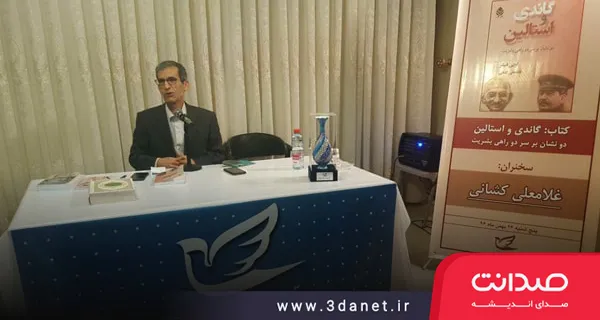
Mohammad Fazeli
SpeakerI am very happy to be here among you and to have this opportunity to speak about the book Social Traps and the Problem of Trust. For me, this discussion is more a continuation of an intellectual project than a book introduction. An intellectual project that became public, in a sense, last March with a lecture by Dr. Mohsen Renani titled “The Myth of the Elephant and the Pride.” Today's discussion, of course, is more affirmative than that. I will first explain the concepts and definitions presented in the book, and then I will turn to my own intellectual project.
What is a Social Trap?
What situation do we call a social trap? A social trap is a situation where if everyone cooperates to solve a problem, everyone wins, but if everyone is unable to cooperate with one another, everyone loses. The failure to cooperate occurs in conditions of a lack of trust.
Bo Rothstein, the author of Social Traps and the Problem of Trust, explains this with an example from the taxi dispatch system in Palermo, Italy. In the 1990s, a taxi dispatch system was created in Palermo that worked like this: when a passenger requested a taxi, the nearest driver to the passenger would signal availability and would be the one to access the passenger. This system was such that if all the drivers trusted each other, it worked very well. This was because the nearest driver to the person requesting the taxi would reach them faster, thus the quality of service would increase, and according to mathematical calculations, it was to everyone's benefit at the end of the day. But the problem is that if the drivers do not trust each other, everyone, even those very far from the passenger, signals that they are nearby. In fact, they think that the other drivers are lying and that by signaling proximity to the passenger, they can get the fare. This distrust among the drivers means a passenger in the west of the city must wait for a driver from the east of the city who has falsely claimed to be nearby. The time to access a taxi increases, and as a result, passengers will not use this system the next time. The final result of this lack of trust among the drivers is a catastrophe for everyone, and so the system collapses due to a lack of trust.
A trap situation is a state where individuals, in pursuit of short-term gains, cause a collective catastrophe in the long run. Another example: we all use more water lest our neighbor has used more than us. The same thing happens in water rationing situations. Others imagine that everyone else stores water in a reservoir when they have access to it, so due to a lack of trust in others, they themselves also start storing water, and the catastrophe continues in a worse form. So, distrust creates the social trap situation.
The same thing happens with the problem of corruption. Everyone thinks that if they themselves do not engage in corruption and nepotism, others will engage in corruption and nepotism and get ahead of them. So, everyone tries to engage in corruption so as not to fall behind others.
Consider a Boeing 747. This airplane has a second floor with higher-quality seats and more expensive services. Imagine a Boeing that is crashing, and this crash is caused by the antagonism and conflict of the people inside it over the possibility of accessing the second floor. The entire airplane is crashing, but some are scrambling to get to the second floor to enjoy better services. When the airplane hits the ground, everyone is destroyed, regardless of which floor they are on, but in a social trap situation, no one pays attention to the destruction. Everyone is trying to be one step ahead, while being one step ahead is equivalent to being closer to everyone's destruction. Consuming a little more water, getting a loan with a bribe, or not paying taxes brings everyone to a state of destruction. People do not pay taxes because they are not sure that others are paying taxes. But when we do not pay taxes, the government effectively breaks down and becomes weaker. And when the government becomes weaker, it provides worse services, and as a result, distrust will increase.
An inefficient system that falls into a trap continually reinforces itself. Distrust leads to more corruption, and more corruption leads to further distrust. This inefficient cycle constantly reinforces itself. Individuals caught in the trap violate their own values. Many of those who pay bribes are religious people who believe in the afterlife and consider corruption bad, yet they engage in it because they feel that others are doing the same. Honest behavior in a social trap situation is foolish; when everyone steals, the one who does not steal will feel foolish.

Escaping the Social Trap Situation
The big question in social science is how can one escape this situation? So, how does solving the problem of the social trap occur? Rothstein establishes several principles for resolving this situation:
First. Everything we do depends on our estimation of others' behavior. We will pay taxes if we are sure others are paying too. We will reduce water consumption if we are sure others are also conserving. We will not take our private cars onto the streets on polluted days if we are sure others are not taking their cars out either. So, all our actions are, in a sense, strategic. A strategic action is an action where, when we perform it, we do not only look at ourselves, but also pay attention to what others are doing.
Strategic action is entangled with something called the cooperation dilemma. Solving the problems of any society requires solving the cooperation dilemma. And the cooperation dilemma will be solved when trust exists. Therefore, an agreement must be reached among all actors to trust one another.
Second. Fairness: actors in situations they perceive as fair become ready for coordinated and trust-based action.
Third. Avoiding corruption, cronyism, discrimination, and humiliation. If governmental institutions possess these characteristics, they can create trust. When members of society experience discrimination and humiliation, they suffer a blow that, no matter how hard they try to forget, the memory of it returns to them with greater force, like ocean waves; and in such a situation, only institutions are capable of resolving it through just procedures.
Our approach to solving problems that have become traps has often been moralistic and from the standpoint of a concept called cultural edification. Cultural edification often represents the ultimate extent of our desperation in overcoming a problem. Wherever we could not solve problems by force, and wherever all problem-solving methods have failed, we remember cultural edification. But we forget that there are many doctors who advise against smoking but smoke themselves. If cultural edification were supposed to be effective, it would have been effective here. There are many religious people who commit major sins. If cultural edification were supposed to have an impact, it would have affected them. People know more about culture than they practice it. People know they should not litter, but they do it. People know they should not lie, but they lie, and they also know they should not cheat, but they cheat. In this respect, there is no individual difference between us and people in other countries. The only difference between us and foreigners is living within two different institutional structures. Institutions allow them to solve their problems without lying or paying bribes. If we had trash bins at appropriate intervals throughout the city, littering in the city would not become necessary. If we are forced to carry a plastic bag of trash from the forest to home and endure its bad smell over a long distance, we will probably get rid of it midway. So, if we have trash bins, we too find the possibility of becoming cultured in the conventional sense. Social traps are not solved by moral advice and will only be resolved through the path of institutional reform.
Traps are intensified when the institutional structure damages collective memory. Collective memory is essentially the process by which people remember how institutions and the government have dealt with and confronted them. A blow to collective memory is like shooting at sparrows in a tree. Only one sparrow falls from the bullet, but all the sparrows become terrified and flee. A system produces trust when it does not shock the collective memory. None of us may have had a bad experience with the police, but when we see a video of a bad encounter with a citizen, we feel the police are standing against us and crushing our character and values. We imagine that such a thing could happen to us at any moment in the future, so it is important that institutions and their performance do not tarnish people's historical memory.
Rothstein wrote his book based on the experience of Sweden. Sweden and other Scandinavian countries like Finland, Norway, and Iceland are countries with the highest levels of trust, administrative integrity, and the highest levels of tax payment. The Swedish government receives the actual figure of ninety-six percent of people's tax returns. This means the level of trust is very high. The question is, why has this country become this way? Rothstein starts from this point: do not imagine Sweden has always been like this:
"Do not imagine Sweden has always been a land of negotiation and tolerance. From the 1890s to the mid-1930s, Sweden lost the greatest amount of its production due to conflicts between workers and employers." Sweden is a land where intense conflict between employers and workers raged for forty years. He continues, do not imagine that Sweden and Denmark, which today call each other brothers, have always had such a relationship. Sweden and Denmark killed each other in ten long, bloody wars until 1814. How was this level of trust achieved after such difficult conditions?
The social trap is dismantled when the issue of free riding is eliminated. Free riding means I save, but my neighbor takes for free. It means I do not bring my car onto the street, and the street becomes less crowded, but others get to their work faster on the emptier streets. To solve the problem, we must all not bring our cars out and cycle instead. Institutions must be able to do this. People must be assured that the state system does not allow abuse.
One of Rothstein's masterpieces in this book is the analysis of the relations between workers and employers between 1928 and 1938 in Sweden. In the period between 1890 and 1928, for about 40 years, workers and employers harmed each other. Workers would strike, factories would close, and employers would not raise wages. A significant and major portion of Sweden's industrial production was lost during these years. In 1928, the head of the trade union finally concluded that wages would not truly rise until productivity increased. The two main Swedish parties reached the point that conflicts could not continue forever. It took ten years to reach an agreement between workers and employers, and in one incident, five people were killed, and these deaths became the source of a reinterpretation of the historical relations between workers and employers. After ten years, in 1938, the two main Swedish parties, along with workers and employers, reached an agreement on how to regulate wages and trade union relations. Rothstein believes that the democratic nature of decision-making weakens the selfish, short-sighted structure and replaces it with cooperation, and during these ten years, the parties arrived at mechanisms for transparency and the necessity of increasing productivity. In the end, they reached a point where the head of the trade union says: "I know it is in all our interests that wages do not increase inflationarily, provided that all unions refrain from wage increases and there is trust between employers and workers that a portion of the profit gained through increased productivity will reach the workers. Resolving the conflicts between workers and employers requires an agreement based on trust. This trust in a country like Sweden took ten years and is contingent upon the forty years preceding it."
Several points can be drawn from this experience. First, democracy and dialogue are not confined solely to the macro-political sphere. Let us not imagine that when we speak of dialogue we necessarily mean dialogue with the Americans and Europeans, or dialogue over regional issues or the JCPOA. Dialogue can take place between labor unions and employers, or between the people and the Ministry of Energy and farmers. Dialogue can occur between women and officials of the Ministry of Sports regarding attendance at stadiums. Rothstein writes, “Contrary to the impression created by studies of the Swedish model, the transition from conflict and mistrust to cooperation and a spirit of consensus in the 1930s was not a sudden change. Leading representatives on both sides had initiated cooperation and engaged in dialogue on a large number of issues at the local and national levels. And such patterns of cooperation were usually initiated on the basis of incentives for which there was government support.”
Second, the condition of the social trap is not unique to Iranian society. You have surely heard it said that until each and every one of us Iranians changes, we will not achieve development. I believe that in other countries of the world, too, not every single member has changed or become virtuous—that is, it is not the case that all individuals in Sweden, Finland, and Japan are highly ethical and beneficial to the interests of their society. The only difference between us and other countries is that we possess a historical memory of the blows institutions have dealt us, and in order to be able to engage in dialogue with one another in processes and arrive at frameworks for cooperation and trust, we need time. The book emphasizes that this program of cooperation must begin at the highest level.
Third, the necessity of striving to reduce corruption. Corruption is defined as the abuse of power for private gain. The Tax Justice Network defines corruption in a way that I consider one of the best definitions: any action that damages public trust. Based on Rothstein’s model and the social trap, one can understand why any action that damages public trust constitutes corruption. Because as soon as an action damages public trust, cooperation becomes more difficult, and as cooperation becomes more difficult, trust diminishes, and we will find ourselves in a cycle of decline: less trust creates less cooperation, and less cooperation creates less trust. The lower trust falls, the more susceptible we become to corruption. In this model, every fair act is a contribution to combating corruption.
Fourth, corruption and mistrust can only be countered on the condition that institutions are inclusive. All individuals everywhere in the world primarily prefer institutions to work in their own favor. We like a bank that gives us a loan, we prefer a school that teaches our children better, and we favor a government that benefits our political faction. To the extent possible, everyone in the world and all individuals strive to achieve this. In this respect, there is no difference between us Iranians and people in other countries. But if we are not certain that the government, bank, and school that favor us today will also act in our favor two years from now, what opinion will we hold?
Suppose the judiciary, through influence exerted by you, issues a ruling in your favor. But if the situation changes in the future and someone is able to exert influence within it against you and rule against you, what will you do? If you are not certain how the institution you are building today will behave in the future, it is always in your interest to build an institution that remains impartial forever.
If we build a judiciary whose rulings are in our favor for the next six months, but we cannot guarantee those rulings after six months, then it is better that the judiciary be under no one’s influence. Impartial institutions are called inclusive institutions. Institutions that are impartial toward everyone under all circumstances, and for which all individuals—woman, man, Shia, Sunni, or belonging to the left or right faction—are equal.
The condition for creating trust is impartial institutions. Creating an impartial institution, as Rothstein says, requires guided self-interest. We all pursue our own self-interest. Guided self-interest means pursuing self-interest in such a way that we avoid establishing rules that benefit only ourselves. It means refraining from corrupting the existing system of rules, with the calculation that if it becomes corrupted, it will destroy us as well.
All those who once gave a small bribe so that the administrative system would work slightly in their favor are today being crushed under the feet of that very same administrative system. A factory owner who paid a thousand tomans in bribe in the 1340s [1960s] to obtain a license might today need a billion tomans to get the same license. Rothstein has a clear recommendation to prevent such a situation.
The government must send a strong signal to the people that a new game is beginning. What is the new game? The new game is for the government to take deliberate and conscious actions to show that it is aware of and sensitive to the distrust created in the past and intends to compensate for it. Leaders must enter a game to win people's trust, a game involving what are called credible commitments or small, meaningful, and valuable signals.
Suppose you want to make a deal with someone. In a situation where the two parties to the transaction are completely distrustful of each other, they cannot agree on a very valuable matter, because one party might take a valuable concession and abandon everything. As analyzed in game theory, to begin the process of trust-building, the parties must give each other small, meaningful concessions. This small concession both shows that one values the other party and, should one party abandon the deal, will not cause the other party such great loss.
These small, meaningful concessions are essentially an incentive to continue the game. Slowly, and through a back-and-forth process, the level of trust rises. The government and the people must enter into this transaction of small concessions and build trust. This does not pertain to the most important issues. The parties do not negotiate over the most important issues from the outset. Dialogue can begin with an issue like healthcare, and a small part of it.
Governments, besides sending clear messages, must create a space for communication and allow dialogue. Psychological research shows that when people are divided into different groups, firstly, they do not act as self-interestedly as we initially imagine. Secondly, the more inward-looking groups and their communications become, the more distrustful they become of the out-group, and their tribalism and kinship favoritism increase. The more the space opens up, the more they interact with each other, the more they trust one another. Creating inclusive institutions is also very important; institutions whose first and most important characteristic is impartiality, and which apply this impartiality with precision and efficiency.
I conclude the discussion of the book Social Traps and the issue of trust by reading some sentences from Putnam: "Putnam showed that voting for an assembly of representatives in a free election with genuine societal representation, accompanied by freedom and fairness, is very good and ideal, but if this same assembly cannot make quality decisions in a way that they are implementable, or if it loses control over the executive apparatus, this democracy is useless."
Democracy must be free, there must be fairness in it, but ultimately, democracy must solve problems. From here, I turn to my own problem and project.
The Reform Project in Iran
First, making the state efficient is the most important task. The biggest project that must be advanced in Iran is making the state efficient. Making the state efficient in Iran takes precedence over everything else. We must have a state that can solve problems—issues such as water, subsidies, electricity, dust storms, and insurance. As long as some people in the country have two insurance booklets and others have none, the free-rider problem will not be solved. If the state does not solve the water problem or the issue of insurance booklets, it cannot build trust. Therefore, the first project of reform, and beyond that, of reformism, is solving the inefficiency of the state. To date, all governments in Iran have been significantly inefficient and incapable of solving problems.
Second, solving problems does not require all-encompassing holism. Saying this sentence is costly for me and many of my like-minded colleagues will be displeased: solving many of our problems inside the country has nothing to do with our relationship with America. Many of the problems that have arisen in the country are not the result of our foreign policy. Drying up wetlands and rivers is something we have done ourselves, and the Americans have in no way helped us.
The first priority of reformers in Iran must be to make the state efficient. This begins at the micro level and with issues whose nature is that of small, meaningful commitments. We must start by reforming administrative procedures. So, in reformism, let us not relate all issues to one another and consider disaggregation an important part of the reform project.
Third, in the reform project, we need to produce detailed, specialized knowledge in every sector. To solve a problem, we need a multi-level analysis and deep knowledge of the issue. To solve the problem, one must think in a more complex way; producing detailed and stratified knowledge is very important in the reformist project.
Fourth, reformism in Iran will not advance through a process of conflict between the parties to the dialogue. We need all those who are on two sides to come as close to each other as possible, and coming closer begins with dialogue about issues for which there is a prospect of resolution.
Let me give an example: a child is fifteen kilograms overweight. If we set a goal for them to lose fifteen kilograms in one month, we will run into a problem. The child will die during the process of losing this amount of excess weight, or will basically become exhausted and give up on losing weight. We cannot start reformism with grand goal-setting. Solving the water problem of all the country's plains together is not possible. There is no single, uniform, all-encompassing solution for the entire country in the field of water. The water issue in the Zayandeh Rud basin and the north of the country is different. Solving labor problems varies across different industries. We must build trust through small solutions, for small problems, and cooperation in solving small problems.
The Necessity of National Dialogue
Trust can be built through dialogue. By national dialogue, I do not mean national reconciliation and grand discussions. National dialogue does not begin with a discussion about the 2009 election. The 2009 election is the ultimate confrontation of ideologies and power struggle. Dialogue must start from smaller matters. From the water issue, Telegram and intervention in cyberspace, electricity, and generally from smaller conflicts for which there is a prospect of resolution. The financial turnover of the country's health system is 140,000 billion tomans, and at the same time, it suffers from the unbalanced income of medical staff, the lack of prioritization of prevention, and the absence of cost-control systems. Dialogue can begin with transparency and frankness in this very arena. The country's welfare budget amounts to over 200,000 billion tomans, and dialogue can begin with a comprehensive discussion to make this arena targeted and effective.
Dialogue requires patient individuals, and this is not unique to Iranian society. Resolving labor disputes in Sweden took almost 50 years. We have traversed part of this process, and there are people in this country who have reached the point where they say, 'Enough conflict over every single matter!' Some are tired of these disputes.
My final word is that reformism does not begin with the most contentious issues, but can start from issues that have the most effective and hopeful impact on the lives of the most hopeless groups in society. Success in this arena can gradually make us hopeful about escaping social traps.
.
.
Audio introduction of the book by Ruhollah Jalili ; presented at this session
.
.
Introduction of the book 'Social Traps and the Problem of Trust' by Dr. Mohammad Fazeli
Series of Goftar va Andisheh Sessions – Session No. 22
Shiraz – Qasr-e Dasht Street, Alley 39, No. 50, Office of the Ettehad-e Mellat Party, Fars Region
Transcription: Ali Ahmadi
.
.



Discussion7 comments
تا مفهوم منافع ملی در ایران درست جانیافتاده باشد وضع ما همین است بلکه بدتر هم میشود تا در ارم سپاه نقش کره زمین وایه قران واسلحه ونخل زیتون است وضع ما همین است بدتر هم میشود بجای انکه نقشه ایران را روی پیراهن سپاه نقش کنند عکس کره زمین را نقش کرده اند واین یعنی فضولی درهمه دنیا یعنی ما ماموریم تمام کره زمین را یکدست سازی نماییم !!! انهمه پولی که از اوباما بابت فروش نفت بلوکه شده بود پس گرفتند وپولی که بابت خرید اسلحه توسط شاه در امریکا بلوکه شده بود پس گرفتند وحتی سود چهل ساله انرا هم گرفتند ایا ریالی از ان پولها برای ایران خرج شد ؟ برای تالابها ورودخانها و کارخانه ها وزیر ساختهای اقتصادی کشور خرج شد؟ همه را دادند به سوریه وحزب الله لبنان و یمن وعراق و.... تا موقعیکه ما توهم ابر قدرت بودن درسر داریم وضع ما همین است بدتر هم میشود این کوچک شدن دولت هم حرفیست که نادانسته هم دولتیان وهم مردم مدام تکرار میکنند دولت کوچک بشود که چه بکند ؟کوچک شدن دولت به قیمت بیکاری جوانان این ملت تمام میشود کوچک شدن دولت یعنی اینکه دولت دیگر استخدام نکند ودرازای خروجی پنج کارمند یک نفر را بکار بگمارد واین یعنی دامن زدن به بیکاری جوانان این مرز وبوم . کسی شعار کوچک شدن دولت را سرمیدهد که اقتصاد خصوصی وسرمایه داری دارد کسی شعار کوچک شدن دولت سر میدهد که با دنیا تعامل دارد نه اینکه هرجا جنگ است او هم یک سر دعوا باشد در چنین وضعیتی که با تمام دنیا سر جنگ داریم به جز کشورهای گرسنه وفقیر که از سر نداری وبه التماس گرفتن کمک مالی به به وچه چه میکنند حرف از کوچک شدن دولت یعنی دامن زدن به بیکاری . ما درایران بخش خصوصی فعال نداریم که بخواهیم دولت را کوچک کنیم وامور را به انها بسپاریم باسیاست خارجی فعلیمان چنین حرفی صددر صد اشتباه است ودولت باید هرروز فربه تر شود
وقتی گفته می شود مردم باید تغییر نگاه داشته باشند منظور بدنه ی جامعه و عمده ی افراد است نه دقیقا همه. آشکارست که در همه جای جهان، همه جور آدمی پیدا می شود و همه ی افراد در جامعه های پیشرفته ی مدنی، از سلامت اندیشه و کنش برخوردار نیستند. بیشینه ی بدنه ی جامعه با اصلاح نهادی اما بخشی از همان عمده ی افراد هم با فرهنگ سازی به سمت اصلاح و بهبود پیش می روند.
آقای احمد اندیشمند گرامی از ساحت مقدس فرهیخته ای چون شما که احتمالاً از زادگان دهۀ فخیمۀ هفتاد ید انتظار نمی رفت که «هراس» را به صورت «حراس» بازنویسی بفرمایید. البته دانش و زبان دانی حضرتتان مرا واخواهد داشت که از پس «هفته» را نیز به صورت «حفطح» بنگارم تا به فرزانه ای چون شما تأسی کرده باشم. شاگردتان از دهه های پیشین
متاسفانه امروزه دولت در ایران چنان فربه شده که قادر به انجام هیچ کاری نیست
اگر جامعه ای می خواهد اعتماد سازی ایجاد کند دو نهاد بهزیستی و کمیته امداد را دریابد فقر را در جامعه کم رنگ کند تا آنان که محتاج نیستند اما بی اعتمادند باور کنند که در اینجا کسی به کسی هست !بیشتر بدبختی های جامعه ما از وضعیت رقت بار چند دهک پایین جامعه است نه از قشر متوسط
پیش نیازهرتغییرواصلاحی آزادی بیان واندیشه است تابتوان به گفتگونشست.برای اصلاح
درجامعه ای اگرازانتشارنشانی ایمیل حراس باشد.راهکارهای اصولی وعلمی شماشدنی نیست