Sociology
Introducing and Reviewing The Decline of Patriarchy at the Speech and Thought Series
At a 'Discourse and Thought' session examining 'The Decline of Patriarchy', Dr. Mohammad-Amin Ghaneirad said the rise of participatory spheres has displaced the family as the primary source of identity. He expressed concern over societal rifts caused by political antagonisms and the pathological changes within the family.
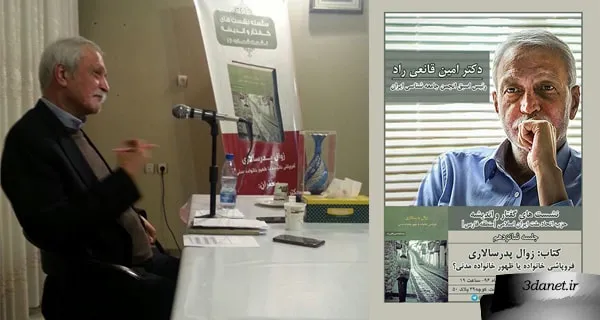
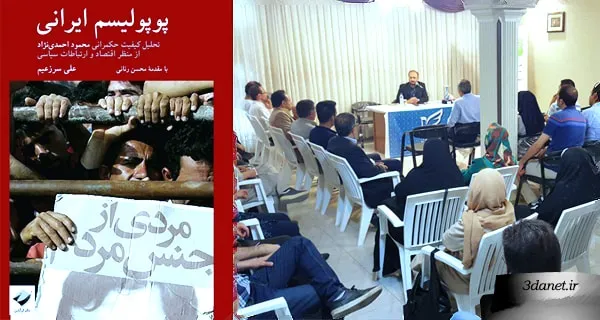
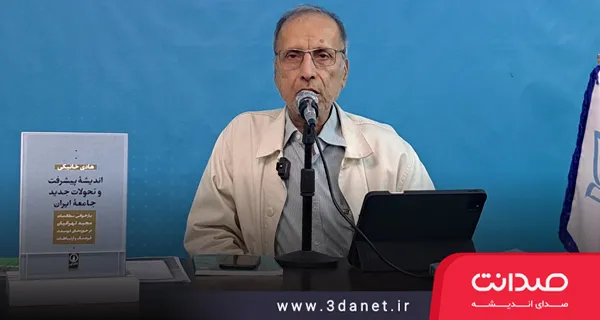
The sixteenth session of the Speech and Thought series, focusing on the introduction and review of the book The Decline of Patriarchy, was held in October at the office of the Union of the People of Islamic Iran Party, Fars Regional Council, with the book's author, Dr. Mohammad Amin Ghaneirad, in attendance.
Text of Dr. Mohammad Amin Ghaneirad's speech:
.
In party education, dialogue and interaction among members is a fundamental [necessity], because individuals gain an understanding of both the region and the regional situation, and also because today all activities are knowledge-based, and political work certainly cannot be anything but knowledge-based and knowledge-driven. In fact, in organizing this series of meetings under the title "Speech and Thought," a range of thought-oriented and scientific discussions in sociology, political science, philosophy, and economics are pursued.
In the realm of scientific discussion within universities, there are good capacities among professors, and good books have also been written. However, many professors have the ability to elevate society through creating and establishing currents of thought in the public sphere, and in my opinion, university professors and lecturers have fallen short in this area and have not communicated with society in a proper and fitting manner, nor have they conveyed the thoughts and ideas produced and generated in the university to general readers. Most academic articles are rarely read even by academics themselves, because they have taken on a formalistic mold, and in many instances, we see they lack content. Methodologically, the methodology is well-examined, the formats are very precise, but the content is absent. The general reader searches for content in texts and has no interest in understanding the sampling method or theory; rather, they are interested in connecting with the author's content analysis.
Furthermore, we have few texts of this kind in society, and the work of the authors of these texts is commendable because they provide material in a common language for general readers. On a Telegram channel, "Sociology of the Public Sphere," I publish my speeches, writings, and interviews for the educated public. This educated public consists of individuals outside the field of social sciences, for example, students of engineering and medicine. Individuals in technical fields, agriculture, basic sciences, and some humanities disciplines hold the highest academic degrees, yet they need education regarding the concepts of sociology and political science. Therefore, writing in this arena is important.
The first part of the book The Decline of Patriarchy is written in an academic format; of course, I tried to make it generally understandable, but it still has scientific foundations. For example, I have made extensive references to scientific sources. The general reader considers this a nuisance.
The second part of the book is the result of systematic research. In fact, my anxieties compelled me to write this book, not my concern as an academic or researcher, but a social concern that we all face. In fact, if family culture were transforming naturally and normally, there would be no cause for worry; the age of marriage has increased, and the importance of the family has diminished. In the past, participation in family and kinship was the basis of social life; individuals felt a sense of identity and gained a place in society through integration into the family and marriage. For this reason, concepts like becoming a bride or a groom were very important. When elders wanted to pray for children, they would say, "May you become a bride," or "God willing, may you become a groom." From childhood, what was taught to children was the performance of family roles. Little girls, while playing with dolls, would play the role of mother or aunt; little boys, in their games, would play the role of father, paternal uncle, or maternal uncle. All social relations were made meaningful through these roles. The only way to become a member of society was to perform family roles.
But now new realms of participation have emerged, including higher education, employment, and economic activities. Young people, and especially women, feel that through employment they have found a role in society. The political realm also satisfies the feeling of social participation. This is because social membership is one of the strong human motivations, and people like to connect themselves to society. Previously, in the patriarchal era, such bonds were created through family and kinship, but today party affiliation, social activities, and media satisfy the feeling of being social, and the value and importance of the family is declining. In the past, if a girl had not married by the age of 17, 18, or 20, she felt a void, and society would apply labels and terms—with which you are familiar—to them, and if they were boys, they would be accused of not accepting social responsibility. As the saying goes, they don't want to settle down. Parents placed great importance on their children settling down, meaning getting married. But currently, the family has changed in terms of its interactive structure and authoritarian structure, a significant role for women and young people in decision-making has emerged, the power of decision-making has been removed from the monopoly of the father and the man of the family, and age and gender groups have gained importance. If these developments were occurring naturally, there would be no problem. But the developments have somewhat of a pathological aspect, and the family is hardly capable of its own cultural reproduction.
Of course, this discussion is relative and not absolute. Even in Tehran, significant differences in the role and structure of the family are observable. Likewise, the family model in some cities resembles Tehran, and in others, the patriarchal era. Signs of change in the family are evident in Tehran. For example, according to statistics, out of every 4 marriages, 1 or 2 lead to divorce, but in the north and some other areas of Tehran, out of every 3 marriages, one ends in failure.
So what is the concern? The concern is the great rift that is occurring in society, and this rift, this splitting apart of people—by people I mean the nation—is happening through two engines. The engine moving from the top is politics, and the engine moving from the bottom is the family. The engine of politics is the set of contradictions that the individual is expanding. Political contradictions, especially at times like elections, cause the polarization of society, and other contradictions such as ethnic and religious contradictions, tradition and modernity, and part of class contradictions are also turning into political contradictions and making society multi-polar. Emotional divorce, violence, and legal divorce occur in new families, and they reach understanding with difficulty, whereas older generations reached understanding more quickly. This understanding was created by tradition or defined by social norms. In the past, the family was extended, and a large number of men and women lived together. The father had a special position. The father also made decisions for other men, that is, the sons, and at times when the father was absent for some reason, the mother would carry forward the same role, and women were not opposed to patriarchy and even sometimes reinforced it. The mother transmitted the rules of patriarchy to the next generation, not the men and fathers. In the patriarchal system, everything was more orderly. Of course, this is not a defense of the patriarchal system on my part. This
order in the present time, however, is declining, and society is in transition; new tendencies label patriarchy as a historical oppression, whereas this is not correct. The patriarchal system was a system that, while making decisions for individuals, also supported them. That is, the father did not only specify the person and conditions of marriage for the children, but also provided housing and facilities. All of this has encountered problems in the current conditions. Inside the family, an engine from below creates contradictions, and these age and gender contradictions are very important. The issue of divorce has become influential in society. Divorce does not occur easily in our culture and is accompanied by a series of quarrels, family rifts, the lining up and saber-rattling of two families. Material resources also exist, which often proceed with a material logic, and families become distrustful of one another. Girls and boys experience distrust in remarriage, and in fact, a kind of distrust occurs as a result of the destabilization of the family, whereas previously two fathers would create the bond.
Divorce disrupts social capital. For example, girls acquire new rights, such as the right to divorce—I am not judging whether it is good or bad, but rather offering a social analysis that it leads to an increase in divorce. A girl feels, why shouldn't I have the right to divorce? In the context of democratization, where the family structure has changed and society has delegated rights to individuals, the decline of patriarchy is a fundamental transformation, not the result of the struggles of women and youth. Even middle-aged men have gone along with it. Like when fathers used to not allow their daughters to continue their education, but now they encourage their grandchildren, the new generation, to pursue further studies.
The decline of patriarchy was not calculated and was unexpected; perhaps the clerics did not think that the chador-wearing women who participated in the demonstrations and chanted 'Death to the Shah' would one day stand against the clerics, demand new rights, and say that jurisprudence cannot meet our new rights. In Iran, one of the critical junctures in the struggle against patriarchy is the Islamic Revolution, and another is the Constitutional Revolution. The Islamic Revolution was a challenge to patriarchy in politics. We revolted against a crowned father.
We are now in a post-patriarchal situation. What should be done in the current situation? Both men and women are engaged in work due to the economic situation, the work rate has increased, and communication has decreased. Often, families have one or two children who see their parents less, and the parents' efforts are focused on meeting the material needs of the children. Children receive a great deal of attention, and a process of child-centeredness takes shape. We are raising children who are a narcissistic generation and see themselves as the center of the family.
In such a situation, are our families capable of raising children who will perpetuate our culture and civilization? We must be both optimistic and pessimistic about future generations. The collapse of the family or the civil family are two problems we face. Some say it is modernity, globalization, and transformation, and they do not engage in pathology or social analysis. Some say this situation is harmful and we must open up a utopia and a new plan for the people. I believe there is a third way in society, which is to look at what trends exist within society itself and which ones we can strengthen. Consultative families, or participatory, civil, or communicative families, are taking shape. Families should use new concepts. Dialogue should not be based on discovering the truth, but rather be empathetic. Because dialogue based on discovering the truth may lead to dispute, but in empathetic dialogue, individuals become acquainted with each other's differences and learn to respect these differences.
We must realize democracy on a small scale within the family. Most of our efforts regarding democracy have been directed at politics; how much have we strived to realize dialogue in society? We must teach children social abilities and dialogue, not test-taking skills. Science does not emerge solely from tests. Physical and mental education is also very important. We are facing a set of crises, and this has led to the industrialization of the family. The family has become overly burdened with financial concerns. The mahr was initially a cultural guarantee, but now it has a more economic aspect. We must solve issues through dialogue, not through bureaucratic methods or an economic approach, nor through psychologists and lawyers. The psychologist should be a facilitator of dialogue.
.
.
Audio of Dr. Ghaneirad's lecture at the sixteenth session of the Speech and Thought series
Audio of Dr. Soroush's lecture on the book The Decline of Patriarchy
.
.
The Speech and Thought Meeting Series – Meeting No. 16
Shiraz – Qasrodasht Street, Alley 39, No. 50, Office of the Union of People Party, Fars Region
.
.

Discussion4 comments
عالی بود
از شما انتظار نمیرود کتابهایی بدون ارزش محتوایی معرفی کنید.
برادر عزیز دچار مغلطه کلی گویی شده اید
احسنت