Psychology
Why can't we stop assigning homework even though we know it's pointless? (translated from Persian)
No research shows a link between homework and academic achievement, and its non-educational benefits remain unconfirmed; yet habit, passivity, and an aversion to radical questions explain the persistence of this practice.


Alfie Kohn
AuthorAlfie Kohn, Edutopia — Perhaps you too would be surprised, just as I was surprised when I learned that no research to date has shown the slightest connection between academic achievement and homework in the years before high school. In fact, even in the high school years, the link between homework and achievement is slight, and no data show that doing homework is the cause of later success (correlation does not mean causation).
And finally, the evidence does not support even a shred of our common-sense beliefs that homework has non-academic benefits, at any age. For example, the belief that homework builds children's character, instills self-discipline, or teaches them good work habits. But we are all familiar with the dark side of homework: frustration and exhaustion, family tensions, lack of time for other activities, and the likely decline in a child's interest in learning. The firm conviction that all these problems are worth it and that, in the end, the benefits of homework outweigh its harms, stems more from our beliefs than from reliance on evidence.
So why do we still assign and accept homework? The likely reasons are these: a disregard for research, a disregard for children (evident in our interest in keeping them busy after school hours), a failure to understand the nature of learning (apparent in our emphasis on doing homework and claiming that it "reinforces" school lessons), or top-down pressure to cram more material faster into children's minds so their test scores go up and we can puff out our chests and say, "We're top of the class!"
All of these reasons may be plausible, but I think there is something else that explains why we still feed our children this modern-day lavender tea۱. We don't ask challenging questions about homework because we hardly ask challenging questions about anything. Most of us are like that neighbor of Robert Frost's۲, the man who "will not go behind his father's saying." Most of us, when questioned about a habit or belief we have accepted, usually answer: "Well, that's how I was raised" ... as if critically examining the values we hold is impossible. Many of us, including some who work in the field of education, seem to have lost the capacity to be horrified by what is horrifying. When we have become the puppets of foolish and destructive administrators, our reaction has been to ask them for guidance on how best to perform the show.
Passivity is a habit we learn in those early years of life. From the very first days of school, we carefully learn what is called the "hidden curriculum": how to do what we are told and stay out of trouble. There are rewards in the mix, whether real or symbolic, for those whose behavior is appropriate, and punishments are in store for those whose behavior is not. As students, we are taught to sit still in our seats, listen to what the teacher says, and underline the sentences in the book that we need to memorize. Soon enough, the day comes when we no longer ask (or even wonder) whether the things they are teaching us actually have any meaning. The only thing we want to know is whether it will be on the test.
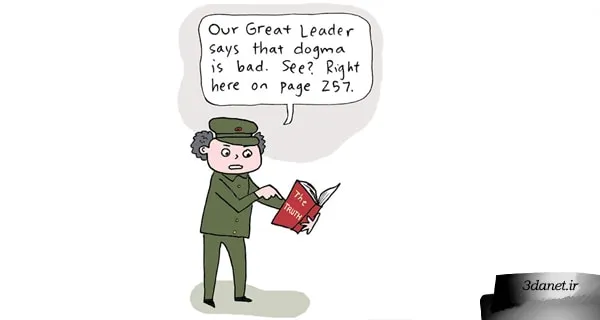
When we are distressed by an exercise or a procedure, we are encouraged to focus on the insignificant aspects of what is happening. We are encouraged to ask questions about the techniques for completing the exercises perfectly ... how to finish the task ... with whose help ... according to what schedule ... but we do not ask whether we should do it at all. The more we focus on secondary issues, the more firmly the main problems—the pervasive structures and presuppositions—stay in place. We have been taught not to pursue radical questions. I am using the word radical here in its original sense: radical comes from a Latin word meaning "root." Part of it is because we spend our time worrying about the growth of ivy, which just keeps growing more and more. Noam Chomsky explains the situation this way: "The smart way to keep people passive and obedient is to strictly limit the spectrum of acceptable opinion, but allow very lively debate within that narrow spectrum, even encourage people to express more critical and dissenting views. This gives people the sense that there's a free flow of ideas, while all the time the presuppositions of the system are being reinforced by the limits imposed on the allowable spectrum of debate."
For example, parents have already accepted most of what is done to their children in school, and therefore their critical energy is spent on peripheral matters. I sometimes amuse myself by guessing how far this pattern has been institutionalized. If a school principal announced that from next week, students must stand in the rain and memorize the phone book, I suspect we parents would show up... to ask whether they have to memorize the entire phone book or if part of it is omitted? Probably our other concern would be to know how much this will positively affect their grade. The most difficult mother in the group would likely end up asking whether her child is allowed to wear a raincoat during this exercise.
Our educational system, meanwhile, seriously avoids the important issues pertaining to itself. For every question that is raised in this context, there are more vital questions that are never asked. Education specialists assess various "behavior management" techniques, but they rarely address why there should be such an emphasis on studying behavior (i.e., observable activities) instead of focusing on reasons, needs, and the children themselves. Teachers constantly ponder what rules to enforce in the classroom, but they do not often ask themselves why these rules should be one-sided. Why shouldn't students have a role in these decisions? Perhaps this is why all teacher training centers have a course called "Teaching Methods," but no course entitled "The Aims of Teaching."
And so, we return to homework. Parents anxiously bombard teachers with questions about their homework-giving methods, but they often ask about trivial matters. Things about how they should force their children to do their assignments. If homework is a given principle, then it is perfectly understandable that people would want to make sure that assignment is done "properly." But then there is no room left for the question of whether that assignment should be done and why. Our reluctance to ask is another explanation for why a practice persists, even if its harms outweigh its benefits.
Teachers, in turn, witness how homework makes so many children miserable and why so many of them avoid doing it. Some react with sympathy and acceptance. Others use punishment and threats to force children to complete their assignments. They may insist that such incentives are necessary: “Without grades, they wouldn’t do anything!” Even if this is true, this argument demonstrates the utility of grades and other coercive strategies more than it proves the value of the homework itself. In any case, someone might think this way. But after all, teachers themselves were forced to do homework when they were students, and they should probably be expected to assign it in whatever school they work at. The idea of assigning homework is less a reasoned conclusion than a form of conditioning—a conditioning that has rarely been examined by education specialists.
Unlike parents and teachers, researchers have stepped back one level from the classroom and have therefore reached the luxury of examining its unpleasant aspects. Yet they rarely do so. Instead, they mostly ask questions like: “How many hours should a student’s homework take?” or “What strategies can increase the rate of homework completion?” These are the kinds of questions that seem satisfying to them.
Policymakers, too, are more cheerleaders than thoughtful critics. For example, the key document on this topic, published by the National Parent Teacher Association and the National Education Association, acknowledges that children often complain about homework, but it never considers the possibility that these complaints might be justified. Parents are encouraged to “show your children that you take their homework seriously,” regardless of whether doing so is actually right or aligns with your own beliefs. Just praise them once they’ve done it.
Nevertheless, health professionals have recently become concerned about the weight of children’s backpacks and have recommended that they… exercise to strengthen their backs! This is an approach People magazine also used: alongside an article discussing families drowning in the endless pile of children’s homework, it ran a sidebar titled “Ways to Reduce Strain on Teens’ Backs” and, for instance, recommended buying backpacks with padded shoulder straps.
The People article reminds us that the popular press periodically publishes pieces about how much homework is dumped on children and the various dire effects this can have. But these investigations rarely lead anywhere, and the conclusions they reach almost never go against the grain. Time magazine ran a cover story in 2003 with the headline “The Homework Ate My Family.” The article began with poignant, even alarming, stories about the damage caused by homework. Yet, a few pages later, the article concluded with this cautious statement: “Both parents and students must eagerly ‘work’ on homework… to taste the pleasure that comes from practice and mastery.” An article on the Family Education Network website concludes in a similar vein: “Yes, homework is a stupid thing, it may be too easy, or too difficult, but that doesn’t mean it shouldn’t be taken seriously.” (One wonders what else would have to happen for us not to take something seriously.)
These questions are apparently not taken very seriously by mental health professionals and physicians either. When a child refuses to do their homework, or doesn’t follow school rules, their job is to get the child back in line. Very rarely is any investigation conducted into the value of homework or the logic behind school rules.
Sometimes parents are invited to school to discuss homework with teachers, and it is assumed that their concerns are “reasonable.” The same is true of formal feedback. Filling out a list of survey questionnaires sent by central office officials is common in all Colorado school districts. Parents are asked to indicate their agreement or disagreement with statements such as: “My child understands how to do his or her homework”; “Teachers at this school have given me good suggestions about how to help my child with schoolwork”; “Homework is assigned in a way that keeps me informed about what my child is being taught and how he or she is learning it”; and “The amount of homework assigned to my child is: a) too much b) about right c) too little.”
The most important question this list should ask is something that is not on it at all. It seems this questionnaire is designed to embody Chomsky’s point. Stir up a controversial debate within a very narrow spectrum of acceptable opinions, in order to better reinforce the system’s presuppositions. The feedback received from parents is carefully examined, but only through these questionnaires. These are the very things cited to criticize homework, or by protesting parents: the focus is constantly on how much homework should be assigned. I sympathize with these concerns, but I am more worried about the extent to which the main issue is being ignored. We think that if excessive consumption of something dangerous doesn’t kill us, moderate consumption won’t harm us, but we forget that this is not true of everything. Sometimes the issue is about the very thing we are doing, or at least about the way we are doing it, and how much we do it is a secondary matter.
The more we think about these options (too much, about right, too little), the less likely we are to step back and ask the questions that really matter: What reason is there to think that any amount of homework assigned to our child is worth doing? What evidence is there that daily homework, regardless of its form, is necessary to turn children into better thinkers? Why do students have no chance to participate in deciding what their homework should be?
And finally: What if they had no homework at all?
.
.
Bibliographic Information:
Kohn, Alfie. The homework myth: Why our kids get too much of a bad thing. Da Capo Lifelong Books, 2006
.
.
Endnotes:
• This piece was written by Alfie Kohn and published on October 19, 2006, under the title “Homework: No Proven Benefits” on the Edutopia website. The website Tarjomaan published it on December 17, 2018, under the title “No research to date has shown the benefit of homework” in a translation by Mohammad Molabbasi. •• Alfie Kohn is an American researcher and author. His field of research is education and parenting. His scathing critiques of the conventional education system have repeatedly sparked controversy. Schooling Beyond Measure is his latest book. ••• This piece is an excerpt from the book The Homework Myth: Why Our Kids Get Too Much of a Bad Thing.
[1] The author refers to “cod liver oil,” which in British folk culture is given to children to boost intelligence. I have used its equivalent based on our local culture, “lavender,” to which many benefits for strengthening the mind have been attributed [Translator].
[2] Robert Frost
.
.




Discussion1 comments
مشق در ایران پدیدۀ منحصر به فردی است که با تکلیف منزل فرق می کند.روتویسی از روی متن کتاب در گذشته بیشتر برای این بود که یک جوری وقت و انرژی بچه ها مستهلک شود.هدف عمدۀ مشق هم همین بود.من خودم در زمان مدرسه شاهد بودم اولیا یکی از دانش آموزان به مدیر مدرسه شکایت می کرد که چرا کم مشق می گویید.این بچه ما همیشه مشغول بازی و تفریح به تعبیری مزاحم استراحت مااست.یا مثلا می گفتند به والدینتان بگویید به شما املا بگویند که اغلب خودمان متنی را مینوشتیم و عمدا چند غلط هم جا می گذاشتیم برای رد گم کنی.والدین نهایتا املا را امضا می کردند.که آن هم پس از مدتی خودمان انجام می دادیم. بعدا توی فیلم و سریال های آن ور آبی دیدیم که کتابی ا به دانش آموز معرفی می کردند که باید بخواند و از آن گزارش بدهد.آموزش و پرورش ما که از این امکانات ها نداشت و ندارد.یک کانون پرورش فکری و کتابخانه بود که آن هم علیل ماند.از خدا می خواستیم که کتابی،رمانی،چیزی به دستان برسد که بخوانیم.حقیقتا نبود.تصور این که یک رمان بدهند دستمان بگویند از این گزارش بنویس برای ما آرزو بود. یا مثلا مدرارس هنر و حتی کلاس هنر.نهایتا در ایران تبدیل می شود به کپی از تصویر کتاب یا در اکثر موارد حذف کامل ساعت هنر.کدام مدرسه آتلیه نقاشی یا کارگاه سفال داشت؟اگر هم داشت ما از فرط خوشحالی احتمالا به در کلاس نمی رسیدیم. ورزش هم که وقت تلف کردن است.چیزی به اسم فلسفه یا جامعه شناسی یا حقوق و روش زندگی هم که تعریف نشده.زبان آموزی هم که جکی یخ بود.خودمان به هزار زحمت و خارج از وقت مدرسه می رفتیم کلاس زبان خارجی و البته به خاطر آزادی کلاس عجیب برایمان شیرین بود.با تکالیفش هم که عمدتا نوشتن متون کوتاه بود مشکلی نداشتیم. ریاضیات و فیزیکی که امروز تدریس می شود یک متن سانسور شده ای است که نهایتا باید قدرت حل تست را تقویت کند.تدریس یک ریاضیات با سطح مطلوب یا فیزیک پیشرفته معلم نیرومند و ساعت زیاد می برد.نمی شود به دانش آموز گفت ما یک مختصری از یک مبحث را می گوییم تو خودت برو تا سطح پیشرفته را یاد بگیر.معلمین ما حتی همین متن مثله شده را هم نمی توانند درس بدهند.اگر به کلاه برداری از دانش آموز و تقاضای رشوه برای برگزاری کلاس اضافی و یا حتی نمره نکشد.آزمایشگاه فیزیک و شیمی زیست اصولا در سیستم ما تعریف نشده.کلاس های مهارتی هم که اگر باشد هزینه و اجرایش به عهدۀ والدین است.والدین هم غر می زنند تکلیفی بدهید که بیش از مداد و کاغذ نخواهد و خود دانش آموز تنهایی بتواند انجام بدهد.برنامه نویسی و مهارت کار با کامپیوتر در کدام مدرسه تدریس می شود؟به جز بعضی مدارس خیلی گران قیمت آن هم محدود به بعضی شهر های بزرگ؟از آموزش و پرورشی که بیش از نود و پنج درصد بودجه اش خرج حقوق معلم می شود چه انتظاری دارید. به نظر من تحلیل خیلی ساده است.مسئله سرکوب پرسش گری یا اطاعت پذیر بار آوردن کودکان نیست.مسئله نبود سرمایه ،امکانات،نیروی انسانی متاسب، زمان و مهم تر از همه دانش آموزشی است.کسی که چیزی نمی داند به دیگران هم چیزی نخواهد آموخت.ما به خاطر کمبود منابع ساعات و تمامی امکانات آموزش را تحلیل برده ایم.آموزش و پرورش مشق محور ارزان است.بیش از کاغذ و قلم و مترسک از یک معلم نمی خواهد.با شش ساعت در روز و شش ماه در سال جمع می شود. تنها دریچه ای که روی نسل جدید باز شده اینترنت است.آن هم شهر بزرگ شلوغی است که بچۀ عاقل(البته با حسابگری کودکانه اش) به درستی ترجیح می دهد به بازی اش برسد تا برود کتاب بخواند.بزرگ شدن دایرۀ امکان بدون، زیاد شدن دانش و رشد عقل، حاصلی جز تلف شدن توان آدمی ندارد.نتیجه آن که، آن گریز به حاشیۀ نسل ما و کم کردن ملال زندگی در ایران با کتاب و مطالعه هم روی این نسل بسته شد.از عاقبت آن و این به خدا پناه ببریم. دعوایی هم که امروز در ایران می بینید دعوای سر لحاف ملا است.دعوای میان وزارت آموزش و پرورش و وزارت آموزش عالی بر سر این است که کدام تعیین کنندۀ ورود دانش آموز به دانشگاه باشد.امیدواریم پیروز این دعوا وزارت آموزش و پرورش نباشد که دغدغه ای به جز معلمان مستخدمش ندارد و به چیزی که فکر نمی کند دانش آموز است.