Sociology
Why, after years of spending on culture, do we still lament the cultural state of society?
Cultural investments fail because of a deficit of hope, trust, and social vitality—factors whose absence keeps the elite out of the arena. In the vacuum left by the cultivated, large budgets are spent and squandered by less competent managers.
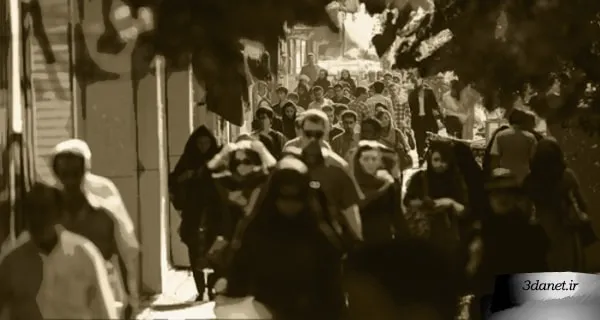
In the matter of culture, these three characteristics (hope, trust, and social vitality) play an important role. If any one of these three factors is damaged, intellectuals and cultural elites will refrain from bringing their own resources to the fore. Either because they have no hope of making an impact, or because they have no trust in the correct understanding and interpretation of their words and, for example, believe that expressing their views will lead to them being accused, or because they lack the necessary vitality for this work. Of course, these three factors are not separate from one another; they influence and are influenced by each other. For instance, if individuals feel that their thoughts will be misused by ill-wishers or will quickly be met with slander and so on, they will naturally lose trust in the social environment, and as this trust fades, they also lose the necessary hope and vitality. Of course, exceptions can be found in any situation, and there may be those who do not lose their hope and vitality so easily, but they are certainly not the rule.
Two remarks from two university professors and an answer to an important question: 1- Some time ago, Dr. Sadegh Zibakalam, citing statistics on cultural budgets spent in the country and the various institutions that receive these budgets, reminded in a letter to Dr. Motahhari. In it, at least nearly 40 institutes, cultural headquarters and centers, organizations, institutions, and foundations are involved in cultural affairs and receive this 6,000 billion budget, of which 13 percent is spent by the Ministry of Culture and Islamic Guidance and nearly 90 percent by other organizations. 2- Dr. Mahmoud Sariolghalam, in a note titled "Why Don't We Cooperate with Each Other?", wrote on his website: "A few years ago, when I was a guest at a Norwegian university, an Iranian-born professor there offered me a tour of the university. During the three-hour walking tour, he spoke with such enthusiasm, passion, interest, attachment, and devotion to the university, its projects, its library, its goals, its buildings and facades, and its colleagues and administrative and management departments that it impressed me more than the importance of the university itself. At the end of the tour, which concluded with lunch, I asked him the reasons for his enthusiasm. He said: The environment, the staff, the management, and the educational-research atmosphere of this university give me peace; everyone respects me; even though I am of Iranian origin, the faculty and university have appointed me to three committees so I can participate; students and professors generally want to learn; I am not exaggerating when I say this is my main home. I show kindness, I receive kindness. I tell the truth, they tell the truth. I do not wish ill upon anyone, they do not wish ill upon me. I do not have unreasonable expectations of others, they do not have unreasonable expectations of me. I fulfill my duties, they fulfill theirs. I consult, they consult. I do not betray, they do not betray. I am disciplined, they are disciplined. I do not speak ill, they do not speak ill. I do not exclude, they do not exclude. I cooperate, they cooperate. The perception and feeling I got from this conversation was this: How normal this human being is. A normal individual, seeing goodness, does good. But if this same normal individual is excluded, he then becomes cautious. When he is betrayed, he distances himself. When they lie, he becomes pessimistic. When they insult him, he isolates himself. When they take advantage of him, he hesitates to show kindness. If a person, in return for showing kindness, giving respect, doing good, being dutiful, being truthful, and being fair, sees negative and destructive reactions, what spirit will he have for cooperation?" (Detailed text)
And now the main question:
Why, after years of spending on culture, do we still lament the cultural state of society?
If we accept that social capital and symbolic capital (whose role we will not address here) are the driving engines of cultural development, we must ask: what are the most important forms of social capital that generate cultural development? And fundamentally, under what conditions do cultural investments yield results?
According to global research, many scholars (1) believe that economic investment yields results in countries where three key characteristics are present. These three characteristics are: “hope, trust, and social vitality.” If any of these characteristics is damaged, economic investors will either not bring their capital into the field, or even if they do—and even if all other scientific and economic considerations are observed—little growth or progress will occur in the economy. This is where the role of social capital becomes prominent. Here we were speaking of social capital that is in good shape economically. Now let us return to the subject of culture. In the realm of culture, these three characteristics (hope, trust, and social vitality) play a far more important role. If any of these three factors is harmed, the cultured and the intellectual and cultural elites will refrain from bringing their own capital into the field. Either because they have no hope of having an impact, or because they have no trust that their words will be properly understood and received and, for instance, believe that expressing their views will provide grounds for them to be accused, or because they lack the necessary vitality for such work. Of course, these three factors are not separate from one another; they mutually influence and affect each other. For example, if individuals feel that their ideas will be misused by ill-wishers or that, for instance, by expressing them they will quickly face slander and so on, their trust in the social environment will naturally be withdrawn, and as this trust fades, they will also lose the necessary hope and vitality. Of course, exceptions can be found in any circumstances, and there may be those who, even under such conditions, do not lose their hope and vitality, but they are certainly not the rule.
So far, we have addressed the impact of these three conditions on the presence or absence of social capital and its role-playing. The other side of the issue must also be examined. If these three conditions are absent or become weak, even if cultural capital brings its resources into the field, because the ground for the dissemination, exchange, and production of culture at a valuable level is not prepared, the least that happens is that these resources remain stagnant or do not flourish as they should, and ultimately perish. When we simply set aside our capital and, instead of collaborating with it in building culture or the economy, do something that strips it of hope, trust, or vitality, we will gradually face the caution, pessimism, doubt, indifference, and isolation of the majority of it. In such circumstances, it is clear who will take their place. There are always those who feel responsible for spending these budgets in the path of culture as they themselves understand it. And because their understanding may be far inferior to that of cultural capital, the result will be nothing but a waste of time, energy, and resources. Citizens cooperate economically or culturally under conditions where their cooperation is reciprocated. Their role-playing must lead to a feeling of being useful and effective. Cultivation and elite status must be considered valuable, and in practice, the learned and the unlearned must not be treated equally. Otherwise, instead of cooperating toward growth, forces will constantly be in a state of conflict and neutralize one another. Everyone sees everyone else as a rival. Narcissistic individuals take the field, and the words of the cultivated, concerned are not heard. Society turns toward rigid demarcations, and the spirit of cooperation vanishes. Average individuals, too, due to the weakness they find in hope, trust, and vitality, distance themselves from society. Cultivated individuals feel like a merchant who finds no suitable place to invest. Although they are willing to offer their ideas without material reward, there is neither a system that appreciates ideas and is a buyer of thought (even differing thought), nor is there hope that all that intellectual effort is worth the trouble and its consequences.
Conclusion: To address cultural problems, there is little need for additional expenditure in the field of culture. We must revive the lost hope, trust, and vitality. Because these factors will cause intellectual and cultural capital to come into play, instead of spending vast economic resources. And this is the path to reform and public satisfaction with the state of culture. Therefore, we must work to make the general public happier than in the past and more hopeful about the future, and to increase their sense of personal security and public trust. These three are our important cultural indicators, and in determining the good and bad of cultural efforts, we should also take these indicators into account.
.
Endnote:
۱- Dr. Renani, in his valuable book entitled « Cycles of Moral and Economic Decline », has explained the set of factors effective in the decline of morality and economics in the form of neglecting “social capital.” In the introduction, he clearly states that even economic development is impossible without a moral and cultural infrastructure.
.
.
Why, after years of spending on culture, do we still lament the cultural state of society?
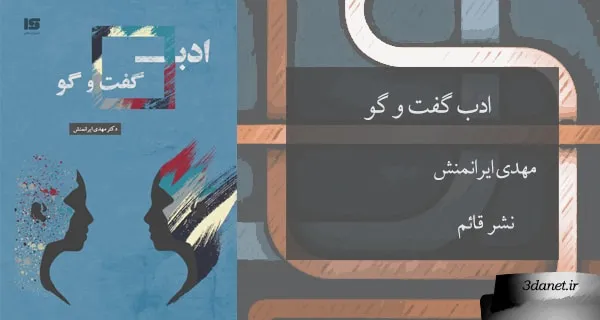
Author: Dr. Mehdi Iranmanesh
.
.



Discussion0 comments
No comments yet; let yours be the first voice.