Religion
Four Interwoven Characteristics of Faith According to Søren Kierkegaard
Søren Kierkegaard sees faith as possessing four interwoven characteristics: risk, passion, choice, and urgency. This existential account interprets faith as a hazardous passion and an urgent choice that carries no guarantee of its own correctness.
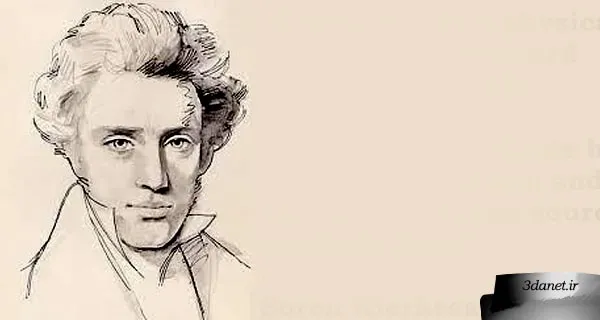
The four interwoven characteristics of faith according to Kierkegaard (Søren Kierkegaard) are: risk-taking, passion, choice, and urgency. Faith is hazardous and involves commitment to beliefs, practices, and even identity-formation; but there is no guarantee that these beliefs, practices, and identity-formations are well-placed. Perhaps the God presupposed by the Bible does not exist at all; or perhaps you and I have misunderstood God, or have not properly grasped what God wants from us, or what plan God has devised for our flourishing. Being religious does not make us infallible; nor does religiosity cause distorted inclinations to step aside from the path of shaping our beliefs, practices, and even identity-formation. Second, faith is passionate. The third aspect of Kierkegaardian faith is the emphasis on choice. The will, and not just reason, is deeply involved in determining the existential sphere in which we live, and also the will, and not just reason, is deeply involved in whether I have faith or whether I consider revelatory claims an insult to my intelligence. Urgency is the fourth aspect of faith, which is linked to the third existential characteristic. Altogether, Kierkegaard presents an existential account of faith, an existential account that interprets faith as a hazardous passion and an urgent choice. Existentialism and Religion, Merold Westphal, The Oxford Handbook of Existentialism, 2012 Søren Kierkegaard
.
.
[Four] interlocking features of faith as Kierkegaard understands it [are]: risk and passion [choice and urgency]. First, faith is risky. It involves commitment to beliefs, practices, and even to identity formation; but it comes without guarantees that it is not misplaced. Perhaps there is no God of the kind presupposed by biblical faith; or perhaps I (and we) have misunderstood who God is, what God wants of us, and what kind of life God has planned for our flourishing. Being religious doesn’t make us infallible; nor does it keep distorted desire from deforming our beliefs, our practices, and even our identities. [...] Second, faith is a passion [...] A third existential dimension of Kierkegaardian faith is the emphasis on choice. The will, and not just the intellect, is deeply implicated in determining the existence-sphere in which I live and in whether I have faith or am offended by the claims of revelation. [...] “Linked to this third existential feature is a fourth: urgency. [...] In sum Kierkegaard gives us an existential account of faith insofar as it is interpreted as a risky passion and an urgent choice.
Existentialism and religion, Merold Westphal, in: The Cambridge Companion to Existentialism, 2012.
.
.
Existentialism and Religion, Merold Westphal, The Oxford Handbook of Existentialism, 2012
Søren Kierkegaard
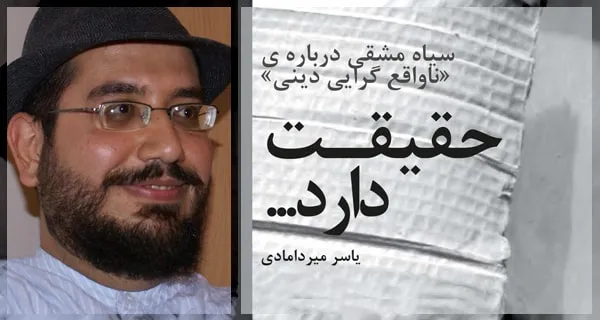
Translator: Yaser Mirdamadi
.
.




Discussion0 comments
No comments yet; let yours be the first voice.