اندیشهفلسفهخردگفتگوحکمتمعناپرسشفرهنگ
Philosophy
Hassan Bolouri's Article 'The Principle of Causality?'
Precise knowledge of causes is impossible, and the principle of causality is acceptable only in its approximate form. The validity of this principle is limited in both classical and quantum physics, and its distinction from mathematics is clear.
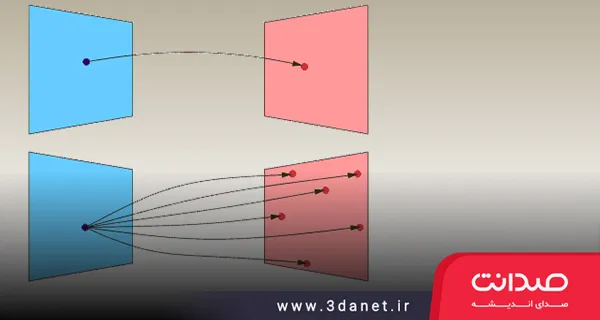
The principle of causality expresses a specific relationship between events. Its simplest form is the relationship between two events, cause and effect, in which the effect is considered the result of the cause. But what proof does this assumption rely on? Can its validity be demonstrated? Or is it merely a metaphysical assumption?
The principle of causality requires, first and foremost, a precise knowledge of the cause. Is a precise knowledge of the cause possible? If the answer is negative, which it is, what is the solution? Should the principle of causality be discarded? Or should its validity be considered limited? Fundamentally, should not chance and probabilities be the basis?
Abandoning the principle of causality means nothing less than forgoing any kind of scientific activity and progress. For experience has shown that scientific achievements, especially in the basic sciences, are impossible without utilizing the principle of causality.
The asymmetrical situation mentioned has rightly attracted the attention of many philosophers since ancient times and compelled them to comment on the principle of causality. Comments that are sometimes contradictory. For example, René Descartes considers human reason, without need of experience, capable of understanding it; Immanuel Kant does not consider it proven through experience; and David Hume recognizes no supra-empirical origin for it.
In this article, after a brief introduction, I will try to show that a precise knowledge of the cause cannot be obtained, and therefore a precise relationship between cause and effect cannot be established. Consequently, the principle of causality is, at best, acceptable only in its approximate form. In other words, the principle of causality is valid and helpful within the limits of the approximate cause. And from this perspective, I will examine whether the principle of causality is deterministic or probabilistic in the classical world and the quantum world. (Effects whose cause of occurrence we do not know, or do not yet know, cannot be examined within the domain of the principle of causality. A prime example of this is the "Big Bang.")
Introduction:
The principle of causality has a history of several thousand years with wide application at various levels of knowledge and science. This principle has been the focus of many philosophers, who have left behind noteworthy and readable works on the subject. From the second half of the nineteenth century, scientists like James Clerk Maxwell, and in the twentieth century with the advent of quantum science, other physicists questioned the principle of causality as it had been conceived until then. On the other hand, with the development of Chaos Theory, the discussion of weak and strong causality became increasingly prominent. Undoubtedly, explaining all these matters—that is, examining the history of the principle of causality, presenting the various viewpoints of philosophers and modern scientists, explaining the application of the principle of causality in different fields including the basic sciences (physics, chemistry, biology, ...), ethology, sociology, law, medicine, economics, etc.—is not possible within the framework of a single article. Since, in the internet age, access to some of this material is readily available, I will therefore refrain from entering into them and will solely examine the concept of the principle of causality scientifically from various angles.
Here it is appropriate to quote the points that James Clerk Maxwell (1831–1879), the Scottish physicist, raised in his book entitled 'Matter and Motion' (1877). Maxwell writes:
"It is a doctrine [metaphysical principle] that equal antecedents always have equal consequents. This no one can deny. But it does not solve a problem in the world, a world in which equal antecedents never reappear and never happen twice. A similar physical principle says, similar antecedents always have similar consequents. But here we move from equality to similarity, from absolute equality to a more or less good approximation. There are manifestations [phenomena] in which a small error in their data produces only a small change in the result. Such processes are called stable. But there are also phenomena of another kind, where the influence of negligible, imperceptible physical quantities leads to very significant results [unstable processes]."۱
In this regard, Henri Poincaré (1854–1912), the French physicist and mathematician, writes:
“A very small cause which escapes our notice determines a considerable effect that we cannot fail to see, and then we say that the effect is due to chance.”۲
Note: The very small causes, with negligible and imperceptible physical quantities, that give rise to “chance” have been studied for more than half a century in the science of unstable dynamical systems or chaotic systems.
The Mathematization of the Principle of Causality:
What is the length of your desk? 1 meter and 40 centimeters; more precisely, 1 meter and 42 centimeters; even more precisely, 1 meter, 42 centimeters, and 3 millimeters; still more and more precisely … ? Can the exact length of the desk be determined? That is, can the error in measuring the desk's length be reduced to zero? As another example, you want a square desk with sides of exactly 1 meter. Is it possible to produce such a desk? Suppose, for the sake of argument, that it is. Can the exact diagonal of the desk be determined, whether through measurement or calculation? In the first case, through measurement, the same question as above arises: can the error in measurement be reduced to zero? In the second case, that is, through calculation, most people's answer to this question appears to be affirmative. Because they remember the Pythagorean theorem, which states: the sum of the squares of the sides of a right-angled triangle is equal to the square of its hypotenuse (a۲ + b۲ = c۲). That is, 1۲ + 1۲ = c۲. Consequently, the diagonal of the desk, c, is given as the square root of 2 meters. But we must note that the numerical expression of the square root of 2 is one whose number of digits:

continues after the decimal point to infinity.
Now, the question might be raised: what need is there for measurement with such high precision, for example, up to the fortieth digit after the decimal point? Undoubtedly, in everyday life, there is no need for such practical precision. But when speaking of science and the principle of causality, we must both have a correct understanding of the domain of causality's validity and know to what extent one must be precise. The domain of the principle of causality's validity is determined not by mathematics but by physics. Our current physics is valid and responsive down to Planck scales. That is, anything smaller than the Planck scale has become unknowable. Consequently, any scientific discussion and attempt to establish a relationship between cause and effect at scales smaller than Planck scales is meaningless—scales that are extremely small. For example, consider the Planck length and Planck time t, which are equal to:

scales that determine the boundary of the validity of current physics and, with it, the principle of causality.
One of the important differences between physics and mathematics is that in mathematics, there are techniques by which error can be driven to the zero limit and the desired result obtained, including through differential calculus. A method with extraordinarily high efficiency that has led to the development of various sciences. Of course, at the cost of an unintended negative impact on our view and perception of concrete, physical problems; in a word, on the achievements of the sciences! And this is something added to our everyday experience of the objective world. We examine objective quantities with mathematical methods, express them in mathematical language, and present the relationships between them in the form of various sciences. The excellent applications of these sciences have satisfied us, and over time, through habit, we have come to believe that with such tricks we can grasp and express the objective world as it is. And at the center of all this, we have placed the principle of causality.
The Approximate Nature of the Principle of Causality:
To explain the approximate nature of the causality principle, let us consider the science of mechanics, one of the oldest and best-known sciences. The science of mechanics was presented in the seventeenth century by Isaac Newton3, the English mathematician and physicist (1642–1726), using the aforementioned mathematical methods. This science, as a branch of classical physics, has developed over time and attained such a status that Arnold Sommerfeld, the famous German physicist, friend of Einstein and teacher of Wolfgang Pauli and Werner Heisenberg, in his well-known book4 assesses the science of mechanics as the backbone of physics. And many people also consider this science to be an instance of the causality principle. But with a little attention, we realize that this perception cannot be correct; for this purpose, it is necessary to take a look at its quantities.
The fundamental quantities of the science of mechanics are space, time, and mass. The magnitude of none of these quantities can be determined precisely. Because here, too, the same problem mentioned above regarding length and its precise measurement applies. That is, the error in measuring the said quantities cannot be reduced to zero. Therefore, it is clear that one cannot obtain precise knowledge of the cause (causes). And consequently, a precise relationship between cause and effect cannot be demonstrated. That is, classical mechanics is recognized as an instance of causality at the cost of ignoring errors; errors arising from the belief in quantities in continuous form and the possibility of their precise measurement. But this is an incorrect belief. We are not capable of measuring quantities precisely, not only in exceptional cases but in general! As a result, we cannot obtain precise knowledge of the cause (initial conditions) and know or predict the resulting event (effect) precisely. Error, small or large, is always present in measurements and cannot be eliminated or denied. We must accept that we do not have, and cannot have, the possibility of achieving a precise relationship between cause and effect; neither the cause nor the effect can be known precisely. For this reason, the existence of a precise relationship between cause and effect cannot be demonstrated. However, its approximate presentation within a certain range of error is possible. In the event of an inability to determine the range of error, probability theory can be utilized.
It is said that the phenomena (causes) that bring about an event (effect) lie in the past of this event (effect). Conversely, the events (effects) that can occur due to an event (cause) lie in the future of this event (cause). Is this always the case?:
The Relativity of the Causality Principle:
The simultaneity of events, explained in the article ‘What is Time and How Did It Come into the World?’5 is relative in the theory of relativity: which of two events A and B occurs earlier or later depends on the coordinate system from which these events are observed. But this is not the case in classical mechanics. Here, the simultaneity of events is assumed to be absolute. That is, when in one coordinate system event A occurs before event B, this situation, this order or this structure, is always the same in all other coordinate systems as well. In the mentioned article, aside from explaining the relativity of simultaneity in the theory of relativity, I showed by illustrating an example that dividing time into past, present, and future has no meaning; in Einstein's words, it is nothing more than an illusion. In fact, the relativity of the simultaneity of events confronts the imagined order in the structure of the causality principle, i.e., cause before effect, with difficulties. Since the speed of influence is limited, at most to the speed of light, past and future in relativity comprise cone-shaped sections of four-dimensional spacetime (refer to the article ‘Effect and Cause’6). And when considering the curvature of spacetime (general relativity), the structure of the causality principle becomes even more complex. In the sense that it causes the collision (interference) of parts of the future and past of an event in curved four-dimensional spacetime.
The Quantum Nature of the Causality Principle:
Quantum theory holds a unique place in our understanding of the world, especially in relation to the principle of causality and the concept of determinism.۷ و۸ In its relatively short lifespan since the early twentieth century, quantum theory has undergone such development and gained such influence in various scientific, technical, and everyday aspects of our lives that it is unparalleled in human history. Nevertheless, the discussion of interpreting and explicating concepts from quantum theory is still not concluded. For instance, the issue of whether this theory is 'deterministic' or 'indeterministic' is still raised. The 'unpredictability' and 'indeterministic' nature of events are also issues discussed within quantum theory. Undoubtedly, each of these cases is somehow related to the subject of the principle of causality.
Quantum theory is considered indeterministic. Of course, here too one can speak of the principle of causality under certain conditions. For example, when the cause of event B is solely the result of event A. Or when we base our evaluations and calculations on Schrödinger's differential equation, that is, the equation of motion in quantum mechanics, it is natural that the results obtained from it are considered deterministic, fatalistic. That is, something far more expressive than what the principle of causality states. In the sense that in the principle of causality, the state of can be is also at issue. But in determinism, the fatalistic state of must be is relevant.
The unpredictability of an event does not mean it is indeterministic. One interpretation of quantum theory says that, due to a fundamental limitation of natural laws, predicting an event is only possible in a probabilistic form. A quantum example: it is impossible to predict which atom in a radioactive substance will be active at the next moment. A statistical example: when a coin is tossed upwards, one cannot say with certainty which side of the coin we will have after it falls. Because here, factors are influential that are seemingly imperceptible, yet the events (effects) testify to their existence; the influence of factors such as the intensity and direction of air molecules' movement. These types of factors (causes), without us being able to precisely measure each and every one of them, ultimately cause the event we observe, and "then we say that the event is accidental" (Poincaré).
Chaos Theory and the Principle of Causality:
In the introduction, a quote from James Maxwell was mentioned, stating:
“There are phenomena where a small error in their data produces only a small change in the result. But there are also phenomena of another kind, where the influence of negligible, imperceptible physical quantities on them leads to very significant results.”
It is admirable that this great physicist speaks of something that only appeared about a century later in the form of a complex science called 'the science of unstable dynamical systems, or systems in a state of disequilibrium,' or 'chaotic' systems, in the mid-twentieth century, and is now considered one of the most fundamental and important theoretical and experimental parts of modern physics and the natural sciences.
Although Maxwell does not mention the principle of causality by name in the cited quote, he practically explains the very thing now discussed in the 'science of chaotic systems': the influence of small changes on a system in a state of equilibrium, or more or less in equilibrium, leads to small changes, and on a system in a state of disequilibrium, or close to disequilibrium, leads to very large changes. For example, let us imagine a hemispherical bowl with a marble inside it. Under such initial conditions, a small tap on the marble does not create much change in its position. But if we invert that same hemispherical bowl and place the marble on top of it, that is, in a state of disequilibrium or close to a state of equilibrium, undoubtedly, with the slightest tap on the marble, we will witness a remarkable result. A famous example often cited in this regard is the flapping of a butterfly's wings at one point on Earth (Brazil) and the formation of a tornado at another point (Texas), from Edward Lorenz (1917–2008), the American mathematician and meteorologist:
“Does the Flap of a Butterfly´s Wings in Brazil Set Off a Tornado in Texas?”
Undoubtedly, this example is far from reality. But the purpose of expressing it is to depict the influence of an imperceptible cause in the formation of a large effect.
Separating the Principle of Causality:
The principle of causality can be divided into the weak principle of causality and the strong principle of causality for the reasons explained below:
The weak principle of causality states that 1- identical, equal causes always produce identical, equal effects. A state which, according to the explanations above, can never be proven due to the lack of precise knowledge of the cause and effect. 2- An imperceptible cause leads to a small change in the result, or it leads to a very large change.
The strong principle of causality says that similar causes produce similar effects (in nonlinear systems, of course, they produce dissimilar effects!).
Note: In some sources, the weak and strong principles of causality are expressed in a summarized form as follows: The weak principle of causality is 'a relationship between a weak cause and a weak effect or a strong effect,' and the strong principle of causality is 'a relationship between a strong cause and a strong effect.'
Our definition is presented with consideration of the issues explained in the sections above, the problem of measurement and the principle of determinism. However, there is fundamentally no significant difference between the two stated definitions.
According to the explanations given in the previous sections, the weak principle of causality presupposes precise knowledge of the cause and the relationship between cause and effect: the ideal state. But we know that the possibility of one hundred percent knowledge does not exist. That is, the claim that “identical, equal causes always produce identical, equal effects” is not correct. Nevertheless, it is important to know that many of humanity's achievements have been made possible by assuming the correctness of this principle. However, these results do not mean confirming its correctness. Although this method of working is sufficient and helpful in many cases. And even at points in history, it is the only way to develop science. For example, Newtonian mechanics, and classical physics in general, were largely formed with the assumption of precise knowledge of cause and effect and the relationship between them. In the sense that it was imagined that the relevant quantities could be measured precisely with the necessary measuring instruments at hand. But this perception is not correct.
Confidence in scientific achievements means the possibility of reproducing their propositions. In the sense that the result of an experiment must be repeatable (reproducible) in similar experiments. Due to the lack of precise knowledge of the initial data and the inability to repeat an experiment one hundred percent identically, there is no way but to accept similar initial data (cause), similar experiments, and similar results (effect). And of course, this very method has led to the development of sciences, especially experimental sciences, and is in fact what is called the strong principle of causality: similar causes produce similar effects; small changes in the initial data (cause) lead to small changes in the result (effect), but not always! For example, it is not uncommon to witness completely different weather conditions (effect) from similar initial conditions (cause). A matter that appears as a contradiction in the strong principle of causality. Due to the complexity of these types of systems, explaining the reason for the emergence of such an apparent contradiction is very difficult.
In less complex systems, yet sensitive to changes, it can be shown that small differences in the initial data (cause) can lead to large changes in the result (effect): systems in a state of disequilibrium or near a state of disequilibrium. Although deterministic laws govern their interactions, predicting their changes for future times is impossible: chaotic systems.
.
.
References:
1_ J.Clerk Maxwell, Matter and Motion, The Sholdon Press, London, 1925
2_ Henri Poincare’, Unbestimmte Welt, Dirk Proske Velag, Dresden, 2006
3_ Isaac Newton, Mathematische Prinzipien der Naturlehre, Wissenschaftliche Buchgesellschaft, Darmstadt, 3. Auflage, 1963
4_ Arnold Sommerfeld, Mechnik, Akademische Verlagsgesellschaft, 7. Auflage, Leipzig, 1964
5_ Hassan Bolouri, Time: What is it and how did it come into the world?
Hassan Bolouri, Time: What is it and how did it come into the world?, published on Persian-language websites, December 2019
6_ Hassan Bolouri, Causal Asymmetry
Hassan Bolouri, Effect and Cause, published on Persian-language websites, May 2019
7_ Hassan Bolouri, Quantum and Philosophy
Hassan Bolouri, Quantum and Philosophy, published on Persian-language websites, May 2019
.
.





Discussion3 comments
بسیار خوش ایده ، قطعا جای بسط و بررسی عمیق تر دارد که امیدوارم نویسنده بتواند در آینده بر روس آن سرمایه گذاری کند
سلام مقاله جناب بلوری با عنوان فلسفه وکوانتوم را نیز منتشر کنید بی نهایت سپاس
مقاله ای کوتاه ، نامفهوم و آکنده از غلط های نگارشی و املایی!