Philosophy
Hossein Sheykh Rezaee's essay 'Philosophy in the New World'
In his history of Western philosophy, Anthony Kenny examines the period from 1757 to 1975 through a blend of biography and thematic discussion. This translated work offers a precise narrative of contemporary philosophy and is an engaging read for students and enthusiasts alike.
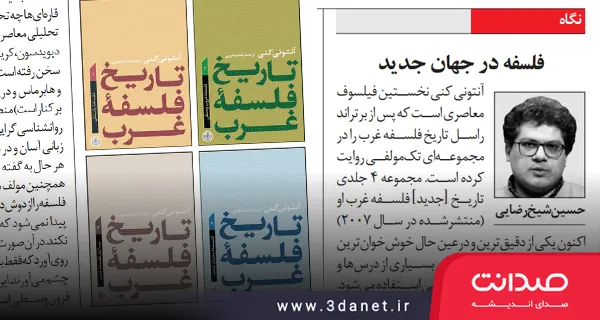
Philosophy in the New World
Hossein Sheykh Rezaee
Etemad Newspaper; No. 4849 – Monday, 6 Bahman 1399
Anthony Kenny is the first contemporary philosopher since Bertrand Russell to narrate the history of Western philosophy in a single-author collection. His four-volume [New] History of Western Philosophy (published in 2007) is now one of the most precise and, at the same time, most readable books on the history of philosophy, and it is used as a textbook in many courses and classes. In this four-volume collection, Kenny has combined biography with the presentation of detailed, thematic discussions to provide a relatively comprehensive and continuous account of the progress of philosophy. Fortunately, this collection is now available to Persian-speaking readers through the translation by Reza Yaqubi (Parseh Publishing), which can offer fresh insights and points for philosophy students, other students taking a general philosophy course, the general eager readership, and philosophy specialists alike. Philosophy in the New World is the fourth and final volume of the History of Western Philosophy series, covering the period from 1757 to 1975.
In this book, Kenny considers his potential audience to be a reader with knowledge at the level of a second- or third-year undergraduate student (p. 20), and this very point shows what a difficult task he faced in writing a precise yet, as far as possible, simple work for the reader. In the book's introduction (p. 19), Kenny speaks of the various criteria he could have used to determine the philosophers and philosophical schools suitable for this book: living philosophers, philosophers older than the 75-year-old Kenny at the time of writing, and finally, the criterion of examining works written more than 30 years ago. It is by accepting and resorting to this last criterion that Kenny avoids examining those works written after 1975. The book consists of 12 chapters. The first 3 chapters can be called biography-oriented, in which thinkers such as Bentham, Mill, Schopenhauer, Kierkegaard, Darwin, Nietzsche, Peirce, James, Freud, Derrida, and others are addressed. Kenny considers these chapters more suitable for those readers with historical interests, for whom observing the course of evolution and development of philosophical ideas in history is important. Following these three chapters, we see 9 chapters that are subject-oriented, in which many of the views and developments mentioned in the initial chapters are scrutinized.
In these chapters, the subjects of logic, language, epistemology, metaphysics, philosophy of mind, ethics, aesthetics, political philosophy, and God are addressed. Many of these subjects were also examined in the previous volumes, and in this way, Kenny has shown a kind of continuity and connection among the discussions related to them. Kenny considers these 9 chapters suitable for those readers who expect the history of philosophy to help them understand the common discussions among contemporary philosophers. Thus, we are faced with a combination of historical and biographical material and thematic discussions. The titles of the first 3 chapters of the book – From Bentham to Nietzsche, From Peirce to Strawson, and From Freud to Derrida – are an indication of Kenny's desire to provide as comprehensive an account as possible of philosophical currents, which includes both what is called "continental" philosophy and what is called "analytic" philosophy. In these chapters, Kenny emphasizes the synthetic and amalgamative character of philosophy and shows that the later rifts between analytic and continental philosophy were not so serious and fateful, at least at the end of the nineteenth century and the beginning of the twentieth century.
اما برخی اظهار كردهاند چنین رویكرد كلنگر و تركیبیای در فصلهای آتی كتاب تداوم نیافته و كنی در فصول 9گانه بعدی عمدتا به بررسی مسائل و مكاتب فلسفه تحلیلی همت گماشته است. به همین دلیل است كه در كتاب نامی از فیلسوفانی همچون مرلوپونتی، لویناس یا فوكو نمییابیم. چنین نقدی محدود به طرفداران و دوستداران فلسفه قارهای نیست. از میان مباحث فلسفه تحلیلی نیز مواردی وجود دارد كه كتاب چندان به آنها نپرداخته است. برای نمونه از آنجا كه كنی معتقد است، فیزیك و فلسفه طبیعی پس از نیوتن دیگر جزو فلسفه به حساب نمیآیند(ص 18) مباحث مربوط به فیزیك و دیگر علوم مانند مسائل فلسفه علم نیز در این مجلد از قلم افتادهاند. هر دو این نقدها ریشه در واقعیتی مشترك دارند: هر تاریخ فلسفهای ناگزیر از انتخاب است و هر انتخابی لاجرم مباحث و متفكرانی را بیرون از دایره بررسی میگذارد. شاید منصفانهتر آن باشد كه به جای برشمردن آنچه دركتاب نیامده به این پرداخت كه به آنچه آمده چگونه پرداخته شده و دقت تحلیلهای عرضه شده تا چه حد است.كنی معتقد است، سلف او راسل در تاریخ فلسفهاش گاه دقت را فدا كرده و از همینرو او سودای دقت در سر داشته است. نگاهی به مباحث و تحلیلهای كنی در این كتاب نشان میدهد او در طرح چنین ادعایی برحق است و گزارش او در این كتاب روایتی دقیق از سیر تحول فلسفه در جهان معاصر به دست میدهد.



Discussion1 comments
آقای دکتر شیخ رضایی از معدود افرادی که با وجود قرار گرفتن در جمع که شاید هیچ سخنی را خارج از چارچوب مورد تایید جزم فلسفه رایج و رسمی بر زبان نمی آورند اما کار جدی فلسفی می کنند ، دقت دارند، و صادقانه می اندیشند. آیا روزی می رسد که اندیشه ایرانی از حاکمیت افراد مشهور و معتبر فلسفه غرب رها شود؟