Sociology
Intellectuals: From Benevolence to Authoritarianism
Hatem Ghaderi described Iranian intellectuals as answer-laden and Dostoevsky's characters as question-laden. Belief in a roadmap and in being affirmed led to revolution being chosen over crisis; yet revolution should be the last resort. Held at the Iranian Artists Forum.
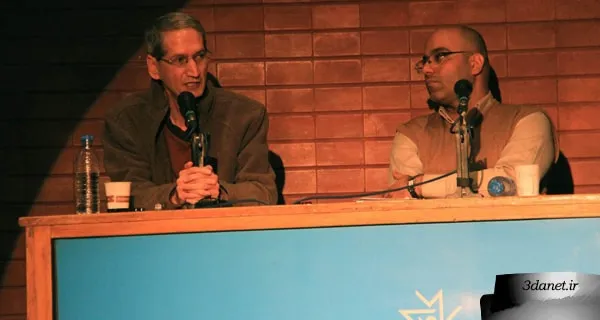
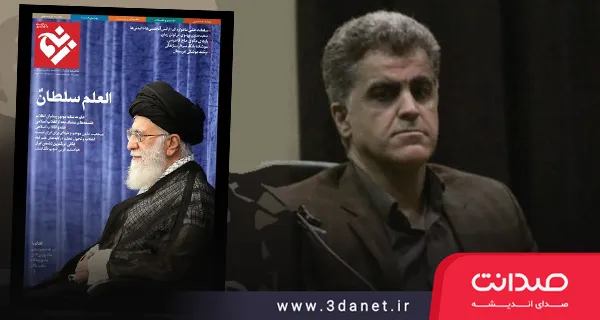
At this meeting, which was organized by the Iranian Artists Forum and the Art and Literature Group of the Thought and Pen Association, with the participation of several artists as well as literature and cinema enthusiasts, Dr. Hatam Ghaderi, a professor of political science, and Mojtaba Golestani delivered speeches on the role of intellectuals in Iranian society, with a focus on Mehrjui's cinematic perspective on this group, and Shahram Eghbalzadeh also spoke on behalf of Mehrjui.
In his speech titled "Intellectuals: From Benevolence to Authoritarianism," Hatam Ghaderi, while referring to the role of intellectuals in Dostoevsky's works, stated: In my opinion, the reason Dostoevsky is considered a classic writer is that he touched upon questions that challenge the boundaries of humanity. Some intellectuals in Dostoevsky's books, for example, "Ivan" in "The Brothers Karamazov," pose the deepest possible questions concerning human existence and life. That is why we see that Dostoevsky is not always a professional writer, but rather a writer who traverses spaces generally inaccessible to ordinary people; spaces that can create tremendous upheavals in the human soul and psyche.
Analyzing the characters in Dostoevsky's works, Ghaderi explained: It is not without reason that we see some characters in Dostoevsky's works might, amidst violence and the boiling over of protest and rebellion, kneel on the ground and kiss the earth. The strange inclination of these individuals towards violence and the fundamental questions they have about human existential concerns, including religion, meaning, and God, give us the opportunity to draw a comparison between these characters and the intellectual atmosphere before the Iranian Revolution and even the first two decades after the revolution.
Before beginning the discussion about the intellectual atmosphere in Iran, the Tarbiat Modares University professor noted: Friends should bear in mind that in my discussion about the intellectual atmosphere, I am not considering all intellectual figures; rather, I am mainly looking at those who had a roadmap for themselves;
Today, I believe revolution should be the last resort
He added: Perhaps today it is easy for us to critique these formulations and even reject them, but the truth is that if we return to the historical experience of these individuals and their way of life and that of the activists in the intellectual sphere at that time, we might not be able to condemn them so much. In fact, political systems most often push things to a point where it is thought that only a revolution can untie the knots of the impasses. This is while today, I believe revolution should be the last resort. Perhaps if we had possessed the wisdom to exchange revolution for crisis and, after two or three decades of enduring crisis, improved the situation, our conditions today would be very different. But the situation was otherwise from both sides; on one hand, the system's lack of wisdom was pushing the situation towards revolution, and on the other hand, the haste for revolution among the protesters was excessive, with the belief that the roadmap was in their hands, without knowing where they were going and what future awaited them.
Continuing his discussion on the comparison between Iranian intellectuals and the characters in Dostoevsky's works, Hatam Ghaderi stated: As I said, Ivan in the novel The Brothers Karamazov is an intellectual who is intensely protesting, but his protests are question-laden rather than answer-laden, such that one can see a kind of roguishness in his questions and subversions. In comparing Ivan with the intellectuals with whom I sympathized for at least a decade, we see that our intellectuals provide answers to Ivan's questions; in fact, the major difference between Dostoevsky's intellectual and Iranian intellectuals is that the former was question-laden and the latter answer-laden. When I myself was young, of course, I was not an intellectual, but I had an affinity for intellectual circles, and back then we all thought it was enough for an opportunity to arise so that we could reach into our theoretical and ideological pockets and pull out answers not just to the questions of Iranian society, but to all of human society.
He continued: Both the leftist and the religious forces were active in this same atmosphere; it is true that their roadmaps differed and they sometimes engaged in bloody rivalries with one another, but they were no different in that both thought they had ready-made answers to the questions of human society. Perhaps the self-sacrifices, the imprisonments, the endurance of torture and exile by intellectuals stemmed from the fact that they imagined our intellectuals were people endorsed by history, existence, or God—people who thought they were either treading the path of Marx's historical materialism or the path of Abel and Cain and the faction of divine truth. The important thing is that both factions imagined they were endorsed in some way, as if they drew their energy and thought from this very endorsement.
Critiquing human teleological thinking, Qaderi emphasized: After many years, I have come to the conclusion that there is a fundamental problem in the way of human teleological thinking, and that is that many imagined they could possess formulations that would appropriate humanity's desirable ends. As if those ends, afterlives, and finalities were waiting to be discovered, attained, and understood, and once we understand these ends, we can determine the path based on them and accept sacrifice along this path.
Regarding the importance of formulation among various Iranian intellectuals, he said: Of course, some of our intellectuals, while acting very committedly and imagining they had to opine on everything, were not bound to a roadmap. I am referring to Jalal Al-e Ahmad. He was, in a sense, afflicted with a kind of bewilderment; he was interested in overthrowing the regime, resorted to existentialist actions, and sometimes projected his nostalgic states onto others. But where is Al-e Ahmad compared to someone like Shariati, who seemed to hold the roadmap in his hand? Or where is Al-e Ahmad compared to the guerrilla movements? One of the fundamental problems our intellectuals had, and sometimes still have, is an attachment to discovering a unified form, like what physicists do, imagining that a final theory will unify the world and reveal everything to us, and then tell us where we must go.
Hatem Qaderi then referred to the philosophical works of Manès Sperber and said: In his book *Like a Tear in the Ocean*, Sperber is caught between two formulations; on the one hand, he has Marxist streaks, but a Marxist who is trapped in the snares and pitfalls of Stalinism, yet at the same time cannot easily move beyond Stalinism. Such a character exists in limbo, meaning he is an intellectual who, although he doubts grand formulations and has reached the stage of denying some of them, arrives at a point where he says, "I invite no one to any movement."
Intellectuals of the Shah's era, with all their sufferings, had simplified intellectualism
He added: The question may arise whether such a proposition means the paralysis of intellectualism? Or intellectuals abandoning their commitments, or becoming indifferent? For me, no. For me, the intellectuals of the Shah's era, with all their formulations, efforts, and sufferings, had simplified intellectualism, in the sense that specific ends, a specific formulation, and specific sacrifice are sufficient to set the wheel in motion. The Marxists also said that the small wheel turns the big wheel and everything will be fine. During the Shah's time, we had other intellectuals in Europe besides Sartre, such as Raymond Aron, but their voices were not heard in Iran. Note that my point is not a denial of pre-revolution intellectualism; rather, I believe we theoretically face a long-standing historical predicament on the path of humanity, the explanation of which is not possible in a one- or two-hour meeting.
In another part of his remarks, the professor of political science at Tarbiat Modares University stated: When intellectuals want to be benevolent, they believe that they themselves, or the class they represent, must be placed at the head of power. Another problem with our intellectuals was that they imagined a liberated society requires liberated human beings. In the pre-revolution era, for example, a guerrilla would endure extreme pressure in order to empty himself of external attachments, or a Muslim had to follow religious myths completely, which was impossible. This was, in fact, an idealistic mistake that looked at human beings regardless of their capacities and this-worldly plurality, a mistake that, one could say, has entangled our region in a sense.
He continued: During the Peloponnesian Wars, Pericles gave a speech called "The Funeral Oration," in which he made a statement that, I can say, is lost in our history. He says: "An Athenian citizen sacrifices himself and dies for Athens, and it is this very self-sacrifice that compels us to honor him, and it is this very self-sacrifice that places him beyond the harms he, as a human being, has caused society." This statement means that a citizen's good and bad are intertwined; he pursues his own interests and purposes, but at one point, in the form of a civic bond, he can defend his city.
Hatem Ghaderi identified what is lost in our country's history as this Periclean view of citizenship and asserted: What has been lost in our history is citizenship in a dynamic sense, which differs from ritualistic citizenship. Dynamic citizenship sees every individual as a this-worldly human being who can, of course, have otherworldly ends as well. A citizenship where the individual connects with us in the spaces in which we live, but not in a way that seeks to provide us with a roadmap.
He continued: I believe dynamic citizenship can turn us into social guerrillas. In fact, we need to find human beings' opportunities and preserve them. That is why I suggest that those intellectuals who do not fear questioning and are willing to deeply impose the suffering of doubt upon themselves—and not those who hold a roadmap and domineer over others—need a middle way; they can, within the heart of the larger society, have a small community where they can experiment.
We Need the Dynamic Citizen and the Social Guerrilla
In the final part of his speech, Hatem Ghaderi explained: At the time of the revolution, we thought in a highly idealistic way, but today we think functionally. This is while the dynamic citizen is neither willing to become a guerrilla, nor, like today's youth, thinks he has only one life and his sole concern is how to spend it. Today, few young people seek to become a social guerrilla or a citizenship guerrilla, and for this reason, I believe we need small communities within the heart of the larger society where fundamental questions can be raised. These small communities need intellectuals who endure the suffering of suspended answers and do not seek quick answers.
Referring to the human desires of intellectuals, he stated: It is being question-laden that makes Ivan in The Brothers Karamazov important to me, and for this reason, unlike Dariush Mehrjui and some friends, I do not say that the Grand Inquisitor emerges from Ivan. If you see some characters in Crime and Punishment or Demons commit suicide, it is because they have a desire to become God. I think those who designed grand roadmaps before and after the revolution also had a kind of desire to become God. This desire is a human desire, and we should not expend it on trivial things, just as we should not completely set aside these trivial things with the aim of pressuring ourselves and plumbing the depths of human beings.
Speaking about the film The Cow and the meaning of intellectualism in this work by Mehrjui, he said: When Mash Islam grew tired, he began beating Mash Hassan. Yet we must accept that inside all of us there live cows that cannot be eliminated by any trick. We are all citizens with one foot in a quasi-bovine life and the other in a human life. We must not beat our cows, and at the same time we must not forget our humanity either. Ultimately, we must accept that the Mash Hassans are inside us, and we must be able to tame them.
Golestani: Mehrjui has always questioned intellectualist planning for society
Mojtaba Golestani, author and philosophy researcher, speaking at the session “Intellectuals: From Benevolence to Authoritarianism” about the professional character of Dariush Mehrjui, said: The interesting point about Mehrjui is his restlessness; in my opinion, Mehrjui was never satisfied, and it is this very trait that has made him appealing to me. Hamoun, as Mehrjui’s best-known work, largely expresses his character; Hamid Hamoun, like Mehrjui, is a successful person, but nothing satisfies him, and he has another preoccupation, which is the leap of faith.
Continuing, and referring to Derrida’s approach to describing intellectualism within a specific discourse text, he said: The specific text here is Mehrjui’s cinema. Addressing fixed and absolute criteria to describe intellectualism is not acceptable, and our era is the era of moving beyond essentialism and idealism. And this is precisely what is addressed in this book.
Referring to the relationship between Mehrjui’s cinema and intellectualism, Golestani said: There are two propositions on this matter; in his cinema, Mehrjui has critiqued the work of intellectuals and intellectualism, and on the other hand, his cinema has itself performed intellectual work. Describing and analyzing the classless class of intellectuals requires theoretical analysis. In his approach, Marx calls intellectuals the ideologues of the bourgeoisie, considers them accomplices of the ruling power, and overall there is a negative perception of them. Continuing the Marxist tradition, Gramsci, in his Prison Notebooks, offers a specific conception of intellectuals that follows Marx’s conception; he believes that intellectuals produce and distribute the achievements of capitalist rule, or, in Althusser’s terms, reproduce capitalism. By adding a proviso, Gramsci divides intellectuals into two groups: on one side were the traditional intellectuals—those referred to so far, such as doctors, engineers, etc.—and on the other side are the organic intellectuals, who move alongside the people and do not seek to consolidate the ruling hegemony. For this group of intellectuals to achieve the goal envisioned by Marxism, it is necessary for them to do for the people and the working class what traditional intellectuals do for the ruling power. Therefore, the scope of Gramsci’s conception of intellectuals is broader than Marx’s, because he considers a group of intellectuals to be alongside the people.
He continued: From here, the concept of the good and bad intellectual emerges, the very thing Sartre raises in his book What Is Literature? regarding the commitment and engagement of intellectuals, and which Jalal Al-e Ahmad also raises in our contemporary literature.
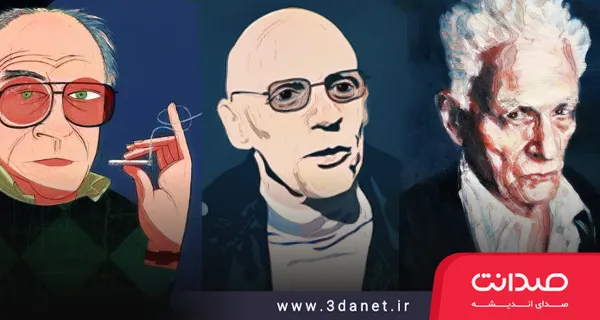
Continuing, and referring to Michel Foucault’s approach to the question of intellectualism, Golestani said: Foucault believed that we must move beyond the universal intellectual, and that specialists must engage in critique and de-authoritization in a micro-level manner within their own specialized domain. Foucault sees the work of intellectuals as critique, in order to expose the capillary roots of ruling power.
This philosophy researcher went on to describe the concept of intellectualism in Iran, saying: Iranian intellectuals in the contemporary period have been largely influenced by the Intelligentsia (Russian intellectuals); and this is due to the strength of leftist currents and the Tudeh Party up until the 1960s in Iran. Based on what appears in Dostoevsky’s novels, instead of lifting a burden from society’s shoulders, intellectuals have themselves become a burden on society, and this is the very notion that proponents of the leftist view have introduced into Iranian society regarding intellectualism.
Golestani, continuing with the role and position of intellectuals in Mehrjui's works, said: If we divide Mehrjui's cinema into four periods, in his pre-revolution cinema we see films such as

Discussion0 comments
No comments yet; let yours be the first voice.