Philosophy
A Day in the Life of Hatam Ghaderi, in His Own Words
Hatem Ghaderi strives to prevent external circumstances from stamping their mark on his days by avoiding media and technology. He spends his daily life in his home library and considers politics necessary only for attending to 'that other work'.
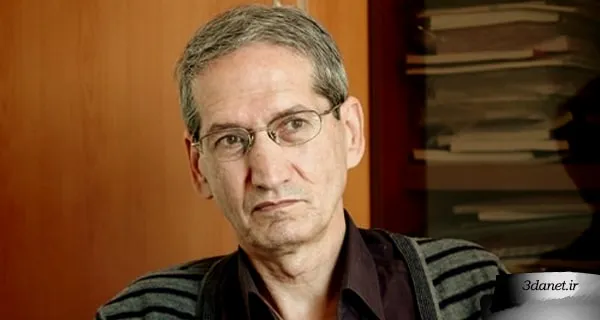
Hatam Ghaderi: I am to give an account of one of my days. It seems a simple task. It is enough to choose a day from among the days and then recall the doings of that day, set aside some of the simpler or perhaps more usual doings, and give an account of the rest, perhaps with some description and commentary. But no, it is not like that at all. For me, it is not like that; at least three fundamental questions arise: a) which day and why; b) which layer or layers of the chosen day's doings; and finally, c) for which audience? I will write a little for each.
.
A Day in the Life of Hatam Ghaderi, in His Own Words
A Framework of Passing Moments
I am to give an account of one of my days. It seems a simple task. It is enough to choose a day from among the days and then recall the doings of that day, set aside some of the simpler or perhaps more usual doings, and give an account of the rest, perhaps with some description and commentary. But no, it is not like that at all. For me, it is not like that; at least three fundamental questions arise: a) which day and why; b) which layer or layers of the chosen day's doings; and finally, c) for which audience? I will write a little for each.
It is true that my days possess a particular framework, but the emergence of situations within this framework differs from one day to another, and more importantly, my encounter with these "changing" situations differs. This "change" is not out of whim or by chance, but out of concern and engagement with situatedness. On the whole, I am very sensitive to the point that "my days" are truly "my days," and I rarely allow external situations to fully stamp their role and mark upon them. If my life does not flow within my days, or at least if a suitable overlap is not achieved in as many moments as possible, then I must speak of something that is apparently the title of this page: daily routine. The truth is, when the editor of this section contacted me and asked me to write about the passage of one of my days under this title, I initially thought I had misheard. Why "daily routine"? In any case, on the whole, I have been far from this bleak and, out of necessity—up to this point in the passage of days and nights—unavoidable interpretation.
It is better, by way of a little explanation, to write that to safeguard my days, I do not allow external situations, or in other words, all the unbridled external forces, to forcefully and intensely make their way into my days. Hence, both out of thought and out of disposition, I do not place myself like an object, or shall we say, a person, in the path of the flood of external talk, hearsay, and information. In this regard, I note that I do not have a mobile phone, I do not read the press, except to glance fleetingly at headlines or to read something from the mass of newspaper and magazine pages on a particular occasion. I neither watch nor listen to the news, except for sports news or important events that I follow a bit of their news proportionately. I have no interest in radio, television, or satellite channels, nor in the internet and various sites. Since I do not use email either, I naturally have no need to check and manage my emails, and of course, due to not having a car, I do not deal much with its requirements, including traffic. I am not one for parties, gatherings, and so on.
Well, perhaps by this point, the "audience" of this text might ask themselves, what does this mean? And might interpret each of these lacks in some way. For instance, I am very often faced with the question of where I get my necessary data as an academic, and in the field of political science at that, and as a citizen... or what problem I have with using more technological facilities, and even the question of how my days pass for me, and most importantly, where my delight lies. In a short and concise form, and as befits the capacity of this page, I must write that instead of all those lacks—which are all themselves the very essence of having—my days and nights pass thus: reading—in various fields—writing, walking and, if possible, hiking in the mountains, listening to music, conversing with close friends, whenever necessary, attending to the preoccupations arising from my historicity and the conditions of my citizenship, and... a complex order in the two categories of sleeps and sleeping on one hand, and foods and eating on the other.
It should be noted that I have limited eating habits; in a sense, food is a domain in which I become a conservative person, dependent on the habits of my palate. Not-so-infrequent headaches and dietary restrictions for what I call the threshold of diabetes—and which others, naturally, would call straightforward diabetes—have cast a veil of relative abstinence over these habits. In this regard, controlling blood sugar without medication through continuous home testing, as well as taking pills to manage my prostate, are among my daily routines. These days, occasional heart palpitations have also given me pause on this front. I should add—with all due respect to doctors—that going to the doctor is something I postpone as much as possible, and even when a necessity makes it unavoidable, in many cases, for instance for prescription renewals and such, it is carried out by proxy.
The layout of my residence is such that the part where I spend most of my time is naturally separated from the rest of the house. In general, I lead a cosseted existence of a kind that must be spoken of in detail on another occasion. At any rate, it is in this very section, sometimes affectionately called "Hatam-Neshin" (Hatam's Abode), that my library is located. Nearly all my waking and sleeping moments are spent in this part. Few people have access to the telephone in this section, and since, alongside the path leading to the main part of the building, the section I use has a separate door opening onto the alley, it practically becomes a "peninsula" with its own distinct life. Perhaps the "reader" might imagine that such a situation separates me from the context of the home in its general sense. This is, in one sense, true, and in another, false.
Because a simple-complex atmosphere exists between me and the children. Mrs. Shamsi, for her part, who has a multifaceted relationship with me and strives greatly to be a companion through thick and thin, naturally holds the key to the part where I dwell. A friend also holds a key to this section, which is more symbolic than for actual use, and finally, for a long time, "Pinocchio" had a key of his own. Mentioning the state of my residence is important to me because of the interaction that "place" has with the flow of my life. I spend far fewer moments outside this place, whether walking or being present at the university. Especially in these last one or two years, when, based on political-administrative justifications, no students have been assigned to our department at the university.
Speaking of politics, it is not bad to say that conventional politics, in my view, is more a necessity than something gratifying or beloved to me. Politics is as necessary as the cleanliness, order, and tranquility of a house. So that a person can, as Rumi says, attend to "that other work." What is that other work? I mentioned it earlier; imagination, the cultivation of diversions, existential concerns about being, humanity, justice, freedom, goodness, friendship, love, and such matters. The necessity of politics follows from some of these categories, including justice and freedom, and for me, it holds no intrinsic value in itself. For this very reason, I have no desire for the realm of politics and its esteemed practitioners to reach into my private sphere, beyond their occupation of the public domain of life. This does not mean passivity; it signifies the value I place on politics, and perhaps a form of "resistance"! I am equally distant from economics and law—in both their academic and non-academic senses.
I mentioned earlier that presenting a suitable framework, as faithful as possible to the reality of my life, requires its own specific audience. And perhaps now, with these few lines above, many readers—the general public?—might say to themselves, what a useless person's daily and nightly moments we are reading about. That aside, my problem is for whom and how to say and write: what does imagination mean? Or that diversion and play are categories complexly woven into creation and existence, different from commonplace entertainments. How far a piece of music—traditional or instrumental—can take a person, or what realm the overt and hidden allusions of a text create for interaction and meaning-making, what the interplay of fate and prudence is in the moments of my life, and what the relationship between mysticism and beauty is, and all this not merely in the realm of theory but in the context of practice and the ongoing activities of daily and nightly moments.
Motifs from the Framework
In these closing paragraphs, I would like to sketch some leitmotifs of the constitution of my life. Here too, of course, I cannot be a realistic reporter of the passage of moments of a day in my life, because parts of this passage are so inward and have the hue of the “soul of the soul” that even an approximate account would require an expansive patience; part of this passage also necessarily remains concealed, since it cannot be brought openly before everyone’s eyes like a surrealist act and thought; and finally, part of the doings are preceded by a background that, again, demands another kind of patience. In place of all these digressions, I emphasize a few “leitmotif” points of the constitution. For example, now as I am writing these things—it does not matter which now this is—I am listening to the (instrumental) music “Selaneh” by Hossein Alizadeh; perhaps for the thousandth time. This music, along with similar instrumental music and also traditional music—mostly Shajarian—accompanies my moments. Of course, while writing, only instrumental music. Another thing: today—it does not matter which day—meat is not to be used in my food. For some time now, I have limited the meat in my diet to three times a week, and even then in small quantities. Naturally, I do not like the idea that humans, for their nourishment, carry out millions upon millions of killings; the discussion of respect and the possibility of the rites of the adherents of reincarnation is a separate matter.
Wandering in my library or in bookshops is a common affair. Typically, every day I perhaps study something close to 10 book titles for various occasions. I do not deem it appropriate to name some of them, but let me mention that in the field of Islamic studies, including exegesis, history, thought, etc., I always have a book in hand. In the field of Western studies, likewise; regarding Iran and historical-thought studies, the situation is the same. I have an interest, and more than an interest, in studies such as the genesis of the cosmos up to the emergence of humankind, and having a book of poetry—mostly Iranian—and at least two novels to read at their specific hours are among my other preoccupations. Usually, one of these novels is reserved for the last minutes of wakefulness, but this time in bed, since its turn is after midnight. And now that the talk has turned to reading books, let me add that I do not read books because they relate to my academic work; rather, I am intensely intimate with books, and in various fields as mentioned. Allow me, in this vein, to draw attention to a “little poem” that flowed through my mind and then my heart some time ago;
I do not know / what the last book I read / will be called / but / you know / if you are beside me at the moment of death
Well, the CD of Selaneh that I was listening to has come to an end; I do not know, perhaps it was in harmony with that last bit of the “little poem” above! In any case, I think a great deal about death, but not in its negative form, rather in an entanglement with living as much as possible. So let me, with another little poem and a brief explanation of it, bring my words to a close
-My dear! / Do not tie your heart to me / I am one hundred and seventeen years old -My beloved! / I am nine years old / and in love / I fear / no number
The number nine (9) is symbolic for me, the last single-digit number, and in this poem the sum of the digits (117) signifies that the lover is a compressed essence and summary of the beloved, and also that to reach the beloved one must pass through a precipice of hardship—and perhaps, in our culture, the ominousness of the number 13.
This, in my view, is the story of love, faith, being, and existence. Well, what else should I write?

Discussion1 comments
درود بر آدم سلیمالنفس، آنچنان، که حاتم قادری است! آیا ما هم میتوانیم خود را حداقل همچون او از دنیای دیجیتال و «دیگه چه خبر؟» مستغنی کنیم و در عینحال، «بهروزِ» واقعی هم باشیم، برای زندگی کردن مرگاندیش هم بوده و به رنجهای دیگران هم اعتنامند باشیم و در همهی این احوالات به دوستی و عشق و تخیل و موسیقی هم بیاعتنا نباشیم؟ تاملی باید کرد، تامل کردنی!