Philosophy
Introducing Why I Am Not a Christian
In Why I Am Not a Christian, Russell views institutional Christianity as a tool for justifying war and power, proposing a scientific ethics in its place. The book invites the reader to a critical historical study of religion and morality.
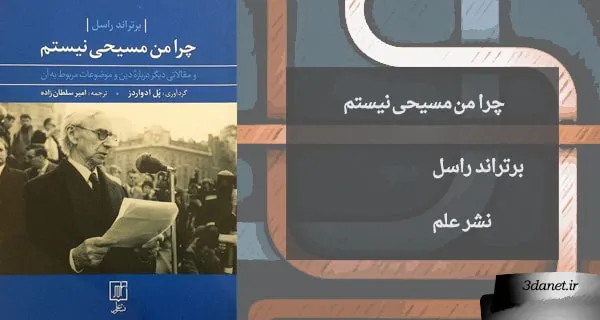
Bertrand Russell is known as one of the most famous British philosophers of the twentieth century. His fame, more than for philosophical reasons, relates to the breadth of his political, pacifist, and social activities. Russell lived a long life, more than 97 years. During these years, in addition to directly confronting the Second World War, he also experienced the lingering effects of the First World War in Europe. The October Revolution in the Soviet Union was another event that influenced his thinking. Russell's criticisms of the communist system, alongside his critiques of capitalism, demonstrate his political neutrality. While the Soviet government accepted some of his criticisms and Che Guevara, in a piece of writing, considered asking Russell to launch a campaign in support of the Bolivian movement, he repeatedly criticized the capitalist system and the colonialism arising from it in his speeches. Place this alongside his frank and outspoken critiques of communism. He even tasted imprisonment for his anti-war activities. As a renowned professor at various universities, he endeavored to express his views and ideas by writing numerous books. The tradition of libertarianism, originating from the academic structure, is also quite evident in his social expression. To better understand the October Revolution and Eastern culture, Russell traveled to the Soviet Union and China. He preferred direct understanding of the environment and field studies over mere library research. His practice, exactly like his philosophical thought, was based on experience. Perhaps one can truly find empiricism in him. Before Maslow and his innovation regarding the hierarchy of needs, Russell had expressed these needs in the same order. This matter is also evident in this very book. Russell's emphasis on moralism is one of the prominent points of the book. Russell strongly seeks to construct and justify a scientific ethics based on psychology. Whether, if he were alive today, he would still adhere to his views on scientific ethics is another matter. Although he did not consider himself a Christian, he was renowned for observing ethical principles. To the extent that even Copleston, in several parts of their debate, acknowledges Russell's observance of ethics. Although Russell is highly respectable for his involvement in purely abstract subjects, such as logic and the theory of science, the critical theories he expressed regarding religion and ethics have received more attention. He was never known solely as a philosopher. He constantly challenged categories related to religion: issues about the human condition in the world, nature, and the good life. In confronting these issues, as in his other essays, he spoke eloquently, authoritatively, and with deep understanding. Because of these very qualities, one might say this book is the most effective book written since the time of Voltaire and Hume.
Russell, in his writings, still believed that the sediments of the Middle Ages remained in the minds of European politicians. He saw religion as a tool in the hands of the powerful during the Middle Ages to justify their expansionist and warlike desires. He repeatedly criticizes them by referencing the Middle Ages and the Pope: that people live in poverty while the Pope lives in wealth; that the order for crusades and the killing of millions of people was issued by someone claiming to represent the religion of love. In a part of this very book, he considers the behavior of the Islamic caliphs towards Christians and Jews to be much better than the Pope's behavior towards Muslims. He strongly condemns the Church's efforts to dominate the thinking of the European people and promote ignorance. The Church's opposition to science is another part he criticizes.
Russell lived at a time when some medieval ideas still lingered in the minds of politicians. The Church, too, made no effort to resolve the bloodshed. Each church had aligned itself with a European power. Under these circumstances, Russell, seemingly dissatisfied with post-Renaissance conduct and believing that the dangerous influence of the Church was still causing this bloodshed, launched an unveiled critique of the Church. He criticizes the Christianity presented by the Church. He finds the morality promoted by the Church alarming and sees this as being in conflict with modern education. The name of this book comes from the title of an essay, "Why I Am Not a Christian," published in 1927. But the entire book is a collection of several essays, lectures, and debates compiled in 1957 by Professor Paul Edwards. This book was assembled under the supervision of Bertrand Russell himself and received his approval. A section of the book deals with the debate between Russell and Frederick Copleston. It is hoped that this book, like previous ones, can play an effective role in understanding Bertrand Russell. I do not seek to confirm or deny his views. I have only tried to convey his words exactly, without the slightest omission. This book can be effective for a better historical understanding of Christianity and the impact of its doctrines on post-medieval morality. It is necessary to mention here that the reader should not forget that this book must be read critically and with consideration of the historical context of its publication. In closing, I invite all professors and lovers of knowledge and philosophy not to withhold their constructive criticism. Certainly, any endeavor of this kind has its shortcomings. Such critiques can undoubtedly lead to greater motivation and effort in the future.
Amir Soltanzadeh
Autumn 2015
.
.
The Book Why I Am Not a Christian | Nashr-e Elm Publishing | Written by Bertrand Russell | Translated by: Amir Soltanzadeh
.
.

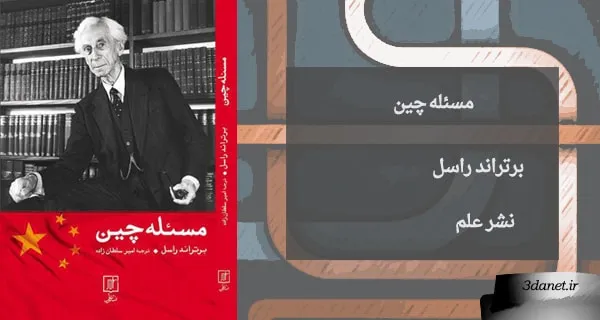

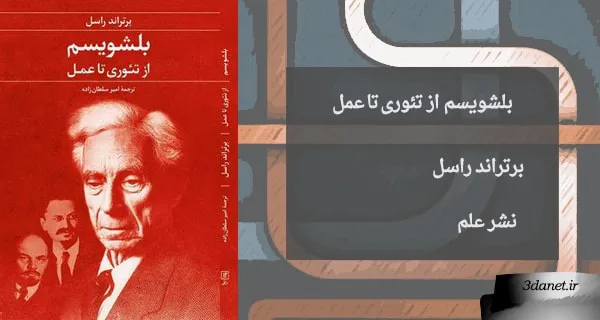
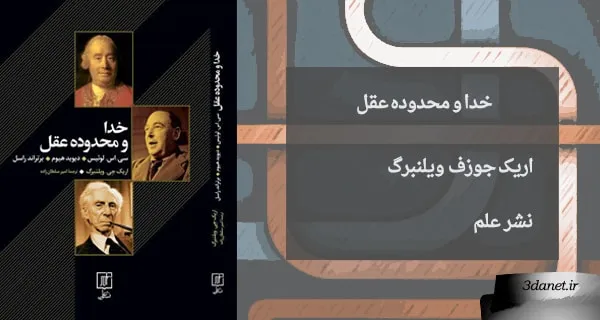
Discussion1 comments
سلام؛ لطفا کتاب «تجدید بنای اندیشه دینی در اسلام» اثر علامه دکتر محمد اقبال را هم معرفی کنید. بسیار مورد تاکید دکتر سروش است. این کتاب اخیرا توسط دکتر محمد مسعود نوروزی و انتشارات دانشگاه امام صادق، با نثری بسیار روان و قابل فهم و توضیحاتی مکفی در پاورقی منتشر شده است.