Religion
Is the Universe Designed?
The universe is finely tuned for life: an essay that examines the evidence for the 'fine-tuning' theory and, in contrast to the 'multiverse' theory, considers divine design the most rational explanation for the cosmological data.
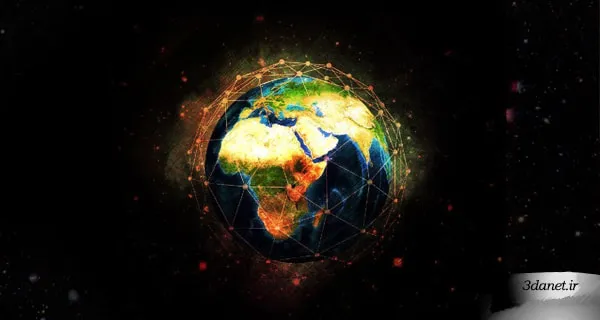
It appears that the universe is precisely tuned to have the capacity to produce life. This article examines the evidence for the theory of “fine-tuning”1 and discusses its major rival, the theory of the “existence of more than one universe.”2
***
Introduction
Like the porridge in the story of “Goldilocks and the Three Bears,” one can conclude in many plausible ways that our universe was designed precisely with the aim of creating conditions to make life possible. The scientist Paul Davies3 writes in his book The Goldilocks Enigma4: It would not be surprising if the universe were created by the God of the great monotheistic religions; God had a good reason for creating a universe with these properties so that intelligent creatures could evolve within it to gain the capacity to communicate with him. The other major alternative to the hypothesis of intelligent design5 is the hypothesis of the existence of more than one universe, a vast ensemble of universes in which the parameters of physics encompass a wide range of values. This article raises numerous issues concerning the hypothesis of more than one universe, and argues that divine design is the most logical explanation for the basis of cosmological data.
The Big Bang
It is now accepted by most cosmologists that the age of the universe began from a dense, hot state approximately fourteen thousand million years ago. From the explosion and cooling of this primeval fireball emerged the galaxies, stars, and planets that we see today, and this is the famous “Big Bang”6 model of the origin of the universe.
The decisive observation that strengthened the Big Bang theory was made by Edwin Hubble7 in 1920, stating that the universe is expanding; that is, distant galaxies are moving away from us. Naturally, one can conclude that the primordial matter of the universe was denser, and indeed the current universe must have emerged from a very dense initial state. However, this did not prevent the Cambridge astrophysicist Fred Hoyle8 and his colleagues from putting forward philosophical reasons alongside scientific ones, and they proposed the “steady state”9 theory. According to the latter theory, the universe is eternal and everlasting, and necessarily maintains its stability at all times and in all places on the largest scales; for instance, the empty spaces left behind by expansion are continuously filled with new matter produced at precisely the right rate. Nevertheless, the Big Bang theory is convincingly supported by three major strands of observation.
1. The theory posits a uniform radiation field encompassing the universe, and we see this phenomenon, the cosmic microwave background radiation, strongly refuting the steady state theory, as that theory has no explanation for it.
2. The theory correctly accounts for the abundance of the lightest chemical elements (notably helium and the hydrogen isotope deuterium), considering them to have been formed from nuclear reactions in the first minutes of the universe’s existence. Meanwhile, astrophysicists were unable to explain the production of these elements and models of nucleosynthesis in stars and other large nuclear sources that produce light and heat in the universe; thus, the production of light elements in the Big Bang completes a compelling justification for how elements heavier than hydrogen were produced.
3. Observations show a greater number of active galaxies at greater distances (which, due to the finite speed of light, resemble earlier epochs in the universe's history). Big Bang theory leads one to expect such evidence of cosmic evolution, whereas in the Steady State theory, the universe appears the same in all epochs. Thus, according to the Big Bang theory, space and time came into being together approximately fourteen thousand million years ago. Moreover, St. Augustine10 had concluded long ago, in 400 AD, that space and time came into being together, and this is one of several instances in which Christian theologians of later eras anticipated modern arguments. The clock also began ticking from this very explosion, as a phenomenon that turned the mass of material into a collection of galaxies. Within these galaxies, stars came into being. The principal legacy of the Big Bang—bequeathed to the galaxies—is the simplest chemical element, hydrogen, along with some helium and other light elements. Other chemical elements were created in the cores of stars, where temperatures reach hundreds of millions of degrees. When their nuclear fuel declines, the most massive stars explode spectacularly as supernovae. Thus, the next generation of stars is composed of material enriched with heavier chemical elements. In this way, new stars can also possess planets.
The Sun and its planets formed approximately 4.6 billion years ago. Since the chemical elements that constitute the Earth and its living creatures were created in the cores of a previous generation of stars, it can be said that "we are made of the remnants of dead stars."
The Principle of Fine-Tuning of the Universe
The conventional Anthropic Principle11 states that the laws of physics and the initial conditions of the Big Bang must logically be such as to make our existence possible. Furthermore, analyses show that both the laws and the initial conditions must be very specific—indeed, "fine-tuned"—to fulfill the aforementioned purpose.
The number of examples of fine-tuning is abundant. Let us examine just a few of them to set the stage.
a) Physical Constants
The laws of physics explain how matter behaves under the influence of the four fundamental forces in nature (gravity, the electromagnetic force, and the weak and strong nuclear forces). For our purposes, we are interested in the constants that determine the relative magnitudes of these forces and the values of other important quantities, such as small masses.
i) One of the most essential elements for life—life as we know it, at least—is hydrogen; no hydrogen means no water, and therefore no life. If the weak nuclear force—the force responsible for radioactive decay—had not, apparently by chance, been related to the gravitational force in a rather specific way, either all the hydrogen would have been converted into helium within the first few seconds of the Big Bang, or none of it would have been converted. In the case of such a weak force, which is relatively loose, one can conclude that there would have been no possibility for water and life at any subsequent stage of the universe's history. Furthermore, the necessity that massive stars must expand as supernovae to release the chemical elements they have produced imposes a relationship between this weak force and the force of gravity in both directions.
ii) As we know it, life is built upon the element carbon, and it is unlikely that any other element could provide a sufficiently stable combination to produce alternative forms of life. Oxygen is also essential. Carbon is a step on the path to producing oxygen and other elements in the periodic table. We need a supply of both: first, the provision of carbon, and then—and perhaps even more importantly—not burning all the carbon to obtain oxygen and other elements. If the strong nuclear force that holds nuclei together and the electromagnetic force acting between charged particles were not in their present precise balance, we would either have had no carbon from the very beginning, or all of it would have burned to produce oxygen. This aspect of the anthropic argument was discovered by Fred Hoyle, who used it to predict the existence of a hidden energy level (resonance) in the carbon nucleus. His prediction was confirmed by somewhat skeptical laboratory nuclear physicists. This specific coincidence was the primary motivation for Hoyle (a skeptic in religious matters who—in line with the above statement—had philosophical reasons for proposing the steady-state theory) to express this view:
If you wanted to produce carbon and oxygen in roughly equal quantities by stellar nucleosynthesis, these are just the two levels you would have to fix, and your fixing would have to be just about where these levels are actually found to be. A common sense interpretation of the facts suggests that a superintellect has monkeyed with physics, as well as with chemistry and biology, and that there are no blind forces worth speaking about in nature. The numbers one calculates from the facts seem to me so overwhelming as to put this conclusion almost beyond question.
iii) Third, the mass of the proton must be approximately 1840 times the mass of the electron—apparently so that chemical products can be formed and remain stable, especially for complex molecules like DNA, which are the building blocks of life.
B) Initial Conditions
i) First, the average density of matter in the universe at the very beginning must be equal to a fraction of 1/1060 of the so-called "critical density" that distinguishes open universes (which expand forever) from closed universes (which collapse in a big crunch). If this density were smaller than it is, the universe would expand too fast for galaxies and stars to form. If it were larger, the entire universe would collapse under the force of gravity in just a few months. In either case, you would have a boring universe with no possibility of life. A precision of 1 part in 1060 is required, which is like hitting a target located at the farthest point of the observable universe, fourteen billion light-years away from us.
ii) Secondly, and related to the above, contrary to our assumptions, it turns out that the universe needs to be enormously large for humankind to be able to live in it. This is the size that an expanding universe with a density close to the critical value attains in the fourteen billion years that lead to the emergence of humans. In the simplest cosmological model (which is adequate for this purpose), the size, mass, and age of the expanding universe are related by a simple formula. A universe with the mass of a single galaxy has enough material to make one hundred billion sun-like stars, but such a universe would only expand for about a month, so that no stars could actually form in practice. Therefore, the argument that the vastness of this universe points to the insignificance of humankind is somewhat of an exaggeration; in fact, only if the universe is vast enough to contain one hundred billion galaxies can we be in it.
iii) Third, there must have been an astonishingly precise order in the Big Bang. We know that the universe is moving from an ordered state toward a highly disordered one (according to the second law of thermodynamics), and it is in this context that you needed a great deal of order at the beginning of the universe to build galaxies and stars; that is, the ordered structures we now see. Mr. Roger Penrose12, Emeritus Professor of Mathematics at Oxford, has shown that our universe is one of the possible universes that contained that amount of order necessary to create the existing complexity; in other words, something like this amount of order was required for us to be here. Suppose you had to write a number of texts, each inscribed on a single atom of the universe; there were not enough atoms in the entire observable universe to enable you to do this.
In short, the universes potentially resulting from these small variations offer no significant scope for interesting developments, and especially for the evolution of complex creatures like us, and physicists have certainly encountered such fine-tunings. As Freeman Dyson13 puts it: the more I examine the universe and the details of its architecture, the more evidence I find that the universe must in some sense have known we were coming. Naturally, one conclusion emerges from all these discussions, which is that the cosmic coincidences we observe are not in fact accidents: the theistic hypothesis is certainly preferable because it carries this implication: God clearly designed this universe with prior intent to bring about beings possessing rational thought and conscience, with the aim of attending to them and communicating with them Himself. The theistic hypothesis can offer reasons to justify why God might create a universe in this particular way. For example, a good God, as assumed in Christianity, would likely exercise His creative power and bring into being creatures capable of appreciating Him for the creation of this universe. Such a design is certainly consistent with the precisely tuned universe we observe.
Alternatives to the Theory of Intelligent Design
The question may be raised: how can one escape the conclusion that the universe was clearly designed with the intention of our presence in it? In fact, there are a number of escape routes. There are ideas that say, "Can we not arrive at a more fundamental and better theory that truly justifies some of the things you spoke about?" The main rival to the theory of intelligent design is called the "inflationary theory"14, which has been proposed recently. This theory posits a period of expansion for the universe occurring at an incredible speed, in a fraction of the first second of its existence, as a result of the Big Bang. This argument holds, for example, that the universe at that time spontaneously tended toward the critical expansion rate. There are two problems with this approach. First: a more fundamental theory in no way negates the need for design by God; for now these questions are still seriously raised: why does the new fundamental theory yield values that apply to the numbers we have spoken about? This ambiguity we encounter regarding the finely tuned numbers exists precisely for the numbers involved in the inflationary theory as well.
Why should the theory of inflation be chosen with these particular numerical values from among all possible theories? Secondly, the theory of inflation itself requires fine-tuning! In recent examinations, the various forms of this theory, in order to match the phenomena of the universe, have easily surpassed the threshold of one hundred different versions, even including a version called "supernatural inflation." Even the American cosmologist Alan Guth15—the founder of the theory of inflation—admits that he cannot understand it! It seems the initiative of the inflation theory has been affected by an instance of inflation itself, which is somewhat dependent on the nested circles that required the preservation of the Ptolemaic model of the solar system, and this model is consistent with this observation. On the other hand, while some cosmologists like Penrose16 are skeptical, it must be acknowledged that the theory of inflation is accepted in many cases within the cosmological community and has recently received serious support from the latest satellite observations concerning the cosmic background radiation.
An important argument presented by opponents of the intelligent design theory is as follows: they argue that if there are not exactly one, but many universes, and if the constants of nature and the initial conditions in the Big Bang admit many different values, then a universe similar to our own could be had as one of this ensemble of universes. Therefore, we should not be astonished to find ourselves in a universe with the very specific conditions our universe possesses, for the reason that we could not have existed in other universes; even in universes that differ very slightly from our own.
Problems concerning the theory of the existence of more than one universe
In fact, this idea concerning the existence of multiple universes suffers from numerous problems.
(i) In the first place, these universes are completely unobservable. A theory is only truly scientific when it can make predictions about observable objects, and the aforementioned theory seriously fails this test. The problem is that we really cannot have any communication with these universes. The easiest way to visualize multiple universes together is to consider them as vast distinct spaces within a single space that encompasses the rest like a dome. Such a structure brings the theory of inflation, in some versions, particularly Andrei Linde's17 version called eternal inflation18, to the point where universes must be considered as bubbles that, due to the limitation of the speed of light, are incapable of communicating with one another. Efforts are underway to connect the theory of eternal inflation with string theory19 (a theory that assumes subatomic particles are not particles but one-dimensional strings); this theory is an important candidate for defending the aforementioned theory, combining gravity and quantum mechanics, and it is expected to be able to explain the first 10 to the power of minus 43 seconds of the universe's existence. But the problem with all such models is that, based on them, one cannot simply conclude that other universes exist. Other ways proposed to prove the existence of more than one universe consider them to be more fundamentally disconnected from our universe. (For example, suppose they arise through successive contractions and expansions of a single universe or through the realization of the proposed outcomes of quantum measurements in some directions). The cosmologist Stephen Hawking20 has interestingly explained that he no longer accepts his former view that new universes could branch off from our universe at the center of black holes. As John Polkinghorne21 points out, the existence of multiple universes offers not a scientific but a metaphysical interpretation of the fine-tuning of the universe. For the existence of these universes is completely neutral with respect to all empirical data, meaning they are unobservable. The reality is that, whether we like it or not, several metaphysical interpretations lie before us, each of which can be accepted in place of the other two: either this universe is a single reality devoid of the capacity for perception, or more than one universe exists, or this universe is designed. (Although we consider these options as the main choices, the logical possibility also exists that God designed and created an infinite number of universes).
(ii) Serious technical problems have also been raised concerning the theory of the existence of more than one universe. Thus, escaping the necessity of specific values for certain parameters, even to set up the first few universes, is almost impossible. It was previously mentioned how the average density of the universe must be very close to the critical value—which is the boundary between a universe that expands forever and one that eventually contracts. In this way, you need an average density in the extended four-dimensional system that is below the critical value to achieve an infinite universe, and there is no reason why this should be the case. In fact, this state seems highly improbable. In any case, we can never truly know the average density of an infinite universe, as it is, in principle (logically and scientifically) and not just in practice, beyond the reach of our measurements.
(iii) Therefore, as Barry Collins22 and Stephen Hawking pointed out long ago, the probability of any particular universe being precisely fit for life is zero. That is, even an infinite number of universes in no way guarantees that even one universe is precisely fit for life. The theory of the existence of more than one universe can explain why a very special universe like ours exists if, when you consider the universe by chance, the probability of it being just right for life is certain. This probability can be very small, but it is essential that it be certain. If this probability is zero, this statement fails.
(iv) There is another problem: if our life-permitting universe were a random member of a multiverse, what would it be like? In the theory of the existence of more than one universe, our universe would be special, but no more special than is necessary for our evolution. Some physicists, particularly Steven Weinberg23, claim that the theory of the existence of more than one universe has been successful in explaining why a particular constant—the so-called cosmological constant—is so small. This constant is sometimes referred to as dark energy and constitutes 70% of the universe's composition; note that matters are more complex than what we presented above: it is believed that the main components of the universe are approximately 5% ordinary matter, 25% some kind of unknown dark matter, and 70% dark energy, the sum of which roughly yields the critical density.
It is believed that dark energy arises from fluctuations in the quantum vacuum, although its density, based on such calculations, is no more than 10 to the power of minus one hundred and twenty times what was expected. The existence of more than one universe may precisely explain why the cosmological constant in our universe is so small, because a small value is necessary for galaxy formation and, therefore, for our existence.
(v) There is, however, a far worse problem that the above theory seems incapable of explaining. This problem is somewhat similar to the example of a monkey sitting at a typewriter for centuries. It is far more likely that it would type “to be or not to be” in one scene of the play Hamlet than the whole of it (incidentally, it is interesting to note that in a 2002 experiment, a group of monkeys came nowhere near producing even a single word and much preferred to examine the computer or use it as a toilet). In such a manner, providing a small pocket of order—say, the size of the solar system—surrounded by general disorder is far more probable than providing the fully ordered cosmos that we actually observe. Mr. Penrose has described how this conclusion is reached as follows: our universe has an order of 1 in 1010123. In fact, just to create a solar system surrounded by total chaos, with random collisions of small objects, which is all that is needed to produce life, the required order is far less than this, though still enormous, namely 1 in 101060. Since 1010123 completely encompasses 101060, it can be concluded that although a universe with an order of 1 in 1010123 exists with probability one if all possible universes exist, the probability of setting up such a universe is only 1 in 1010123, and this is entirely in conflict with the conventional assumption based on the multiverse theory that the probability of setting up what we are in is close to one. This problem seriously calls into question the explanatory power of the multiverse theory. It is important to note that we are not looking for conditions that make the existence of another universe besides our own more probable, but rather for conditions that make the existence of the universe we are in more probable. In other words, the probability of a small, ordered universe surrounded by disorder is greater than that of a multiverse where the universes together form an ordered set.
(vi) The question also arises: if a multiverse exists, what would these universes generally be like? To answer this question, there is no choice but to set aside physics and take the path of metaphysics, saying that all possible worlds exist, and this guarantees that our world must also exist. In that case, most of these worlds would have no particular actuality; the small remaining fraction would contain a number of mythical beings like unicorns and werewolves, and the amount of suffering in these worlds would be far greater than in our actual world. Indeed, in this view, anything that can happen will happen at some place and time. If the matter is looked at in this way, doing science would be a complete waste of time. Instead of trying to find reasons for things, we could simply shrug our shoulders and say, “Very well, something like our universe is bound to happen in one of these worlds, and this is the one we are in,” and this is extremely detrimental to science.
(vii) Finally, the experience of scientists shows that the simpler an interpretation, the more likely it is to be correct, and simplicity is precisely what the multiverse theory lacks. There is a principle called Occam’s razor24 (the scientific principle holding that in explaining something, assumptions should not be multiplied beyond necessity). After the fourteenth-century philosopher and theologian William of Ockham—who stated that between two competing proposed explanations, one should choose the more economical one—it posits the fewest number of entities. The multiverse theory stands at the furthest conceivable point from this principle.
Conclusion
The aim of this article is not to expand upon the idea of divine design in all its details, but rather to critique some of the arguments that hold that this universe is not designed. Nevertheless, there is a strong argument for the claim that divine design offers a simpler and more useful interpretation for the existence of our very specific universe, and that, contrary to what is expected in the theory of the existence of more than one universe, it is more probable that we observe a perfectly orderly universe that God has designed. In principle, theistic hypotheses provide far more comprehensive interpretations. This is because God, as an eternal concept, is necessary, whereas a material universe or even a multiverse is contingent. That is, God cannot merely be and must possess His own specific attributes, such as omniscience, omnipotence, and the like. This is the minimal meaning of the concept of God. In contrast, the universe may or may not exist and could be different from what it is now. The same point applies to the existence of more than one universe, and in fact, the question of the specialness of our universe is not resolved by the aforementioned theory but merely transferred to it: why does a specific multiverse exist, and why does it have these specific universes? In any case, belief in God as a necessary being provides both an explanation for why anything exists at all and a reason for the existence of this particular—indeed, extremely particular—universe, so particular that it leads to the production of us.
Furthermore, while human inability to see God is greater than its inability to see other universes, there is actually no reason to prove that God cannot have observable effects in our universe, unlike other universes. Christians claim that there are many such effects, including the incarnation of God Himself, though of course these claims must be validated.
In conclusion, accepting that the universe was designed by will, by God, and with a serious focus on creating intelligent beings who can relate to their Creator, is far more rational than believing in the existence of more than one universe without God. Surrendering to irregular, generally unscientific and speculative thought models, unobservable universes, and a host of beliefs that are entirely outdated to explain the highly specific nature of this particular universe seems irrational.
.
.
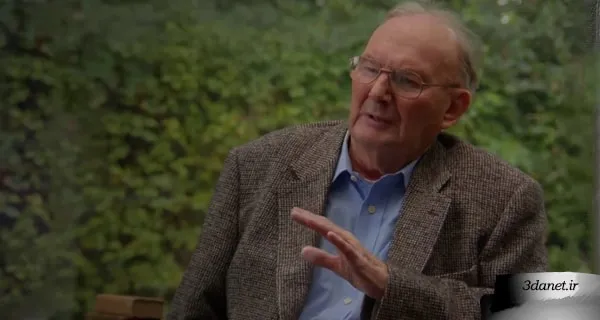
Rodney D. Holder*
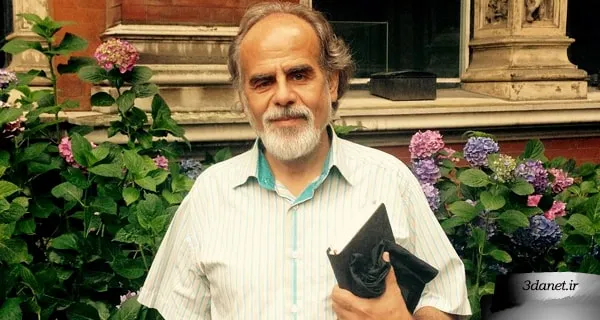
Translated by Faezeh Barzegar Tabrizi**
* Rodney D. Holder
** Graduate with a Master's degree in Philosophy of Religion; Allameh Tabataba'i University
.
.
Source
Is the Universe Designed?
Publication date: April 2007. © The Faraday Institute for Science and Religion.
Endnotes
1. fine-tuning // 2. The existence of a multiverse // 3. Paul Davies // 4. The Goldilocks Enigma // 5. design // 6. Big Bang theory // 7. Edwin Hubble // 8. Fred Hoyle // 9. Steady state theory // 10. St Augustine of Hippo // 11. anthropic principle // 12. Roger Penrose // 13. Freeman Dyson // 14. inflation // 15. Alan Guth // 16. penrose // 17. Andrei Linde // 18. eternal inflation // 19. string theory // 20. Stephen Hawking // 21. John Polkingorn // 22. Barry Collins // 23. Steven Weinberg // 24.Ockham`s razer.
.
.



Discussion22 comments
هنوز عقل انسان به ان مرحله نرسیده که بتونه این اسرار را کشف کند درجهان مامیلیاردهاکهکشان وهرکهکشان میلیاردها سیاره وهر سیاره میلیاردها انواع سنگ فلزات خاک مایعات وگازها وجود دارد باز درون این اجسام میلیارده ملوکول وغیره دارد طبق نظریه دانشمندان ممکن است این ساختار برعکس هم باشد یعنی مثل جهان ما میلیاردها جهان دیگر درعالم دیگر باشدوادامه داشته باشدعلم انسان همینقدر تونسته بفهمدولی دانشمندانی هم هستند که میگویند انسان ویا هر موجود دیگر فنا ناپذیرند وقتی روح از جسم جدا میشودبه هرعالمی پرواز میکند وآن موقع است که این اسرار را میفهمد خداوند اینطوری خواسته وما انسانها را اینطوری خلق کرده هرگزنباید به ذات پاک الهی شک وتردید کنید
این که بگویم جهان طراحی شده است ساده می نماید اما مسئله چگونگی به وجودآمدن جهان به چگونگی به وجود آمدن خدا منتقل می شود اینکه خدا چیست از چه ساخنه شده است خداباوران می گویند که خدا غیر مادی است غیر مادی یعنی چه با گفتن صفات سلبی مانند اینکه عدم وجود طول عرض ارتفاع و زمان چه چیزی را می توان شناخت چیز را که نتوان تصور و توصیف کرد چگونه می توان شناخت ما هر چه را که می بینیم همین ماده هست و وجود نظم را بر اساس رفتار ذرات بنیادی می توان توضیح داد
جناب پارسا، پاسخ به موضوع چه شد؟!!! لازم نیست خودتان را مطرح کنید.
– تنها بیان واقع بود... منطق بخوانید و مغالطه بدانید، تا دیگران بتوانند با شما وارد مباحثه شوند و نگریزند... در غیر اینصورت تنها احساس “خود پیروز پنداری” نفسانیت شما را بزرگ خواهد کرد... – پاسخم هم بسی طولانیست. در کتابها به دنبال آن باشید… البته شما نیاز به “کتاب” ندارید، چون “خدا” را دارید.. ولی بگذارید بقیه هم در آسودگی و “جهل” لذت بخش خود بمانند..... ;-)
مسلمان: "استاد ملکیان" سالهاست سعی میکنند که به عده ای فیلسوف نما بقبولاند که بین “باورمند بودن” و “عقل”، تضاد مطلق وجود دارد، ایمان جز از طریق زیر پا گذاشتن اصول “عقلی” و “منطق” ممکن نیست و باورمند با “پیش فرض” گرفتن خدا در پشت استدلالهایش، در حال انجام مغالطه ای ابتدائی است. در نتیجه، در تحلیل نهایی او نهایتا از طریق “تعبد” است که “ایمان” آورده و باور دارد.. (هر چند خود حاضر به اعتراف به این مسئله نباشد).. واقعا خوشحالم که امروز، این مسئله به “شکلی عملی” هم برایم ثابت شد ...........
(مدعا: "کسی که "خدا" را ذهنی بپندارد، به طریق اولی "جهان" را هم ذهنی پنداشته" ...) آن مغالطات مد نظر "استاد ملکیان" چیست؟ مغالطه های "پیش فرض" ، "دور" و "مصادره به مطلوب".....
اولا از کسی مایه نگذارید. ثانیا این ادعای شما که بین باورمند بودن وعقل تضاد وجود دارد ، مضحک است. اگر عقل نتواند انسان را به باور برساند، آنهم در مورد مهمترین موضوع ، پس به چه درد می خورد؟
1) دربارۀ ترجمه اینکه یک ترجمه در وهلۀ اول، باید قابل خواندن و فهمیدن باشد، و آنگاه باید دید که آیا مطابق متن اصلی (متن مبدأ) هست یا نه؟ این ترجمۀ فعلی در مورد اول مشکل دارد، مثلاً نگاه کنید به جملات آخر مقاله: «تسلیم شدن در برابر مدلهای فکری نامنظم و به طور کلی غیرعلمی و حدسی، جهانهای غیر قابل مشاهده و تعداد زیادی از باورهایی که کاملاً منسوخ شدهاند برای توضیح دادن طبیعت بسیار خاص این جهان خاص، غیرمنطقی به نظر می رسد.» این جملات ترجمه ای است، و واقعاً با یکبار خواندن قابل فهمیدن نیست. و خلاصه اینکه بوی ترجمه میدهد! حالا این مطابق متن اصلی هست یا نیست ـ که البته حتماً از نظر نحوی مطابق متن اصلی است، وگرنه بوی ترجمه نمیداد! ـ بحث دیگری است. 2)اولاً متهم کردن دیگری به «مغالطه کردن» بی آنکه دقیقاً نشان بدهیم کجای سخن دیگری مغالطه آمیز است و چرا، خود نوعی مغالطه است! وگرنه هر کسی به آسانی میتواند بجای پاسخ مستدل گفتن، بگوید که شما دارید مغالطه میکنید! ثانیاً شگفتا! برادر مسلمان که میگویید: «آری جهان طراحی شده است و طراح آن خدا است. برای مخالفین هیچ راه فراری وجود ندارد.» اولاً بفرض که جهان طراحی شده است، از این امر نمیتوان نتیجه گرفت که طراح آن خداست! شاید طراح آن مثلاً شیطان باشد! جالب اینجاست که شما چیزی میگویید و چیزی دیگر را نتیجه میگیرید! مثلاً از وجود نظم در جهان، توحید را نتیجه میگیرید! در حالی که، اولاً نظم اساساً نیازمند ناظم است و نه خالق، و ثانیاً منطقاً میتوان چند ناظم را تصور کرد و نیازی به یک ناظم واحد نیست. نظمدهی و مدیریت گروهی و جمعی هم ممکن است و هم مطلوب! ثانیاً اینجا کسی وجود خدا را انکار نکرده است بلکه بحث بر سر این است که مدعای شما، یعنی ادعای وجود خدا، با دلایلتان تناسبی ندارد. شاید ادعای شما درست باشد اما دلایلش مناسب آن نیست.
جناب علم دوست! اولا نتوانسته اید به آن چهار سوال اساسی که در جای دیگر مطرح شده است پاسخ بدهید.ثانیا ادعای دو خدایی باطل است زیرا یک اداره کوچک هم نمی تواند دو رییس داشته باشد، چه رسد به کل موجودات. ثالثا خدا خالق است و نظم دهنده. چهارم اینکه حتی در طراحی های جمعی هم ، در موارد اختلاف نظر، باید نظر رییس پروژه تعیین کننده باشد. پنجم اینکه واضح است که نمی توانند خدا را انکار کنند ، علاوه بر این در برابر دلایل توحید همیشه شکست می خورند و باید پرسید که با چه انگیزه ای میخواهند تا آخر ، خود را در شک و تر دید نگه دارند؟ اگر انگیزه خود را از این سرگردانی مطرح نمایند می توان به نتایجی رسید.
مسلمان : یک “باورمند درستکار و حقیقی” هرگز چیزی را به دروغ به دیگران نسبت نمیدهد، و از روی بی اطلاعی، اعمال و باورهای دیگران را تفسیر نمیکند. و جاهای خالی “اطلاعات خود در مورد دیگری” را با برداشتهای ناقص خود پر نمیکند… “منیت” را از خود دور میکند، دگراندیشان را میپذیرد، و قداست “باورهای” خود را با قرار دادن “آنها” در معرض قضاوتهای جدل گونه ی غیر ضروری و بی معنا ، پست، لگدمال و تباه نمیکند… تنها اینگونه به راستی از درون آرام است و به معبودش نزدیکتر ...............
آنچه در مورد یک ملحد گفتم عین حقیقت است، زیرا کسی که خالق جهان را ذهنی بپندارند به طریق اولی خود جهان راهم ذهنی میداند ، هر چند حاظر به اعتراف دومی نباشد.
انکار کنندگان خدا سر انجام مجبور می شوند همه چیز را ذهنی بپندارند حتی خودشان را! مانند جناب«پارسا».
جناب هراتی: شما واقعا لطف دارید... :-) خوشحال میشم وجه مغالطات بنده را بیان کنید… البته باید بگم که من هم کاملا با نتیجه ی نهایی این مقاله موافقم.. خدا به عنوان یک “مفهوم” ذهنی قابل تعریف، همیشه "موفق ترین" تبیین برای “جهان هستی” بوده و در آینده هم، “خواهد بود"...... ;-)
جناب پارسا حقیقتا یدی طولا در مغالطه و لفاظی دارید.
سرکار خانم، اگر لطف بفرمایید دقیقا به ما هم بگویید که ترجمه کجای متن درست نیست هم کار آموزشی انجام داده اید و هم اینکه مشخص میشود ما کجای متن را نفهمیده ایم.در نتیجه لطفا با توجه به متن با استناد و به شکل مدلل و منطقی و به دور از هیجان و احساسات غیرضرور، بفرمایید که ترجمه کجای متن غلط است. اگر اشتباه کرده اید و غلطی وجود نداشت، خیلی متواضعهاانه و متمدمانانه به ما مخاطبان عزیز بفرمایید که اشتباه کرده اید.
کل استدلال مبتنی بر این مقاله میتواند اشتباه و معکوس باشد. یعنی: برای اینکه ما بتوانیم در این دنیا حیات بیابیم جهان اینگونه که هست طراحی نشده است، بلکه چون جهان به "اینگونه" که "هستی دارد" هست، ما "توانستیم" درون آن حیات بیابیم.... این مقاله با این همه ارجاعات علمی اش، همچنان نمیتواند موضع خداباوران را نسبت به بیخدایان معقول تر نشان دهد. چرا که تنها بر پایه یک پیش فرض معکوس استدلال قیاسی استوار است....
حتی اگر بخواهیم بر اساس معقول بودن گزاره های پیش فرض قضاوت کنیم و بحث را آغاز کنیم، گزاره ی بنده معقول تر است، چرا که خود گزاره ی پیش فرض معکوس مطرح شده در این مقاله، خود شدیدا نیاز به اثبات دارد و پذیرفتنش بی دلیل معقول نیست... عجیب است که در هیچ دوره ای از تاریخ، دین باوران اینچنین، پرتلاش، در پی اثبات مدعیاتشان با توسل به عقل نبودند.. حقیقتا اگر کیکگور امروز زنده بود، این 'فیلسوفان دین' را چه خطاب میکرد ؟؟؟ این است احوال 'فیلسوفان دین امروز.. البته برای موجود انسانی، که نمیداند و جرأت اقرار به آن را ندارد، قالبا ساده ترین راه خود را معقول تر مینمایاند...
جناب پارسا! اینکه هم جهان دقیقا با شرایط و قانونهای مساعد هست ، و هم ما هستیم به جای یک دلیل، دو دلیل در توحید است. وجود جهان دقیقا با همین قانون ها و دقیقا با همین شرایط نیاز به طراحی وخلق دارد و تازه این تنها شرط لازم برای زندگی انسانها است ونه شرط کافی. حیات و شعور و اختیار انسانها خود نیاز به خلق جدیدی دارد. طراح ، خالق و نگهدارنده کل عالم و موجودات، شرایط طبیعی خاصی را بصورت شرایط لازم قرار داده و آنرا خلق نموده است. مردم از روی عظمت جهان ، به عظمت خالق پی می برند و او را ستایش و عبادت می نمایند تا خودشان به سعادت برسند (البته اگر بخواهند).
کیهان شناسی به عنوان شاخه ای از علم فیزیک نباید به حدس ها و گمان ها و ادعاهایی که هیچگونه مبنای علمی و شواهد تجربی را ندارند ، آلوده شود. مقاله بالا تلاش خوبی است در این راه.آری جهان طراحی شده است وطراح آن خدا است.برای مخالفین هیچ راه فراری وجود ندارد.
متشکرم ! عالی بود!!
سپاس بابت این مقاله زیبا کاش مترجم عزیز ترجمه بهتری ارائه می دادند مقاله به این جذابی ولی با ترجمه ضعیف اگر یکی از تحصیل کردگان رشته فیزیک نجوم مقاله را ترجمه می کردند به نظر روان تر و قابل فهم تر می بود در هر حال بسیار سپاسگزارم
این هم کلیشه شده که هر چیزی ترجمه می شود ندیده و نشناخته می گویند ترجمه ی ضعیفی بوده . خب عزیز من لاقل یک نمونه از این ضعف را مستدل نشان می دادی تا دیگران برای حرفت ارزشی قایل بشوند. چشم بسته که نمی شود هر ادعایی را مطرح کرد و هر کاری را بدون دلیل و شاهد زیر سوال برد!