Religion
Question for Malekian: Does the Order in the World Not Prove the God of the Quran?
Mostafa Malekian argues that the verses in question are concerned with proving God's unity, not His existence. He considers interpreting 'corruption' (fasād) as the opposite of order to be a mistake, as the meaning of words must be sought in the era of the Quran's revelation, not through later philosophical concepts.
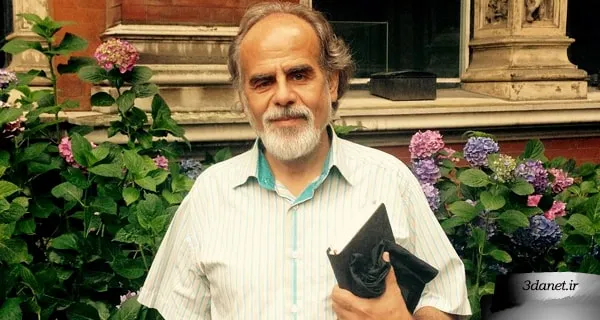
Question for Mostafa Malekian: Can one not derive the attribute of ordering the world from the Quran and then posit that the being who does such a thing in the world is the very God of our Quran? (Given the verse “Had there been within them [i.e., the heavens and earth] gods besides Allah, they both would have been ruined” (Al-Anbiya/22) and the verse “Do you see any flaw?” (Al-Mulk/3))
Response by Mostafa Malekian: First, one must prove a premise, namely that ruin (fasād) is the opposite of order, whereas ruin is not the opposite of order but rather causes disruption; second, these verses are not for proving the existence of God but for proving the oneness of God. One of the problems we have with the Quran is that we accuse everyone of thinking eclectically, yet we do the most eclectic thing with Quranic concepts; that is, we attribute meanings to Quranic concepts that were, say, given to that concept three hundred or eight hundred years later, and we never ask ourselves: when the Quran was revealed, what meaning did this concept have at that time? For example, at the beginning of philosophy books we write: “And whoever has been given wisdom (ḥikma) has certainly been given much good,” but is ḥikma in the Quran really in the same sense that we use it? Ḥikma in the sense we use it, roughly two hundred years after the revelation of the Quran, in the speech of the Greeks, there was a word called venous for which Arab translators could not find an equivalent word in the Arabic language; after much investigation, they assigned the word ḥikma to it. It was then that ḥikma entered the Arabic language with this meaning. The same applies to concepts such as justice (ʿadl) and injustice (ẓulm), etc. We translate and interpret ʿadl as “giving every possessor of a right his due,” but we do not know that this is the interpretation Aristotle gave of justice. Now, is this meaning that Aristotle gave for the word justice the lexical meaning and the Quran’s intended meaning of the word ʿadl? We say that anyone who refers to the Quran must have a near-certain conviction that these words had these meanings at the time of the Quran’s revelation. Can anyone say that whatever meanings the words of this speech of mine acquire up to five thousand years from now, I am also bound by those new meanings? Hafez says, “My heart is slipping from my hands, O possessors of hearts, for God’s sake”; let us come today and say, “So Hafez had diarrhea!” Because the apparent meaning of his words is that. No, at that time “the heart slipping from the hand” meant “I am losing my patience.” Here too, the word fasād is not the opposite of order; rather, fasād has opposites. 1- Kawn, meaning being, so fasād means annihilation; 2- Ṣiḥḥa, meaning health, so fasād means bodily unsoundness; and it has nothing to do with order.
.
.
Question for Malekian: Does the Order in the World Not Prove the God of the Quran?!
Mostafa Malekian, History of Western Philosophy, Volume One, Page 238
.
.




Discussion0 comments
No comments yet; let yours be the first voice.