Philosophy
J. L. Mackie's Skepticism about Moral Values
John Mackie denies the existence of mind-independent objective values, arguing that human moral judgments involve a systematic error. Drawing on cultural diversity and the queerness of values, he develops his error theory in opposition to moral objectivism.
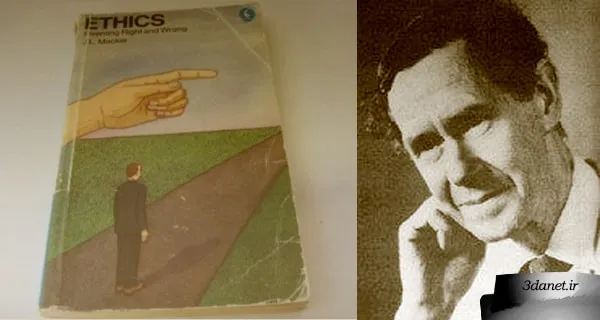
In his book Ethics: Inventing Right and Wrong, J. L. Mackie attempts to show that objective values do not exist. Although his focus in this book is primarily on moral values, since he states that his arguments concerning ethics also apply to beauty, in this note we will refer to aesthetic cases in addition to ethics. In his view, our human moral and aesthetic positions are merely attitudes that we hold. In a given culture, some of these values may be considered effective and useful and therefore be accepted. Of course, when Mackie says values are not objective and adopts a skeptical stance, he does not deny the difference between violent and kind acts or the difference between ugly and beautiful works of art. For these differences are dependent on the human mind—the standards we introduce or the desires we have. What Mackie denies is the existence of values independent of the human mind; in his view, values such as goodness/badness or ugliness/beauty have no existence independent of the human mind. He stands in opposition to the objectivist or realist who claims that moral values exist independently of human minds and that their existence or non-existence makes a great difference in human life. If we accept the objectivist position, then our moral or aesthetic judgments are correct only if they correspond to objective moral and aesthetic facts. From the objectivist's perspective, the mere fact that a group of people praise an action or admire a work cannot determine the rightness/wrongness or beauty/ugliness of a moral act or an aesthetic judgment.
At the same time, Mackie accepts the difference in human lives depending on the existence or non-existence of objective values. In his view, there is no objective value by which we can ascertain the correctness or incorrectness of our moral judgments. Thus, when someone says that Paul Gauguin's painting "When Will You Marry?" is beautiful, they believe this painting possesses the property of beauty, or when someone says the act of rape is bad, they believe the act of rape possesses the property of "badness."
Our human way of speaking is such that we seem to believe in the existence of objective values. When we make aesthetic comments or moral judgments, we speak as if these values exist independently of the human mind. Mackie, who himself does not believe in the existence of such values independent of the human mind, seeks to find an explanation for why, although objective values do not exist, we humans, whenever we make a moral or aesthetic judgment, have implicitly described such values. His solution is to say that all our claims about values are systematically false. In other words, Mackie says the aim of moral judgments is the correct description of objective values, but these values do not exist; therefore, what we utter when speaking of values is broadly mistaken, which is why Mackie uses the term error theory to describe our talk about values.
What Mackie says seems exciting, but before accepting it, we must see why Mackie believes that objective values do not exist. He offers two main reasons for the non-existence of objective values.
1) The diversity and difference of values across different cultures
Different values have existed in different cultures and at different times. Among one group of people, Van Gogh’s “A Pair of Shoes” is considered a beautiful and meaningful work, while another group may regard this work as lacking beauty. One group may believe that the artwork “The Crowning with Thorns” poses no moral problem or even possesses positive moral values, while another group may see it as conflicting with moral values. By relying on the fact that the description of values differs across cultures and groups, Mackie attempts to show that objective values independent of human beings do not exist. For if they did, human beings, despite differing cultures, would have to adopt identical values, whereas our moral and aesthetic judgments are often determined by our form of life. The problem with this position is that it cannot explain the changes that occur in the values of a single culture or society. For instance, when women’s suffrage was proposed in the West, those who opposed women’s suffrage themselves lived in a form of life that did not grant women the right to vote, and the culture in which these people lived did not grant women the right to vote. Mackie has no objection to the fact that, in some cases, our moral values tell us what actions we ought to perform. In his view, these conflicts and changes occur when our way of life conflicts with the values we have accepted.
2) The queerness of objective values
Mackie’s second reason is the queerness of values. He argues that if objective values existed, they would be entities of a very different sort from the entities we are familiar with. For example, if moral values existed independently of the human mind, they would be vastly different from trees, buildings, humans, animals, machines, mountains, and other things we try to describe. Furthermore, if objective values existed, we could not become aware of their existence through the ordinary methods by which we acquire knowledge. Since these values are not physical, they cannot be detected by observation, or by using a microscope or other instruments employed to study natural phenomena. Moreover, we cannot become aware of the existence of objective values, nor provide a description of them, merely by thinking.
Disagreement among us humans about values is an undeniable phenomenon, but can we really conclude from the fact that there is disagreement about beauty and morality that these values are dependent on the human mind, and that, since each of us lives in a different culture, society, and era and also has individual differences, these values must be sought in culture or in perspective? If someone were to say that beauty is independent of the human mind and that beauty is so evident that anyone who looks at all works possessing the property of beauty ought to notice it, and added no further point to this view, then one could accept that disagreement is a good reason to doubt the objectivity of values. For example, if a person who believes in objective beauty says that enjoying beauty requires practice and the attainment of a particular skill, disagreement cannot easily be used as an argument against objectivity. At the same time, one can also draw on logic: since a contradiction cannot be true, one of two mutually contradictory views must be correct. If all humans agree on a view, that cannot be taken as proof of that position’s correctness (think about how all humans once thought the sky was a ceiling); disagreement likewise cannot show that there is no objectivity. Christian fundamentalists believe that the Earth is only a few thousand years old. Yet our disagreement with Christian fundamentalists does not lead us to say that the question of the Earth’s age has no objective answer.
Strangeness cannot be a reason for something to exist or not exist. What is strange to us depends on our living conditions, our form of life, our culture, and our era. Perhaps what is strange to me is not strange to you; based on Mackie's model, one can conclude that "strangeness" is not objective and is dependent on the human mind, and therefore dependent on human perspective, culture, and history! Mackie's philosophical stance is naturalism, and for this reason it is strange to him that values exist independently of human beings, whereas a naturalist can believe in values independent of the human mind, and ultimately beauty and goodness can be explained in terms of natural kinds, or one can say that moral values are in fact natural kinds (some naturalists hold this position). According to Mackie's definition of strangeness, our knowledge of logic and mathematics is also strange. Mackie says that if we cannot explain how we acquire our knowledge of mathematical and logical truths, we must set them aside.
As noted, Mackie's philosophical stance is naturalism. He believes that if moral realists want to speak of objective values, they must be able to show us how such values fit into our scientific picture of the world. This does not mean that scientists must discover objective values for us through a microscope or telescope. Rather, Mackie means that, given our scientific picture of the world, moral realists must show what objective values are. Since mathematics and logic play a fundamental role in our scientific picture of the world, Mackie cannot deny them.Probably the best solution for the realist regarding moral values is to examine the explanation of our knowledge of mathematical and logical truths and then try to model the explanation of moral values on it.
Mackie considers three types of reactions to his position. One reaction is anger, as Mackie's position is seen as a threat to morality in society. At the same time, some might say that this position is completely obvious. Another reaction is to say that what Mackie precisely means by "objective" is unclear and requires further clarification. To better define Mackie's position, one must consider what exactly his skepticism encompasses. For this purpose, consider the approaches of Farzin and Farzaneh.
Farzin believes that morality is a system of beliefs imposed by the ruling class in order to control people and preserve the interests of the ruling class. He thinks of many examples in his society and has become certain that his position is correct and that moral codes are merely for repression and control. Farzin believes that there is an objective truth, and that is that all of society's moral codes are for repression and control. Therefore, Farzin's skepticism is about moral codes.
Now consider Farzaneh. Unlike Farzin, Farzaneh believes that there is no such thing as moral values, yet she is committed to her moral codes. In fact, Farzaneh believes that the moral codes she believes in do not reflect moral values but rather represent her approach. The reason Farzaneh is committed to her moral codes is that she finds these codes useful. Mackie's position aligns with Farzaneh's position.
At first glance, Mackie's position seems similar to the relativist position. The relativist might say that everyone should do whatever they think is good. The difference between this view and Mackie's view is that this kind of relativism can actually be formulated as follows:
It is objectively correct that every individual should do whatever they think is right.
In fact, there is an absolute and objective rule according to which every individual is permitted to do whatever they think is right.
Mackie's position on moral values is a metaphysical one, meaning he says there is no such thing as objective values. At the same time, he recognizes that everyone may consider a particular phenomenon or action valuable. For Mackie, this merely indicates the intersubjectivity of values, not the objectivity of moral values. For example, if all humans consider honesty valuable, this does not mean an objective value exists by which one could say honesty has moral worth. Rather, it simply means that all humans value honesty. We might also conclude that we want certain values to be universal; for instance, we want all humans to accept that men and women have equal rights. This does not mean an objective value exists and, based on it, we want this value to become universal and everyone to accept it; rather, it simply means we want this value to spread throughout the world. Therefore, for Mackie, morality cannot be unconditional. That is, one cannot say that, whether individuals want to or not, no one should lie or commit murder. We may enact laws or launch a campaign to establish or universalize certain values in society, but this merely depends on our wanting to do so. Thus, we might be able to show Mackie that equality is a useful value and improves societal efficiency. He does not deny this point; what he denies is that there is an objective reality according to which equality is valuable.
.
.
Zohair Bagheri No’parast
J. L. Mackie
Mackie, J. L. (1977). Ethics: Inventing Right and Wrong. Penguin.





Discussion0 comments
No comments yet; let yours be the first voice.