Psychology
Kelly McGonigal: How to Make Stress Your Friend
Stress harms your health only when you believe it is harmful; research shows that believing stress is bad raises the risk of death more than stress itself. Kelly McGonigal explains how to change the body's physical response to stress.
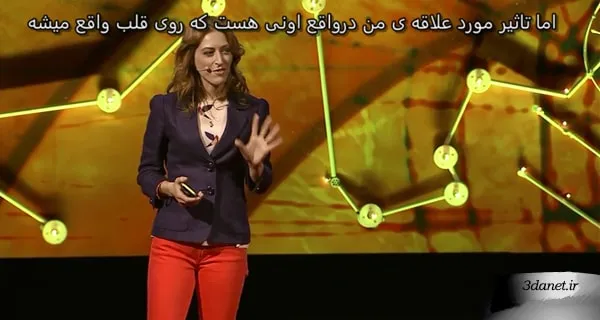
Stress. It makes your heart pound, your breathing quicken, and your forehead sweat. Yet while stress has become a public health enemy, research suggests that stress may only be harmful if you believe it to be so. Kelly McGonigal, a health psychologist, urges us to see stress in a positive light, and introduces us to an unsung mechanism for stress reduction: connecting with others.
.
.
.
00:12
00:40
But that is not my confession. My confession is this: I am a health psychologist, and my mission is to help people be happier and healthier. But I fear that something I have been teaching for ten years has been doing more harm than good, and it has to do with stress. For years I have been telling people, stress makes you sick. It increases the risk of everything, from the common cold to cardiovascular disease. Essentially, I had turned stress into an enemy. But then I changed my mind about it, and today, I want to change yours.
01:20
Let me begin with the study that made me reconsider my approach to stress. This study tracked thirty thousand adults in the United States for eight years, and they started by asking people, "How much stress have you experienced in the last year?" They also asked, "Do you believe that stress is harmful for your health?" And then they used public death records to find out who had died.
01:47
01:48
Okay. First the bad news. People who experienced a lot of stress in the past year had a 43 percent increased risk of dying. But that was only true for those who believed that stress is harmful to health. (Laughter) Those who experienced a lot of stress but did not believe it was harmful were no more likely to die. In fact, they had the lowest risk of dying of anyone in the study, even compared to people who had relatively little stress.
02:24
Now, the researchers estimate that over the eight years they tracked mortality, 182,000 Americans died prematurely, not from stress, but from the belief that stress is bad for you. (Laughter) That is over 20,000 deaths a year. Now, if that estimate is correct, believing stress is bad for you would be the 15th leading cause of death in the United States last year, killing more people than skin cancer, HIV/AIDS, and homicide.
02:56
02:59
03:08
03:22
Now, to explain how this works, I want you all to pretend that you are participating in a study designed to stress you out. It's called the social stress test. You come into a laboratory, and you're told you have to give a five-minute impromptu speech on your personal weaknesses to an expert panel of evaluators sitting right in front of you, and to ensure you feel the pressure, it's brightly lit and there's a camera right on your face, something like this. And the evaluators have been trained to give you discouraging feedback, like this.
04:04
04:08
04:25
Okay. I want you all to count backwards from 996 in increments of seven. You're going to count out loud, as fast as you can, starting with 996. Go! (Audience counting) Go faster. Faster please. You're going too slow. Stop. Stop, stop, stop. That guy made a mistake.We are going to have to start over. (Laughter) You're not very good at this, are you? Okay, so you get the idea. Now, if you were actually in this study, you'd probably be a little stressed out. Your heart might be pounding, you might be breathing faster, maybe breaking out into a sweat. And normally, we interpret these physical changes as anxiety or signs that we aren't coping very well with the pressure.
05:12
But what if, instead, we viewed these signs as indications that your body is energized and preparing you to meet this challenge? That is exactly what participants were told in a study conducted at Harvard University. Before they underwent a social stress test, they were taught to view their stress as a helpful factor. That pounding heart is preparing you for action. It's okay if you're breathing faster. It's getting more oxygen to your brain. And the participants who learned to view the signs of stress as helpful and conducive to their performance, were less stressed, less anxious, more confident, but what fascinated me most is how their physical stress response changed. In a typical stress response, your heart rate increases, and your blood vessels constrict. Like this. And this is one of the reasons that chronic stress is linked to cardiovascular disease. Being in this state all the time is not healthy at all. But in this study, when participants changed their view of stress positively, their blood vessels stayed relaxed like this. Their heart was still pounding, but this is a much healthier cardiovascular profile. In fact, what happens is very similar to moments when we experience joy and courage. Over a lifetime of stressful experiences, this one biological change could be the difference between a stress-induced heart attack at age fifty and living healthily into your nineties. And this is what the new science of stress reveals, that how you think about stress matters.
06:52
So my goal as a health psychologist has changed. I no longer want to get rid of your stress, I want to make you better at stress. And we just did a little bit of that. If you raised your hand and said you'd had a lot of stress in the last year, we could have saved your life, because hopefully the next time your heart is pounding from stress, you'll remember this talk and you'll think to yourself, this is my body... helping me rise to this challenge. And when you view stress in that way, your body believes you, and your stress response becomes healthier.
07:30
07:49
To understand this aspect of stress, we need to talk about a hormone called oxytocin, and I know oxytocin has already received more than enough attention as a hormone. It even has another cute name: the cuddle hormone, because its levels rise when you hug someone. But that's a small part of what oxytocin does. Oxytocin is a neurohormone. It regulates your brain's social instinct. It encourages you to do things that strengthen your close relationships. Oxytocin makes you crave physical contact with your friends and family. It increases your empathy for others. It even makes you more inclined to help and support those you care about. Some people have even suggested that we should snort oxytocin (like a drug) to become more compassionate and caring. But here's what most people don't know about oxytocin: it's a stress hormone. Your pituitary gland pumps it out as part of the stress response. Much like adrenaline, which makes your heart race,oxytocin plays a major role in your stress response. And when oxytocin is released in the stress response, it motivates you to seek support. Your body's natural response to stress urges you to share your feelings with someone instead of bottling them up. Your stress response wants to make sure you notice when someone else in your life is struggling, so that you can support each other. When life is difficult, your stress response wants you to be surrounded by people who love you.
09:32
So how does knowing this about stress make you healthier? Well, oxytocin doesn't only affect your brain. It also acts on your body, and one of its main roles is to protect your cardiovascular system from the effects of stress. It's a natural anti-inflammatory. It also helps your blood vessels stay relaxed during stress. But my favorite effect on the body is actually on the heart. Your heart has receptors for this hormone, and oxytocin helps heart cells regenerate and heal from any stress-induced damage. This stress hormone strengthens your heart, and the cool thing is that all of these physical benefits of oxytocin are enhanced by social contact and social support, so when you reach out to others under stress, either to seek support or to help someone else, you release more of this hormone, your stress response becomes healthier, and you actually recover faster from stress. I find this amazing, that your stress response has a built-in mechanism for stress resilience, and that mechanism is human connection.
10:50
I want to finish by talking about one more study. Pay attention, because this study could save someone's life. This study tracked about a thousand adults in the United States, ranging in age from 34 to 93, and they were asked, "How much stress have you experienced in the last year?" They were also asked, "How much time have you spent helping friends, neighbors, and people in your community?" They then used public records for the next five years to find out who died.
11:27
Okay, the bad news first: every stressful experience in life, like financial difficulties or family crises, increased the risk of dying by 30 percent.But — and I hope you were expecting a "but" by now — but this statistic did not apply to everyone. People who spent time caring for and supporting others showed no stress-related increase in risk. Zero. Caring for others created resilience. So we see once again that the harmful effects of stress on your health are not inevitable. How you think and how you act can transform your experience of stress. When you choose to view your stress response as helpful, you create the biology of courage. And when you choose to connect with others under stress, you can create resilience. Now, I wouldn't necessarily ask for more stressful experiences in my life, but this science has given me a new appreciation for stress. Stress gives us access to our hearts. The compassionate heart that finds joy and meaning in connecting with others, and yes, your pounding physical heart, working so hard to give you strength and energy, and when you choose to view stress in this way, you're not just getting better at stress, you're actually making a profound statement. You're saying that you can trust yourself to handle life's challenges, and you're remembering that you don't have to face them alone.
13:21
13:22
13:31
Chris Anderson: What you're telling us is quite astonishing. It seems to me amazing that a belief about stress can make such a big difference in life expectancy. How might this translate into advice, like, when someone is making a lifestyle choice between, say, a stressful job and a low-stress job, does it matter which one they choose? Is choosing a stressful job just as wise as long as you have the belief that you can somehow handle it?
13:59
Kelly McGonigal: Yes, and one thing we know for certain is that chasing meaning in life is better for your health than trying to avoid discomfort and trouble. So I think that's really the best way to make decisions, to go after what gives your life meaning and then trust yourself to handle the stress that follows.
14:17
.
.
00:12
00:40
But that is not my confession. My confession is this: I am a health psychologist, and my mission is to help people be happier and healthier. But I fear that something I've been teaching for the last 10 years is doing more harm than good, and it has to do with stress. For years I've been telling people, stress makes you sick. It increases the risk of everything from the common cold to cardiovascular disease. Basically, I've turned stress into the enemy. But I have changed my mind about stress, and today, I want to change yours.
01:20
Let me start with the study that made me rethink my whole approach to stress. This study tracked 30,000 adults in the United States for eight years, and they started by asking people, "How much stress have you experienced in the last year?" They also asked, "Do you believe that stress is harmful for your health?" And then they used public death records to find out who died.
01:47
01:49
02:07
02:10
02:24
02:36
02:38
02:56
02:59
03:08
03:21
Now to explain how this works, I want you all to pretend that you are participants in a study designed to stress you out. It's called the social stress test. You come into the laboratory, and you're told you have to give a five-minute impromptu speech on your personal weaknesses to a panel of expert evaluators sitting right in front of you, and to make sure you feel the pressure, there are bright lights and a camera in your face, kind of like this.
03:51
03:52
04:05
04:06
04:09
04:25
04:26
04:27
04:39
04:45
04:46
04:51
04:52
You're not very good at this, are you? Okay, so you get the idea. If you were actually in this study,you'd probably be a little stressed out. Your heart might be pounding, you might be breathing faster, maybe breaking out into a sweat. And normally, we interpret these physical changes as anxiety or signs that we aren't coping very well with the pressure.
05:12
But what if you viewed them instead as signs that your body was energized, was preparing you to meet this challenge? Now that is exactly what participants were told in a study conducted at Harvard University. Before they went through the social stress test, they were taught to rethink their stress response as helpful. That pounding heart is preparing you for action. If you're breathing faster, it's no problem. It's getting more oxygen to your brain. And participants who learned to view the stress response as helpful for their performance, well, they were less stressed out, less anxious, more confident, but the most fascinating finding to me was how their physical stress response changed.
05:55
Now, in a typical stress response, your heart rate goes up, and your blood vessels constrict like this.And this is one of the reasons that chronic stress is sometimes associated with cardiovascular disease. It's not really healthy to be in this state all the time. But in the study, when participants viewed their stress response as helpful, their blood vessels stayed relaxed like this. Their heart was still pounding, but this is a much healthier cardiovascular profile. It actually looks a lot like what happens in moments of joy and courage. Over a lifetime of stressful experiences, this one biological change could be the difference between a stress-induced heart attack at age 50 and living well into your 90s. And this is really what the new science of stress reveals, that how you think about stress matters.
06:53
So my goal as a health psychologist has changed. I no longer want to get rid of your stress. I want to make you better at stress. And we just did a little intervention. If you raised your hand and said you'd had a lot of stress in the last year, we could have saved your life, because hopefully the next time your heart is pounding from stress, you're going to remember this talk and you're going to think to yourself, this is my body helping me rise to this challenge. And when you view stress in that way, your body believes you, and your stress response becomes healthier.
07:30
07:49
To understand this side of stress, we need to talk about a hormone, oxytocin, and I know oxytocin has already gotten as much hype as a hormone can get. It even has its own cute nickname, the cuddle hormone, because it's released when you hug someone. But this is a very small part of what oxytocin is involved in.
08:09
Oxytocin is a neuro-hormone. It fine-tunes your brain's social instincts. It primes you to do things that strengthen close relationships. Oxytocin makes you crave physical contact with your friends and family. It enhances your empathy. It even makes you more willing to help and support the people you care about. Some people have even suggested we should snort oxytocin... to become more compassionate and caring. But here's what most people don't understand about oxytocin. It's a stress hormone. Your pituitary gland pumps this stuff out as part of the stress response. It's as much a part of your stress response as the adrenaline that makes your heart pound. And when oxytocin is released in the stress response, it is motivating you to seek support. Your biological stress responseis nudging you to tell someone how you feel, instead of bottling it up. Your stress response wants to make sure you notice when someone else in your life is struggling so that you can support each other. When life is difficult, your stress response wants you to be surrounded by people who care about you.
09:32
Okay, so how is knowing this side of stress going to make you healthier? Well, oxytocin doesn't only act on your brain. It also acts on your body, and one of its main roles in your body is to protect your cardiovascular system from the effects of stress. It's a natural anti-inflammatory. It also helps your blood vessels stay relaxed during stress. But my favorite effect on the body is actually on the heart.Your heart has receptors for this hormone, and oxytocin helps heart cells regenerate and heal from any stress-induced damage. This stress hormone strengthens your heart.
10:15
And the cool thing is that all of these physical benefits of oxytocin are enhanced by social contact and social support. So when you reach out to others under stress, either to seek support or to help someone else, you release more of this hormone, your stress response becomes healthier, and you actually recover faster from stress. I find this amazing, that your stress response has a built-in mechanism for stress resilience, and that mechanism is human connection.
10:50
I want to finish by telling you about one more study. And listen up, because this study could also save a life. This study tracked about 1,000 adults in the United States, and they ranged in age from 34 to 93, and they started the study by asking, "How much stress have you experienced in the last year?"They also asked, "How much time have you spent helping out friends, neighbors, people in your community?" And then they used public records for the next five years to find out who died.
11:27
Okay, so the bad news first: For every major stressful life experience, like financial difficulties or family crisis, that increased the risk of dying by 30 percent. But -- and I hope you are expecting a "but" by now -- but that wasn't true for everyone. People who spent time caring for others showed absolutely no stress-related increase in dying. Zero. Caring created resilience.
12:00
And so we see once again that the harmful effects of stress on your health are not inevitable. How you think and how you act can transform your experience of stress. When you choose to view your stress response as helpful, you create the biology of courage. And when you choose to connect with others under stress, you can create resilience. Now I wouldn't necessarily ask for more stressful experiences in my life, but this science has given me a whole new appreciation for stress. Stress gives us access to our hearts. The compassionate heart that finds joy and meaning in connecting with others, and yes, your pounding physical heart, working so hard to give you strength and energy. And when you choose to view stress in this way, you're not just getting better at stress, you're actually making a pretty profound statement. You're saying that you can trust yourself to handle life's challenges. And you're remembering that you don't have to face them alone.
13:21
13:22
13:31
Chris Anderson: This is kind of amazing, what you're telling us. It seems amazing to me that a belief about stress can make so much difference to someone's life expectancy. How would that extend to advice, like, if someone is making a lifestyle choice between, say, a stressful job and a non-stressful job, does it matter which way they go? It's equally wise to go for the stressful job so long as you believe that you can handle it, in some sense?
13:59
KM: Yeah, and one thing we know for certain is that chasing meaning is better for your health than trying to avoid discomfort. And so I would say that's really the best way to make decisions, is go after what it is that creates meaning in your life and then trust yourself to handle the stress that follows.
Watch on Aparat (with Persian subtitles)
Watch on TED (with Persian subtitles)
Download Video 76 MB
Download Video 46 MB
Download Video 24 MB
Download Video 13 MB
Download Persian and English subtitles
.
.
Kelly McGonigal: How to Make Stress Your Friend
Source: TED
Translated by Faranak Deeba
Reviewed by sepideh hajizadeh
.
.

Discussion0 comments
No comments yet; let yours be the first voice.