Religion
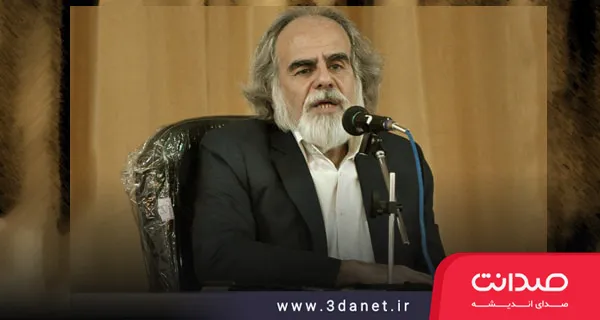
Lecture: 'Liberation from Religious Fundamentalism' by Mostafa Malekian
Mostafa Malekian defines Islamic fundamentalism as the belief in the insufficiency of reason to solve worldly problems, the timeless and placeless immutability of jurisprudential rulings, and the intrinsic link between Islam and political power—a distinction that marks the boundary between the faithful and fundamentalists.
There is no doubt that when we speak of religious fundamentalism in this session and possibly in similar sessions, what is meant is Islamic fundamentalism. Although we also have non-Islamic fundamentalisms, such as Jewish fundamentalism, which exists in the world today, as well as Christian, Hindu, and even Buddhist fundamentalism, the issue afflicting our society is, in any case, Islamic fundamentalism. Nevertheless, similar points can be repeated regarding non-Islamic religious fundamentalisms. So that there is no ambiguity, I am speaking about the dangers and perils of religious or Islamic fundamentalism, clarifying what we mean by it, and I will define Islamic fundamentalism in its proper place. Elsewhere, I have explained the difference between the fundamentalist approach to Islam, the traditionalist Islamic approach, and the modernist approach to Islam. These three differ and disagree on eleven points. In the article on the relation and connection between Islam and liberalism.
In the article on the relation and connection between Islam and liberalism, written 14-15 years ago [1], I stated there that these three approaches have serious differences. Now, I will consider a more concise account of Islamic fundamentalism from one of the Islamic thinkers, namely the Arab thinker Adel Zaher. There is no time to elucidate them for the friends. I will consider a more concise account of Islamic fundamentalism, as there is no time to elucidate those eleven points for the dear audience. Islamic fundamentalism refers to a doctrine, path, and method that believes in three propositions together. If someone believes in these three propositions together, not one by one, we are an Islamic fundamentalist.
The Insufficiency of Reason in Solving Material and Worldly Problems from the Perspective of Islamic Fundamentalists
The first proposition is that human beings do not have the power to solve the problems and difficulties of this world by relying on their own reason. Pay attention to the wording. The first proposition believed is that human beings, by relying on their own reason—that is, by relying on the totality of their perceptive faculties—do not have the power to solve their worldly problems and remove their worldly difficulties. I might believe that human beings do not have the solution to their otherworldly and spiritual problems by relying solely on their own reason. This does not make me an Islamic fundamentalist. Almost every Muslim believes that solving otherworldly and spiritual problems and resolving otherworldly difficulties by relying solely on reason and perceptive faculties is not possible. Let me simplify further: if you are religious, with any orientation in your religiosity, whether religious in Islam, Christianity, or any religion and denomination, simply by being religious, you undoubtedly believe that solving spiritual and otherworldly problems solely by relying on human reason is not possible. To resolve our spiritual difficulties, we need something beyond reason. All religious people hold this. What separates the religious from Islamic fundamentalists is that fundamentalists believe that human beings also do not have the power to solve worldly problems and remove their material and spiritual difficulties through their own reason. That is, to solve their worldly, this-worldly problems and remove their otherworldly difficulties, human beings also need another source or sources. So, the first proposition believed by Islamic fundamentalists is that they believe otherworldly and spiritual problems aside—no!! Our this-worldly and material problems also cannot be solved and removed by resorting to human reason. That is, for solving problems related to the institution of the family, education, science, technology, and art, politics, economics, law—for solving these problems, which are material, worldly, and this-worldly—here too, our reason is insufficient. This is the first proposition.
The Perpetual Nature of Jurisprudential Rulings from the Perspective of Islamic Fundamentalists
The second proposition that Islamic fundamentalists believe is that jurisprudential rulings are eternal and valid forever. That is, they are not rulings that apply in one place and not in another, at one time and not at another, in certain circumstances and not in others, in one society and civilization and not in another. They believe that jurisprudential rulings are rulings that possess perpetual, eternal, and universal validity and authority. Regardless of time, place, circumstances, culture, civilization, or society, a crude interpretation is always derived from the statement that has been transmitted: "Muhammad's halal is halal until the Day of Resurrection, and his haram is haram until the Day of Resurrection." I am not saying that the speaker of these words intended Islamic fundamentalism by uttering this statement; my point is that from this sentence, they draw the conclusion that the validity of jurisprudential rulings is inviolable.
The fundamentalists' belief that forming a government and acquiring political power is intrinsic to Islam and an obligation upon Muslims
The third proposition believed by Islamic fundamentalists is that Islam's connection to government is not accidental or coincidental, and that the connection to politics and governance is ingrained in the very essence of Islam. It is not that circumstances arose in which the Prophet (PBUH), by the necessity of those circumstances, was compelled to assume the leadership of the Ansar and the Muhajirun, and subsequently, because he had accepted the leadership of this new city, naturally acquired enemies who attacked him, forcing him to fight, and acquired friends with whom he made treaties, experiencing defeats and victories. No, these were not events that, had they not occurred, the Prophet would have had nothing to do with governance. In their view, the religion of Islam is fundamentally a religion whose affairs cannot be set in order except by seizing political power. As you know, the Prophet (PBUH) governed during the last 10 years of his life in Mecca and Medina, up until the conquest of Mecca. The only debate is over whether this was because the Prophet acquired political power as a result of events, or whether political power is intrinsic to Islam. Fundamentalists believe that anyone who wants to be religiously observant in the religion of Islam must be serious in the pursuit of seizing political power. The bond between the essence of Islam and politics and political power is not accidental or coincidental. This religion is fundamentally a religion that has a close connection with politics and with seizing political power. Let me give you an example. There is a verse in the Quran that says: "O you who have believed, say not 'Ra'ina' but say 'Unzurna'..." O you who have believed, do not say "Ra'ina" but say "Unzurna." This verse, solely because the people's language was Arabic, relates to a specific incident where the Prophet (PBUH) would sometimes recite the verses of the Quran hastily to the people. The Prophet's companions, in order to ask him to recite the verses slowly so they could commit them to memory, to have regard for their situation, would say to him "Ra'ina." The opponents of the Prophet (PBUH) would deliberately pronounce this word "Ra'ina," with the pronunciation of that time, mockingly as "Ra'ina" meaning "our shepherd," and would mockingly say that the Prophet's followers call him "our shepherd." When this became a cause for ridicule, a verse was revealed stating: "O you who have believed, do not say 'Ra'ina' to the Prophet, for if you say 'Ra'ina,' the enemies will use it as a means of mockery. You say 'Unzurna,'" meaning "give us respite." "Unzurna" could no longer be mocked. There is no doubt that this verse was revealed for this reason, because the people's language was Arabic.
and accepted the leadership of this city, and naturally this city had enemies, and defeats occurred, and commands and prohibitions were issued by the Prophet—these are events that are not like the incident of Ra'ina. That is, if the oppression and injustice of the polytheists in Mecca had not existed, if the Prophet had not been forced to migrate to Medina, the Prophet would certainly have established a government as well. Because establishing a government is part of the very essence of his prophethood and his mission. Therefore, all who are Muslims—whether fundamentalist, traditionalist, or modernist, even historians—all believe that the Prophet established a government in the last ten years of his life. But fundamentalists, unlike others, say that this establishment of a government was not an accident, was not an incidental occurrence that, had it not arisen, the Prophet would not have undertaken; it was part of the very essence of the religion of Islam. However, Muslim traditionalists and Muslim modernists do not accept this at all and say that a series of events and factors compelled the Prophet. The mission of the Prophet (PBUH) was nothing but conveying God's message. And the Messenger's duty is only to convey [the message]. Otherwise, the Prophet—to use the Qur'an's expression, let me give you another example—if the Prophet's wives had not quarreled among themselves about the Prophet's behavior toward them, the Prophet would certainly not have forbidden himself from eating honey, and certainly this verse would not have been revealed: Why do you forbid [yourself from] what God has made lawful for you, seeking to please your wives? That verse was occasioned by an incident. If those two wives had not had a disagreement and problems had not arisen and that incident had not occurred, the Prophet would certainly not have forbidden himself from eating honey. These are not part of the essence of Islam; an incident occurred, and there was no alternative but for a verse to be revealed in that incident. Whatever incident occurred, whatever event came to pass, it was part of the Prophet's message to convey them to the people. The story of Why do you forbid what God has made lawful for you—so it can be said that whatever is in the Qur'an, whatever event occurred, whatever phenomenon manifested itself, that action and speech of the Prophet is not part of the essence of Islam. The third matter believed by Islamic fundamentalists is that part of Islam's message is intervention in politics. Political power is part of its message. If they do not do it, it is as if, for example, they have failed in the duty of prayer and fasting.
If they do not do it, it is as if they have failed in the duty of prayer and fasting. If they fail in its establishment, it is as if—if someone believes in these three propositions collectively, then today we call him an Islamic fundamentalist; this individual is an Islamic fundamentalist. 1- Human reason is not sufficient even for solving worldly problems and must resolve them through revelation. The insufficiency of human reason in solving and resolving worldly and otherworldly problems. 2- Jurisprudential rulings are imperishable and possess permanent authority and reliability. 3- The duty of a Muslim is to strive, to the extent of his ability, for the formation, consolidation, and establishment of political power and its preservation and continuation. Because one of the duties of Muslims is to form a government, and if they do not do so, it is as if they have not performed the Hajj or the prayer. He must establish a religious government; secondly, he must establish his religious government on the foundations of jurisprudential rules; thirdly, he must extend his government even in material matters. For example, in family problems, political, economic, education, science, technology, and art—he wants his government to intervene in all of them. Because even in the most material matters, seeking help from reason will not solve the problem.
The history of this fundamentalism goes back to after Napoleon conquered Egypt in 1799 and entered Cairo, and there the first encounter between Islam, which had been asleep for centuries, and the West took place, and since the gateway to the Islamic world was Egypt and the first face-to-face encounter with the West occurred there, it began in the country of Egypt and then gradually spread to other places. I do not want to mention the names of personalities who advocate Islamic fundamentalism. The greatest danger of this Islamic fundamentalism today is that it destroys the issue of the entire globe.
To whose benefit is fundamentalism?
The only ones who imagine they benefit from fundamentalism are three groups. Now, whether their perception is correct or not is another matter. One is the Marxist powers of the world.
The benefit of the Marxist powers of the world from Islamic fundamentalism
That is, I never believe that Russia or China are in the least bit disturbed or worried by the growth of Islamic fundamentalism. Why? Because someone like the odious Putin believes that the sharp tip of Islamic fundamentalism's attack is the West, and since regimes like Putin's and China have ideological differences with the West, these are the vanguard of the attack on the West—let the Muslims bear its casualties. Whichever side they are killed on, it is to our benefit. This is why I do not believe that China, Russia, and the regimes subordinate to China and Russia ever think that Islamic fundamentalism is to their detriment.
The Benefit of the Growth of Islamic Fundamentalism for the Clerics of the Islamic World
The second class is a huge portion, and rather, I want to say unfortunately, the vast majority of the clerics of the Islamic world. They think that Islamic fundamentalism is to their benefit. Not that the Shia cleric thinks Shia Islamic fundamentalism is to his benefit, and the Sunni cleric thinks Sunni Islamic fundamentalism is to his benefit; otherwise, the generality of clerics—I am not saying all clerics—throughout Islam, in their own estimation, benefit. In their own estimation, of course. If they call Daesh 'takfiri,' it is clear from this very name that they are not worried about anything else but that the Daeshis say to the Shia, 'You are infidels.' They never say, 'You are Islamic fundamentalists.' Because the Daeshis are takfiris. Whom do they declare takfir upon? First and foremost, the Shia. If you pay attention, they have not shown serious reactions against fundamentalism either, up to now. Because Shia and Sunni clerics have a kind of cultural problem with the West. They blame the West for society's irreligiosity. If there is Islam-avoidance and Islam-antagonism in Islamic societies, the main factor is the West. When the West becomes frightened and terrified, then it will reduce its cultural invasion against Muslims. Four explosions in Paris and the West will cause them to stop the cultural invasion. Then we clerics can breathe, because then the people will not be Islam-antagonists. I do not believe that the clerics—not all of them, I have repeated many times—but the vast majority of them are, in their hearts, distressed by the growth of Islamic fundamentalism.
The Benefit of the Growth of Islamic Fundamentalism for the Poor of the Islamic World
And the third group is the poor of the Islamic world, and those who have been driven to extreme poverty and do not even have the necessities of life. Islamic fundamentalism is to their benefit. Why? Because poverty brings three things. One is that material poverty brings cultural poverty. The more financially poor we become, the poorer we become culturally in terms of breadth of knowledge, power of thought, power of understanding, and experiences. Cultural poverty means we surrender to every superstition. And one of those superstitions is this very Islamic fundamentalism that has been raging for 40 years. Poverty inevitably brings envy. It has no choice but to feel envy. Hafez also said: 'Jealousy does not allow the world to be filled with calamity.' Be aware that if you deviate from the path of reason and, as they say today, the gap between rich and poor exceeds a certain limit, it will disrupt everything. The poor person says, 'Why are there people in the world when I can support myself and my family for five years on the monthly expenses of a Westerner's dog?' The class divide between poor and rich countries, the countries of the North and South, and even within the countries of the South between the poor strata has become so vast that someone says to themselves, 'Do you mean that I, my wife, and my children are not worth as much as a cat?' Then, when someone says, 'I want to go and blow them up, to destroy their young daughters and sons,' they welcome it very much.
The next point is that a poor person has nothing to lose, which is why they are very bold and courageous. Whatever happens brings them no loss; if the arch breaks, let the yogurt spill, and may the world turn to the taste of the bowl-licker... Therefore, the poor of the Islamic world are the greatest people who, wherever the banner of the fundamentalists is raised, whether by the Taliban, by Mullah Omar, by Daesh, or by Boko Haram, they will all beat their chests under their flag.
اما ازین سه دسته که بگذریم بی شک کل کره زمین زیان خواهد کرد چه غرب و چه کشورهای اسلامی که مهد آنها هستند. به این جهت رهایی از بنیادگرایی اسلامی، رهایی از همه مسائلی است که در دنیای امروز ما وجود پیدا می کند و غیر از مسائلی مثل محیط زیست تقریبا هر مسأله ای تحت تأثیر بنیادگرایی اسلامی قرار دارد. گرچه محیط زیست هم بر اثر انفجار اینها از بین می رود. برای مقابله با بنیادگرایی اسلامی سه وجه مقابله وجود دارد.
یکی نشان دادن اینکه سه اعتقاد بنیادگرایی اسلامی نه استدلال عقلی به سودش حکم دارد و نه استدلال نقلی برای آن وجود دارد. این یک راه بحث فلسفی است با بنیادگرایان اسلامی. نه دلیل عقلی و نه دلیل نقلی به سود آنها نمی شود اقامه کرد. این بحث بحث امشب من نیست. اتفاقا عادل ظاهر در این کتاب یک بحث فلسفی در این باب کرده است . منتها بحث فلسفی او در مورد نامستدل بودن بنیادگرایی اسلامی فقط از منظر عقلی است. ولی عقلا و نقلا می توان نشان داد که هر سه گزاره خطاست. این یک بحث.
لزوم اتخاذ رویکرد مصلحت اندیشانه برای ریشه کن کردن بنیادگرایی اسلامی
بحث دوم بحث اخلاقی است. نشان دادن اینکه بنیادگرایی اسلامی ما را به کرداری خواهد کشاند که مطلقا از نظر اخلاقی موجه نیست. یعنی چاره ای ندارد یک بنیادگرایی اسلامی ندارد جز اینکه دیر یا زود ضوابط اخلاقی را بپذیرد. بحث من بحث سوم است. نه از منظر فلسفی نه از منظر اخلاقی بلکه از نظر مصلحت اندیشانه چه کار می شود کرد چه مصلحت اندیشی می توان کرد که بنیادگرایی اسلامی تمام بشود و جهان اسلام بتواند رو به طرف عدالت و آزادی حرکت کند. اینکه جهان از هراس افکنی، از شر تروریسم رها بشود و جهان اسلام و جهان غرب برگردند به یک روابط سالم و انسانی با یکدیگر؟
غرض این است که وجه مصلحت اندیشانه می خواهد دو تا کار می کند یکی اینکه جهان اسلام که هم از لحاظ عدالت، رفاه، امنیت و آزادی عقب افتاده است از جهان غرب این را دارای 4 آرمان بزرگ اجتماعی بکند و یکی هم اینکه تضاد میان غرب و جهان اسلام را از بین ببرد تا ما بتوانیم با همه مردم در شرق و غرب زندگی و همزیستی مسالمت آمیز داشته باشند و این چهار صباح را در درد و رنج به سر نبرند. من الان در مورد این نکته می خواهم صحبت کنم که چه کارهایی می شود کرد؟
وظیفه قدرتهای سیاسی غرب در مبارزه با بنیادگرایی اسلامی
من به نظرم می آید که کارهایی که ما باید بکنیم سه گروه بیشتر از همه مسئولیت آن بر دوششان است یکی قدرتهای سیاسی غرب هستند که مورد حمله بنیادگرایان اسلامی هستند، یکی روحانیان جهان اسلام و دیگری روشنفکران جهان اسلام یعنی متفکران غیر روحانی که دغدغه دین و مذهب دارند و نگرانند مردم واقعا مسلمانانه زندگی کنند. اینهایی که من می گویم هر کدام مسئولیتش بر عهده یکی از این سه گروه است. اول می پردازم به کشورها و قدرتهای غربی.
قدرتهای غربی اول کاری که باید بکنند این است که در جهت ترفیه یعنی د جهت مرفه سازی جوامع بسیار فقیر جهان اسلام به جد فعالیت بکنند. فقر باتلاقی است که تمامی قارچ های خرافه از آن رشد می کند. تا جهان اسلام در فقر به سر می برد مستعد خرافات است خرافاتی که هم خود خرافه زدگان را نابود می کند و هم دیگران را نابود خواهد کرد. جهان غرب چه از لحاظ رفاه بسیار بیشتر از جهان اسلامه باید بفهمد که اگر بخواهد بنیادگرایی اسلامی تضعیف بشود اول باید فقر در جهان اسلام ریشه کن بشود. هر جا فقر هست یک منجلابی دارید که از درون آن خرافه می روید. هر خرافه ای در عمل یک خطر است. بنابراین، باید در این مجامع جهانی در کنفرانس ها و سمینارها به جای توحش، خشونت و مقابله به مثل به فکر ترفیه و مرفه سازی کشورهای اسلامی باشند. نه به معنای اینکه صدقه بدهند نه اینکه گداپروری کنند. مثل آفریقاییان بیچاره که آرد را از غرب گدایی می کنند. این کمکها با برنامه ریزی دقیق محقق شود تا به رفاه جهان اسلام می انجامد. واضح است این نکته. این کار اولیست که آنها باید بکنند. فقر همیشه فقرا را در برابر مرفهان قرار می دهد و چون مصداق مرفهان جهان غرب است لذا می روند سمت آنها که آنها را نابود کنند.
But the second, which is no less important than the first. You, as a Western political power, can provide aid so that, for example, Egypt becomes prosperous, or Iraq, or Afghanistan, or Pakistan, but more importantly, you must not allow a class divide to emerge in these countries. The danger of a class divide is no less than that of poverty. Imagine a country that is entirely poor, but the difference in their incomes means a poor person earns, say, 3 dollars a day, and a well-off person earns 15 dollars a day. This country is certainly a poor country. But this is not a class divide. If people know that everyone is like themselves, they will not give in to those social upheavals and disruptions. But in a country where its poor earn 30 dollars a day and its wealthiest earn 15 thousand dollars a day, compared to a poor country where its poor earn 3 dollars a day and its richest earn 15 thousand dollars a day, this second country is more prone to danger than the previous one. More dangerous than poverty is the class divide. Therefore, aid must be conditional on not allowing the class divide to widen further.
Withholding Support for Israel by the Western World, a Way to Combat Islamic Fundamentalism
The third task is for the West in general, and America in particular, to cease its unstinting and unconditional support for Israel. As long as the Islamic world thinks that there is an enemy within its heart and core, and that whatever this enemy does is met with the agreement and support of America, it is impossible for its heart to soften towards the West. America, Italy, France, and others can support any other country, but their support must be constrained and conditional upon a set of criteria. It must not be unconditional. On the condition that we, the Muslim people, do not infer that it is as if Western powers tell Israel, 'Do whatever you like, we will support you.' Since 1946, the general inference of the Islamic world has been not that every Jew residing in Israel is condemned to rejection, but that the political regime of the Jewish nation is condemned to rejection. Just as one cannot pass the same judgment on the Russian nation as we do on its government. Although the degree of nations' involvement in their governments' decisions varies greatly, the issue is the political power ruling over Israel. As long as these are endorsed by the West, this danger exists. As long as the public opinion of the Islamic world infers that Islam is not safe from encroachment on the life, property, and honor of Israel, the West is in danger. One cannot say the West is not at fault. Islamic fundamentalists are taking the Islamic world's revenge on the West. Therefore, there is no choice but to secure the life, property, honor, and dignity of Muslims from Israeli encroachment. With the continuation of this process, it is impossible not to provoke the Islamic world. By granting this aid to Israel, at least observe the human rights of Muslims. A very important task the West must undertake is to convince the public opinion of the Islamic world of its non-support for Israel. This action of theirs has long wounded and aggrieved the psyche of one and a half billion Muslims worldwide.
Withholding Support for Despotic Governments in Islamic Countries by Western States, a Way to Combat Islamic Fundamentalism
Another is that the West must not support the despotic governments that have fallen upon Islamic countries like a canker. If a government in a Muslim country does not encroach upon the West's interests, it can do whatever it wants to its own nation. They believe that any government, no matter how despotic, tyrannical, and dictatorial, as long as it does not interfere with their interests, can do whatever it wants with its own people. When the people of such countries are driven to despair and also see your support, there is no doubt that the people of these countries will come to loathe you. It makes no difference whether these governments are religious, secular, laic, socialist, or liberal; governments that show no mercy to their own people, because you support them, it is certain that the people will seek an escape. One of those escape routes is taking refuge in Islamic fundamentalism.
Refraining from Insulting Islamic Sanctities by the West, a Way to Combat Islamic Fundamentalism
Another point is that the West, in the name of freedom of expression, has for years been insulting, affronting, humiliating, and disparaging the religious sanctities of the world's Muslims. Here I must make a few points in the spirit of truth-seeking. You have seen in these years how cartoons of various Muslim figures are made the subject of mockery, jest, and ridicule, provoking laughter, to which the Islamic world has reacted. There are several issues here. The first point is that I do not believe a being who has departed this world can be insulted. When I, Mostafa, depart this world, it is impossible for anyone to insult me, because once I have departed, I either become utterly, utterly, utterly annihilated, or, if we believe in an afterlife where I will continue my existence, I am not sitting up there above the globe watching who draws my picture or writes a satirical poem about me. That realm is separate from the earthly realm. No religious leader can be insulted once they have departed this world. Therefore, insulting a sacred leader after they have passed away is meaningless. An insult means you humiliate, affront, mock, and hurt me with your words and deeds. Someone who has departed this world—if, according to people's beliefs, that other world exists—that individual is not reading Charlie Hebdo magazine over there! These are jokes. Another point is that, nevertheless, one and a half billion people are living on this planet. When you draw a cartoon of the religious leader of this many Muslims, you wound the hearts of all these Muslims. You fuel the pain, suffering, toil, anxiety, distress, and anguish of one and a half billion Muslims. The issue should be framed as the gratuitous hurting of one and a half billion human beings on this planet. That we have needlessly inflicted pain and suffering upon them. The infliction of unnecessary pain and suffering. What necessity is there to hurt one and a half billion people with a single image? Look, if you slap me across the face, won't you be taken to the police station? Now, what if you insult a figure I hold in reverence, a figure for whom I would be willing to be slapped a thousand times rather than see them insulted? What is the situation then? When you drag me to court for a single slap? There are many Muslims who would rather endure a hundred times the suffering than see their Prophet insulted. This means that for you, only the human body matters. You say if someone inflicts a wound on another's body, they must be punished, but when my soul is wounded, even a hundred times more than a bodily injury, does this carry no punishment? We cannot steer the discussion towards the issue of insulting the Prophet (PBUH), but we can steer it towards the pain and suffering of one and a half billion human beings who are not at fault for their religion being Islam. That is the second point.
Freedom of Expression and Its Conditions
But the third point is that freedom of expression, which is so heavily emphasized, can never be defended in an absolute sense. If one claims such a thing is free, firstly, introducing false beliefs into the minds of others is not permissible. How can it be that anyone is free to introduce any nonsense, any superstition, any compound ignorance, delusion, and hallucination into the lives of others? Freedom of expression must have constraints and conditions. It must have four conditions, which there is no time to discuss now. Resorting to freedom of expression absolutely is not correct, either morally or even legally. Freedom of expression means that if you commit an injustice against me with your hand, you are a sinner, but if you commit an injustice against me with your tongue, because it falls under freedom of expression, it is beyond reproach. I am in favor of freedom of expression, but it must have constraints and conditions. Sometimes the question is asked: why do humans not have freedom of action, yet they have freedom of speech? Are speech and action not distinct from one another? Both are behaviors. Sometimes behavior takes the form of action, and sometimes behavior takes the form of speech. Why is there no freedom of action? No, both freedoms have constraints and conditions.
Under this point, let me also say: is satire or caricature an instance of expression? They have assumed that caricature is an instance of expression. We know that writing and speaking are instances of expression, but are painting or sculpture also instances of expression or not? This is not the place for a philosophical discussion on that. The question of what separates speech from action is another story. That is the third point.
Islam's Opposition to Assassination and Terrorism
The fourth point is that, at the same time, we can never accept terrorist activities. Because what they mean is that if someone commits a wrong, anyone else can be killed in their place. Are those walking in the Baghdad market, eating in Paris restaurants, the very same people who drew the caricature? “There is no assassination in Islam.” Even someone you are permitted to kill, you cannot kill by surprise. When the Prophet (PBUH) said, “There is no assassination in Islam,” it means even if someone deserves to be killed, you cannot kill them from an ambush, let alone someone drawing a caricature, and then killing other people on the charge that they share the same religion and society, even if they agree with him—how can one do such a thing? Therefore, terrorism has no justification whatsoever, neither morally nor legally.
False Interpretation of the Holy Quran in Support of Terror
Another point is that in the literature of early Islam, terror was equivalent to fatk (assassination), but unfortunately, some of our clerics, after the Islamic Republic, knowingly did something that I do not think they are incapable of understanding to this degree. Look, in the Arabic language of early Islam, terror was called fatk. The Prophet stated: “There is no fatk in Islam.” In the last two centuries, as the Arabic language has undergone serious transformations, they replaced the old fatk in Arabic with the term “irhab” and speak of irhabi (terrorist), irhabiyya (terrorism), and irhabiyyat (terrorist acts), due to linguistic evolutions. It is like how our parents used to say “hagarz” in old times and we now say “hargez” (never). So, this irhab means to terrify. The terms irhab and irhabi are all coinages of the last two centuries. Then our cleric, in pre-Friday prayer sermons, came and said the Quran has permitted terrorism where it says: “And prepare against them whatever you are able of power and of steeds of war by which you may terrify the enemy of Allah and your enemy.” And he took “turhibuna” (you terrify) in the Quran to mean today’s irhab, whereas in the language of the Holy Quran and early Islam, it was called fatk. It is not that “turhibuna” (arhaba, turhibu, irhab) is an instance of irhab. This word has been formed in the Arabic language for nearly 80 years. My esteemed, dear, and precious friend Dr. Saeed Hajjarian wrote an article at that time pointing out this very point. It means be ready for war and prepare your horses for war; when the infidels see you are prepared, they become afraid. This was said by those who consider themselves interpreters of the Quran.
The fourth point is that terror and irhab are in no way justifiable. Assailing someone by surprise is not permissible, and it makes no sense that someone commits a wrongful act in one place and other people are killed elsewhere. Let alone the fact that even if the person who drew the caricature were apprehended, his crime would not warrant execution anyway. If you had arrested him, even a court would not have sentenced him to death.
The Necessity of Supporting the Class of Religious Intellectuals by Islamic Governments as a Way to Combat the Spread of Islamic Fundamentalism
The fifth point is that the Islamic world must be nurtured by its intellectuals so that the masses do not display such misplaced sensitivities. When someone makes a jest, if I show such a degree of sensitivity, it indicates I have not attained the necessary maturity. When you cannot prevent these actions, how can you stop the likes of Al-Qaeda, ISIS, and Boko Haram? Humiliation is neither morally right nor expedient. Even if Western powers do not wish to prevent humiliation and mockery on moral grounds, it is expedient for them to prevent it. Because in this fragile and brittle world of today, it is in your own interest.
Support for Religious Intellectualism by Islamic States
The next point is that one of the reasons Islamic fundamentalism is growing is that Islamic modernists and intellectuals do not find the opportunity to engage in dialogue with the masses of the Islamic world. If religious modernists in Persian-speaking Islamic countries like Iran and Tajikistan, in the Turkic-speaking Islamic world of Turkey, across the entire Arab world, and also in the English-speaking Islamic world of Malaysia, Bangladesh, and so on... if the religious intellectuals and religious modernists of these countries had the possibility of dialogue with a broad audience, their enlightenment would not allow the masses to flounder so much in superstition, ignorance, delirium, and illusion, and then become the best morsel for those who want to equip Islamic fundamentalism with them. One of the greatest reasons that Islamic fundamentalism became prevalent in these countries was that all the governments of these countries do not allow religious intellectuals, who have a more humane, more compassionate, and more merciful conception of Islam, to speak to the people on radio and television. Whenever you turn on any television channel, you see a fundamentalist in the guise of a cleric, a university professor, and so on, speaking. It is clear how the people find their intellectual nourishment. Let these people speak to the people about Islam. Has a fundamentalist book ever been censored in these countries? But to what extent do you prevent the promotion and propagation of books that present an ethical, humane, and merciful narrative of Islam? Only modernist books that have a merciful, humane, and mystical outlook are censored. The more fundamentalist a book is, the easier and more readily it gets a publication license. You even invest yourselves; they are willing to deliver them to the people for free. When Muslim people receive their Islam from this stratum, this is the result. Unfortunately, even Western powers do not pay attention to this point: that even if, for the sake of justice, you do not give these religious intellectuals the right to speak, it is in your own interest to give them the right to speak.
The Necessity of Strengthening the Scholarly and Theoretical Foundation of the Clerics of the Islamic World as a Way to Combat Islamic Fundamentalism
The next point is that the clerics of the Islamic world must pay attention to two points. One is that they should not think that whoever fights against the West, they will profit. They should not say that since they cannot engage in a cultural confrontation with the West now, let us physically eliminate them. They say, since we cannot achieve an argumentative and intellectual elimination, since we cannot stand against this immense philosophy, these human sciences, these historical sciences, their historical sciences, let us now, overtly and covertly, shake hands with those who eliminate them. Do not prefer the interests of your own guild to the interests of the 6 billion people on the planet. Socrates always said, when you face someone, do not weaken your enemy; strengthen yourself. The clerics in the Islamic world, unfortunately and regrettably, have nothing left to say in the face of Western philosophy, human sciences, psychology, sociology, and politics, so they say, well, let them strengthen their own course. You yourselves used to say, 'The Word of God is the highest.' So, if you have nothing to say, it is clear that your word is not the word of God. If your word is lower than the words of others—which it is—that is the most conclusive proof that it is not the word of God. Go and strengthen yourselves. And if someone claims, 'I am the greatest wrestler in the world,' to know whether he truly believes this in his heart, give him a test. Tell him there is a match next week; he will say, 'I wish there were two matches,' because he is certain his superiority will be proven each time. But if someone says, 'No, why is it being held now, in this season, in the cold weather?' and you say, 'In two months, in the spring,' if you see him do this, know that he does not believe he is the greatest wrestler in the world, because he is evading the match. Otherwise, he should welcome every session. It is clear: 'The Word of God is the highest.' If your word is the word of God, meaning your word will not be surpassed, then you must welcome every word that is spoken, because once again, the supremacy of your word will be proven. Therefore, they come to believe that if four terrorists go and assassinate four thinkers and writers, it is not so bad.
I believe the clergy of the Islamic world must strengthen itself. You will gain nothing from these stories. As Ali ibn Abi Talib said: I am amazed that Muawiyah's soldiers are so united in their falsehood, yet you are not of one voice in your truth. You who believe the West is so earnest in its falsehood, why are you not earnest in your truth? What kind of research method is this that you constantly have nothing to say? You cannot say anything. Come and see how far their political sociology has gone. When this fear enters the hearts of Westerners, they will no longer take up the pen, because they believe a Daesh member will destroy them. Now, if a Daesh member strangles me, you will still be as weak as you were. Every science is advancing. Go and make yourselves strong.
Let the clergy come and truly tell the people God's message. Tell the people, you cannot say that there is no discord (fitna) within Islam. One is astonished at the silence of the clerics of the Islamic world. Someone was beheaded for the sin of another. What is the reason for your silence in the Islamic world? Should you not speak when the Book and the Sunnah are being confronted? All this savagery, all this brutality, should not one of you rise up? When innovation (bid'ah) appears in religion, the scholars must make their knowledge manifest, otherwise God's curse is upon them. There is terror among the Turks in the name of Islam. I think that even if the clerics oppose religious intellectuals, they surely do not oppose the words of the Quran and the narrations. Say that these things are not in Islam. I have never seen you don a shroud for the laughter of some people in a gathering, yet for all these crimes that are occurring, you maintain a silence that is a sign of consent. You cry out so much over a detestable act (makruh), yet the property, lives, and honor of people have fallen under the sway of Islamic fundamentalists, and this is not an innovation in religion?
And the last thing I noted down to be said is that I truly do not wish to express the view of people like myself, which is that any thought that draws lines between human beings is to their detriment. The line of skin color, race, nationality, ethnicity, religion, sect, and any thought that, in my opinion, draws lines between people and, instead of saying we are the inhabitants of a single nation of 7 billion, comes and draws lines in the name of religion, sect, and race. It is the vision of the mystics that says: whoever loves a human being solely because they are human has reached the pinnacle of moral excellence. I say, at least do not draw lines between people that religion itself has not drawn. Although, in the view of many religious thinkers, religion itself has drawn lines. A Muslim also divides a Muslim into Shia and Sunni. The Shia are further divided into Twelver Shia, Zaydi, Kaysanite, and Ismaili. Then the Twelver Shia are divided into those who believe in the Guardianship of the Jurist (Velayat-e Faqih) and those who do not. What rational or scriptural justification is there for this? I am not saying you should be like Lao Tzu, Confucius, Buddha, Jalal al-Din Rumi, or Ayn al-Quzat Hamadani, who say we love all human beings, just as the sun, when it rises in the morning, does not say I will shine only on meadows and flowers, but shines on every swamp, and God also has effulgence and radiance upon every human being. I am saying, at least do not draw those lines between people that our own religion has not drawn. It seems to me these are the main points, and if we adhere to them seriously, we can save the Islamic world from being so hated by the Western world and repair the rift between the West and Islam, and also enable the Islamic world to enjoy welfare, freedom, justice, and security. The Islamic world must make these four its guiding aims. We need a society where, firstly, security, secondly, welfare, thirdly, justice, and fourthly, freedom exist. Unfortunately, we have none of these in the Islamic world. Even though we were told that if you adhere to this religion, you will have good in this world and good in the hereafter. Apparently, this is our world: "Whoever is blind in this [world] will be blind in the Hereafter and more astray in way." (Quran 17:72). Be certain that whoever's world is like this, their hereafter will be worse. And peace be upon you.
[1] Islam and Liberalism, Kiyan Magazine, Issue 48, Year 9 (August-September 1999)
.
.
Mostafa Malekian | Liberation from Religious Fundamentalism | Thursday, 12/09/1394
Location: Yazd - Meybod - Imam Sadiq (AS) Cultural Complex
.
.
Audio of the Lecture: Liberation from Religious Fundamentalism
From Server One | Server Two
.
.



Discussion1 comments
سلام. یک سوالی که از استاد داشتم این هست که آیا کس که اعتقاد به یک عقیده دارد و مرتکب قتل اعتقادی و مذهبی می شود ،مشکل از شخص تندرو هست یا مکتبی که او به آن معتقد است؟ خیلی از مسلمانها با این اعتقاد که پیامبر در بنی قریظه هفتصد نفر را گردن زده پس حق کشتن را برای خود قائل می شون. در ضمن مورد پیامبر قرآن گفته میشود که داستانهای قرآن که در تورات هست گفته می شود که داستانهای برگرفته از تمدنهای بابلی وکلدانی می باشد و خود محمد در واقع تحت تاثیر افرادی بنام ورقه ابن نوفل که پسر عموی عایشه می باشد که بع دین مسیحت و یهودیت اگاهی داشته است. که این در کتاب تولدی دیگر شجاع الدین شفا ذکر شده. یا در کتابی بنام نامه ای برای محمد از خسین قاضی محمد را مسیونری از مسیحان نستوری میداند و حروف مقطعه قران را مثل حروف ابجد شمارهای از گتاب فرقان می داند که برای محمد نوشته شده. اگر درصدی از این گقتها درست باشد پس ما خیلی به خطا رفتیم.