Religion
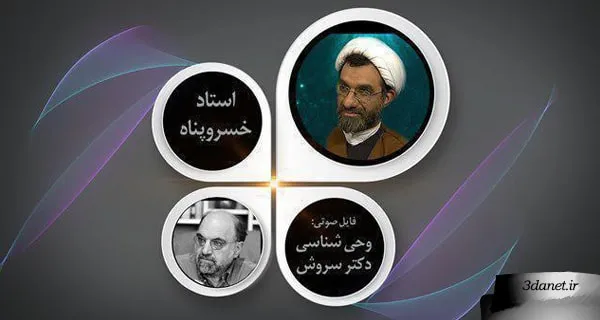
Lectures on Selections from and Commentary on Al-Ghazali's Alchemy of Happiness by Abdolkarim Soroush
In his selection and commentary on al-Ghazali's The Alchemy of Happiness, Abdolkarim Soroush identifies ethics as the core of his thought, overshadowing jurisprudence. The sessions address the book's structure, self-knowledge, the afterlife, and the pillars of being a Muslim, offering a contemporary reading.
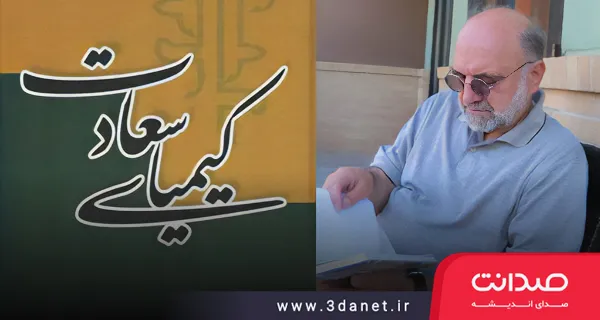
The series of lectures on Selections from and Commentary on Imam Mohammad Ghazali's Alchemy of Happiness by Dr. Abdolkarim Soroush commenced on Saturday, March 2, 2019, corresponding to Sunday, Esfand 12, 1397, at the Islamic and Cultural Center of Northern California.
In the first session, Dr. Soroush spoke in general terms about Imam Mohammad Ghazali, his place in Islamic and Iranian civilization, and his prominent and important works. He noted that despite being one of the most important jurists and scholars of the early centuries of Iran and Islam, his tomb in Iran faces neglect, and he has not been treated as befits this renowned jurist, theologian, and religious scholar; not even a significant seminar or conference has been held about him.
According to Abdolkarim Soroush, Ghazali was the first person to critique jurisprudence, calling it a worldly science useful for worldly affairs, and asserting that for Muslims to cultivate their afterlife, they must turn to ethics and be content with a minimum of jurisprudence. His book Ihya' 'Ulum al-Din, a selection of which was rewritten by Ghazali himself in the form of Alchemy of Happiness, is in reality Ghazali's predominantly ethical and less jurisprudential rulings and instructions in advice to Muslims.
Dr. Abdolkarim Soroush says that what became robust in Ghazali was ethics, and what became lean was jurisprudence.
Although the text of Alchemy of Happiness is a summary of Ihya' 'Ulum al-Din, it is essentially a new book that Ghazali wrote anew for Persian speakers, and from this perspective, it is among the important, authoritative, and prominent sources in the field of Persian language of the fourth and fifth centuries AH.
.
.
First Session
Download the audio of this session
March 2, 2020
On Ghazali, his thought and views
At the end of this meeting, he mentioned the book Mahajjat al-Bayda' by Mulla Mohsen Fayz Kashani, which is a rewriting of 75 percent of the book Ihya' 'Ulum al-Din, and said that both Ghazali and Fayz Kashani were among the few jurists who did not consider music forbidden.
.
.
Second Session
Download the audio of this session
In the second meeting of the series of lectures on Selections from and Commentary on Alchemy of Happiness, Dr. Soroush is still in the introductory phase of the discussion. In the previous session, he discussed Ghazali's world and era, his relationship with the politics of the time, religious sects, his role in promoting religious thought, and his opposition to philosophy and theology. In this session, he spoke of the more than 100 books that Ghazali authored in his not-so-long life (55 years), as well as his immense role in Islamic civilization and the promotion of topics related to Islamic ethics. The main focus of Mr. Soroush's discussion in this session was Ghazali's moral philosophy. According to Mr. Soroush, moral philosophy discusses the reasons for moral vices and virtues, the reasons for lying and truth-telling, and other ethical topics. And from this perspective, he approached Ghazali's ethical views and discussed them. Mr. Soroush also emphasized and spoke about the role of Ghazali and the book Alchemy of Happiness, along with other books such as Ferdowsi's Shahnameh and Beyhaqi's History, in the spread of the Persian language in the early centuries. In the Q&A section, some questions related to the discussed topic were also raised and discussed.
.
.
Third Session
Download the audio of this session
June 1, 2019 On Ghazali, his thought and views
In the third session of the commentary on Imam Mohammad Ghazali's Alchemy of Happiness, Dr. Abdolkarim Soroush read Ghazali's introduction to the book Alchemy of Happiness. He explained that the book Alchemy of Happiness is a rewriting and abridgment of the book The Revival of the Religious Sciences. For a better and more precise understanding of the generalities and details of this work, you can refer to Dr. Soroush's lengthy article in his recent book, Lords of Wisdom-2, where he has devoted a substantial chapter to this subject.
.
.
Session Four
Download the audio of this session
13 July 2019
In the fourth session of the series of lectures on Selections from and Commentary on Imam Mohammad Ghazali's Alchemy of Happiness, Dr. Soroush addresses Ghazali's categorizations in this book, and in fact provides a brief overview of the table of contents and the arrangement of chapters, titles, and principles. In this session, Mr. Soroush states that the aim of selecting from and commenting on this book is to summarize it and, in a way, to provide a contemporary narrative of it. Based on Ghazali's categorization and Dr. Soroush's remarks in this session, the book is divided into four pillars: Acts of Worship, Transactions, Destructive Vices (moral vices) and the pillar of Saving Virtues (moral virtues)
.
.
Session Five
Download the audio of this session
3 August 2019
In the fifth session of the commentary on the Alchemy of Happiness, Dr. Abdolkarim Soroush selects and comments on the main title, which is called "On Knowing One's Own Self," itself based on 18 chapters, of which up to chapter eleven were explained and examined in the previous session. In this session on the main title, Mr. Soroush addresses chapters thirteen and 14 of this main title. Chapter thirteen, "The Nobility of the Heart in Terms of Power," and chapter fourteen were also discussed and examined in this session. The title of chapter 14 is "The Truth of Prophethood and Sainthood," which was explained and examined in detail.
.
.
Session Six
Download the audio of this session
7 September 2019
.
.
Session Seven
Download the audio of this session
5 October 2019
.
.
Session Eight
Download the audio of this session
2 November 2019
.
.
Session Nine
Download the audio of this session
7 December 2019
.
.
Session Ten
Download the audio of this session
4 January 2020
.
.
Session Eleven
Download the audio of this session
15 March 2020
The Fourth Title: On the Knowledge of the Hereafter (Chapters Two, Five, and Six)
The eleventh session of Dr. Soroush's selection from and commentary on Imam Mohammad Ghazali's Alchemy of Happiness coincided with the onset of the coronavirus epidemic, and at the beginning of the session, he provides an explanation about this virus and the difficult conditions it has created for humanity. The commentary then continues with the fourth title of the book Alchemy of Happiness, named "On the Knowledge of the Hereafter," which is selected, commented upon, and critiqued. In this heading or title, chapters two, five, and six are commented upon and critiqued.
.
.
Session Twelve
Download the audio of this session
4 April 2020
The Fourth Title: On the Knowledge of the Hereafter (Chapters Eight, Twelve, and Fifteen)
In the 12th session of the lecture series on selections from and commentary on Imam Mohammad Ghazali's Alchemy of Happiness, Dr. Abdolkarim Soroush discusses chapters 8 (The Reality and Degrees of the Torment of the Grave) through to the end of the title "On the Knowledge of the World."
.
.
Session Thirteen
Download the audio of this session
2 May 2020
The Book of the Pillars of Muslim Life (The Second Principle: On Seeking Knowledge, and the Sixth Principle: On Fasting)
In the thirteenth session of the lecture series on selections from and commentary on Imam Mohammad Ghazali's Alchemy of Happiness, the topic or book of the Pillars of Muslim Life is discussed and examined. The first part of this session is dedicated to the second principle of the first pillar, which is called Acts of Worship, whose title is On Seeking Knowledge, where a detailed discussion of Ghazali's view on the status of knowledge and the scholar is presented. The second part of this lecture is dedicated to the subject of fasting, in which the conditions of the fasting person are discussed and examined.
.
.
Session Fourteen
Download the audio of this session
6 June 2020
The Book of the Pillars of Muslim Life (The Eighth Principle: On Reciting the Quran; Inner Etiquettes)
In the fourteenth session, Dr. Soroush remains within the pillar of Acts of Worship and this time addresses the recitation of the Quran and its manner from the perspective of Imam Mohammad Ghazali in the book Alchemy of Happiness. In this part, he discussed the etiquettes of Quran recitation, focusing on the inner aspect of reciting the Quran, and the six etiquettes of recitation that cause the inner purification of the reciter, audience, or reader. In the course of this, Mr. Soroush also engaged in discussions about his views in the book The Prophetic Dream, and at the end, he also addressed some questions about the book and his own views, as well as a question about the views of Dr. Mohammad Mojtahed Shabestari.
.
.
Session Fifteen
Download the audio of this session
4 July 2020
The Book of the Pillars of Muslim Life (The Ninth Principle: On the Remembrance of God Almighty)
In the fifteenth session of the lectures on Selections from and Commentary on Imam Mohammad Ghazali's Alchemy of Happiness, Dr. Soroush addresses the ninth principle under the heading of Acts of Worship, which is on the Remembrance of God Almighty. On this occasion, after providing a brief overview of remembrance and its conditions, he also delves into the truth of remembrance and expounds upon it. He explains the degrees of the truth of remembrance and also states that the very essence of all acts of worship is remembrance, and true remembrance is that which comes forth at the time of command and prohibition, remembering God, and desisting at the time of sin, and fulfilling at the time of decree.
.
.
Session Sixteen
Download the audio of this session
1 August 2020
On the Etiquette of Marriage (Part One)
The sixteenth session of Selections from and Commentary on Imam Mohammad Ghazali's Alchemy of Happiness addresses a section and heading of the second pillar, named the Pillar of Transactions, and the first chapter on the benefits and harms of marriage. In this discourse, Dr. Soroush, while elaborating on the view of women from 900 years ago (Ghazali's era) and providing a precise description of the Sharia-based perspective on women's activities, compares it with the contemporary period. This is the first session of examining, commenting on, and critiquing the etiquette of marriage and matrimony, in which Mr. Soroush critiques and examines up to the end of the threefold harms of the gaze.
.
.
Session Seventeen
Download the audio of this session
5 September 2020
On the Etiquette of Marriage (Part Two)
In the seventeenth session, which is the second and concluding part on the etiquette of marriage, Dr. Soroush first engaged in a general discussion about the book Alchemy of Happiness and also The Revival of the Religious Sciences, stating that some topics in the book, such as the etiquette of marriage, naturally face much criticism in this day and age because they fall under the category of life issues and their etiquettes. He then addressed the second and third chapters, as well as the etiquettes and the husband's rights over the wife.
.
.
Session Eighteen
Download the audio of this session
3 October 2020
On the Etiquette of Earning and Trade
In the eighteenth session of the lectures on Selections from and Commentary on Imam Mohammad Ghazali's Alchemy of Happiness, Dr. Abdolkarim Soroush has turned to another chapter and heading of this religious-philosophical book, a chapter that is much discussed in contemporary relations as well, the chapter named the Etiquette of Earning and Trade.
.
.
Session Nineteen
Download the audio of this session
7 November 2020
On Knowing the Lawful, the Unlawful, and the Dubious
(A Glance at Ghazali's Political Thought)
In the nineteenth session of Dr. Abdolkarim Soroush's lecture series on selections from and commentary on Imam Mohammad al-Ghazali's Alchemy of Happiness, he delivered a relatively lengthy introduction (over 50 minutes) on the importance of this chapter and also the importance of the chapter on enjoining good and forbidding evil, considering these two chapters as a perspective on Ghazali's political thought. He then addressed the point that, contrary to some scholars who believe Ghazali's political views are compiled in his book Nasihat al-Muluk (Counsel for Kings), he cast doubt on the attribution of the published book (based on the edition by Dr. Jalal al-Din Homa'i), citing the research of Allameh Mohammad Qazvini and other scholars, and stated that it is now almost proven that the aforementioned Nasihat al-Muluk does not belong to Ghazali. He also referred to the views of two individuals whom he labeled as "paradoxical thinkers," saying that they probably had not read Ghazali's main book (Ihya' 'Ulum al-Din) or even its translation and abridgment (Alchemy of Happiness), especially the two important chapters mentioned, and that one of them had used the epithet "rustic" and the other "deceiver" for this great man. Whereas if Ghazali had sought deception, he would not have turned his back on all the resources available to him and chosen a corner of seclusion to author and compose such works. In Dr. Soroush's view, Ghazali, in that era and especially by raising the following topics, was practically able to pay close attention to the relations between people and the social issues of that time. After this long introduction, Dr. Soroush read parts of the chapter on the etiquette of the lawful and unlawful for the attendees and answered the audience's questions.
.
.
Session Twenty
Download the audio of this session
5 December 2020
On Knowing the Lawful, the Unlawful, and the Ambiguous (2)
(A Perspective on Ghazali's Political Thought)
If the audience and followers of Dr. Abdolkarim Soroush's lecture series on selections from, commentary on, and critique of Imam Mohammad al-Ghazali's Alchemy of Happiness recall, in the nineteenth session Mr. Soroush selected and analyzed the topic "Knowing the Lawful, the Unlawful, and the Ambiguous" from the ethical-philosophical book Alchemy of Happiness (pages 366 to 389 - first volume), edited by Hossein Khadiv Jam, and examined it from the perspective of a meticulous analyst, scrutinizing contemporary critiques and the author's historical beliefs. That discussion, however, remained unfinished and will be continued in this session.
In the introduction to the discussion, before starting and continuing the topic from the previous session, Mr. Soroush addressed two events that occurred in Iran: first, the assassination of a nuclear scientist and criticism of the breaches that must exist in Iran's security system, which he believes results from poor management and the promotion of, in his view, light-minded individuals, placing them in charge of important affairs and tasks; and second, in memory of Dr. Mohammad Maleki, an activist from before and after the revolution. Subsequently, Mr. Soroush proceeded to the second part of his discourse on Ghazali's political thought, considering the discussion of the lawful and unlawful and based on the book Alchemy of Happiness, as well as the original discussion of this topic in the book Ihya' 'Ulum al-Din, which is seven times longer than its discussion in Alchemy of Happiness.
Session 20 is a continuation of the sessions related to the discussion of the lawful and unlawful, in which Dr. Abdolkarim Soroush has pointed to the degrees of scrupulousness (wara'). From Ghazali's perspective, these degrees are five, which Ghazali presents in the second chapter of the book on the ambiguity of the lawful and unlawful. Ghazali states at the beginning of the book: Know that the lawful and unlawful have degrees, and they are not all of one kind. Some are lawful, some are pure lawful, and some are purer. And likewise, among the unlawful, some are more severe and more impure. Just as for a patient whose illness is harmed by heat, the hotter something is, the greater its harm; and heat has degrees—for honey is not like sugar; and the unlawful is thus: The degrees of scrupulousness are: the scrupulousness of the just, the scrupulousness of the righteous, the scrupulousness of the pious, and the fourth degree is the scrupulousness of the truthful (siddiqun), and the fifth degree is the scrupulousness of those brought near (muqarrabun), which they will analyze and examine at the end of this section, quoting from Mr. Soroush's book. He also discussed and critiqued a part of the third chapter on separating the lawful from the unlawful and investigating it.
.
.
Session Twenty-One
Download the audio of this session
6 February 2021
On Knowing the Lawful, the Unlawful, and the Ambiguous (3) (A Glance at Al-Ghazali's Political Thought)
.
.
Session Twenty-Two
Download the audio of this session
6 March 2021
On Fulfilling the Rights of Companionship with People
In the twenty-second session of selections from and commentary on Imam Mohammad Al-Ghazali's Alchemy of Happiness, Dr. Soroush turned to the fifth principle of this philosophical, ethical, and didactic book. Al-Ghazali dedicated this principle to fulfilling the rights of companionship with people and observing the rights of kin, neighbors, and servants, and observing the rights of friends, and the rights of dervishes and brothers for God's sake. In this principle, which itself is divided into three chapters and is, in Dr. Soroush's view, one of Al-Ghazali's best discussions in this book, the first chapter concerns friendship and brotherhood for God; the second chapter, on the rights of friends; and the third chapter, on the rights of Muslims, blood relations and kin, servants, and so forth, where captivating discourses and analyses are presented.
.
.
Session Twenty-Three
Download the audio of this session
10 April 2021
.
.
Session Twenty-Four
Download the audio of this session
1 May 2021
.
.
Session Twenty-Five
Download the audio of this session
5 June 2021
.
.
Session Twenty-Six
Download the audio of this session
10 July 2021
.
.
Session Twenty-Seven
Download the audio of this session
7 August 2021
.
.
Session Twenty-Eight
Download the audio of this session
.
.
Session Twenty-Nine
Download the audio of this session
4 September 2021
.
.
Session Thirty
Download the audio of this session
4 December 2021
.
.
Session Thirty-One
Download the audio for this session
8 June 2022
.
.
To be continued...
.
.


Discussion0 comments
No comments yet; let yours be the first voice.