Philosophy
Mahmoud Morvarid on “Decision Theory and the Principles of Jurisprudence”
A lecture by Mahmoud Morvarid on the intersection of late usul al-fiqh and analytic philosophy, explicating decision theory and its application to questions of authoritativeness and rationality; a critique of three doctrines: the atomistic view, the sufficiency of generic probability, and the subjectivist orientation prevalent in the field.


Mahmoud Morvarid
SpeakerDr. Mahmoud Morvarid, a faculty member of the Analytic Philosophy Research Group at the Institute for Research in Fundamental Sciences (IPM), examined the shared domains of the principles of jurisprudence (uṣūl al-fiqh) and analytic philosophy at the second educational-research workshop on the Philosophy of the Science of Uṣūl, recently held by the Applied Jurisprudence Department of the Research Institute for Civilizational Islam and the Akhund Khorasani Specialized Center at the Islamic Propagation Office of Khorasan Razavi. The text of the PowerPoint follows.
Dr. Morvarid began by referring to the relationship between the two scientific fields of uṣūl al-fiqh and analytic philosophy, stating: We must first take a brief look at the structure of the discussion of authoritativeness (ḥujjiyya) and rationality, and then, by explaining decision theory, address the applications of this theory in discussions of authoritativeness.
To explain the subject, I will present my discussion in the following four sections:
Section One: A brief look at the structure of the discussion of authoritativeness in later uṣūl al-fiqh
Section Two: The relationship between the concept of "authoritativeness" and "rationality"
Section Three: A look at decision theory
Section Four: The application of decision theory in discussions of authoritativeness and some of its results.
Dr. Morvarid then proceeded to explain his discussion in the aforementioned sections. A summary of his remarks follows below.
A Brief Look at the Structure of the Discussion of Authoritativeness in Later Uṣūl al-Fiqh
If a person attains certainty (qaṭʿ) regarding a religious ruling, their certainty is authoritative (ḥujja). When authoritativeness is attributed to certainty, what is meant by it? Martyr al-Ṣadr enumerates three meanings for authoritativeness:
a- Logical authoritativeness (the epistemological concept of authoritativeness).
b- Ontological authoritativeness (the functional-psychological concept of authoritativeness).
c- Excusing and inculpating (the normative concept of authoritativeness).
In the words of Martyr al-Ṣadr, in the third usage (excusing and inculpating), the issue is whether, in the relationship between master and servant, certainty is inculpating (munajjiz) and excusing (muʿadhdhir) in the context of compliance or not.
An important question arises here: Is there a normative concept of authoritativeness that applies in a domain broader than the master-servant relationship?
When we consider the concept of authoritativeness in the domain of the relationship between the Lawgiver and human beings, what is meant by "certainty being inculpating"?
(1) If the Lawgiver has made "A" obligatory and Zayd has certainty of this obligation, then Zayd is deserving of blame if he omits "A".
(2) If the Lawgiver has made "A" obligatory and Zayd has certainty of this obligation, then performing "A" has a (actual) rational obligation for Zayd.
Sometimes, predicates of this form are used in the consequent: "Omitting 'A' is (actually) ugly (qabīḥ)", "The Lawgiver has a right to obedience over Zayd", "Omitting 'A' is an injustice to the Lawgiver", "Zayd is deserving of punishment from God", "It is not ugly for God to punish Zayd"
When we consider the concept of authoritativeness in the domain of the relationship between the Lawgiver and human beings, what is meant by "certainty being excusing"?
(1) If Zayd has certainty that the Lawgiver has not made "A" obligatory, then Zayd is not deserving of blame if he omits "A".
(2) If Zayd has certainty that the Lawgiver has not made "A" obligatory, then performing "A" does not have a (actual) rational obligation for Zayd.
In the doctrine of the essential rational exemption (aṣālat al-barāʾa al-ʿaqliyya), we say: If Zayd does not have certainty that "A" is obligatory, and no binding apparent ruling has been communicated from the Lawgiver, then in the event of omitting "A", Zayd is not deserving of blame.
Likewise, in the doctrine of the essential rational precaution (aṣālat al-iḥtiyāṭ al-ʿaqliyya), we say: If Zayd does not have certainty that "A" is obligatory, and no exempting apparent ruling has been communicated from the Lawgiver, then in the event of omitting "A", Zayd is deserving of blame.
Unlike certainty, supposition (ẓann) is not authoritative in itself, and only acquires authoritativeness through the Lawgiver's stipulation.
The Lawgiver has established authoritativeness for a set of indications: solitary report (khabar al-wāḥid), apparent meaning (ẓuhūr) (the verbal principles related to apparent meaning: the principle of literal meaning, the principle of generality, the principle of absoluteness), the statement of a lexicographer, the principle of the speaker's intent, the principle that the speaker is in a position to clarify, the principle of absence of semantic transfer, and the principle of absence of error.
The “prevalent tendency regarding the authoritativeness of indications” accepts the following three doctrines about the authoritativeness of indications:
A- An atomistic view
B- The sufficiency of type-level conjecture (non-stipulation of personal confidence in correspondence, non-stipulation of personal conjecture of correspondence, non-stipulation of the absence of actual personal conjecture to the contrary)
C- Having subject-specificity
A- The atomistic view
The aforementioned indications are independent of one another, and whenever the conditions for authoritativeness are met for each one, the purport of that indication can be used (without any restriction) in the premises of a syllogism whose other premises have also been established through certainty or other authoritative indications, and the result is a legal ruling.
B- The sufficiency of type-level conjecture
It is usually said that personal confidence in correspondence, personal conjecture of correspondence, and also the absence of personal conjecture to the contrary are not conditions for authoritativeness; rather, type-level conjecture is sufficient.
The distinction between type-level conjecture and personal conjecture can be applied from two completely different aspects:
– In this distinction, the focus is sometimes on the individual human being, in which case the question is whether the indication in question gives rise to conjecture for the type of human beings, or whether it is conjecture-producing for this specific individual? An indication may be conjecture-producing for the type and not for the individual, because that individual is slow to believe or suffers from obsessive thoughts (the reverse is also possible).
– But sometimes the distinction between type-level and personal conjecture is raised from the aspect of the indication itself. In this case, the question is whether the type of this indication (e.g., the type of the imperative form, or the type of a trustworthy person's report) leads to the attainment of conjecture, or is the specific instance of this indication conjecture-producing? Here too, sometimes the type of an indication is conjecture-producing, but its specific instance is not.
Given that the type/personal dichotomy can be applied from two different aspects, four possible views can be proposed in total:
1) The condition for the authoritativeness of an indication for Zayd is that the specific instance of that indication be conjecture-producing for the specific individual Zayd (stipulation of personal-personal conjecture).
2) The condition for the authoritativeness of an indication for Zayd is that the specific instance of that indication be conjecture-producing for the type of human beings (stipulation of personal-type conjecture).
3) The condition for the authoritativeness of an indication for Zayd is that the type of that indication be conjecture-producing for the specific individual Zayd (stipulation of type-personal conjecture).
4) The condition for the authoritativeness of an indication for Zayd is that the type of that indication be conjecture-producing for the type of human beings (stipulation of type-type conjecture).
Almost all scholars of legal theory explicitly or implicitly reject the first and third options. Thus, the main competition is between the second and fourth options. A group of legal theorists also rejects the second option and accepts the fourth option instead.
What is meant by the doctrine of “the sufficiency of type-level conjecture” here is the rejection of options one through three, and the acceptance of the fourth option.
C- Having subject-specificity
Each of the aforementioned indications has subject-specificity for authoritativeness, meaning that if something gives rise to conjecture to the same degree as a solitary report (for example), there is no necessity that this thing also be authoritative. In other words, the fact that the conjecture was obtained through a solitary report and not through another path is significant for the validity of that conjecture.
– Most legal theorists accept A and C, and many of them also accept B.
– We will refer to a view that fully accepts all three doctrines regarding all indications (or the primary indications) as the “prevalent view or tendency” (the view I will defend rejects all three).
– In principle, it is possible for someone to accept A but reject B and C, or one of the two.
– Acceptance (and likewise rejection) of each of (a), (b), and (c) is a matter of degree; meaning that someone may accept (a) for one class of indications and reject it for another. The same applies to (b) and (c). (Regarding characteristic (b), the variety is greater; because someone who rejects (b) has several options before them: requiring personal-typical confidence, requiring personal-typical supposition [ẓann], requiring the absence of personal-typical supposition to the contrary.)
– For the sake of simplicity, we will focus our discussion on the two ends of the spectrum; that is, the prevailing view (which accepts (a), (b), and (c) for all the aforementioned indications) and the chosen theory (which rejects all three).
Some Implications of the Prevailing View
1) This view greatly increases the instances of establishing proof by means of the transmitted method (due to characteristics (a) and (b)).
2) On the other hand, this view creates numerous obstacles to using the achievements of the non-transmitted method.
3) This view leads to the dominance of the transmitted method over the non-transmitted method in cases of conflict.
Part Two: The Relationship between the Concept of “Authoritativeness [Ḥujjiyya]” and “Rationality”
Shahīd Ṣadr enumerates three meanings:
a- Logical authoritativeness (the epistemological concept of authoritativeness).
b- Ontological authoritativeness (the functional-psychological concept of authoritativeness).
c- Excusing and inculpating [ta‘dhīr wa tanjīz] (the normative concept of authoritativeness).
In the words of Shahīd Ṣadr, in the third usage, the question is whether, in the relations between master and servant, certainty [qaṭ‘] is inculpating and excusing in the position of compliance or not?
An Important Question: Is there a normative concept of authoritativeness that applies in a domain broader than the relations between a superior and a subordinate?
– In the domain of moral affairs
– In the domain beyond moral affairs
Authoritativeness (in the Normative Sense) in the Domain of Ethics
– If Zayd has certainty that performing act A is morally obligatory, then if he omits A, he is deserving of blame.
– If Zayd has certainty that performing act A is morally obligatory, then performing A has (actual) rational necessity for Zayd.
– Other discussions of authoritativeness also apply correspondingly in the domain of ethics.
– Authoritativeness in the specific jurisprudential sense (authoritativeness in religious matters) is a particular case of authoritativeness in moral matters; because obeying God is itself one of the moral obligations (from the standpoint of the obligation to thank the Benefactor, or the obligation to thank the Creator, and the like).
Authoritativeness (in the Normative Sense) in the Domain Beyond Ethics
– The concept of “rationality” used here is “relative practical rationality.” This means it expresses the rationality of an action, not absolutely, but relative to a goal that the person has adopted. This concept can also be called “method-oriented rationality” (as opposed to “goal-oriented rationality”).
– This concept of authoritativeness does not only apply to the attainment of certainty; it is also raised in relation to other states.
– This concept of authoritativeness can be called “authoritativeness as method-oriented practical rationality.”
– Authoritativeness in the specific jurisprudential sense (authoritativeness in religious matters) is a particular case of authoritativeness in moral matters; because obeying God is itself one of the moral obligations (from the standpoint of the obligation to thank the Benefactor, or the obligation to thank the Creator, and the like).
– Assuming that Zayd’s goal is to perform act A (for example, quenching thirst), if Zayd has certainty that performing act B (for example, drinking the contents of the glass) realizes A or is an instance of act A, then it is rational for Zayd to perform act B.
– We have seen that authoritativeness in the normative sense is used in three domains:
1) In the domain of relations between master and servant (or superior and subordinate).
2) In the domain of moral affairs.
3) In the domain beyond moral affairs.
What is the relationship between the concept of authoritativeness (hujjiyyat) in these three domains?
– In the first two domains, authoritativeness has the same meaning, which comes back to deserving blame or actual rational obligation (on the side of incrimination) and not deserving blame or the absence of actual rational obligation (on the side of exculpation). But in the third domain, authoritativeness comes back to practical rationality concerning method.
– It seems there is a close connection between authoritativeness as deserving blame and authoritativeness as practical rationality. This connection can be expressed as follows:
– If, firstly, assuming goal A, performing action B is rational, and secondly, bringing about A is morally obligatory, then in the case of abandoning B, the person deserves blame (and also, performing B has an actual rational obligation).
Part Three: A Look at Decision Theory
In a preliminary division, rationality has two parts: theoretical or epistemological rationality, and practical rationality. Practical rationality itself is divided into two parts: practical rationality concerning ends and practical rationality concerning means.
Practical rationality concerning ends is examined in moral philosophy and the like. Here, the issue is what fundamental values are, and in other words, what ends rationality requires adopting.
The main problem in practical rationality concerning means can be expressed as follows: Every rational human being has ends and desires (with varying degrees of importance) (for now, we disregard whether these ends themselves are reasonable or legitimate. That pertains to practical rationality concerning ends). When a person does not know exactly what actions will lead them to their ends, and is in a probabilistic space, what actions are rational to perform in order to achieve those ends? ('Rationality' here is relative reasonableness; that is, reasonableness relative to the specific end that has been chosen).
This main problem can be pursued in discussions such as decision theory, probability theory, and also discussions related to rationality. As mentioned, the said problem is completely general; meaning that it can be raised regarding any end. The answers to the problem are also general, and indicate general aspects of human rationality.
If adopting a specific end itself has a moral obligation, then the action that is rational considering the adoption of that end also acquires an actual rational obligation, meaning the person is worthy of blame for abandoning that action.
In decision theory, it is usually said that two categories of factors are involved in the relative reasonableness of an action (like A): the degree of importance of the outcomes that may result from performing the action, and the degree of probability that exists for the occurrence of each outcome by performing A. According to some theories, a third factor under the title of risk aversion is also involved in determining the rationality of a behavior.
In simpler forms of decision theory, to measure which behavior is more reasonable, the "expected utility" of each behavior is calculated. The expected utility of each behavior is a function of the probabilities that the person assigns to the possible outcomes of that behavior, and also the degree of importance of those probable outcomes.
An example: Zayd can perform action A or abandon it. If he performs A, with a 30% probability he gains a utility equivalent to 10,000 Tomans, but with a 70% probability he loses 4,000 Tomans. But if he abandons A, he neither gains nor loses. In this case, is the rational action to perform A or to abandon it?
Expected utility of action A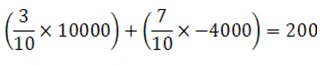
Expected utility of abandoning A zero (0)
Therefore, if the goal is merely to obtain more money, performing A is more reasonable than abandoning A, and if there are no other considerations involved, it is rational and necessary (in the relative sense of the word) to perform A.
Applying Decision Theory to the Discussion of Authoritativeness (Hujjiyyah)
Our goal is to fulfill the purposes of the Lawgiver, or to secure His desired outcomes (or something of this nature). The obligatoriness of this goal (in the absolute sense of obligation, not its relative sense) is established through the principle of the necessity of gratitude towards the Benefactor in theological and ethical discussions. However, we do not know precisely which actions will lead us to that goal, partly because we do not know exactly what the Lawgiver's purposes or commands are. The question, then, is this: under these circumstances and given the aforementioned goal, which action is rational to perform?
Suppose that, with respect to the aforementioned goal, performing action A is rational (in the relative sense). Since the goal itself carries a non-relative moral obligation, performing that action will possess a non-relative obligatoriness; that is, a person will be deserving of blame for omitting it. And this is the normative concept of authoritativeness (Hujjiyyah) that is of concern to scholars of legal theory (Uṣūlīs).
Consider this relatively general scenario: I want to determine whether or not to perform action A. Suppose that to a degree α, I deem it probable that there is an expediency (maṣlaḥah) with a degree of importance s in performing action A. Also, to a degree β, I deem it probable that performing A entails a harm (mafsadah) of magnitude t. On the other hand, suppose we know that no separate expediency or harm lies in omitting A.
The aforementioned scenario is relatively general. A more specific case is where, for example, β is zero; that is, cases where there is only a doubt concerning the obligatoriness of the act. Similarly, in cases where there is only a doubt concerning its prohibition, α will be zero.
Now, the expected value of performing and omitting A can be calculated in two ways. The first method, however, is incorrect and is only presented as a preliminary.
The First Method:
Given that harm is, in reality, a negative value, the expected value of performing A equals: 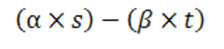
On the other hand, since it is assumed that we know no separate criterion lies in omitting A, the expected value of omitting A will be zero.
1) If 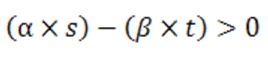 then performing A is obligatory.
2) If 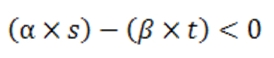 then omitting A is obligatory.
3) If 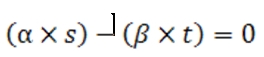 meaning the probability coefficient of the expediency multiplied by its intensity equals the probability coefficient of the harm multiplied by its intensity, then the person is free to choose between performing and omitting A.
The Second Method:
Suppose in the same previous example, the magnitude of the expediency of permission (that is, the expediency of permissibility as a primary ruling) equals m. Now, for performing A to be obligatory, it is not sufficient that the expected value of performing A, i.e., 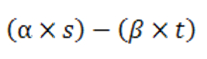
be greater than the expected value of omitting A (i.e., zero); rather, it must also be greater than the expediency of permission (i.e., m).
Similarly, for omitting A to be obligatory, it is not sufficient that the expected value of performing A, i.e., 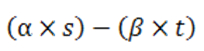
, be less than zero; rather, it is also necessary that the absolute value of this value, i.e., , be greater than the expediency of permission (i.e., m).
4) The intermediate case is where 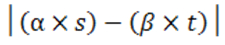 is less than m. In this case, the person is free to choose between performing or omitting a.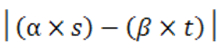
The Rule of Probability in the Probable
1) If 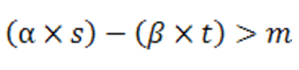 then performing a is obligatory.
2) If  then omitting a is obligatory.
3) In cases other than these two (i.e., when  then neither performing a nor omitting it is obligatory.
– Is the Rule of Probability in the Probable contingent upon the non-arrival of a contrary apparent ruling from the Lawgiver or not? And if it is contingent, has such an apparent ruling arrived?
Traces of the Rule of Probability in the Probable in the Opinions of Legal Theorists
Traces of the Rule of Probability in the Probable in the opinions of legal theorists can be enumerated as follows:
First Example: To simplify the discussion, suppose that regarding act a, there is only a probability of obligation to the degree ?, and the probability of its prohibition is zero. In this case, according to the Rule of Probability in the Probable, performing a is obligatory only if we have: 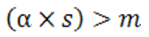
That is: Thus, the probability of the obligation of a becomes actualized only if it exceeds a certain threshold.
Many legal theorists have also, in various ways, considered the strength of probability as a condition for the authoritativeness of indications (the condition of the absence of personal suspicion to the contrary, the condition of personal suspicion of conformity, the condition of confidence or trust in conformity). All these views, like the Rule of Probability in the Probable, emphasize the point that for a duty to become actualized, the probability of the duty must exceed a certain threshold (the threshold of actualization).
According to the rule, the threshold of actualization depends on the strength of the probable and its relation to the expediency of permissibility. However, the aforementioned legal-theoretical views—at least in the apparent meaning of some statements—have considered this threshold to be independent of the strength of the probable. It seems that the truth in this matter lies with the Rule of Probability in the Probable. As we will see later, legal theorists themselves have, in some instances, considered the threshold of actualization to be dependent on the strength of the probability.
Second Example: To simplify the discussion, suppose that regarding act a, there is only a probability of obligation to the degree ?, and the probability of its prohibition is zero. In this case, according to the Rule of Probability in the Probable, performing a is obligatory only if we have: 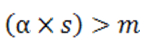
Now, if the degree of importance of the probable expediency, i.e., s, is very high, performing a becomes obligatory even with a low ?. The legal-theoretical equivalent of this point is the rule of the necessity of precaution in important matters (lives, honor, and property). Even if there is a relatively weak probability that act a will save a human life, performing it is obligatory.
This established understanding of legal theorists can be refined and expanded: The importance of the probable is not limited to the three cases of lives, honor, and property. Every duty has a degree of importance (although the three mentioned cases have the highest degrees). The higher the degree of importance of the probable, the lower the probability required for the duty to become actualized; and conversely, the lower the degree of importance of the probable, the higher the probability required. That is, the threshold of actualization depends on the strength of the probable, and this is precisely what the Rule of Probability in the Probable states.
Third example: Some scholars of legal theory have also applied the rule of the necessity of precaution in important matters in another way. According to them, punishments (ḥudūd) involving execution or bodily harm cannot be established through a solitary report (khabar al-wāḥid). This is because if the solitary report does not correspond to reality, a great harm would arise, and rational people do not consider a solitary report as authoritative in such cases. The rule of probability in the probable (iḥtimāl dar muḥtamal) yields precisely this conclusion.
Here too, the implicit understanding of the scholars of legal theory can be generalized: Firstly, the aforementioned point is not specific to solitary reports, but also includes apparent meanings (ẓawāhir) and other indicators. Therefore, it might be claimed that certain rulings cannot be applied even by relying on the unrestricted implications (iṭlāq) of Quranic verses. Secondly, importance is not confined to the matter of lives. Every probable criterion (mālak) possesses a degree of importance, and the greater the harm arising from performing an act in the event that the indicator is erroneous, the higher the threshold for that act's inculpation (tanajjuz), exactly as stated in the rule of probability in the probable.
.






Discussion0 comments
No comments yet; let yours be the first voice.