Philosophy
Mahmoud Morvarid's Lecture: 'An Analytical Approach to Islamic Philosophy'
In a conversation with Nim-Faseleh, Mahmoud Morvarid outlined the characteristics of analytic philosophy and described its relationship with Islamic philosophy as one of kinship; despite shared concerns, the more precise linguistic tools of analytic philosophy have enabled deeper analysis.
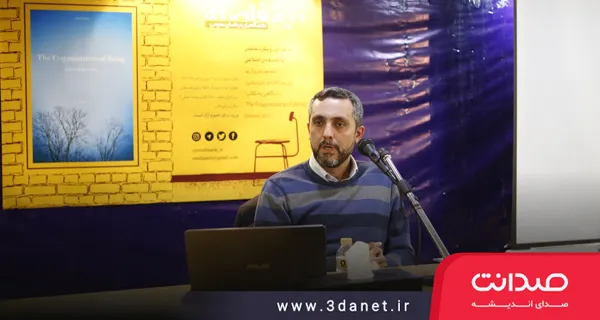
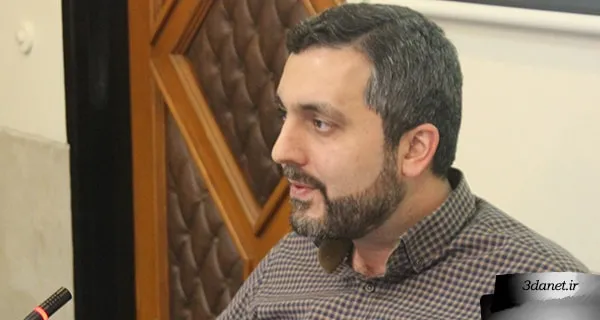
Mahmoud Morvarid
SpeakerThe fourth weekly session of "Half-Space, Academics in the Public Sphere" on the topic of "An Analytical Approach to Islamic Philosophy," with the presence of Mahmoud Morvarid, a faculty member at the Institute for Research in Fundamental Sciences, was held by the Book House Institute on Wednesday, January 1st.
Mahmoud Morvarid began his talk at the start of this session by posing the question of what analytical philosophy fundamentally means and what its differences and similarities are with other philosophies, and said: One can list 10 characteristics for analytical philosophy, and usually the theories and individuals that fall under analytical philosophy possess several of these characteristics.
He stated: The first characteristic is that in analytical philosophy, when encountering a major philosophical problem, analytical philosophers break it down into smaller, more detailed problems and try to resolve these problems, ultimately aiming to obtain a picture of the major problem. Secondly, in any discussion they enter, considering the words and concepts involved in that problem, they try as much as possible to express the meaning precisely and clearly.
The Growth of Analytical Philosophy with the Help of LogicsThe faculty member at the Institute for Research in Fundamental Sciences stated: Another characteristic is that in every philosophical discussion, we encounter several categories of propositions, and there are arguments that separate these categories from each other. Sometimes, to continue this path appropriately, numbering is used, and to allow arguments to proceed indefinitely, logical tools are employed. Therefore, analytical philosophy and logical results were, in a sense, born together, and throughout the expansion of analytical philosophy, classical logics and non-classical logics grew; meaning that logics help the growth of analytical philosophy and vice versa.
He added: The sixth component is that in the speech of technical philosophers, there is less engagement in generalities. Of course, being vague does not contradict being technical; most analytical philosophers try to speak precisely rather than focusing on verbal embellishments. Another characteristic we observe in the method of analytical specialization is respect for common sense understanding. Analytical philosophers accept intuition as an important piece of evidence in their specialization, but the way analytical philosophers perceive intuition compared to the perception Muslim philosophers have of self-evidence is that Muslim philosophers usually consider self-evidence as an infallible piece of evidence, whereas analytical philosophers consider intuition a fallible proposition.
Diminishing the Pitfalls of Detailing Through Interdisciplinary StudiesMorvarid identified the eighth characteristic of analytical philosophy as detailing and said: Analytical philosophy deals less with a comprehensive philosophical system, although some analytical philosophers seem to have done various works towards the end of their professional lives. The detailing of analytical philosophy may bring some criticisms with it, but it is also unavoidable and a requirement for progress. Of course, there are solutions to reduce the harms; for example, interdisciplinary studies can diminish the pitfalls that detailing entails.
He stated: Another aspect of analytical philosophy is the epistemological aspect, meaning that analytical philosophers do not claim that the result of their work is certain knowledge of reality. And the final component is that analytical philosophers pay great attention to other branches of knowledge of the era, and there is a two-way interaction between analytical philosophy on one hand and mathematics and empirical sciences on the other. Therefore, these 10 items are part of the characteristics of analytical philosophers; most analytical philosophers possess some of these traits, but many of these characteristics are observable in ancient philosophers. Of course, there is a difference in terms of method, for instance, that analytical philosophers pursue precision, analysis, and argumentation with greater depth, and the reason for this is that they have more precise tools like logic at their disposal, but in the essence of the work, they are very similar.
The faculty member of the Institute for Research in Fundamental Sciences stated: The branches of analytic philosophy include philosophy of language, epistemology, ethics, aesthetics, and so on, all of which are branches situated within analytic philosophy. From its birth to the present, analytic philosophy has passed through different periods, and across these periods there are significant differences in both method and subject matter. However, in certain middle periods of analytic philosophy, it can be said that metaphysics and parts of traditional philosophy fell into obscurity. This was due to a view they held about meaningfulness, believing that many traditional problems of philosophy, especially metaphysics, arise from the incorrect use of language. If language is used precisely and correctly, many philosophical problems will dissolve; therefore, the philosopher's work is also more focused on language. From the mid-twentieth century, with the abandonment of these views, metaphysics returned to the scene with force and grew considerably, and at present, metaphysics is considered one of the most flourishing parts of analytic philosophy.
He stated: So analytic philosophy is not a philosophical logic, nor is it a branch of philosophy; rather, it is a general approach. What falls under this approach is the method applied within it, and under this general current, there exist various branches and opposing schools.
Morvarid, pointing to the necessity of knowing the relationship between analytic philosophy, with these characteristics, and Islamic philosophy, stated: The relationship between analytic philosophy and Islamic philosophy is akin to kinship, and this close relationship can be examined from four aspects. The first reason is the historical aspect of the matter; the second aspect is the realist spirit, meaning that in both, the perception is that philosophical problems are more important than the history of philosophy; the third aspect is similarity in method, though despite the similarity in method, there are also differences. For example, regarding self-evidence, religious philosophers have nothing to say about what is self-evident, but analytic philosophers believe that self-evidence is no guarantee of certainty. The fourth similarity that exists is similarity in problems, meaning they discuss similar issues.
He stated that in Islamic philosophy, the philosophical sciences are divided into theoretical wisdom and practical wisdom, adding: Theoretical wisdom is further divided into theology, natural sciences, and mathematics. In terms of content and problems, there is also much common ground between Islamic and analytic philosophy, and yet there are also differences. These very points of commonality are sometimes situated within different networks of concepts and frameworks, to the extent that establishing a dialogue becomes difficult. Ultimately, the theories proposed to solve problems, in terms of their formulation and the answers given to the problems, are very different. It can be claimed that in analytic philosophy, a level of subtlety, complexity, and depth has been reached that we do not observe in Islamic philosophy. The reasons for this are that in analytic philosophy, the analytic techniques—that is, their linguistic tools—are more advanced, and they have a systematic focus on problems.
The faculty member of the Institute for Research in Fundamental Sciences, continuing by introducing a book by Kris McDaniel published in 2017, said: The title of the book is The Fragmentation of Being, and McDaniel specifies that the genre of this book is contemporary analytic metaphysics. That is, he says, I do not want to write the history of philosophy; rather, I am precisely engaged with the most up-to-date problems raised in the field of contemporary analytic philosophy. Sometimes in this book, reference is made to the theories of past philosophers, and the author uses the inspirations and intuitions that ancient philosophers had, wanting to see whether those ideas they proposed can be raised within the framework of contemporary analytic philosophy in such a way that the result is reasonable.
He said: In this book, several old problems of philosophy that are precisely about issues of existence are brought from various philosophers, and he tries to clothe them in the garb of contemporary metaphysics and see what effects they have on other contemporary philosophical discussions.
Morvarid stated: This book tries to relate the concept of degrees of existence to other contemporary philosophical discussions, for example, its relation to the concept of time. This is an interesting method that shows how an old idea can be constrained with new tools.
.
Audio of Mahmoud Morvarid's Lecture
.



Discussion4 comments
آن چه دکتر محمود مروارید بعنوان فلسفه ارائه می کنند قریب ترین نسخه به عقل ، تجربه ، و نگاه دینی است.
آقای مروارید تنها فردی در جامعه فلسفه ایران است اهل فلسفه و تعقل است. تنها کسی که مواضع فلسفی را در معرض بحث و ارزیابی قرار می دهد. این هم از اخلاق آموخته از اسلام است. اخلاق او را با دیگران مقایسه کنیم دیگرانی که جایگاه اجتماعی جلب توجه و اعتبار اجتماعی و دانشگاهی تنها هدف آن ها ست
جالب اینجاست که ایشان حوزوی بودند.
در اینکه ایشون آگاه و با دانش هستن شکی نیست اما تنها فرد نیستند. تجربه من می گوید در اکثر دانشگاهها حداقل یکی دو استاد هستند که بدون پروپاگاندا درس می دهند و مشق می کنند و اقیانوسی از اندیشه هستند