Philosophy
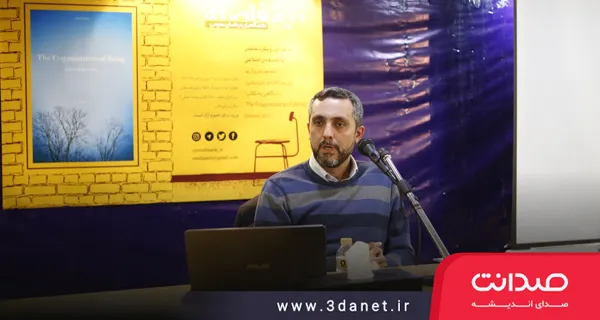
Mahmoud Morvarid's Lecture Series: Topics in the Philosophy of Religion
In his lectures on the philosophy of religion, Dr. Mahmoud Morvarid examines the problem of evil and skeptical theism, critiques the formulations of the Proof of the Sincere by Allameh Tabatabai and Mohaghegh Esfahani, and explores the doctrine of divine simplicity in light of analytic metaphysics.
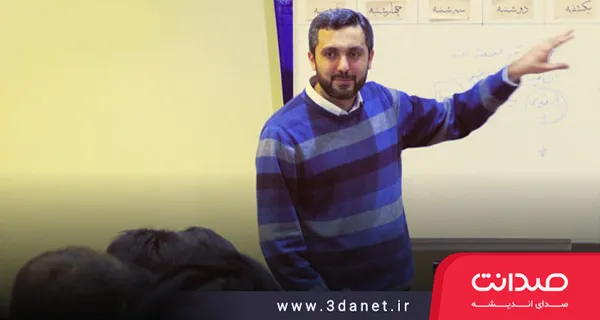
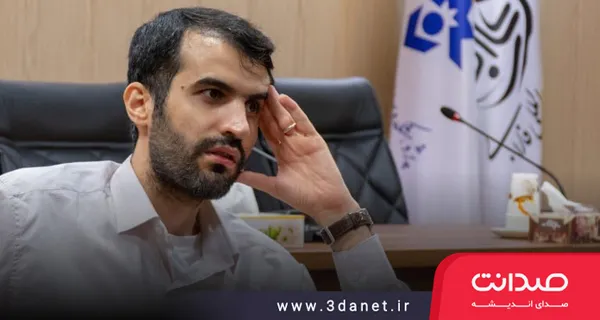
Mahmoud Morvarid
InstructorTopics in the Philosophy of Religion (The Argument of the Righteous, Divine Simplicity and Attributes, and the Problem of Evil)
Dr. Mahmoud Morvarid, Associate Professor at the Institute for Research in Fundamental Sciences (IPM)
Day One: The Problem of Evil and Skeptical Theism
The associate professor at the Institute for Research in Fundamental Sciences, noting that one of the most important and wide-ranging topics in contemporary philosophy of religion is the problem of evil, added: This problem is usually presented as an argument against the existence of the God of the Abrahamic religions.
He pointed out: The core idea of the argument is that if there exists a being in the world who is omniscient, omnipotent, and perfectly benevolent, no evil should exist. For such a being, being omniscient, knows under what conditions what evils will arise; being perfectly benevolent, desires to prevent the occurrence of those evils; and being omnipotent, can actualize that desire. On the other hand, we observe a vast amount of evil every day; therefore, a being who is omniscient, omnipotent, and perfectly benevolent does not exist.
Regarding the various formulations of the argument from evil that have been presented, Dr. Mahmoud Morvarid said: In a general classification, they can be placed into two categories. The first category is the logical argument from evil: in this argument, the claim is that some of the facts we know about evils deductively entail that God does not exist. In other words, the existence of God is logically incompatible with some of the facts we know about evils.
He added: The second category is the probabilistic (or evidential) argument from evil: in this category of formulations, the claim is that some of the facts we know about evils significantly reduce the probability of God's existence and/or justify us in believing that God does not exist (although it does not deductively entail God's non-existence).
Concluding his discussion by stating that skeptical theism is in fact a general approach to responding to evidential arguments, Dr. Mahmoud Morvarid remarked: The core idea of this approach is that the limitations of our cognitive faculties regarding possible goods and the relationships these goods have with the evils of the world prevent us from acquiring justified belief in the premises of evidential arguments. In recent years, this general approach has been formulated in several different ways, some of which will be reported on and examined in this session.
Day Two: The Argument of the Righteous as Formulated by Muhaqqiq Isfahani and Allameh Tabatabai
In the tradition of Islamic philosophy, a group of arguments for the existence of God have been called the "Argument of the Righteous" (Burhan al-Siddiqin). The idea underlying this type of argument is that the existence of God is proven not with the help of His acts and creatures, but through consideration of and reflection upon existence itself and its properties.
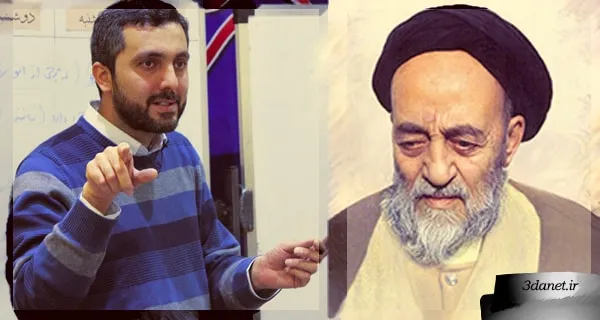
Mentioning the above point and noting that numerous attempts have been made to design arguments with this characteristic, Dr. Mahmoud Morvarid said: In this session, two versions of this argument presented in the last century will be examined: the argument of Allameh Tabatabai and the argument of Sheikh Muhammad Husayn Isfahani.
He stated: It has been claimed that Allameh's argument is a new proof that establishes the existence of God without employing philosophical principles. However, it seems this argument faces significant problems, including that it conflates de re necessity with de dicto necessity.
The associate professor at the Institute for Research in Fundamental Sciences continued, stating that Muhaqqiq Isfahani's argument can be read in two ways: a Russellian reading and a Meinongian reading, and said the Meinongian reading resembles later Meinongian formulations of Anselm's argument. Nevertheless, neither of these two readings of Muhaqqiq Isfahani's argument is successful.
Day Three: Divine Simplicity and the Relationship between Essence and Attributes
The doctrine of divine simplicity is one of the fundamental components in the theological systems of the Abrahamic religions. According to this doctrine, the essence of God is simple in every respect and contains no composition whatsoever. On this basis, there is no distinction between God's essence and His attributes; in other words, God's essence is identical with His attributes and characteristics (such as knowledge, power, life, etc.).
Dr. Mahmoud Morvarid reported on the significant growth of analytic metaphysics in the last century and stated: Extensive discussions have been raised concerning properties and the relations between them and objects. In light of these discussions, philosophers of religion have scrutinized the doctrine of divine simplicity, and controversies have arisen surrounding this doctrine.
Noting that one of the most important views about properties is Platonic realism, he added: According to this view, properties are universal, atemporal, aspatial, necessary entities that lack causal power.
The associate professor at the Institute for Research in Fundamental Sciences added: Some philosophers, such as Plantinga, hold on the one hand that there are good arguments in favor of the Platonic view, and on the other hand, they have found this view to be incompatible with the doctrine of simplicity. Accordingly, this group of philosophers has concluded that the doctrine of divine simplicity is unacceptable.
He clarified: Another group has responded and proposed various ways to defend that doctrine. For example, Brower (2006) and Bergmann and Brower (2009) have sought to open a path between Platonic realism and nominalism that, on the one hand, avoids the problems of nominalism and, on the other hand, is compatible with the doctrine of divine simplicity.
Dr. Mahmoud Morvarid continued: According to this approach, in sentences where the predicate is essential to the subject (such as "God is knowledgeable" and "Zayd is a human"), there is no reason for a property to exist corresponding to the predicate. Only contingent predicates carry an existential commitment to properties.
He emphasized: God's being knowledgeable is not fundamentally due to the existence of something called the property of knowledge that God possesses. Hence, the issue of that property's relation to God is also obviated. In any case, this discussion is among the cases that demonstrate the significant impact of analytic metaphysics on the philosophy of religion.
.
The Proof of the Veracious (Burhan al-Siddiqin)
The Proof of the Veracious, Session One Server One | Server Two
The Proof of the Veracious, Session Two Server One | Server Two
The Proof of the Veracious, Session Three Server One | Server Two
.
Simplicity of Essence and Attributes
Simplicity of Essence and Attributes, Session One Server One | Server Two
Simplicity of Essence and Attributes, Session Two Server One | Server Two
Simplicity of Essence and Attributes, Session Three Server One | Server Two
.
The Problem of Evil
The Problem of Evil, Session One Server One | Server Two
The Problem of Evil, Session Two Server One | Server Two
The Problem of Evil, Session Three Server One | Server Two
.


Discussion2 comments
خیلی ممنونم.
سلام درابتداخواهشمندم pdfمطلب راهم درج نمایید چون استماع ان بسیار وقتگیر وحوصله بر میباشد درثانی ورود به بحث اثبات وجودی خداباتوجه به محدودیتهای دیدگاهی مابسیار اشتباه است چراکه مظروف توانایی توضیح در مورد ظرف خودراندارد بنظر من بهتر است ابتدامابرای خروج از محدودیت خود ازدایره تعیین شده تاکنون دین که بنظر من نیاز به تجدید نظر کامل دارد چاره ای اندیشیده وسپس به بیان این نظریات بپردازیم واگر نه جز خلط مطلب ودچار شدن در پدیده دور نتیجه ای عایدمان نخواهد شد وفقط انرژیها راهدر میدهیم زمانیکه شماحبس در قفسی تنگ وتاریکید تحلیل جهان خارج از قفس توهمی بیش نیست والسلام