Political Science
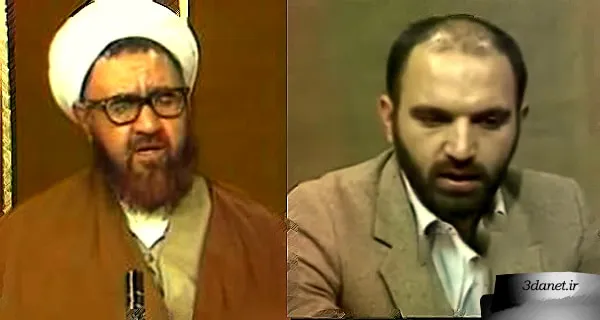
Markab-e Kherad's Interview with Sadegh Haghighat
In his theory of 'convergence', Sadegh Haghighat seeks a third path between maximalist jurisprudential and minimalist secular approaches; neither political jurisprudence nor political philosophy alone is sufficient—solving society's problems requires the interaction of these two disciplines.
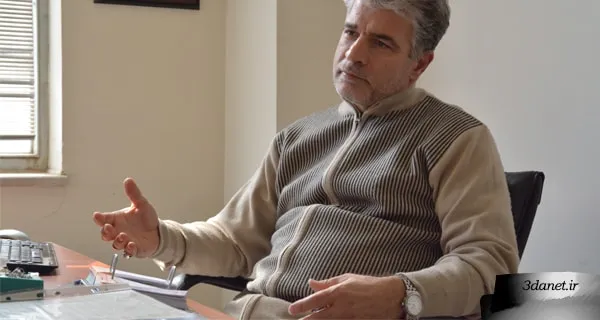
Markab-e Kherad: Thank you for giving us your time. Please explain the outlines of your theory for the readers so that we can then go into the details.
Dr. Haghighat: You're welcome. The word hamravi is the equivalent of the term "confluence," meaning the interaction of two currents. "Flow" means current, and "fluence" is its noun form. "Confluence" means the interaction and going-together of two currents. This word exists in various sciences; that is, it is an applied term. In geography, it means the moving together of two bodies of water, such as rivers. In medicine, it means the parallelism and convergence of two vessels. In physics, it means two stars moving together. In epistemological discussions, William James used this term to mean the interaction and combination of methods of knowing. What I mean by the confluence of political jurisprudence and political philosophy is that these two interact with each other. Their interaction means that both political philosophy and political jurisprudence are responsive in solving our political problems, such as justice, freedom, civil society, etc. That is, if we ask what justice means, both political philosophy and political jurisprudence are responsive. Now we want to see what the claim of this thing—which will later become a theory—is. Why do I say later? Because some parts of the puzzle may be empty now, but it will become a theory in the future.
Markab-e Kherad: So you currently believe it is an idea that will result in a theory.
Dr. Haghighat: Right now it is the preliminaries of a theory, and it will become more complete later. But in any case, if I said theory, I meant that it will become a theory in the future. The claim is that for answering the political questions and problems of society, political jurisprudence is not complete and does not suffice. Political philosophy alone also does not suffice; rather, both must be responsive, and their answers are comparable. This, in fact, is the main claim. Who says that political jurisprudence suffices? Some of the maximalists. They believe that for solving all the problems of society and politics, political jurisprudence is responsive, and therefore we have no need for political philosophy.
Markab-e Kherad: So by maximalists you mean those who believe that all the problems of society and government can be solved from within religion?
Yes, the opposite side is the minimalists, that is, the secularists. They believe that the rational mode of thinking suffices for society and that political jurisprudence has no validity. The first group sets aside political philosophy, and the second group sets aside political jurisprudence. So in the first and second groups, interaction is meaningless, because one side has been eliminated. The claim of the confluence theory is that neither the maximalist theory approach nor the minimalist (secularist) theory approach suffices. Rather, both political jurisprudence has validity to some extent, and political philosophy is valid.
Markab-e Kherad: Dr. Haghighat, if possible, please state the aspects of the insufficiency of the minimalist and maximalist views. That is, what are the problems with the minimalist and maximalist theories that they do not yield our desired results?
Haghighat: I will give an example for each. A clear example of a case where political jurisprudence is not valid and political philosophy is needed is the theory of the state. Based on an article I wrote previously, political jurisprudence cannot have a theory of the state—discussions that relate to the type of state. For instance, the minimal and maximal state, or whether the state should be based on natural rights or not, and so on. These are questions that jurisprudence cannot answer.
Markab-e Kherad: So jurisprudence cannot be system-building?
Dr. Haghighat: It can. It can build systems in the realm of jurisprudential obligations. But the nature and essence of the state are not among the matters that political jurisprudence can address. The opposite example—that is, where jurisprudence can enter and political philosophy is ineffective—is the dispute between socialists and liberals. This dispute might continue until the Day of Judgment! Because the type of reasoning in political philosophy is not always like mathematical proofs that are convincing to the opposing side. Rather, sometimes the arguments become dialectical, and neither side can completely defeat the other.
Note that political philosophy does not need political jurisprudence in terms of validity, but in responding to political issues in those dialectical cases I mentioned, it can resolve the dispute. Because political philosophy is the product of rational reflections, and rational reflections may be based on specific presuppositions, and neither can liberals convince socialists, nor the reverse. In such situations, religion can specifically be a way forward. That is, it can provide general strategies. An example that I personally believe in, and have also included in the book Hamravi, is this: as Professor Motahhari has also said, the Western system closest to the Islamic political system is social democracy. That is, the state has a duty to provide egalitarian minimums or a welfare state for the people, and this is part of the state's duties. Therefore, libertarians such as Hayek and Nozick may not accept such a thing and may have their own arguments for their political philosophy. But on this side, Islamic political philosophy can argue that the state should have welfare state policies. That is, it should secure the minimums for all people at a specified level. For example, something like social democracy, and of course, here I always caution that Islam is not socialism. Islam is Islam. I mentioned this point to dispel the illusion, lest some think we have become enamored with a Western system. Professor Motahhari's expression is that among Western political schools, social democracy is the closest system to Islam, not that it is Islam itself!
Markab-e Kherad: So there is no identity; there is only proximity.
Dr. Haghighat: Rather, it is merely closer.
Markab-e Kherad: Dr. Haghighat! Does the theory of Hamravi say that political philosophy and political jurisprudence have no conflict, or that they have conflict and this theory resolves the conflict? Because there may be places where these two come into conflict.
Dr. Haghighat: Conflict is meaningless. Because two disciplines address problem-solving. I say there are aspects for the precedence of each of these two disciplines, for which I gave examples for each. Ultimately, my belief is that since one level of Hamravi is the convergence of epistemological methods, and since reason, tradition, experience, and intuition ultimately arrive at the same place, therefore political philosophy and political jurisprudence may appear to conflict, and their answers may be irreconcilable, but my epistemological presupposition is that the path of reason and tradition will not conflict; they will complement each other and help each other.
Markab-e Kherad: In reality, you do not see rational and transmitted perceptions as conflicting in the nafs al-amr (the real world). Although we may err in the process of scholarship. Is that correct?
Dr. Haghighat: My basis is the same as that of Farabi. Mulla Sadra and Allameh Tabatabai also have similar statements that reason and tradition are in reality harmonious. Although in appearance we may err and these may come into conflict, which of course also has a way of reconciliation.
Markab-e Kherad: Fundamentally, what was your concern, and what problem did you want to solve that led you to design this theory?
Dr. Haghighat: My concern was finding a third way between the two maximalist and minimalist (secularist) approaches. This third way can be introduced within a discourse called "religious new thinking." The theory of Hamravi is situated within the discourse of religious new thinking. My concern is to propose the discourse of religious new thinking and defend it in the form of the theory of Hamravi. My concern is to draw a boundary between religious new thinking and religious intellectualism. I have also said this in some of my previous interviews. I have designed a table that states the differences between religious intellectualism and religious new thinking in 6 items. Two of the most important are that political jurisprudence is not valid from the perspective of religious intellectuals, whereas from the perspective of religious new thinkers, it is valid. And the other is that religious intellectuals are secular, and religious new thinkers do not believe in secularism. Therefore, my concern is the defense of religious new thinking. In Western countries, they call religious new thinking "reformist Islam" and religious intellectualism "liberal Islam." That is, even among Western thinkers, these two approaches have been separated.
Markab-e Kherad: Meaning they have recognized the difference?
Dr. Haghighat: Almost, yes. Not completely, of course, but approximately, why not.
Markab-e Kherad: Surely after your trip to America, these differences have deepened further?
Dr. Haghighat: (Dr. laughs) I have also tried to do this. Of course, I suppose that when Westerners differentiate between these two currents (religious intellectualism and religious new-thinking), we in Iran are certainly more deserving of this differentiation and should not conflate these two currents. Of course, these two ways of thinking share many commonalities, but it is the distinction that causes two discourses to separate from each other.
Markab-e Kherad: In refuting the theory of the minimalists (religious intellectuals), you stated that some discussions in political philosophy lead to antinomic propositions—according to Kant's designation—and we cannot issue a definitive judgment. Because the nature of proofs in political philosophy differs from the nature of mathematical proofs, and one cannot speak definitively and resolve the dispute as in mathematics. On the other hand, at the end of the article (The Convergence of Political Philosophy and Political Jurisprudence), you have said that if we have a clear rational reason somewhere, we must change the ruling of political jurisprudence. So, ultimately, do you believe that a definitive proof can be established in political philosophy or not?
Dr. Haghighat: Look, in some discussions of political philosophy, proof exists in a logical and mathematical form. For example, Ayatollah Dr. Haeri, in his book *Hekmat va Hokumat* (Wisdom and Government), has a precise philosophical argument for the impossibility of appointing a political ruler. He says that if someone were to be appointed by God, its necessary consequence is an implicit circular argument (*dowr-e mozmar*). A circular argument is invalid. Therefore, the theory of divine appointment is invalid. I say that if this argument were correct, all reasons for the Guardianship of the Jurist (*Velayat-e Faqih*) would have to be set aside. But, as it happens, the argument, in my opinion, has a flaw and is not correct.
Markab-e Kherad: Does this only encompass the Guardianship of the Jurist, or does it also include the political guardianship of the Infallibles?
Dr. Haghighat: Both. Because he denies political appointment in general.
Markab-e Kherad: The next question is that you have raised the issue of the convergence of political philosophy and political jurisprudence. While jurisprudential propositions are of the type (ought and ought not) and philosophical propositions are of the type (is and is not), and they fundamentally have no overlap or interaction to necessitate a convergence! Therefore, wouldn't it have been better to name your theory the convergence of political philosophy and political theology? Since both of these discuss (is and is not) and likely encounter conflict, agreement, and so on.
Dr. Haghighat: Our discussion here is Islamic political philosophy. Because this theory has been presented within the domain of Islamic political thought, and in the domain of Islamic political thought, one side of the discussion is political philosophy and the other side is political jurisprudence. But is political philosophy characterized by the Islamic attribute or not?
Well, many discussions of political philosophy are shared with Islamic political philosophy. But what does the Islamic attribute mean? Because some might say, isn't philosophy the complete and total sovereignty of reason? Then it would be neither Islamic nor non-Islamic!
The Islamic attribute means that every philosopher brings presuppositions from somewhere. There are presuppositions that are unprovable. Yet, they assume them in their process of philosophizing. For example, someone might take them from history or from anywhere else. An Islamic philosopher might take their presuppositions from the Quran and Islamic foundations.
Markab-e Kherad: Do these presuppositions also appear in the premises of the argument?
Dr. Haghighat: They are part of the premises, but not in the method of reasoning. For instance, Thomas Hobbes, who considers human nature to be evil, or John Locke, who considers it to be good, neither has provided a philosophical argument for this anthropological assumption. They may have referred to similar historical instances or taken this as a given, and this becomes a premise for their political philosophy argument.
Markab-e Kherad: If you could provide an example from Islamic philosophers as well.
Dr. Haghighat: Among Islamic philosophers, for instance, Allameh Tabatabai believes in the theory of istikhdam. (Istikhdam means that humans seek to employ one another.) Hobbes also says that man is a wolf to man. Superficially, one might find a resemblance between Allameh's theory and that of Hobbes. But from my perspective, which does not contradict Allameh Tabatabai's theory either, Islam says that man is a mixture of good and evil.
The son of Adam is a wondrous mixture
Composed of angel and of animal
If he inclines toward this, he becomes better than this
If he inclines toward that, he becomes better than that
The Quran says: (fa-alhamaha fujuraha wa taqwaha, Shams, 8) God inspired it with both its wickedness and its righteousness. Therefore, if Hobbes considers man evil-natured and Locke considers him good-natured, the Islamic political philosopher considers man a mixture of good and evil. This is the anthropological presupposition, but during the act of philosophizing, there should be no difference between an Islamic, Eastern, or Western philosopher. Because all must be bound by reason free from everything, including revelation.
Markab-e Kherad: But these presuppositions are not rational; they come from transmitted sources.
Dr. Haghighat: They can come from anywhere. When we want to derive them from Islam, for example, the presuppositions can be Quranic.
Markab-e Kherad: If you were to ask Hobbes why he said man is a wolf to man, he would probably answer that he found empirical evidence that ultimately led him to this conclusion.
Dr. Haghighat: That is correct. Meaning, presuppositions can come from empirical evidence, historical evidence, a type of hypothesis, or even a dream, inspiration, or true vision.
Markab-e Kherad: The first two cases you mentioned do not conflict with philosophizing. But the subsequent cases, such as deriving from transmitted sources, must be explicated by a secular reason independent of religious law, and its authority, signification, text, and chain of transmission must be proven. At that point, this is no longer political philosophy; it is, in fact, political theology and has been formulated within the framework of religious sources.
Dr. Haghighat: No, my point is precisely that the stage before reasoning is that of presuppositions, and presuppositions may be derived from anywhere. But the stage of reasoning must be conducted with reason free from revelation. So, from this point onward, that is, during the act of philosophizing, there is no difference between an Islamic and a non-Islamic philosopher. In my belief, Farabi is an Islamic philosopher. Because in the process of his philosophizing, he never argued based on transmitted sources, and among Farabi's fifty books, there is only one Quranic verse and no hadith. Of course, that one verse was not for argumentation and was only mentioned as corroborating evidence.
Markab-e Kherad: Do none of his arguments refer to Quranic verses?
Dr. Haghighat: Well, but Farabi's presuppositions and his applications can be Islamic. Now, what are applications? It means, for example, in the course of Farabi's philosophizing, the title of (the First Chief) or (the Platonic Philosopher King) is applied to the Prophet; note that in this course, he does not argue. But he makes the application.
So, because Farabi used independent reason during argumentation, he is a philosopher.
But he is an Islamic philosopher in two senses: 1: He used presuppositions (from Islamic sources). 2: He made applications to Islamic instances, like the case of (the First Chief) that was mentioned.
Markab-e Kherad: Please also explain the position of political theology.
Dr. Haghighat: Therefore, political theology is another discipline that has two main differences from political philosophy:
1: Political theology is not free from revelation. Unlike political philosophy, it seeks to prove revelatory propositions.
2: The method in political philosophy is purely rational, whereas in theology, it is multi-methodological. For example, a theologian can use verses, hadiths, history, or experience and reason. So, theology is multi-methodological, unlike philosophy.
Markab-e Kherad: On this subject, two points arise:
1: You have apparently stated in your discussions that in political philosophy we do not necessarily use reason alone...
Dr. Haghighat: No. It has been said that we do not use logical reason, which arranges arguments in a mathematical form. The method in political philosophy is rational, but it is not necessarily mathematical or logical in its manner.
Markab-e Kherad: Meaning that reason is an encompassing term, one of whose instances is the argumentative faculty.
Dr.: Yes, exactly.
Markab-e Kherad: Does political philosophy discuss oughts and ought-nots in a way that would clash and conflict with jurisprudence?
Dr. Haghighat: So your question is actually this: political philosophy speaks of what is and what is not, whereas jurisprudence speaks of ought and ought-not. Well, how have these two been placed alongside each other? This is, in fact, a general objection. The general perception is that political philosophy speaks solely of what is and what is not. But this is not the case. In truth, based on these is and is-nots, it also issues prescriptive (ought and ought-not) propositions.
For example, suppose you ask Rawls how the distribution of wealth in society should take place; he would say it must be done based on the policies of the welfare state.
If you ask Hayek or Nozick, they would say it should not be based on the policies of the welfare state. So one cannot object to them that you must only speak of what is and what is not, and that ought and ought-not are not in the domain of political philosophy. In truth, the core of the matter is a fallacy, and it has been assumed that political philosophy only discusses within the realm of is and is-nots. In reality, political philosophy seeks to discover and explicate them within the realm of is and is-nots.
Markab-e Kherad: Which, after discovering the is and is-not, must then express it as a prescriptive proposition.
Dr. Haghighat: Yes, that is indeed the case. Of course, it is not just discovery. Sometimes it also builds consensus and agreement upon it.
Markab-e Kherad: Meaning it must logically lead to a normative conclusion?
Dr. Haghighat: Yes, meaning we return to that main concern raised at the beginning of the discussion: if the question is asked, how should power and wealth be distributed, or what should justice be like? Political philosophy gives one answer, and political jurisprudence gives another...
The claim here is that neither is political philosophy independent of jurisprudence, nor is political jurisprudence independent of political philosophy. In fact, these two help each other and have convergence. Although in terms of validity, political philosophy logically does not need political jurisprudence, because political philosophy is free from transmitted sources. However, political jurisprudence, in creating the groundwork—that is, building the foundations and propositions for itself—needs reason and, in truth, needs political philosophy. So, political philosophy is the groundwork-maker for political jurisprudence.
In reality, although one discipline does not need the other, and the other does, when it comes to answering the question of the distribution of power and the explanation of wealth, or the issue of justice, or the issue of freedom, these two seemingly stand alongside each other and do not necessarily have a hierarchical relationship.
That is, political philosophy and political jurisprudence each provide an answer, and these answers are comparable to one another. So, the theory of convergence considers political philosophy and political jurisprudence to be alongside each other, although from a logical perspective they have a hierarchical relationship. That is, political philosophy does not need political jurisprudence, but political jurisprudence needs political philosophy. However, we do not address this discussion in the theory of convergence, and our focus is on their horizontal relationship. In this sense, for example, to answer the question of the distribution of power or wealth, political philosophy and political jurisprudence each have an answer, and their answers are comparable to one another.
Some have objected to me, asking why you have used the word convergence, whereas convergence means the meeting of two veins and combining with each other, ultimately becoming one thing, or, for example, two rivers meeting and creating a third thing; however, political philosophy and political jurisprudence do not meet each other and are two separate fields of knowledge.
My answer is that:
First, there is no dispute over the term itself. It is a technical term that has been used. Second, in physics, when confluence is mentioned, it does not necessarily refer to two things that merge together. For example, when two stars are moving together, it is called the confluence of stars. Yet the two stars neither merge nor collide; they merely move together. That is, this word has the capacity to be applied to two currents that are moving together, whether they meet, like two rivers, or do not meet, like two stars, and the word confluence applies to both.
Markab-e Kherad: Two points remain:
1: The unilateral need of political jurisprudence for political philosophy, and the absence of a reciprocal need, is part of the essentials of the confluence theory, and in fact you have accepted this.
Dr. Haghighat: Let us not call them essentials. It is among the issues that the confluence theory addresses and believes in. The reason political philosophy does not need political jurisprudence is that, fundamentally, the very constitution of something called political philosophy lies in its independence from other matters and its sole use of the instrument of reason. And its very title clarifies why it has no need. Like what is said in logic: propositions whose syllogisms accompany them... (propositions whose reasoning accompanies them).
But why does political jurisprudence need political philosophy? Because political philosophy, like political theology, prepares and smooths the rational grounds for political jurisprudence.
Almost all jurists believe that political theology is the rational groundwork for political jurisprudence; on this same reasoning, philosophy or political philosophy takes precedence over jurisprudence or political jurisprudence.
Markab-e Kherad: Because in criticizing the minimalist theory and to show that political philosophy alone is not sufficient, you stated that political philosophy sometimes leads to propositions being dialectically two-sided, and this is where we need a decisive arbiter to settle the dispute. The question is, can it be said that this is an aspect of political philosophy's need for political jurisprudence?
Dr. Haghighat: No. The aspect of need lies in solving the problem. That is, where political philosophy is not adequate for solving a problem.
Markab-e Kherad: But epistemologically, it has no need.
Dr. Haghighat: Precisely, from this very standpoint, political philosophy is self-sufficient.
In answering the question of the distribution of power or the distribution of wealth, we may feel the inadequacy of political philosophy at some point and feel the need for revelation.
In fact, it is we who find ourselves in need. Political philosophy has no need. In reality, we cannot command political philosophers to go and use such-and-such a source. Because political philosophy, by definition, needs nothing and relies upon itself.
Markab-e Kherad: By "we," do you mean the religiously devout?
Dr. Haghighat: Yes, that is, we religious new-thinkers who are bound by the Sharia and also committed to expertise and reason. In fact, we reach a point where, for solving certain problems, we do not deem the answers of political philosophy sufficient. At least where we need revelation.
Markab-e Kherad: You stated that some people think that because jurisprudence produces (oughts and ought-nots) and political philosophy produces (is and is-not), these two never come into conflict with each other.
Dr. Haghighat: Not that they do not come into conflict, but that they are fundamentally incomparable.
Markab-e Kherad: They are fundamentally two separate domains. Yet, political philosophy's (is and is-not) leads to the production of (ought and ought-not). That being the case, wouldn't it be better to say that confluence occurs between political philosophy and political theology, since both theology and political philosophy have propositions of the "is and is-not" type, which can ultimately interact with each other?
Dr. Haghighat: No. Because when political philosophy becomes bound by the Sharia (revelation), it becomes political theology itself, and fundamentally, an intermediary confluence between the two no longer makes sense. For example, how many political philosophers do we have? Some name Farabi and Ibn Sina, or for instance, Abu al-Hasan Amiri, Khajeh Nasir al-Din Tusi, Mulla Sadra, and ultimately Allameh Tabatabai.
Others, who rightly object, say: It is true that Farabi is a political philosopher, but Ibn Sina is not a political philosopher, because Ibn Sina mixed his discussions with revelation. In truth, he is a political theologian. In fact, the objection that some people have to the category of Islamic political philosophy is that many of those who bear the title of political philosopher are actually political theologians, and in my view, this objection is valid.
Of course, as mentioned, I do not consider this objection applicable to Allameh Tabatabai and Farabi, and I believe they truly had Islamic political philosophizing with entirely rational materials and, of course, Islamic presuppositions. But in my opinion, this criticism holds true for the rest, and they were not pure political philosophers. Therefore, when there is disagreement over whether Ibn Sina was a political philosopher or a political theologian, we should not say there is convergence between political philosophy and political theology.
Look, for example, the Islamic Revolution of Iran triumphed with the theory of Velayat-e Faqih. The Islamic Republic of Iran is governed based on this very jurisprudential theory. Consequently, jurisprudence and political jurisprudence have filled the space, and in the words of Professor Motahhari, jurisprudence has become bloated. On the other hand, political philosophy has become so weak and emaciated that our specific claim is precisely that political philosophy must be revived. Unfortunately, political philosophy in Shia political thought is almost dead. In the convergence theory, political philosophy and political jurisprudence are placed parallel and equivalent to each other. That is, they are two pans of a scale. In other words, this theory is a critique of the bloating of political jurisprudence on one hand, and on the other hand, a critique of secularists who do not consider political jurisprudence valid.
The End
.
.
Markab-e Kherad Magazine's Interview with Sadegh Haghighat
.
.


Discussion3 comments
جناب دکتر حقیقت کم اوردید گفتید کامنت شما را برداشتند ؟ دوست عزیز مرد اهل تحقیق از پرسش وپاسخ نمی هراسد حقایق از تضارب ارا رو مینماید اهل صبر وحوصله وسعه صدر باشید
جناب دکتر حقیقت 1-شما به نظریه دکتر ایت الله حائری اشکال وارد دانستید که ولا یت فقیه منصوب خداوند نیست وایشان انرا دور باطل دانستند شما نوشتید که از نظر من درست نیست خواننده وقتیکه جمله شما را میخواند این تصور را پیدا میکند که شما مدافع نظریه ای هستید که ولایت فقیه رامنصوب خداوند میداند اگر چنین است باید ادله بیاورید 2-شما میفرمایید که اسلام حداقلها را در نظر گرفته این فقط یک ادعاست اتفاقا اسلام با تعریفی که از عدالت میکند راه را برای دور شدن از قسط وطبقاتی شدن جامعه فراهم مینماید اینکه عدالت قسط نیست وبرابری نیست وهرکس باید اندازه جایگاهش قدرومنزلت ببیند انرا باز میکند که هرکس ادعا کند جایگاهی که دارد بر اساس لیاقتش به او داده شده واین حق اوست که زبر دست باشد ودیگران زیر دست . مفهوم عدالت به قسط بسیار نزدیکتر است گرچه بران منطبق نیست تا اینکه چنین معنا شود که اسلام ادعا میکند درعمل هم جامعه اسلامی نتوانست به طرف عدالت برود وبرعکس به جامعه سرمایه داری نزدیک شد چون اسلام اصلا تئوری اقتصادی ندارد 3- عدالت وازادی مواردی نیستند که فقه بتواند گرهگشایی نماید چون فقه جز مشتی شعار چیزی برای ارائه نداردمدینت النبی هرگز نمیتواند به عنوان الگو وجامعه ارمانی طرح شود مدینت النبی یک جامعه بدوی بود زمان پیامبر اینهمه منابع و جمعیت وارتباطات وجود نداشت زمان پیامبر نفت وگاز و معادن و بورس وبانک و ارتباطات پیچیده بین المللی وجود نداشت یک جامعه بدوی هرگز توان هماوردی با جوامع مدرن را ندارد چه برسد به اینکه بعنوان الگو مطرح شود مسئله ی ازادی هم طبق عرف جوامع است که تبیین میشود حدو حدود ازادی را فقه نمیتواند تعیین نماید این عرف جوامع است که راهگشاست 4-فقه سیاسی شریک نمیپذیرد این مطلبی که شما عنوان میکنید حداقلیها وحداکثریها . حداقل چه چیزی ؟ وحداکثر چه چیزی ؟حداقلیها حداقل دین را میگویند که شما انها را سکولار نامیدید پس مینیممی از دین را میخواهند نگه دارند همه را ازدست نمیدهند وانها که حداکثری هستند هم تا جاییکه امکان داشته باشد دین را واحکام دینی را در پی اجرایش هستند منظورم اینست که بنوعی همان حداقلیها این نظر شما را که چشم اندازی به دین هم داشته باشند را دارند ولی بنا ندارند که قوانین واحکام دین را حتی حداقلی انرا به جامعه تحمیل نمایند یعنی اینکه در نهایت برای مسایل جدلی الطرفین این عرف است که حرف اخر را میزند در خاتمه از اینکه سلسله مراتب عددی نوشته شما رعایت نشد پوزش میطلبم
دکتر حقیقت فقط شعار میدهند چیزی را اثبات نمیکنند لیبرالها هم معتقد به فراهم کردن رفاه حداقلی برای جامعه هستند این فقط مدعای فقه سیاسی نیست که البته فقه سیاسی هم درعمل هرگز به ان عمل نکرد ودرنهایت الان بطرف خصوصی سازی وجامعه سرمایه داری پیش میرود نمونه های دیگری از مقوله های جدلی الطرفین بیاورید تا مستدلتر سخن بگویید اینکه معتقد هستید ولایت فقیه از جانب خداست انرا اثبات نمایید صرف ادعا نمیتواند شما حق به جانب نماید نظریه همروی شمااشکال دارد فقه سیاسی شریک نمیپذیرد فلسفه سیاسی هم درموارد جدلی الطرفین رجوع به ارای عمومی میکند واز عرف مدد میجوید