Philosophy
Michael LeBuffe's article “Moral Philosophy and Reason”
Although Descartes, Spinoza, and Leibniz are rationalists in epistemology, the label 'rationalism' is not particularly helpful for their moral philosophy. Their views on virtue and the passions reveal both the commonalities and divergences within this tradition.
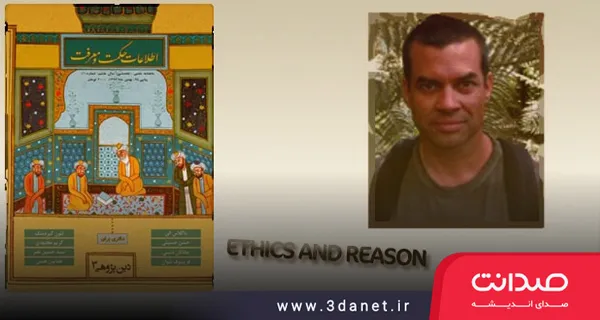

Michael LeBuffe
AuthorDescartes (1596–1650), Spinoza (1632–77), and Leibniz (1646–1716) are commonly and rightly regarded as belonging to a particular school of thought in metaphysics and epistemology. Although they offer different conclusions in these sciences, they share a set of concerns and methodological principles. Each separately attends to proving the existence of God, describing God’s relation to the world, providing an account of the human being, and describing the nature and limits of knowledge. Descartes, Spinoza, and Leibniz disagree about what the principal components of logic are and how they are properly employed; nevertheless, it is broadly true that each regards these subjects as matters best understood by human reason rather than by uncritical reliance on the senses. For these purposes, then, the label “rationalism” is precise, useful, and acceptable.
The label may not be so useful in moral philosophy. Descartes, Spinoza, and Leibniz share some ethical views. Moreover, some of the most important differences arise from their positions in metaphysical and epistemological disputes.
The aims and influences of these philosophers in the domain of ethics differ in many respects, and less emphasis on this point can be misleading. Descartes’s ethical theory shows the influence of Stoic philosophy and also reformulates ancient views about the passions (emotions) and their control in light of his own account of the human being, human physiology, and psychology.
The views Descartes expressed were tempered by deference to both ecclesiastical and civil authority, together with a justified concern that his enemies would likely find, in a complete ethical theory and especially in a detailed normative ethics, effective means for destroying his reputation and stability. As a result, even his most complete ethical work, The Passions of the Soul, leaves one with the sense that some important consequences of the theory remain unwritten. Spinoza, in his account of the passions and their control in the Ethics, engages with Descartes and the Stoics.
Yet Spinoza also clearly engages with a number of other writers, notably Hobbes, Maimonides, and Aristotle. Cartesian themes are present in Spinoza’s ethical theory as well, but only as one important part of his overall view. Moreover, Spinoza presents his view in a bold, uncompromising, and direct treatise, such that his ethical theory is far more fully developed than the views of Descartes or Leibniz. Although his considerations on morality show his close attention to Spinoza and Descartes, he addresses other traditions, particularly the natural law theory tradition, just as much. Leibniz offers an account of virtue, happiness, and perfection that, while brief and unsystematic, clearly responds to concerns of the kind that motivated Descartes and Spinoza. At the same time, his most important and distinctive ethical thoughts, and the conception of benevolence in the community of rational minds that he calls the City of God, address an ethical point—how we should act toward others—that is only a passing note for Spinoza and something Descartes defers to higher powers. There is, then, a common set of themes exhibited in these theories. At the same time, these various points and perspectives suggest that the degree of similarity is more suggestive of a significant development of the virtue ethics tradition than of a defined school of rationalist ethical thought.
Descartes
In the preface to the French translation of the Principles of Philosophy (1647), Descartes writes (AT IXB 14, 1969): “Thus the whole of philosophy is like a tree. The roots are metaphysics, the trunk is physics, and the branches emerging from the trunk are all the other sciences, which may be reduced to three principal ones, namely medicine, mechanics, and morals. I mean the highest and most perfect moral science, which, presupposing a complete knowledge of the other sciences, is the ultimate level of wisdom.”
While Descartes often appears as a non-naturalist, his commitment to the view that ethics is part of a single body of knowledge along with the other sciences shows that he is, in a way, a naturalist: his methods in studying ethics do not differ from his methods in other sciences, and he uses the results of other sciences, particularly his calculations about human nature, to arrive at the concept of ethical theory.
It is therefore not surprising that his important position on Descartes's account of ethics is found specifically in the philosophical writings, including the Discourse on Method (1637), the Meditations (1641), and the Principles of Philosophy (1644). However, later in his life, in July 1645, Descartes corresponded with Princess Elisabeth of Bohemia, a correspondence that began with a study of Seneca's On the Happy Life and continued with Descartes's Passions of the Soul (1649). The Passions and the correspondence with Elisabeth led Descartes to develop a shift in his other works and produce the most detailed account of ethics. In its broadest outlines, where theory is understood as something involving a specific state of virtue, there are certain degrees of knowledge and will by which one is guided to understanding, along with an account of conditional ethics and the means by which we should generally strive to acquire virtue, as well as an account of the passions. Descartes's account of the passions describes the principal obstacles to constancy of will and the means of overcoming them. We can attain happiness by acting on the best understanding of the good, and acquire blessedness by acting in this way through knowledge.
In describing the ideal human condition, Descartes emphasizes the importance of a will that seeks the understanding of the good without being mixed with desire or passion, and he also notes the genuine knowledge of the good. His emphasis on this will is in the Discourse, where he writes (AT VI 28):
For since our will neither pursues nor avoids anything except insofar as our understanding presents it as good or bad, judging well is sufficient for acting well, and we are as capable of acting in the best way as we are of judging.
In the Discourse, his correspondence with Elisabeth, and also in the Passions, Descartes emphasizes the importance of constancy of resolve and, on the other hand, the harmful influence of passion and emotion, which cause fleeting impulses instead of compelling us to confine our understanding to the good in the best way. He describes virtue in these terms, for example, in a letter to Elisabeth (4 August 1645, AT IV 265):
Each person must establish a firmness and constancy for all that reason commands, without being diverted by passions and emotions, and it is this constancy of resolution that, in my view, constitutes virtue.
Of course, the constancy of following an imperfect understanding of the good may produce behaviors that are undesirable, a problem Descartes himself points out in the same letter. Descartes adds to his ideal there the concept of a true knowledge of the good (AT IV 267):
Virtue alone is sufficient to bring about this content in our lives. But this point, even if considered without being illuminated by understanding, virtue can be false; that is, we must say that the will and decision to do the right thing may lead us to undertake teachings while we think they are right and good; the happiness obtained in this way is not stable... The right use of reason [or logic], by giving true knowledge of the good, prevents virtue from being false.
Descartes probably emphasizes the cultivation of a firm will over knowledge because he portrays the human being as like God, possessing an infinite will in a process similar to His. Nevertheless, Descartes may have a reason for stressing the value of a resolute will over that of perfect knowledge of the good: if the possibility of acting badly arises from imperfect understanding, it can be mitigated by a kind of conservatism (commitment) in one’s actions. According to this view, if I follow the most moderate opinions of others, then whatever I misunderstand may cause me little harm. Certainly, such conservative policies are part of the provisional moral code in Part Three of the Discourse (AT VI 23-8):
(1) By the religion in which, by God’s grace, I was instructed from childhood, I must obey the laws and customs of my country and hold myself obliged in all respects to this opinion, to be very moderate and avoid extremes.
(2) In my actions, to be as firm and resolute as I can, and to follow even the most doubtful opinions, once I have adopted them, as if they were entirely certain.
(3) To try always to master myself rather than fortune, and to change my desires rather than the order of the world.
(4) I thought I could do no better than to devote my whole life to cultivating my reason and advancing as far as I could in the knowledge of the truth.
The code of the Discourse on Method fully comprises the requirements by which I can advance in the knowledge of the truth. Perhaps where the first and fourth maxims seem incompatible, the acquisition of true knowledge of good and evil should compel one to abandon a firm attachment to an incorrect understanding of the good. However, Descartes’s rule clearly emphasizes, for deciding to act and to change oneself, the third maxim as a means of bringing about such a decision. These are themes he elaborates in the Passions.
The passions can cause one’s will to be inconstant because they depend on and influence bodily conditions. Descartes classifies the passions as forces that create in us a tendency to desire whatever is beneficial for us, accompanied by bodily actions (Passions, Art. 52, AT XI 372):
The function of all the passions consists solely in this, that they dispose the soul to want the things that nature tells us are useful to us, and to persist in this volition; and the same agitation of the spirits that normally causes them also disposes the body toward the movements that serve to carry out these desires.
The passions influence us in a way that diverts us from the best judgment about the good, not because the passions are bad—Descartes says they are fundamentally good (Art. 211)—but because, through the body’s influence on the soul, they tend to distort the apparent value or disvalue of the ends they concern.
(Passions, Art. 74):
The utility of all the passions consists here not in that they make durable and strengthen in the soul thoughts which it is good for the soul to preserve and which might otherwise easily be effaced. Likewise, all the harm they can do consists in that they strengthen and preserve these thoughts more than is necessary, or strengthen and preserve others on which it is not good to dwell.
In the Passions, Descartes emphasizes the firmness of our judgments about good and evil as a means of resisting the distorting influence of the passions. However, he is also much more explicit there about the importance of knowledge of good and evil as opposed to mere firmness of thought. He writes in Article 48:
What I consider the proper weapons for firm and decisive judgments in connection with the knowledge of good and evil is that which guides the soul to decide for the conduct of its life.
This article emphasizes the uniformity of the will in a manner similar to Descartes in the Discourse. But he also combines this view with the idea that steadfastness in judgment in following knowledge is also desirable. A view that Descartes emphasizes in Article 49: “The power of the soul is not sufficient without the knowledge of truth.”
Whether Descartes considers most people capable of attaining a high degree of awareness of good and evil, and whether such knowledge keeps one more virtuous, are issues that remain not fully resolved in his account. In any case, it is clear that this is a knowledge of truth, of one's own will, and the importance he gives to ethics. A sense of knowledge with a firm will bestows generosity upon a person, a kind of complete emotional state that the soul can create in itself and grant a person fundamental self-esteem (Art. 153):
It seems to me that true generosity, which raises a person's self-esteem, can quite legitimately consist entirely in this. In part, in his knowledge that nothing truly exists but the free control of his will, and that he should be praised or blamed for nothing except using it well or badly: and in part in his feeling within himself a firm and constant resolution to use it well.
Whether other knowledge of good and evil makes one virtuous or not, knowing that it includes generosity is fundamental to virtue.
In Article 153, Descartes does not emphasize that the best thing is to be sincere in order to attain the components of true generosity. Awareness of one's nature as an agent whose volitions are free is all the awareness needed, so both for the complete pursuit of virtue and for the complete control of the passions, Descartes's egalitarian theory makes a demand with its own humility. Furthermore, in Article 154, Descartes writes that generosity consists in acknowledging the fact that every individual either has or can have this perfection.
Spinoza
Like Descartes, Spinoza also considers metaphysics and epistemology as sources for a rational theory; Spinoza's list of the passions is derived from a Latin translation of Descartes's Passions. Spinoza is a moralist and a perfectionist of virtue, and his understanding of virtue emphasizes self-awareness and self-esteem. However, the argumentative influence of Descartes's rational theory on Spinoza is most evident in his criticism of two central doctrines of Descartes. Spinoza rejects the mentalist doctrine of the human mind, as well as the view that we possess a free will. Instead, he proposes a concept of freedom compatible with his determinism, that humans and all other things are constrained by universal necessity and determination; he believes that the human mind has as much scope of freedom as it is responsible for its own actions. Spinoza's understanding of humanity and its freedom led him to the conclusion that while we can more or less be the cause of our actions, we cannot be completely free; consequently, he strongly and explicitly rejects the Cartesian theory that we can have complete command over the passions.
Spinoza calls the characteristic causal activity of every singular thing its striving, or conatus, for persevering in being (a term that was also important for Descartes and Hobbes, among others). Spinoza describes the conatus in various ways at the beginning of Part 3 of the Ethics (Spinoza 1925a):
3p6: Each thing, as far as it is in itself, strives to persevere in its being.
3p7: The striving by which each thing strives to persevere in its being is nothing but the actual essence of the thing.
Although Spinoza quickly arrives at an account of human existence, 3p7 and 3p6 demonstrate the thoroughgoing naturalism of his ethical theory. Spinoza intended to describe human action as something similar in kind to the action of every other thing in nature.
Spinoza seeks an account of the human being that can explain motivation equally well in psychological or physical terms, a commitment that has profound implications for his ethical theory. In general, we may be called bodies that strive to live, and this means that, just as the mind strives for knowledge, the human body strives to persist in such a way that each of its actions can be understood as actions that have been effective—this is what Spinoza calls the characteristic ratio of motion and rest of the body's parts, that is, the preservation of life itself. The characteristics of Spinoza's striving in mental terms, which he emphasizes in Part Three, point toward a kind of enduring knowledge:
3P9: The mind, both insofar as it has clear and distinct ideas and insofar as it has confused ideas, strives to persevere in its being for an indefinite duration, and it is conscious of this striving.
Every effect that a mind has, insofar as it is clear and distinct or adequate, the adequate idea has the same effect. Consequently, what remains of adequate ideas is clear, that is, it serves to acquire knowledge. How the mind is affected by its confused ideas is still widely debated, but what is important is that, for Spinoza, adequate concepts of the passions involve confused ideas.
Spinoza regards passion as his theory of the emotions. In 3P11 he defends the view that the power of acting of the body corresponds to changes in the mind:
Whatever increases or diminishes, aids or restrains, the power of acting of our body, the idea of the same thing increases or diminishes, aids or restrains, the power of thinking of our mind. Then, in a scholium to this proposition, he names such changes as changes in perfection and defines them as human passions:
We see, then, that the mind can undergo many changes, and can pass now to a greater, now to a lesser perfection, passions which specifically explain for us the affects of joy and sadness. By joy, therefore, I shall understand that passion by which the mind passes to a greater perfection; and by sadness, that passion by which it passes to a lesser perfection.
Every particular passion for Spinoza is at once a change in the body's power of self-preservation and in the power of the mind's ideas. Later in the Ethics (3P58), Spinoza says in explicit language that some mental changes are not those the mind undergoes but rather changes the mind brings about in itself. For Descartes, generosity is an emotional state that the soul produces in itself; so, for Spinoza, the best emotional states—self-contentment, nobility, tenacity, and the love of God—are states we produce in ourselves. He therefore uses the word affect (affectus) to refer to changes generally, and uses the word passion (passio) only to refer to changes the body undergoes.
As Spinoza's identification of changes in power with changes in perfection in 3p11 and the scholium to 3p11 itself shows, he equates the perfection of a thing with its power. A mind or body cannot remain perfect forever, just as a singular thing in the world alongside many other existing things cannot remain completely powerful. Spinoza emphasizes this point at the end of his account of the passions in 3p59:
In this way, I believe I have explained and demonstrated the primary causes and principal effects of the fluctuations of the mind that arise from the three primary affects of desire, joy, and sadness. From this it is clear that we are driven about in many ways by external causes, like waves of the sea driven by contrary winds, tossed about, ignorant of our outcome and fate.
Just as a sailor moves better by following a current, we too can be guided by the forces that are alongside us and surround us, but we cannot completely free ourselves from their influence. Contrary to the Cartesian ideal, the ideal of human perfection as Spinoza understands it is not something that can be attained to a greater or lesser degree.
Spinoza then describes the good as an increase in power and greater perfection:
4d1: By good I understand that which we certainly know to be useful to us. (As a means to becoming more perfect)
Spinoza differs from Descartes in his consideration of the passions because he regards the passions in themselves as either an increase or decrease in power; that is, all forms of pain ultimately lead to evil, while forms of joy lead to good. However, Descartes, like Spinoza, uses the passions to explain things to us as good or evil and also to show how they sometimes mislead us. The forms of the passions of joy and sadness are overcome by the understanding and active forms of encounter.
Those particular goods that are not effective in themselves have a dualistic pull in Spinoza's account of human struggle. In 4p39, he describes the good for the body in general as follows:
4p39: Things that bring about the preservation of the proportion of motion and rest that the parts of the human body must have in relation to one another are good. Those things that bring about a different proportion of motion and rest among the body's parts are evil.
In the Ethics, a number of other propositions explain in more detail those things that are good, and with respect to those goods that are similar to these, this is what makes Spinoza's theory of value very close to Hobbes's view.
Spinoza's view of political goods is taken from the text of his Theologico-Political Treatise and shows this similarity (lines 13-27 and Spinoza 1925, vol. 3, p. 59):
Society is most useful not because it protects the individual from the enemy but for making possible many tasks that must be done, and moreover, are necessary for this. For although people are willing to work for one another, each would have to lose their skill and time in order to be able to provide the means for their own livelihood and life. Besides, not everyone is suited to every task, and no one alone can provide the things they need. Each person alone would lose the time and strength to plow, sow, harvest, grind, cook, weave, sew, and perform many other tasks that must be done to sustain life, not to mention the arts and sciences which are absolutely necessary for the perfection of human nature and its blessedness. Thus we see that they live in a barbarous manner without a state, and this ultimately leads to a nearly animal-like and miserable life.
But, in this text, Spinoza places greater emphasis on rational goods, and in some passages in the Ethics (including 4p26 and 4p28) he says that rational goods are sought only for their own sake. Perhaps this emphasis suggests that bodily goods are only instrumental goods, or, as he writes, they are good only insofar as they are necessary for the perfection of human nature.
In Part 5 of the Ethics, Spinoza refers to his account of human freedom, or the extent to which we can overcome the influence of the passions and rationally pursue virtue. This account includes both a general account, like Descartes's, which specifies some degrees of virtue accessible to all who pursue it, and also an account of a highly rational elite person who possesses a kind of virtue that is rarely attained. In the first half of Part 5, Spinoza describes the rules by which we can understand our passions, or where we cannot understand them, we can diminish their influence by promoting contrary things, that is, through active affects. In 5p10s, he suggests that such strategies are available to everyone:
One who reads these principles carefully (they are not, in fact, troublesome) and practices them will in a short time be able to direct his actions for the most part in accordance with the commands of reason.
The second half of Part 5, a very difficult section of the Ethics, describes the eternity of the mind and suggests that some people, through the knowledge of God, can attain a kind of salvation, a state that brings with it the best forms of active affects, namely worship and love of God, and allows them, if not complete control, to have a more assured command over their passions than those who can attain (the love of God) in the ordinary way. In maintaining this view, which is the clearest expression of the passages containing moral principles, Spinoza presents a kind of elitism not found in Descartes:
Even if the way I have shown leads to these things that now seem very difficult, nevertheless it (the love of God) can be found. And indeed, what is so rarely attained must be limited to difficult things. In fact, if salvation were at hand and could be obtained without great effort, how could it be that almost everyone neglects it? But all excellent things are as difficult as they are rare.
Leibniz
Leibniz emphasizes the virtue of perfection and also the central element of both, namely knowledge, and he also proceeds in a way that clearly shows his indebtedness to Descartes and Spinoza.
Descartes and Spinoza enter to some extent into the discussion of another central theme of Leibniz's moral theory, his anti-voluntarist account of natural law. Leibniz carefully studied Spinoza's Theological-Political Treatise and considered his political theory as bearing a great resemblance to his own principal target, Hobbes. Moreover, Leibniz correctly notes Descartes as an important source of the view that often entangles him concerning voluntarism, the doctrine that God creates the eternal truths. However, this influence is not very direct. Leibniz's theory of natural law directly addresses Grotius, Pufendorf, Hobbes, and Locke and is therefore best understood in the context of those authors' ideas.
Leibniz's account of virtue and perfection differs, and his account of perfection is complicated especially by the importance of that concept for his metaphysics (according to which, in Spinoza's view, human minds and other finite beings cannot be absolutely perfect). Among Leibniz's major works, important discussions of the topics raised appear in the New Essays on Human Understanding (1704), the Theodicy (1710), and the Monadology (1714). Therefore, probably the clearest concise statement of his view is the short essay "Happiness" (Riley, 83–4; see Leibniz 197), a small series of connected ethical views and definitions that Leibniz wrote and revised in the late 1690s. In that account, moral perfection increases with the knowledge of eternal truths:
8. Knowledge perfects our minds because it brings us to eternal and universal truths, those that are manifested in the perfect being (=God).
It can be said, in this way, that Leibniz's moral perfectionism resembles the rationalist tendencies of Spinoza's moral theory: the more I understand about God, the more perfect I become. Nevertheless, Leibniz's theory of virtue combines this rationalism with a hint of the value of pleasure, love, and justice: in Leibniz's account, virtue corresponds to perfection as an application to the practice of the knowledge we possess. Leibniz defines virtue in terms of wisdom:
1. Virtue is the habit of acting according to wisdom. It is necessary that we practice accompanying it with knowledge.
Wisdom is the knowledge of what brings about happiness or, as Leibniz wrote in a letter concerning "Reflections on the Common Concept of Justice" (1702–3), namely "our own good" (Riley, 57). But this is only the knowledge of our own perfection or that of others which arises "in its place from the absolutely perfect being." Therefore, the action of a virtuous person originates from the knowledge of God.
The most important kind of virtue, in Leibniz's account, is justice or benevolence. Leibniz defines the term in the book Felicity in a way that introduces guidance toward right action:
6. Justice is charity or a habit of loving conformed to reason. Thus when one is inclined to justice, one tries to procure good for everyone as far as one reasonably can, according to each person's needs and merits.
Although they are the same (i.e., justice and the good for all are one and the same), one can find different perceptions in the specific terms of justice and benevolence. Justice is the central important concept for Leibniz in the development of the theory of natural law in the book Meditation and in the treatise Opinion on the Principles of Pufendorf (Riley in 1706): voluntarism cannot be correct because it turns justice into a good that God wills without reason, rather than a constant manifestation of God that is worthy of our love. Benevolence (caritas), that is, kindness in accordance with wisdom, similar to Descartes's generosity, befits the state of a pious agent.
Leibniz's account of benevolence, the correct kind of love, is the most important moral idea in Leibniz's theory. It has two significant implications.
First, while Descartes emphasizes the will as the respect in which we become like God, Leibniz emphasizes the possession of a mind as well. For Leibniz, having a mind is the capacity to know the universal truths described in the book Felicity. From the late 1690s, Leibniz wrote that this makes us members of the moral kingdom. This theory is perhaps the boldest theory found in the Monadology (Garber & Ariew), 224 and see Leibniz 1989):
85. ... the assembly of all minds must constitute the City of God, that is, the most perfect possible state under the most perfect of monarchs.
86. This City of God, this truly universal monarchy, is a moral world within the natural world. This concept helps Leibniz explain what love in accordance with reason is in the benevolent person: it is the love of one citizen of the City of God for another.
Second, the content of moral philosophy, that is, God's law for us, is broadly understood by Leibniz through his perfectionism. To have a mind is to have the capacity to know and love God, and to have more of a mind is to know and love God more. Therefore, to act benevolently toward another, to have a good will, is to strive to advance these ends in everyone. Leibniz wrote in his Memoir for Enlightened Persons from the 1690s (105 and Riley):
Truly, to genuinely contribute to human happiness, one must enlighten one's understanding; one must strengthen one's will in the exercise of the virtues, that is, in the habit of acting according to reason; and finally, one must try to remove the obstacles that prevent them from finding truths and following the true good. Leibniz thus conceives of moral laws as the laws of the legislator of a moral monarch of minds, and understands them as laws that guide us toward improving the talents of others, especially understanding and reason. In this respect, his synthesis of earlier concepts of virtue and perfection anticipates Kant's theories.
See also Hobbes (Chapter 8), Kant (Chapter 14), Virtue Ethics (Chapter 40), Contemporary Natural Law Theory (Chapter 42), Ideals of Perfection (Chapter 55).
.
.
"Moral Philosophy and Reason"
Translator: Fatemeh Songhor Kalayeh
Translation of the article "ETHICS AND REASON"
Author: Michael LeBuffe
From the Routledge Companion
Source: Journal of "Ettela'at-e Hekmat va Marefat"
.
.






Discussion0 comments
No comments yet; let yours be the first voice.