Psychology
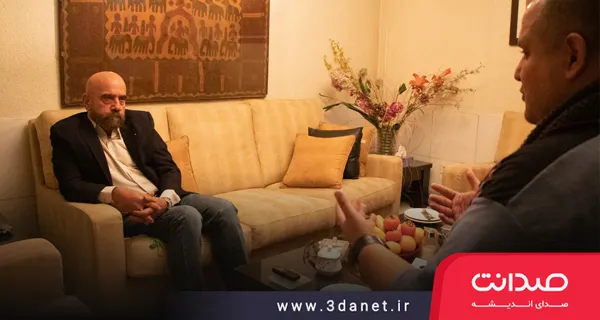
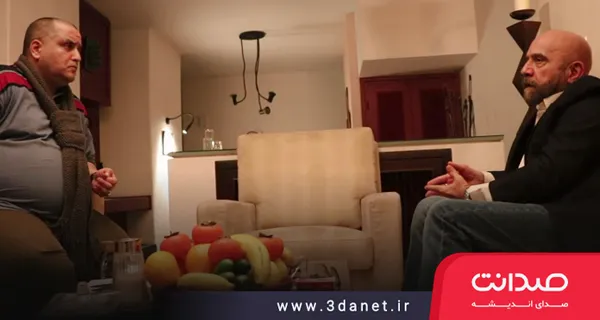
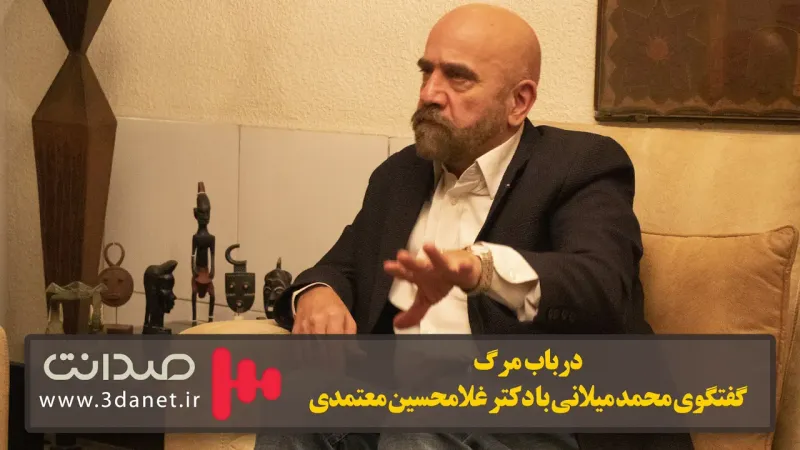
Mohammad Milani in Conversation with Dr. Gholamhossein Motamedi on “Hope”
Despair can sicken a society, but a society can heal itself. Dr. Motamedi sees hope not as a simple feeling but as a future-oriented motivational system that critiques the status quo and demands change—a conversation about hope and despair.
Note: It may not be hard to believe, but it is bitter. That if hope is absent and despair prevails over human existence, in addition to all the problems and difficulties that arise, a person becomes ill. Despair can thus drag the depths of every human being into a discordant challenge. Worse still, this illness can afflict a society and even a nation. Throughout history, there have been and still are numerous examples. If there is an organic resemblance between a person and their society, if you believe that society, like a bodily system, has its own organs and specific functions, then it will not be without reason to accept that a society, or even beyond that, a nation, if afflicted by despair, can also heal itself and find a path and an opening toward hope. An ideal and, of course, dynamic society is one with such characteristics.
What you are reading is a conversation for the Etemad yearbook with Dr. Gholamhossein Motamedi, to briefly examine despair and hope in human beings and human society.
Dr. Gholamhossein Motamedi is a physician and psychiatrist who, in addition to his medical practice, has always considered the primary concerns of humanity, death, and human hope in his research and work. From this perspective, he needs no introduction, as his translated and authored works clearly show that the human being, with all existential and ontological dimensions, is the most important criterion for his research and work. What you are reading is the result of a conversation with him about the despair of these days and the desire for a constructive hope that exists within all of us.
Thank you very much for accepting our invitation for this conversation. As a first question, I would like to go straight to the main reason for this conversation. In your professional work as a psychiatrist, what role and position does hope hold?
Unfortunately, in its historical course, although psychology was initially established with a focus on the healthy human being and the characteristics of Europe, after a while it became more focused on the sick person and placing them within a pathological framework. Therefore, the confrontation with despair, which is one of the prominent symptoms of depression and some other mental problems, became more pronounced. Of course, in depression, even without an external factor, despair appears alongside other symptoms and signs, necessitating pharmacological intervention and other supportive measures. Since hope is one of the main factors of living and being alive, with the expansion of various psychotherapy and counseling methods, it has been considered in every therapeutic situation, because hope essentially looks toward change, and the basis of these methods is nothing but facilitating the occurrence of change in patients in a positive direction. Today, with the emergence of positive psychology, we are witnessing more attention and research on factors such as happiness, satisfaction, hope, optimism, motivation, and efficacy. Therefore, much research has also been done on hope in its psychological domain. Based on recent research, hope cannot be considered merely a good feeling. Rather, hope is in fact a dynamic cognitive motivational system, and various attitudes and cognitive states related to hope are taken into
consideration. From this perspective, emotions follow thoughts, and it is natural that the outcome of this dynamic system will be the emergence of good and positive feelings.
Are there tests and methods for measuring hope?
Yes, hope is assessed both as a stable personality trait and as a state that anyone can possess at any time. The Hope scale is a suitable tool for this, showing that in both of the aforementioned cases, the presence of hope is associated with positive outcomes, and studies on students in relation to academic achievements demonstrate the positive role of hope. Of course, in the realm of positive psychology, the direct relationship of factors such as hope and optimism with greater physical and mental health and better interpersonal relationships has also been emphasized. In this regard, perhaps one can speak of the presence of hope in the definition of a healthy human being.
Could you explain more about the cognitive aspects of hope?
You see, having hope does not depend merely on the presence of a simple concept in the mind. Someone who has hope and is determined to realize their goal uses various strategies to achieve those goals. The importance of hope lies in the fact that life is fundamentally difficult. I read somewhere that hope is composed of suffering and time (paraphrased). In life, there are many obstacles ahead, and hope allows individuals, when facing difficulties, to draw upon a mental set and a strategic arrangement aligned with the situation, thereby increasing the chances of realizing their goals. With these preliminaries, it can be said that hope is part of human nature, manifested in one's experiences, cognition, and orientation toward the future, and consequently, it is a state of awareness. Hope is interwoven with future-oriented thoughts, feelings, and actions. As the contemporary philosopher Richard Rorty put it, hope is a meta-narrative that, like a story, serves the promise or logic of expecting a better future. Hope represents the human will to go there (the target point or the future).
So it would be appropriate and not irrelevant for you to address the relationship between hope and time as well. What relationship can be imagined between hope and the future?
Yes, hope is a human concept whose gaze is directed toward the future and the delineation of a more desirable situation. One could say hope's relationship with the past is negative, but it stands in a positive relationship with the future. A past full of weakness, failure, frustration, displeasure, and unhappiness hardly turns into a future whose bricks are made of hope. Depression is one of the clear examples of this situation. Sometimes people speak of positive and negative hope, which, in my opinion, is a kind of misnomer. It is better to place hopelessness in opposition to hope. Of course, another temporal aspect is the presence of hope in different stages of life, such as childhood, youth, middle age, and old age, where in each period we encounter its specific forms and characteristics.
What picture do statistical assessments regarding hope show?
Unfortunately, the assessment of hope at the individual level indicates that half of the people do not have a high level of hope. Hope and hopelessness, or despair, are rooted in reality, and reality usually reflects hopelessness or is far removed from our hopes. In any case, individual and social life is always under the dominion of the duality of despair and hope. Understanding social reality cannot be a bearer of hope. As Ricoeur says, we are constantly losing the desire to live and continually turning into hopeless people. Incidentally, the presence of hope in the mental and social space gains importance and begins precisely here. Because hope is always a critic of the status quo and enters the scene in protest against the dominant order, demanding its change. As Lyngs says, hope is always against reality. In truth, there is a strong link between hope and change, to the extent that one can say hope is ultimately nothing but the imagination of the realization of change. On the other hand, when we conclude that we cannot change reality, we fall prey to despair and deprivation. Much research
shows that hope enters the scene even in dire and worrying conditions, when there is a kind of uncertainty about the future and things are not going well. Of course, this is one side of the coin. In many cases, reality wins, and individuals suffer from a kind of chronic despair and feelings of helplessness and insecurity, and a passive aspect overcomes them.
It seems that by raising the relationship between hope and reality, we have entered the discussion of the social dimension of hope.
Yes, that is correct. Because we cannot separate individual hope from collective or social hope, or even the institutions of hope in society. In fact, the efforts of our sociologist friends who deal with hope are aimed at finding a way to increase the potential for hope within the very texture of the hopeless reality that dominates society, and for this reason, they pay attention to the importance of social institutions in strengthening hope in society. Durkheim believed that hope is realized in a society where the social order presents a new functional perspective before its members, the realization of which is precisely the realization of the hope of the individuals of that society.
Given the frustrations that have existed and continue to exist in our society, these days the level of despair has clearly preoccupied and consumed a dominant part of Iranian society. On the other hand, with the current global outbreak of the coronavirus and naturally its presence in our country, it is natural that the path for injecting hope or increasing hope from within the heart of our society is not an easy or simple matter. Considering such circumstances, how do you assess the state of hope in Iranian society?
This is a task that sociologists must undertake based on knowledge-based statistical and field studies to yield a reliable result. But undoubtedly, the presence of hope at a dynamic level finds its reflection in the dynamism of that society, and such a prospect is absent. Regarding the coronavirus, in addition to numerous other factors, the relationship between hope and death must be considered. It can be said that the visualization of death alone does not destroy hope, because hope relies more on individuals' self-confidence. In this context, courage is essential. Because pessimism not only helps no one, but in many cases does not stem from rational judgment; rather, it indicates a distrust of any pre-planned action or measure.
So, on this basis, hope must, and indeed it is essential that it does, increase in our society. What recommendations do you have for increasing hope at the individual and social levels?
Firstly, when we talk so much about the positive aspects of hope, it does not mean that success always follows from hope. If that were the case, we would not encounter so many descriptions like vain hope, false hope, misplaced hope, and so on. But this very recognition of hope on one hand, and its education on the other, can be helpful. Whether in the individual sphere or the social realm, similar steps exist to invigorate hope. Setting realistic goals, having the necessary will to pursue said goals, identifying the pathways and obstacles to achieving the goals, and finally, effective action to realize them are effective. Fortunately, hope, like happiness, is contagious to others and is a capital that everyone can benefit from, and through necessary modeling, it can be generalized and spread in society. Sociologists speak of a reading of hope, with the help of which the texts of despair existing in the individual and society can be read, so that this reading itself becomes an experience for promoting hope at the societal level.
.
.
Mohammad Milani in Conversation with Dr. Gholamhossein Motamedi on “Hope”
Published in the Etemad Yearbook, Special Issue for Nowruz 99
.
.





Discussion0 comments
No comments yet; let yours be the first voice.