Philosophy
Mostafa Malekian: Five Things Young People Should Heed in Life
Drawing on lived experience, Mostafa Malekian offers five pieces of advice for the young: the qualitative value of time in youth, drawing on the experience of those who came before, the importance of literature, philosophy, and psychology, artistic self-expression, and avoiding reducing life to a university degree.
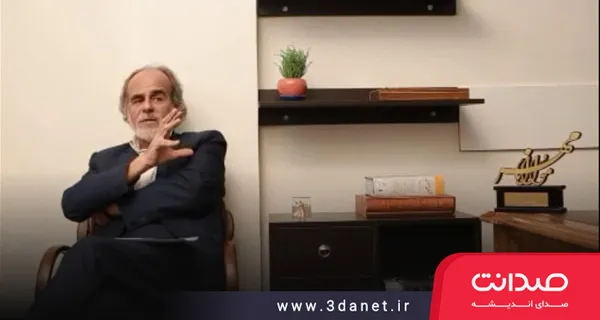
I do not consider these five points the result of my studies, but rather the result of my lived experience. That is, in fact, the failures I myself have had have taught me that I should not have forgotten these points, and if I had not forgotten them, those failures would not have occurred.
1) The first point is that young people must pay attention that their time has a qualitative difference from the time of older people. In simpler terms, mathematically speaking, the distance between age 20 and 21 is one year, and the distance between age 50 and 51 is also one year. But if someone reaches my age, every single week in the span between 20 and 21 has the value of one year in the span between, say, 50 and 51. The value of time is not in the quantity of time but in the quality of time, and because in adolescence and youth, our physical powers, mental powers, and psychological powers are all at their peak, our time therefore finds a qualitative difference from the time when we become middle-aged or approach old age. When someone is at my age and evaluates their learning ability, memory retention, speed of transmission, reasoning power, physical ability, and all their other abilities, they understand that this qualitative difference cannot be denied, and whatever we say in its regard is no exaggeration. Therefore, my first point is that this qualitative difference must lead a young person to realize that they are now in a period of their life where they must make the most use of their time. Any failure to use it will later result in regrets that are, in the fullest sense, scorching.
2) The second point is that young people must make great use of the experiences of those who came before. These predecessors begin with one's own father and mother and extend to all the cultural traditions of humanity. To think that the world began with our birth and that our predecessors had nothing to say is the height of immaturity and ignorance. Our difference from other animals is that we do not start from zero; when we are born, within a short period of time, we receive all at once a huge portion of the experiences that humanity has acquired bit by bit over hundreds of thousands of years. This reception should not be limited to reading, writing, arithmetic, and geometry; rather, we must make use of all the experiences of our predecessors. Disregard for the experiences of those who came before only brings harm to us. This, of course, does not mean that we must be imitators of our predecessors; any kind of imitation, blind obedience, suggestibility, indoctrination, following public opinion, conformity with the crowd, and all such things are rejected. But at the same time, none of these (these rejections) should prevent us from making use of the achievements of our predecessors. In fact, what I mean is having a critical approach to the achievements of those who came before. This critical approach negates two things: one, turning one's back on predecessors, and two, a submissive approach to predecessors. We must have a critical approach. These predecessors include all of humankind, and not just the predecessors of my own society. And in this respect, there is also a kind of openness to the cultural heritage of humanity. And this will only and solely be beneficial for me, the open-minded one, and I lose nothing by knowing the experiences of those who came before.
3) Every young person (and essentially every human being) must specialize in a scientific, technical, or artistic field so that, by virtue of the expertise they have in this scientific, technical, or artistic field, they can take charge of it and can perform well in the professional job they have undertaken. But apart from this, all of us must have knowledge, at least as a strong amateur, in three other things. That is, everyone must also know things in three other domains. These three domains are: literature (it includes all genres of literature, but my greatest emphasis is on the novel and poetry), and parts of philosophy (even if amateurishly, we must know parts of it, such as parts of epistemology, metaphysics, philosophy of language, philosophy of mind, philosophy of action, ethics, and philosophy of religion), and the third is psychology. These three are no longer specific to you and me, and we must know a minimum standard of these three. These three bodies of knowledge must be taught in all schools, universities, and educational institutions.
4) A human being needs an artistic branch for self-expression. Each of us must be an amateur in one artistic branch. Not in order to, for example, become a skilled musician or a master painter. Rather, just to the extent that I can engage in self-expression and articulate my inner pains, sufferings, aspirations, failures, and illusions in some way.
5) The fifth point I want to make, and which may of course be misunderstood, is that life is not for having a university education. We did not come here merely to get a PhD and post-doc. We came to have a good, happy, and worthwhile life. If this good, happy, and worthwhile life requires education, then pursue education only to that extent. And I am, of course, afraid of being misunderstood, since most of our youth do not have much inclination for education and this may be misused. I am not speaking to those people; rather, I am speaking to those who imagine that their entire life is about turning a bachelor's into a master's, and then the master's into a doctorate, and after that into a post-doc. This is a sheer mistake. We came to make a good, happy, and meaningful life, and whatever this good, happy, and meaningful life necessitates, we must have. Including, if it necessitates a university education, to have it to that extent. But to pour all of life into the funnel of education and turn this expansiveness of life into a bottleneck is a mistake.
I wish all young people the best of days... And with that, farewell...
.
.
Watch on YouTube
Watch on Aparat
.
.
Source: Soroush Molana Institute
.
.



Discussion3 comments
با سلام نکات ارزنده ای راآقای ملکیان در این نوشته مورد اشاره قرار داده بودند . باید توجه داشت که این نکات که یقینا ایشان نیز بدان واقفند مربوط به جنبه هایی از زندگیست و شامل تمامی آنچه که یک جوان باید بداند و مورد توجه قرار دهد تا در ابعاد مختلف زندگی موفق باشد نمیگردد.که البته استاد هم چنین حصری را در نکات مذکور قائل نشده اند . با سپاس از زحمات شما
از دیو و دد ملولم و ملکیانم آرزوست
ممنون