Psychology
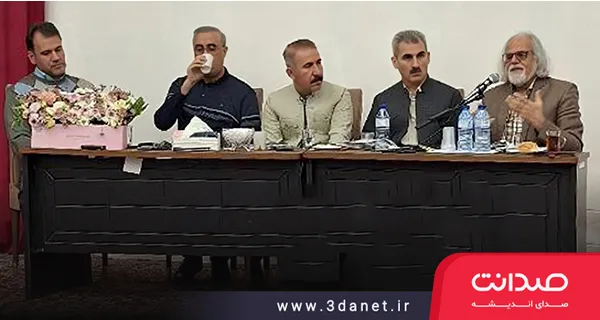
Notes and Advice on Reading from Mostafa Malekian
In his advice on reading, Mostafa Malekian emphasizes the need for different approaches to different kinds of texts, the importance of active rather than passive reading, the right timing, and note-taking driven by one's own intellectual concerns instead of traditional index-card methods.

Notes and Advice on Reading from Mostafa Malekian:
- How to Read Books on Different Subjects
One should not read texts from different fields of human sciences and knowledge in the same way. Philosophical texts require one method, historical texts another.
The book How to Read a Book by Mortimer J. Adler, published by Astan Quds Razavi, is very useful in this regard. However, its translation is not good.
- Active Reading Instead of Passive Reading
Our problem is often that we read books passively. Passive reading means reading in a receptive, inactive manner. Active reading means reading a book with paper and pen. That is, you should establish a set of codes for reading, and in this way, mark a passage you do not understand with one code, a passage you understand but disagree with with another code, and a passage you suspect is inconsistent with another part of the author's work with yet another code. Also, mark passages that are important from the author's perspective or your own with specific codes.
For active reading, I suggest that whenever you open a book, you always formulate a series of questions based on the book's title and its table of contents, and seek the answers to those questions while reading. In this state, the book comes alive for you.
- Method for Reading a Book
If you want to save time in your life, read the book once from the beginning as quickly as possible. When you finish the book, you might realize it was worthless. Well, at least you have lost two hours, but you might conclude that it is a valuable book and read it actively the second time.
- Time for Study
From after dawn until midday is the best time for learning; therefore, it is better to schedule your more serious studies in the early hours of the day.
- A Solution for Escaping Study Fatigue
If you feel tired while reading a text, do not abandon studying; instead, turn to another text. Of course, it is better if you can accustom yourself to focusing on a single book and text.
- Resting During Study
It is very good if you can do two things while studying: one is to sometimes get up and walk for two or three minutes in the middle of studying. The other is to just taste something that is not harmful to your health. These two actions help sustain your study activity.
- Devoting Ten Minutes During Study to Beloved Books and Articles
It is good if you sometimes devote ten minutes in the middle of studying to books or articles that you love and are very interested in. Because you do not necessarily love your academic field in the same way you love the poems of Hafez and Saadi. Reading these works amidst your serious studies is very useful and effective.
- Opposition to Note-Taking on Index Cards
I am opposed to note-taking on index cards. From a text I read, I write down three categories of material for myself, and I call this note-taking:
8.1. Matters that are my own intellectual concerns: wherever I see them, even if it is just a single sentence, I note them down.
8.2. Matters that are not my existential concerns but are very important points.
8.3. Questions that come to my mind while reading.
-
Compiled by Sedanet from some lectures and conversations of Mostafa Malekian.





Discussion3 comments
سپاس فراوان. توصیه میکنم تمام دوستان این مطلب استاد را کامل بخوانند.
کوتاه,مختصر,خیلی خیلی مفید! سپاس درود بی پایان!
ضمن عرض سلام و خسته نباشید واقعا از این مطلب استفاده کردم و بهبود بخش کار من بود خیلی ممنون