Religion
Mostafa Malekian's Lecture: Drawing Near to God
Mostafa Malekian sees nearness to God not as spatial proximity but as resemblance to His moral attributes. Acquiring qualities such as simplicity, immutability, and enduring serenity brings one closer to God, and serves as the measure of religiosity and one's station in the hereafter.
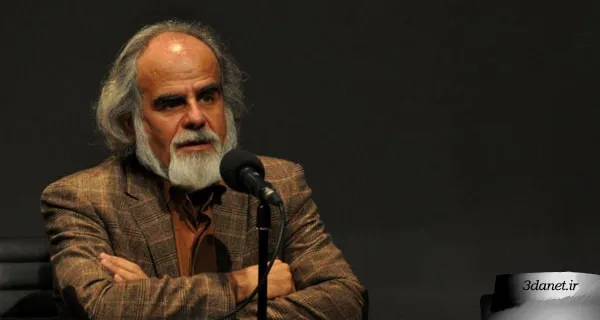
In the Abrahamic religions there is a concept called drawing near to God or closeness to God, and in one sense the ultimate aim of religiosity in these religions has been considered to be drawing near to God; of course, this concept also existed in the Age of Ignorance, and it appears several times in the Quran that when idolaters are asked why they worship idols, they say we do not worship idols except so that they may bring us closer to God. There is no doubt that drawing near to God is not a spatial concept. For God has no place; if God had a place, that would mean He must have a body, and in the Abrahamic religions God does not possess a body; of course, a small minority in these religions, whom we refer to as corporealists or anthropomorphists, believe that God has a body. So, if drawing near to God is not a matter of spatial proximity and, a fortiori, not of temporal proximity, what does it mean? Mystics in the Abrahamic religions have taken drawing near to God in a specific sense, which is that we make our attributes approximate the attributes of God. God has attributes and characteristics, and drawing near to God in one, two, or several attributes brings us closer to God. Here, the meaning of “draw near to God” is “become like God.” That is, become similar to God. See what attributes God has, and try to cultivate those attributes in yourself, or strengthen them if you already have them. On the other hand, see what attributes God does not have, and try to uproot those attributes in yourself, or if they are not present in your being, try to prevent them from arising in your being. Mystics sometimes spoke even more explicitly than this, saying that “become like God” means “adopt the character traits of God.” That is, see what character traits and qualities God has, and you too acquire them. Mystics attributed two categories of attributes to God: 1- Metaphysical attributes: or metaphysical, these are attributes that belong exclusively to God and to no one else. Such as God being the Necessary Existent, or God being the Cause of causes, or God being the Unmoved Mover. These are attributes that human beings cannot possibly move toward and are not feasible for humans; they belong solely to God. 2- Moral attributes: Most of God’s attributes mentioned in the holy books fall into this second category. We can draw near to these attributes. So, if drawing near to God means cultivating moral attributes within ourselves, the question arises: what are the most important moral attributes? What are those grand, significant, and important attributes which, if we attain them, we will a fortiori possess the lesser attributes as well? For when 100 comes, 90 is also with us. In the terminology of the mystics, if you acquire these attributes, you become a “sign of God” (Ayatollah). That is, you will be a sign of God on earth. In Nahj al-Balagha, Imam Ali says of himself: “I am the greatest sign of God,” and its meaning is that he tried to cultivate these attributes within himself to the utmost degree. Knowing these attributes serves the purpose that each person can understand for themselves what the state of their afterlife will be like. These attributes are this-worldly criteria and measures for predicting the otherworldly state. Measures for religiosity and closeness to God.
Some of these divine attributes are:
1- God is simple (non-composite).
God's existence is not fragmented, not composite. It is simple, having no parts whatsoever. If God were composite, He would be dependent on His parts; therefore, God is simple. "Allah al-Samad" means that God is solid, without any fissure or gap. This attribute can also be realized in us. If we become single-hearted in life, a kind of simplicity emerges. There is no doubt that becoming single-hearted in the strict sense of the word may be beyond the capacity of any human being. But at least we can go from having a hundred hearts to having ten hearts. I want wealth from life, and part of my activities are aimed at attaining wealth. I also want power, status, social standing, fame, popularity, academic degrees, scholarly knowledge, beauty, health, and so on. Each of these desires scatters my being further and fragments it more. The Quranic allegory: You humans are like a hunter who is dropped from the beak of an eagle in the sky and falls to the bottom of a ravine. Along the way, other birds, each according to the strength of its beak, tear off a piece of you, and nothing reaches the bottom of the ravine. Each of life's objects of desire tears off a piece of our being, and when we reach the bottom of life, nothing remains of us. The story of The Old Man and the Sea in Western literature expresses exactly this theme. These objects of desire, each of which consumes a part of our life, inner talents, and external opportunities, are not compatible with one another. The Quranic allegory is to imagine a slave girl who has been jointly purchased by several masters who quarrel with each other; one tells her to sit, another tells her not to sit. What is this slave girl to do? Compare this with a slave girl who has one master. No matter how unjust or ignorant this master may be, at least that slave girl knows what she must do. The Quran says that if you follow God, at least you will have one master. If you reach a point where you say, "I don't understand what I should do," it indicates that you have many masters. Purity of heart or sincerity of intention means wanting only one thing in life. In this way, life is more desirable because there is less inner conflict.
2- God is immutable.
God is not influenced by anything other than Himself. He is not acted upon by anything other than Himself; He is impassible. It is good for us to gradually reach a point where external circumstances have the least possible effect on us. Not to become happy when others cheer us, nor sad when they boo us. If we are to become happy, we should not need to go to nature and change our location. This means the umbilical cord of our life is attached to the outside, and since the outside is not under our control and is constantly changing, we too are constantly changing.
3- God possesses perpetual serenity.
Because God is immutable, He possesses perpetual tranquility. If you too can sever the umbilical cord of your attachments from the outside, and the outside does not cause you anger, love, hope, or despair, you will find serenity within. In the religious conception, the highest station considered for a human being is the tranquil soul. This serenity makes a person resemble God. According to the Quranic text, serenity and a tranquil heart are beyond faith. One can be a believer but not possess a tranquil heart. It is stated in the Quran that Abraham said to God, "My Lord, show me how You give life to the dead." God said to Abraham, "Do you not have faith?" Abraham said, "Yes, I have faith, but I do not yet have serenity." The mystics used to tell us: in the turbulence of the world's whirlwind, be the eye of that whirlwind and remain calm. This does not mean do not struggle or do not work. Rather, it means work with a tranquil heart.
4- God is silent.
God carries out His sayings through His actions. We mostly carry out our actions through our sayings. Whenever we cannot speak, we resort to action, whereas God does not break His silence except out of necessity, and when He wants to speak, it is through action. The fact that mystics consider the world's order a system of signs means that God is speaking to us through all phenomena. But He carries out His speech through action. (Sit by the stream's edge and watch the passing of life, for this sign from the transient world suffices us (Hafez) When God makes the water flow in the river, He means to say that your life is passing.)
5- God is self-sufficient.
God is self-sufficient. He possesses magnanimity and a sense of honor. Human beings, too, should not have their eyes on what they possess and should look upon everything from a state of satiety. My eye is sated, my soul is valiant (Rumi) This self-sufficiency saves us from many humiliations. We are saved from misplaced genuflection, flattery, turning a blind eye to the violation of rights, and so on. When you become self-sufficient, you become courageous, because you have nothing to lose or to gain, and the threat of losing something or the enticement of gaining something has no effect on you. In this bazaar, if there is any profit, it is with the contented dervish; O God, make me blessed with dervishness and contentment (Hafez) In the bazaar, two groups profit: those who bring a great deal of capital into the market, and those who have a greed for profit. But this bazaar of which Hafez speaks is the opposite: if you have nothing and want nothing, you profit.
6- God has the upper hand.
God’s giving is without taking. He has the upper hand and gives, but He does not have the lower hand and does not take. If you are self-sufficient, you find a giving hand, but you hold no favor over anyone. Whenever Imam Hussein helped a poor person, he would kiss that poor person’s hand, meaning that you have taken and carried away a part of our burden, and there was no sense of conferring a favor.
7- God possesses inner joy.
God possesses intrinsic delight. He is joyful from beholding Himself. Mystics become joyful through inner journeying. Rumi marvels at people who gather around a street performer while their own inner being is full of wonders. Imam Ali says: you think you are a small being, while the greatest universe is hidden within you. There are other attributes that I will address on another occasion. Wassalam
.
.
Audio of Mostafa Malekian's lecture titled Drawing Near to God
.
.
Mostafa Malekian's lecture titled Drawing Near to God - Year 1394
.
.

Discussion1 comments
صحیح:ید علیا نه اولیا